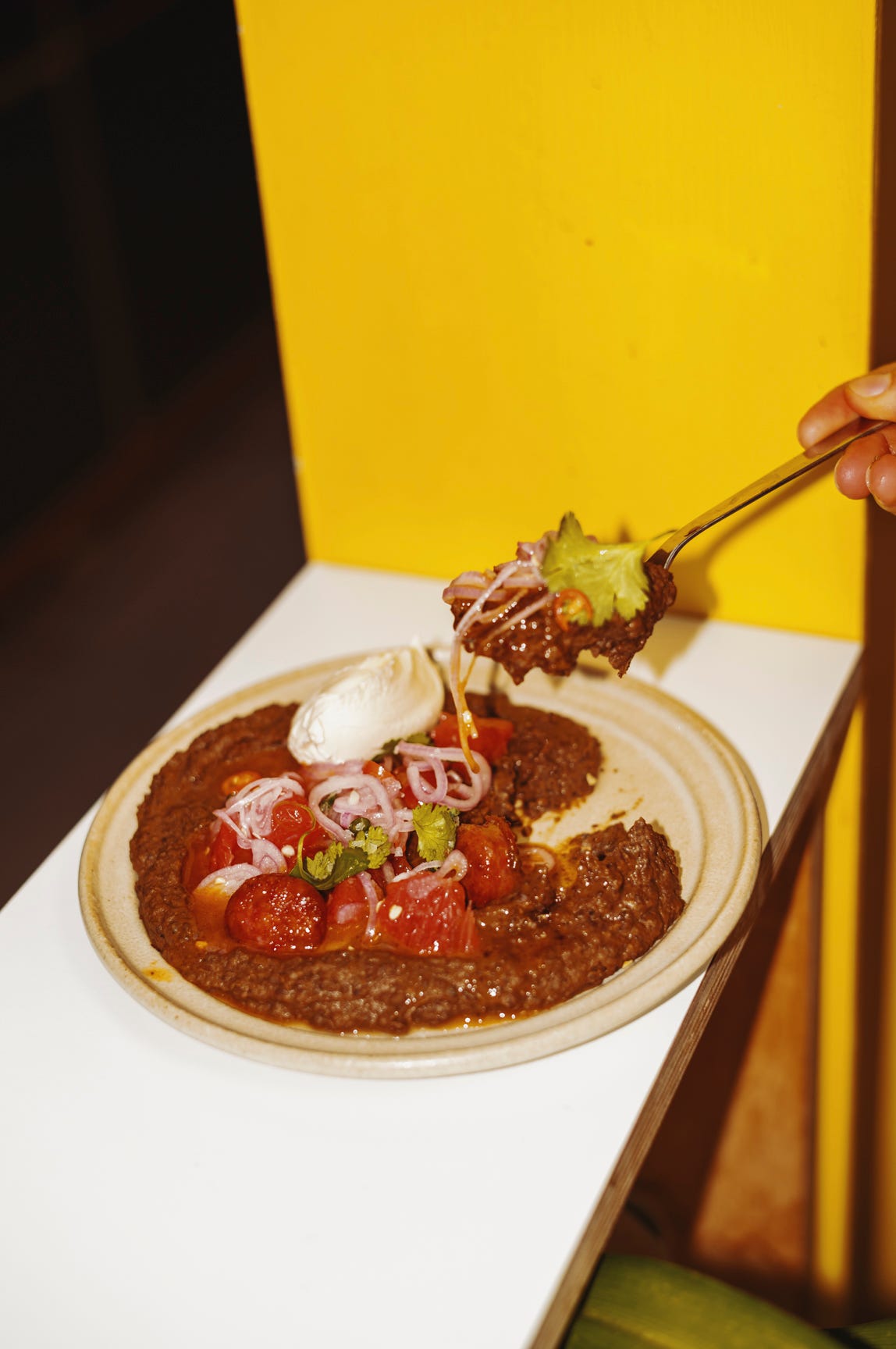
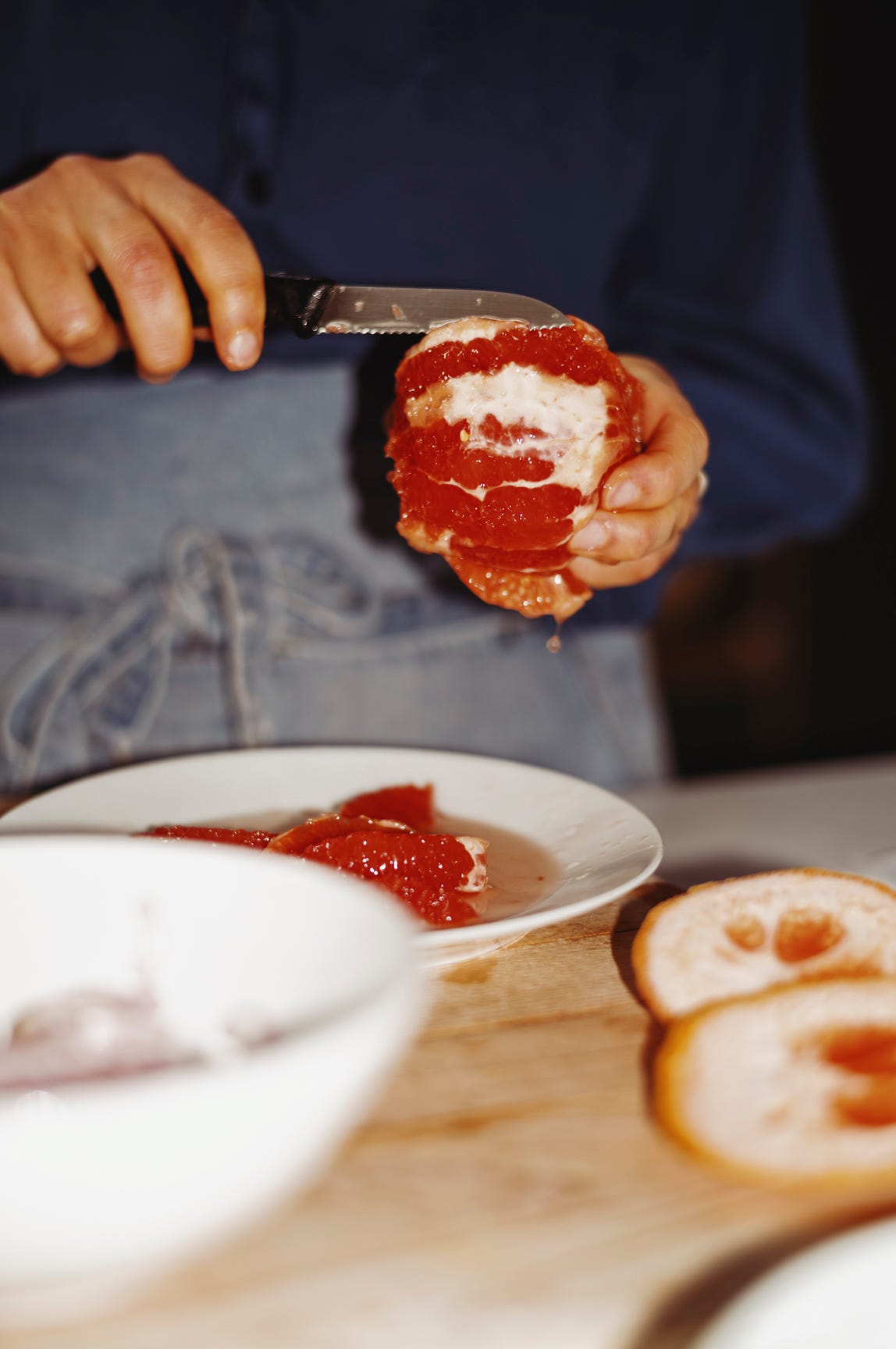
A recipe for sweet and sour Sausages, black bean mash and Grapefruit vinagrete. Words by Ixta Belfrage. Photographs by Ben McMahon.
Mar 04, 2026
∙ Paid
Good morning, and welcome to Vittles! Today, we are running a recipe by Ixta Belfrage fromIssue 2 of our print magazine. This piece is part of a compilation titled ‘Disrespect your Elders!’ in which chefs shared dishes that defy traditional expectations. In print, Ixta is joined by Feroz Gajia and Rahel Stephanie.
To read the whole compilation, purchase the magazine, chock-full of all things Bad Food, here.
In Brazil, Saturday is the day of feijoada. Traditionally, feijoada must include all the following on one plate: feijão (black bean and pork stew); couve (sautéed greens, similar to collard greens); farofa (a textured condiment made from coarse cassava flour fried with garlic and onions – and sometimes also bacon, banana and egg); vinagrete (a salsa made with tomato, onion, chilli and vinegar); orange slices (usually skin–on) as a sweet and sour counterpart to the fatty beans; and rice.
Iracema, my bisavó (great-grandmother), painstakingly made feijão most days. My mother recalls waking each morning to the scent of boiling beans, simmering salted pork and frying refogado. They lived in Natal, a beachside city in the northeast of Brazil. At the time, dairy farmers would bring their cows to the end of the sandy, unpaved streets and milk them into metal buckets. Iracema would use this to make cream and butter, saving the nata – the thick cream that rises to the top when you boil unpasteurised milk – for herself as a treat to spoon over her feijão. I’ve never heard of anyone else eating feijão with nata, but it’s very special indeed.
My bisavó was serious about her feijão. She would be shocked, therefore, to learn that my mother cooks hers with seaweed, cumin and ginger in an attempt to reduce gut inflammation. She would also be absolutely horrified that I, her great-grand-daughter, add Worcestershire sauce, curry powder, tamari and cocoa to mine – decidedly untraditional pantry staples from the various cuisines I grew up with, which I’ve come to rely on when I need to add serious depth of flavour, fast.
The following recipe emerges from these and other experiments with tradition. It’s a reimagined feijoada that leans into the English half of my background, drawing inspiration from bangers and mash.