Mother Food
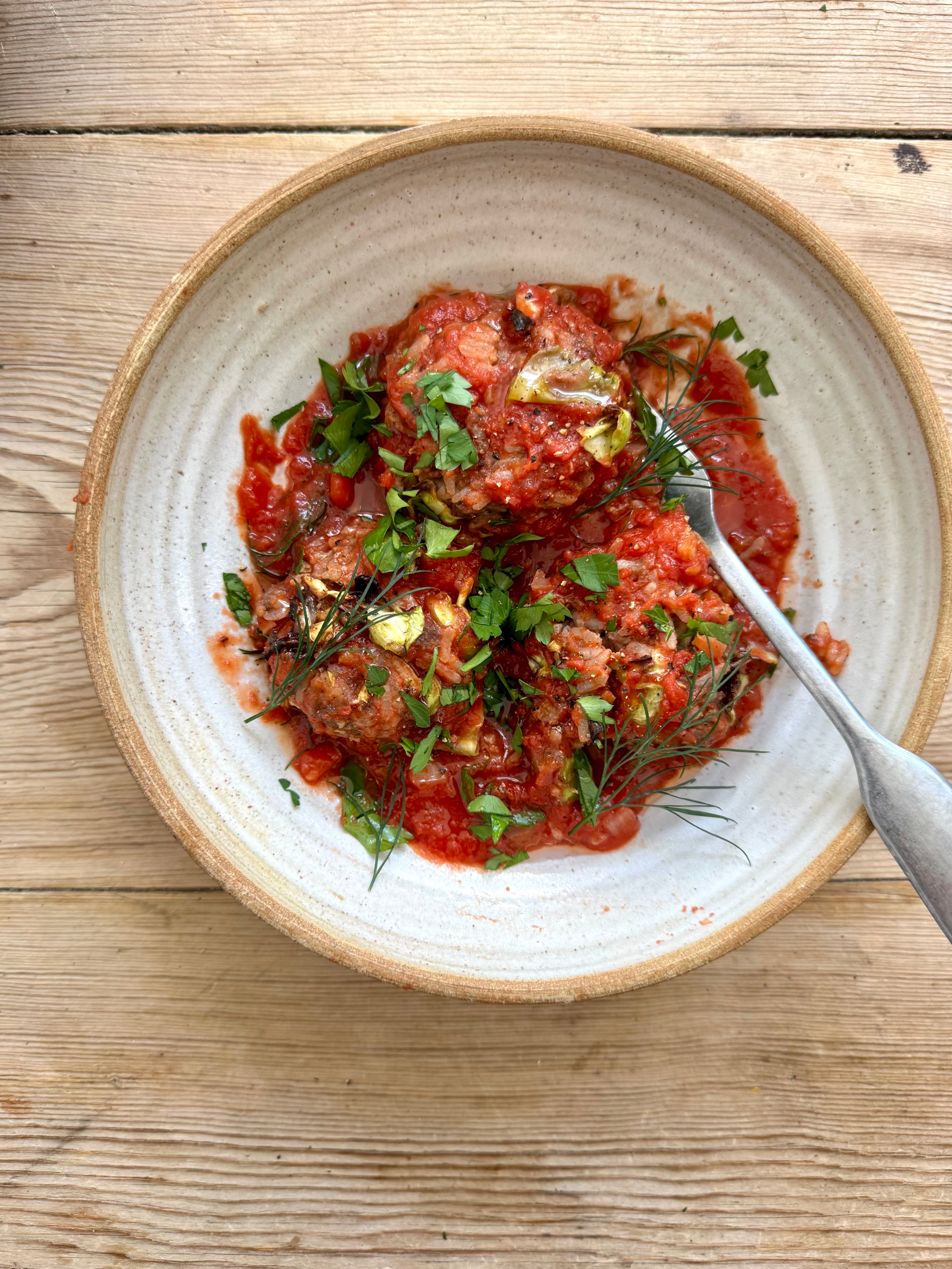
Misha Honcharenko revisits his late mother’s recipe book, and shares her ‘lazy’ take on holubtsi (Ukrainian cabbage rolls)
Good morning and welcome to Vittles. Today, Misha Honcharenko writes about connecting with his mother – and Ukraine – via her handwritten recipe book. If you haven’t picked one up already, we still have copies left of our second print issue, on the theme of ‘Bad Food’ – we highly recommend buying a copy. Ruby Tandoh’s guide to the ice cream of London is also still available for pre-order here (note: preorders are currently only available in the UK).
All the articles in Vittles Cooking are paywalled. To view them, you can subscribe to Vittles for £7/month or £59/year. Vittles is entirely subscriber funded, and your subscriptions help to pay all our writers, photographers and illustrators at a fair rate.
Recently I’ve been looking through my mother’s small recipe book again. Whenever she had any spare time, she would write down recipes and lists of random things to use up in the household. Everyone in the family knew about her obsession with buying cooking magazines (this was way before she was diagnosed with breast cancer in 2022, after the full-scale Russian invasion of Ukraine). She never cooked anything from those magazines or revisited them after she bought them. The recipes she wrote down, though, were those she considered important enough to prevent her from losing herself. Food is something that one must always treasure, like a precious stone, she’d say.
My mother never showed her cookery notebook to anyone but me. Interspersed among the recipes are some brief thoughts, prayers for when you’re feeling low, instructions on how to bring luck into your life and even rituals for daily facial care. The notebook is full – 182 pages in total – and disorderly, although her handwriting is deliberately neat, without any crossings-out or mistakes. At the end, on the flyleaf, she wrote out information about different measurement conversions: grams, millilitres and tablespoons. There are spillages from coffee on several pages.
It felt like doom, but also life-affirming, to look through it after her death. I can kind of sense that it was meant only for her, but at the same time she entrusted it to me. I feel honoured to possess it.
The recipes in the book don’t just hold the trauma of losing my mother. They hold the memories of everything that was lost when we were forced to flee Ukraine in 2023, carrying only what we could. Not long after we arrived in Cork in Ireland, my mother’s cancer returned. It couldn’t be cured this time. I was living in a hostel room for people caring for relatives with terminal illnesses. When she died, I looked around the room at all the stuff I’d felt was important to bring with us, not knowing what to do with any of it. What do you unpack when the person you brought it all for is gone? My first instinct was just … blankness. I couldn’t think, couldn’t feel anything clearly. But then I remembered her notebook. It held what I couldn’t – the details, the care, the pieces of her I was so afraid to lose.
The notebook has travelled through four countries since we left home: Poland, the Netherlands, Ireland, and finally the UK, where I live now. But it always takes me right back to our tiny kitchen in Poltava, to small, precious memories of my mother cooking my favourite dishes for me. Looking through it now, I realise just how much she valued simplicity in food. I love this about her, but it makes recreating her cooking difficult, because there’s nowhere to hide. Every attempt of mine to make one of her recipes ends in failure, because I can’t cook as well as her. Besides, what I really miss is her presence in the kitchen rather than the food itself.
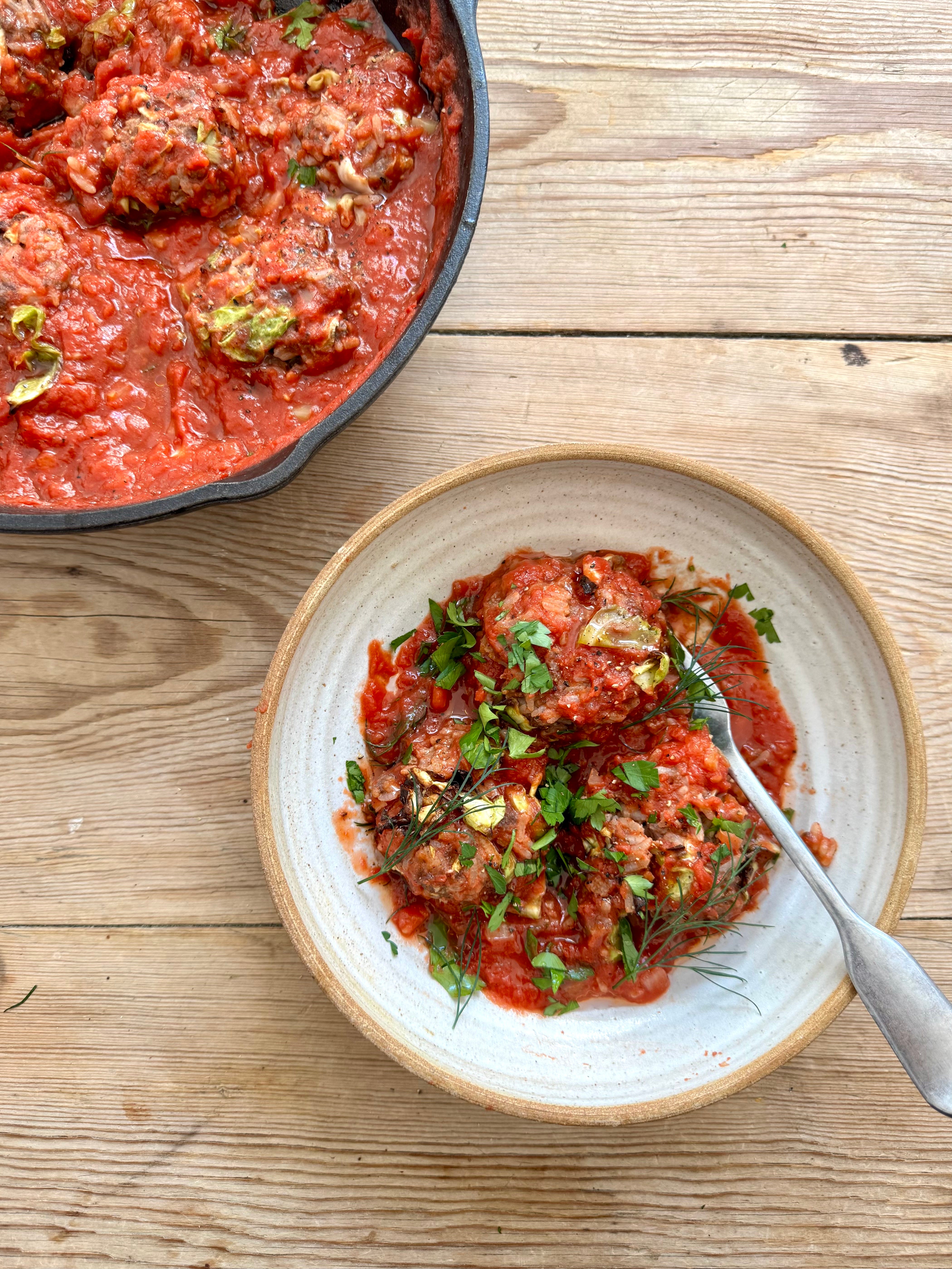
Still, I keep on trying, hoping to feel a little closer to her. One of those recipes I return to most is my mother’s holubtsi. These cabbage rolls originated in rural Ukrainian farming communities as a cheap, nutritious and filling meal. I’ve always loved them for their rich flavour. Whenever I make them, I try to fill them just as generously as my mother did.
Lazy Holubsti