

The 99 Best Restaurants in London. Part 3: No 40–11
The business end of the list. By Jonathan Nunn.

This is the third instalment of the Vittles 99, Jonathan Nunn’s pick of the best restaurants in London. Numbers 99–76 was published here, with 75–41 announced here, 10–2 here, and finally No. 1. To read the whole list, you can subscribe to Vittles for £7/month or £59/year, which gives you access to the entire back catalogue.
40. Levant Book Café
I once went to Fosselman’s, the legendary Alhambra ice cream parlour where customers eat sundaes by twilight, and mourned London’s lack of late-night dessert culture. I then had to check myself for my lack of patriotism. On a summer’s night in Park Royal, when the MOT garages have fallen silent, you’ll find Levant Book Café full of light and life: old men playing backgammon on ornate wooden boards, the trickle of water from a fountain and ‘Sa’altak Habibi’ on the stereo. Here, owner Sameh Asami has not just written a love letter to Damascus, but recreated a shard of another city in an industrial park. It is also, as Ruby Tandoh has noted, the best ice cream parlour in London, specialising in booza, the piney, mastic-heavy Syrian ice cream that is cut into slices rather than scooped. On weekends there is savoury food, but I always leave space for the halawet el jibn – fresh milk curds scented with rosewater and stuffed into rolled semolina and cheese dough.
39. Camille
When it opened, Camille was unfairly lumped into the ‘French brasserie named after a woman’ moment of 2023. In reality, Camille is the most successful of the St. John bastards, a group of modern London restaurants which have pushed the idea of ‘nose to tail’ to its seams and whose argot is as at ease with supermarket condiments as with regenerative agriculture and whole-animal butchery. Chef Elliot Hashtroudi has a love of monumental flavours: smoked fish and crustacean heads become condiments for meat, while offal is sometimes used as a provocation (if you order snout, you will get something that looks like a child’s drawing of a snout). However, there’s real technique anchoring it all – a dish of calves brains with purslane, for instance, could honour any trad bouchon. There’s something admirably freewheeling about Camille, a sense that it is making things up on the spot; it’s this spirit that stops its disparate elements from remaining clichés, instead becoming something wholly original.
38. The Devonshire
One of the most striking things about 2024’s buzziest restaurant is that it’s so easy to see The Devonshire in 20 years’ time as a Soho institution, as lived in and just there as Quo Vadis is, a place you can take your godmother post theatre because steak and sticky toffee pudding never go out of style. (As it happens, The Devonshire serves the same menu, almost beat for beat, as London’s oldest restaurant, Rules, and does every dish better.) Stripped back from the hype, restaurateur Charlie Carroll, publican Oisín Rogers and chef Ashley Palmer-Watt have created that most difficult of things: a restaurant that has no concept apart from being very good. Scallops with homemade bacon and malt vinegar is a perfect use of British flavours and ingredients, a reminder that the best of what we do holds up to anywhere on the continent. A pile of langoustines is just that, fire and sweet flesh. The bread and butter pudding, almost a soufflé, may well be the best you’ve ever had – it is certainly mine.
37. Tasty Jerk
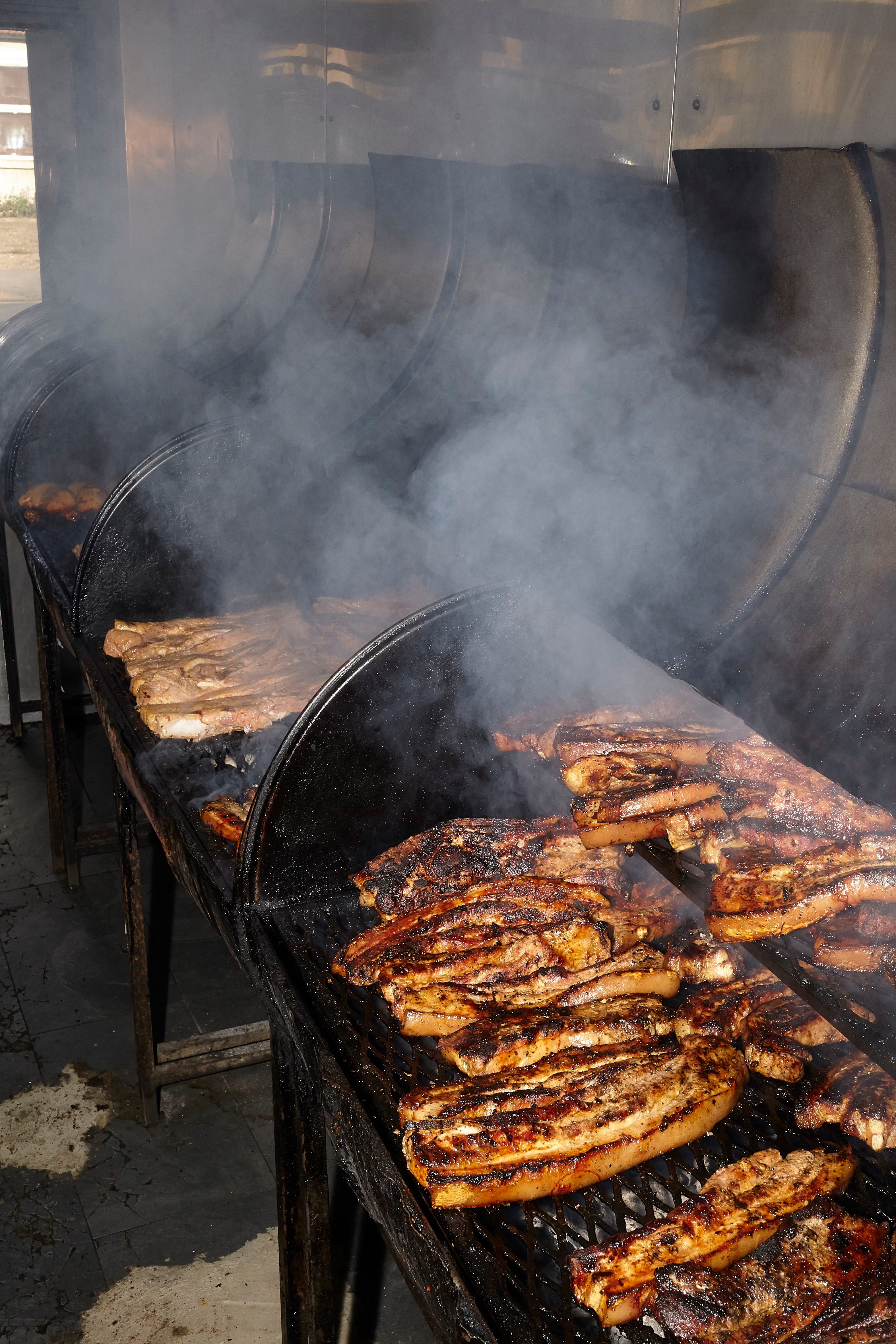
When the wind catches the smoke right, you don’t need to worry about directions as you walk up Whitehorse Lane in Thornton Heath – the scent of barbecued meat from Tasty Jerk’s chimney extraction will hit you from a mile away. There was a time, when its founder Murphy Lawrence still worked there, that I would have told you that eating the Tasty Jerk jerk pork was one of the top three things you’re legally allowed to do in public in London. Although it doesn’t always hit those supreme heights under new management, nowhere else has taken its crown. The jerk pork doesn’t need sauce: bite into it dry and you can taste the long, careful cooking of the meat, the sting of Scotch bonnets, the breakdown of connective tissue, the fat rendering and crisping – soft as chicharrón and sweeter than the best siu yuk – decades’ worth of seasoning from the three blackened drums, and notes of char, soot and petroleum that rush up your nose and down your throat. The chicken is good too.
36. Mountain
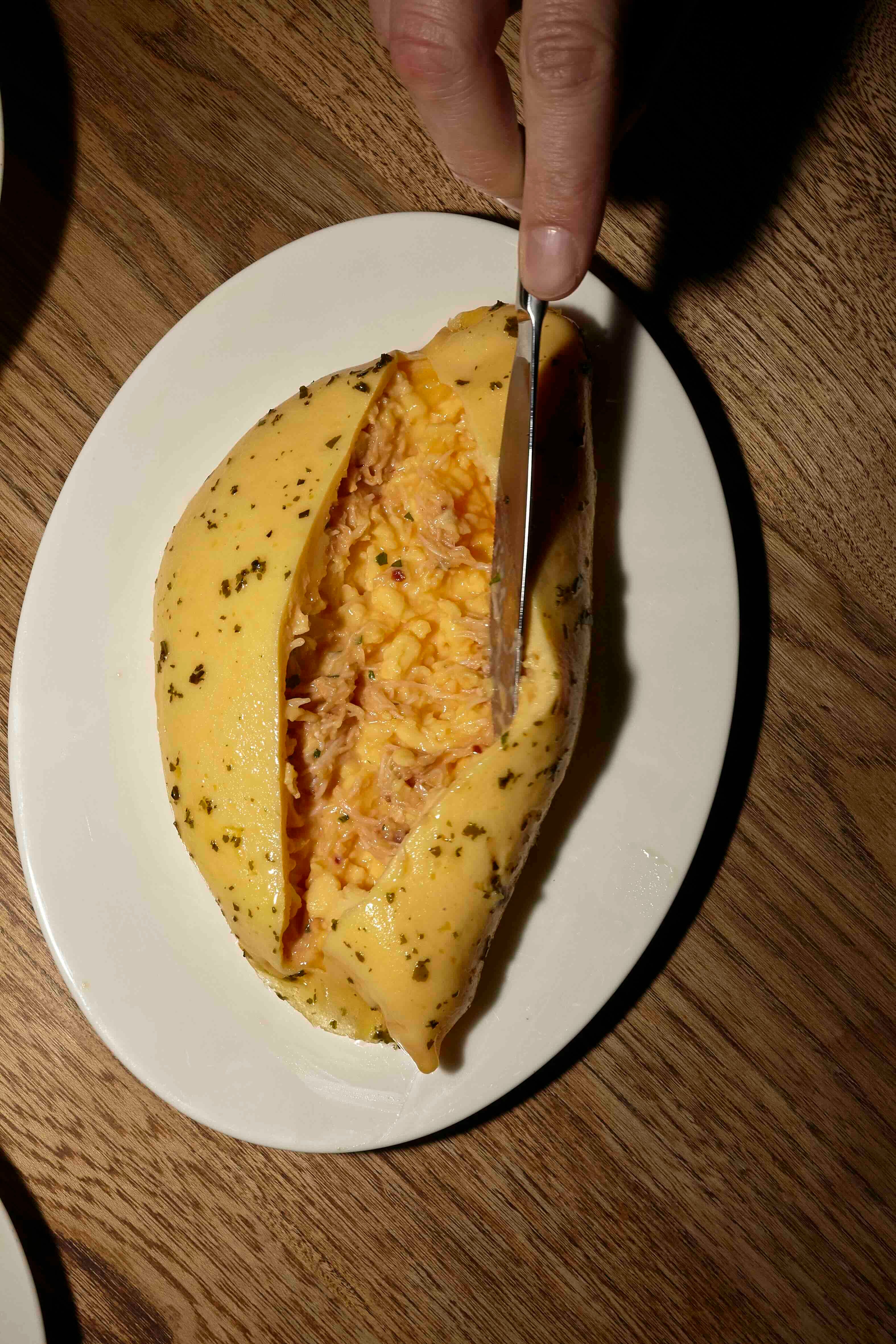
What do you do when your first restaurant becomes the most-liked place in the city? Open somewhere as baffling as Mountain, of course. Tomos Parry’s difficult second restaurant is less people-pleasing than Brat, but it’s the one that keeps compelling me to return, its vast menu begging the question of what the best version of Mountain actually is. It’s not the grill, which you can go to Brat for. It could be the dishes that display recherché technique, like the Maillard-less patina of a spider crab omelette, whose money shot once provoked a table next to me to dissolve into raptures of delight. But I think Mountain is best experienced through small assemblages of cutting-edge produce that show off its sourcing, such as cured dairy beef with enough lactic funk to be its own self-contained cheeseburger, and through its braises, particularly a garnet-coloured tripe dish filled with so much collagen it sticks your lips together. I wouldn’t mind if restaurant three just did stews.
35. Towpath
The sighting of Towpath open after its four-month hibernation is the East-London-white-person equivalent of spotting the Eid moon – a sign of renewal. Lori de Mori and chef Laura Jackson’s canal-side cafe has consequently become synonymous with a style of light, vernal cooking: small plates of green things, undressed asparagus spears with a dip, fizzing, bright salads. And yet, I would like to make a case that Jackson’s best cooking is her sometimes entirely unseasonal larger dishes that seem to have wandered in from another restaurant entirely: a golden matzo ball soup of unimpeachable clarity, chicken meatballs with beans and parmesan that makes a case for the supremacy of spherical chicken, brisket with tzimmes that could put Reich’s out of business. I sometimes wonder what Jackson is doing for the other third of the year – there’s a great Ashkenazi Jewish deli hiding here, and the fact that there’s nowhere cosy to have her winter cooking is a minor London tragedy.
34. Sikatiô
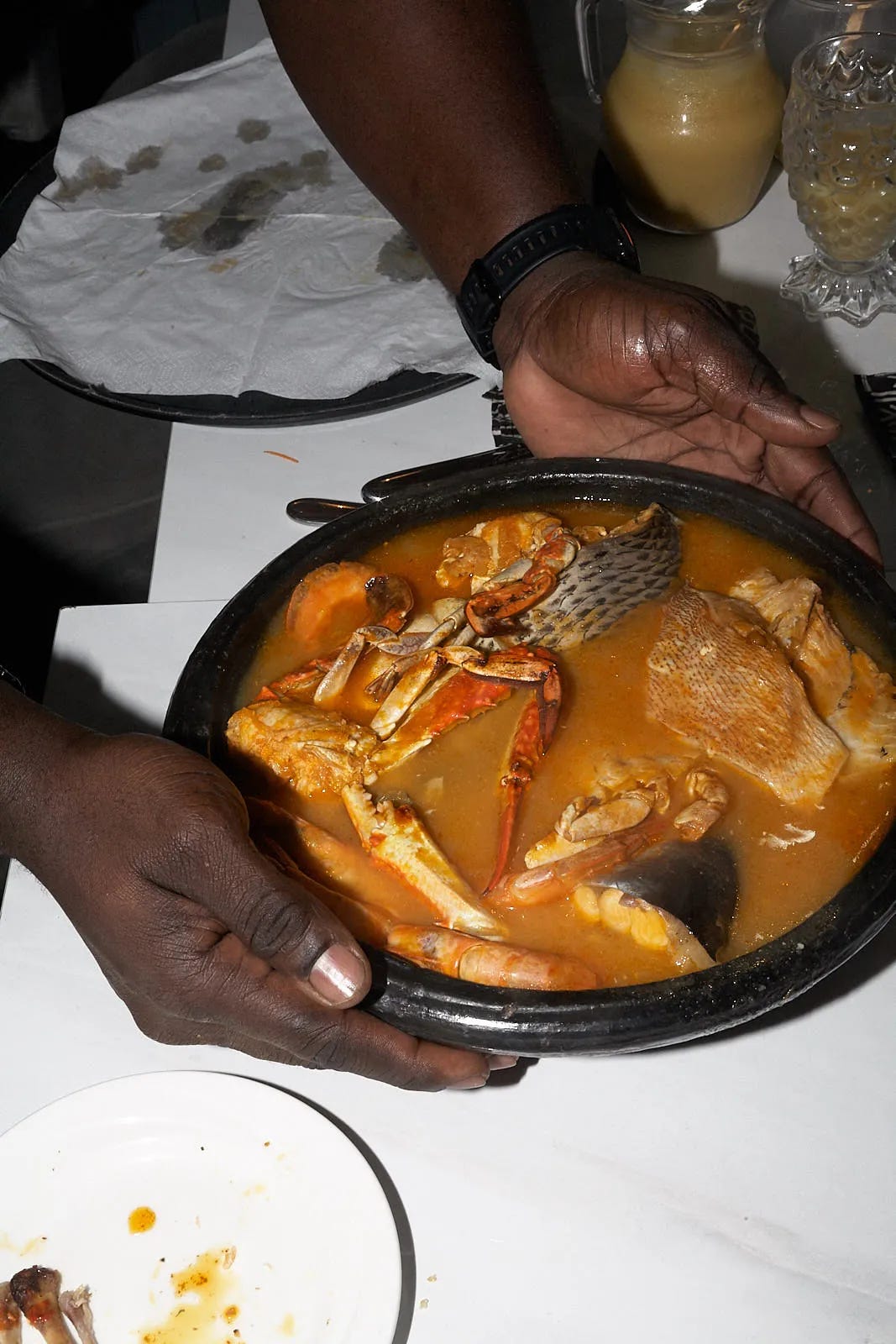
A diasporic Ivorian restaurant as accomplished as Sikatiô should, by rights, be in Paris. And yet, improbably, it’s here in Brockley, where Lynda Beble and Brice Assemian are putting out some of the most skilful fish cooking in South London, including croaker in a deep-fried chainmail of skin – a show-stopping piece of soul food that tastes like if Colonel Sanders moved to the coast from deep Kentucky – and the soupe du pêcheur, a Satanic bouillabaisse of gently poached fish, crab and prawn with a broth that winds you with each gulp. There’s a strong sense of coup de grâce here, which extends to the meat dishes – lamb and guinea fowl suffused with wood smoke, or brisket in sauce graine, a gothic peanut soup made from the palm nut. My favourite thing on the entire menu might just be the fried plantain: cut on the diagonal and perfectly ripe, each piece has the same shape and sweetness as a teardrop.
33. Leo’s
Bright, the much-missed London Fields restaurant headed up by chefs Will Gleave and Giuseppe Belvedere, could never have lasted: it was like Simon and Garfunkel if there were two Paul Simons. While Gleave is now at Margate’s Sargasso, Belvedere has continued where he left off, at Clapton’s Leo’s, where he is putting out his most assured cooking to date. Eating here, in a city of mediocre pasta restaurants, can be a reminder of exactly what it is about Italian food that we’ve all fallen in love with: its generosity, directness and cheat-code flavour combinations. Riso al salto, the Milanese version of tahdig, is a simple dish – it’s just crispy, saffron rice – but adding a layer of fonduta transforms it into a decadent, savoury kind of truffle. Sharing mains, like a lasagne of gamey white ragù served with the spoon still in, or pork with a molten layer of Coombeshead ham, make it feel like you’re being cooked for by a friend who is secretly trying to seduce you.