


You asked, we delivered. Here’s Jonathan Nunn’s list of the 99 best restaurants in London in one post, along with their addresses.

The Vittles 99
In 2005, the American food magazine Gourmet prematurely named London as the best place to eat in the world, citing a new feeling of optimism that infused everything from the ‘freshness and simplicity’ of St. John to a resurgent Borough Market. Reading it now, 20 years on, it’s startling to see how much the city’s food has progressed and put down its roots. ‘London cuisine’ has become a mix of lineages, each one as important as the next, from the the modern British movement that has revolutionalised the city’s relationship to native produce, our own peculiar takes on French fine dining and Mediterranean ‘peasant food’ and the explosion in casual wine bars and gastropubs, to the pioneering Turkish ocakbaşi and Cypriot taverna that have become North London institutions, the Jamaican cookshops and Nigerian takeaways in South that formed the bedrock of the city’s Black cookery, meat-forward Punjabi and Pashtun grillhouses, all-veg Gujarati and Tamil canteens and a hundred other cuisines vying to make their own legacies. This bewildering diversity is what gives London its character: an endless cycle of old traditions being supplanted by new energy, new people and the generative creativity that comes from their intermixing. Today, in 2025, there isn’t a single pocket of the city untouched by great food.
The Vittles 99 is my attempt to write a guide to everything interesting about eating out in London right now, from the upper echelons of fine dining to restaurants that exist first and foremost to serve their communities and neighbourhoods. To produce it, I have spent the last two years revisiting all my favourites and filling in large gaps in my own knowledge – particularly regarding London’s Michelin-starred restaurants. From a shortlist of around 3000 meals eaten during the last seven years of writing, I’ve whittled the final list down to a round and unreasonable 99, presented in order. While composing the list, I have been asked how it’s possible to compare, say, The Ritz to Kaieteur Kitchen. My answer is that each restaurant is skilled, and has an unwavering commitment to what quality means to them. Ultimately, it is all food and hospitality. The sole metric I have used to order the list is one that has always served me well: how excited would I be to go eat there tonight on my own dime?
London is not a perfect food city. High rents, increasing food costs and ever-slimming margins mean that restaurants are constantly squeezed, compelled by forces beyond their control into a kind of homogenisation. The 99 restaurants on this list are all different but share one key characteristic: amid pressures and fleeting trends, each one is committed to serving the food that they want to cook. Despite everything, their individuality and personality shine through. London’s food, after all, is defined by its people. For the last seven years, these people – chefs, cooks, waiters, porters, developers, suppliers – have kept me fed and provided me with my living. This list is dedicated to all of them. JN
The Rules
It’s trickier to define a restaurant than it might seem at first glance. For the purposes of this list, a restaurant is a place where you can sit down and eat a full meal for money, or take one away. Bakeries have been excluded, as have pop-ups and delivery-only ventures.
To avoid repetition, I set out to limit myself to one entry per restaurant group, unless there are two restaurants in that group that serve radically different food. I have also ended up breaking this rule, but it’s fine, because it’s my list.
I have paid for all the meals on this list and done my best to steer clear of freebies, although being known as both a writer and a supplier of tea means that it has been tricky to avoid absolutely everything without being rude. Over almost two years, I have logged a few glasses of champagne, some extra courses in a tasting menu and, in one case, a bottle of rapeseed oil.
Three of the entries on this list are run by people whom I consider friends and about whom I could not possibly be objective. To balance things out, I have also included restaurants run by people who hate me.
Despite my best attempts, there are still some restaurants in London I have never been to, or didn’t have time to return to. My apologies to all of them – I’m already working on next year’s list.
This is a highly personal list, and I would be alarmed if anyone agreed with every entry. Dissent is very much encouraged. See you in the comments.
99. Oslo Court
Oslo Court, an absurd cream puff of a restaurant on the ground floor of an International Style housing block in St John’s Wood, is the one place on this list where the food is a bystander to the experience. Some of the truly great restaurants are not about food at all, but about comfort and fantasy. The real draw of Oslo Court is things being precisely as you remember them (if you’re old enough) or the delight of unearned nostalgia. It’s a place where Melba toast comes unbidden, where the most avant-garde main is steak Diane, where at least one table will be celebrating an 80th birthday, and where sides (including genuinely excellent latkes) are technically unlimited. A word of warning: if the legendary septuagenarian dessert waiter Neil Heshmat is on duty, recommending the best dessert on his trolley, which he’s saved just for you, Oslo Court reaches some kind of perfection; if it’s his night off, the whole thing might fall down like a pale pink house of cards.
Oslo Court, Charlbert Street, NW8 7EN
98. The Quality Chop House
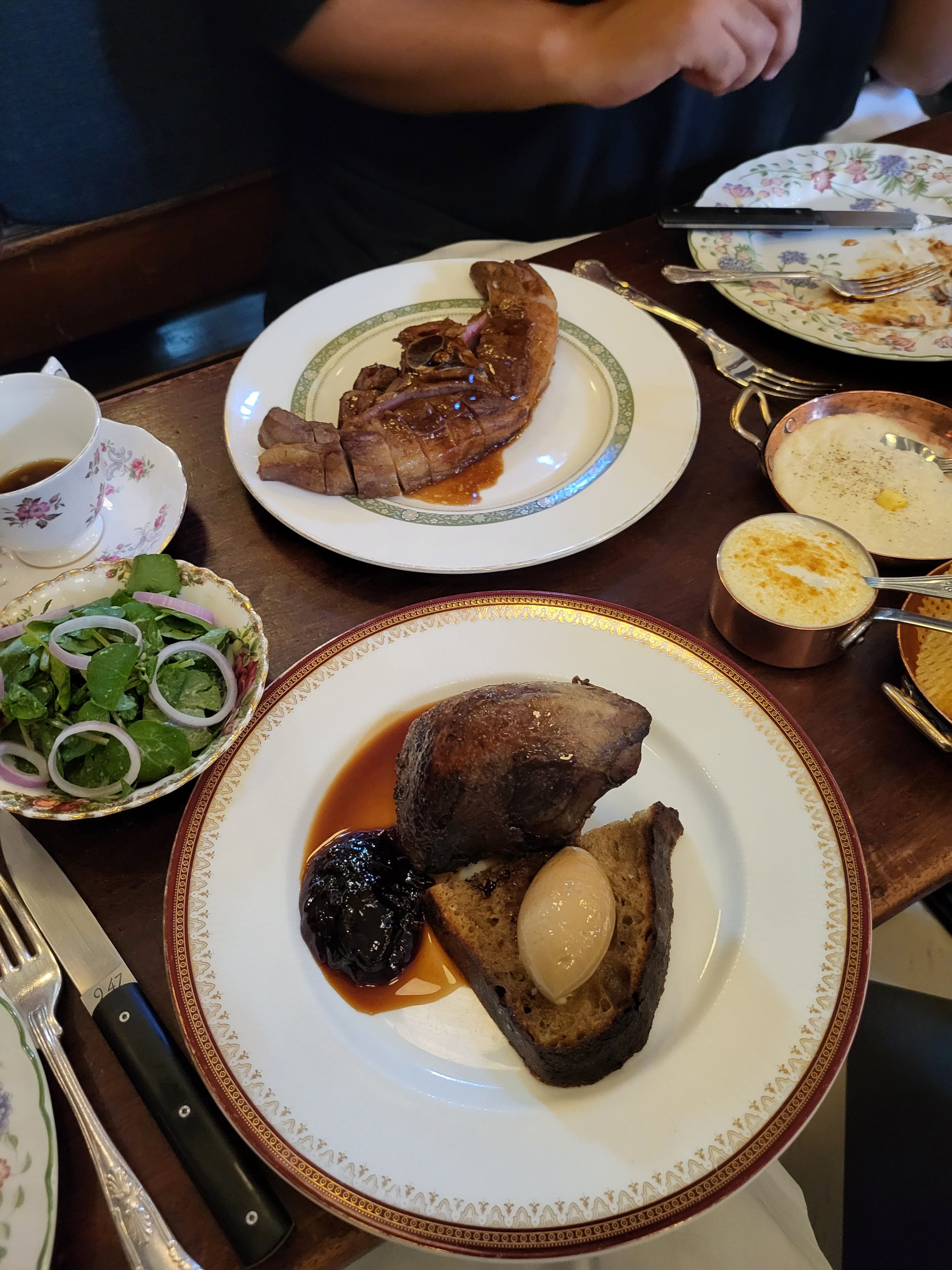
I once heard the legendary French chef Olivier Roellinger say that the template for every great chef must be the image of a mother nourishing a hungry child. Shaun Searley at Quality Chop House is not a nourishing mother: he has the mien of a chef out to kill his customers. My most memorable meal here showcased every known shade of brown plus a few that the restaurant invented: a game broth that tasted like Bovril if you gave it a knighthood; a tranche of brill spine cooked hard to stand up to a glossy Sichuan-ish sauce; grouse (a mahogany breast, a study in brown in its itself) with trimmings; brown bread fried in something unholy; plum jam the colour of sin; a scoop of liver parfait as smooth as chestnut gelato atop dripping toast; gravy. I am only in the mood for this cooking once in a blue moon, but, my god, if you want to feel like a boy being fattened up by a witch in a Brothers Grimm tale, nowhere else will do.
92–94 Farringdon Road, EC1R 3EA
97. Sonora Taquería
There are now plenty of good individual tacos in London: the lengua from Guacamoles, the taco paisa from Comalera, the al pastor from El Pastor. But Sonora is the only London taqueria that passes the ultimate test: would I stake the city’s reputation on bringing the most annoying American person I know? I would relish it. Since being refurbished this spring, Michelle Salazar de la Rocha and Sam Napier’s Stoke Newington restaurant has been operating on a level close to some of the best in New York or LA. The aggressive caramelisation on the carne asada, the sticky, concentrated jus of tongue and head in the cabeza, the translucent, lunar quality of the flour tortillas: all these small touches are reminders that making great tacos is an exercise in miniaturism. The tiniest item on the menu, the bean quesadilla, is a must order, perfectly honouring the tortilla, which is so delicious I would happily call it a roti.
208 Stoke Newington High Street, N16 7HU
96. Core
When you go to Core, you’ll be asked to choose between two menus: ‘Classics’, which is made up of tried-and-tested dishes, and the more experimental ‘Seasons’. If you go as a pair, you should order both, which will give you a chance to glimpse the light and shadow of Clare Smyth’s three-Michelin-starred cooking. I prefer the heavier Classics menu – particularly how Smyth fashions a silk purse from the sow’s ears of potato, dulse and herring roe, creating something that feels decadent with humble ingredients. But what marks both menus out from the ‘international fine dining’ aesthetic that plagues this genre are a sense of style, limpid and playful, and a strong sense of place, thanks to the focus on British ingredients. If you can’t afford a tasting menu, fear not! You can order Core’s best dish at the bar: an update on the Malteser that solves that chocolate’s central problem – its harshness on the teeth. With a Wonka-like flourish, the kitchen conjures a cloud of malt that sits atop the dessert like a fascinator and dissolves like cotton candy.
92 Kensington Park Road, W11 2PN
95. Little Nyonya
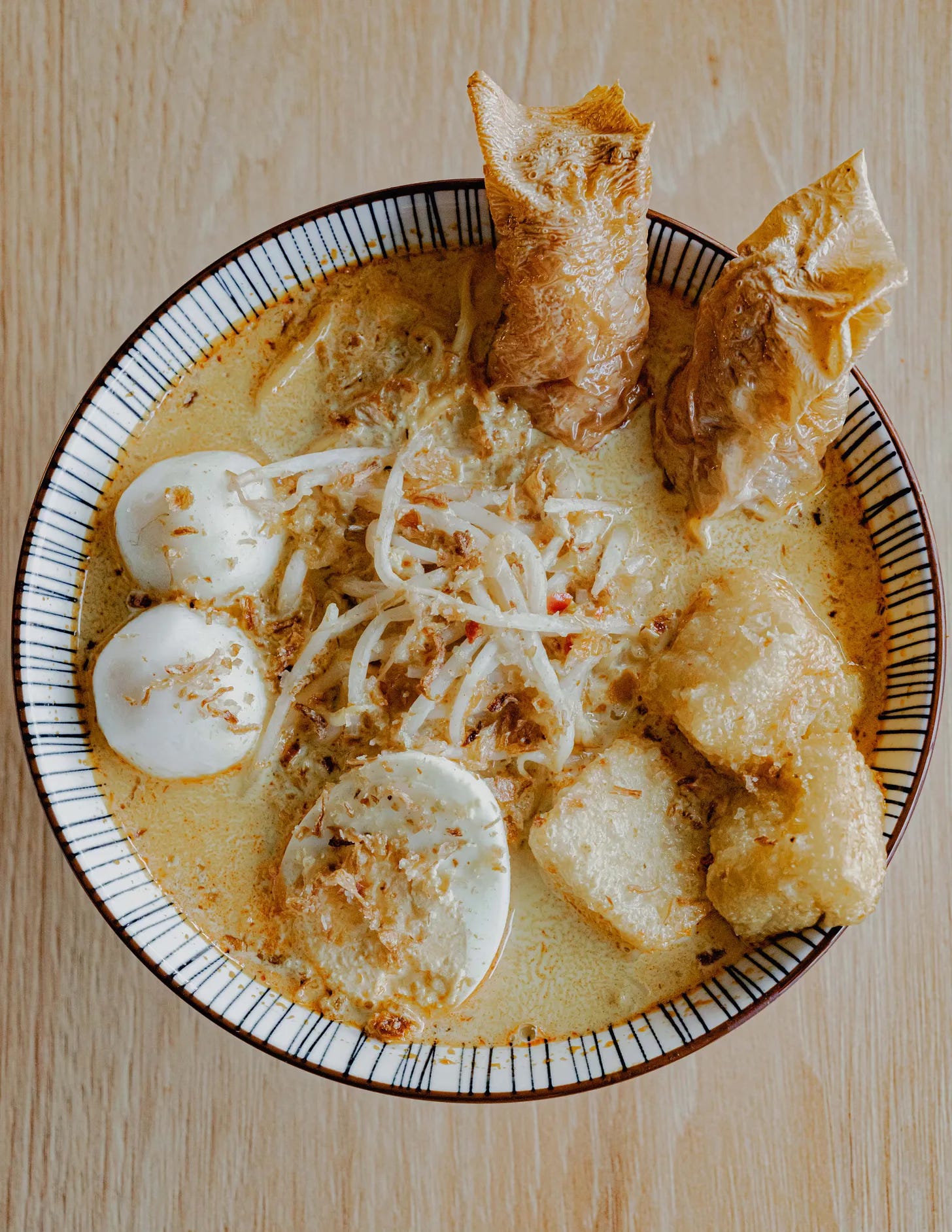
When Kelvin Chan and June Fan reopened their 14-seater cafe Little Nyonya in Sutton in 2023, almost exactly as it was in Quarry Bay 6000 miles away, they invented something new – not a diaspora restaurant, but a whole restaurant in diaspora. Little Nyonya may be the only restaurant in London operating on Hong Kong rules: a cramped kitchen putting out six dishes for around three hours a day, queues round the block, cash only. Its customers, mainly from the new Hongkonger community, aren’t looking for traditional HK comfort food but for what Little Nyonya was famous for back home: its elegant laksa, with broth the colour of virgin sand, either enriched with the marine funk from the heads of three prawns or by the QQ texture of glossy fish balls and homemade fish and pork beancurd rolls. I’ve often had the feeling eating here that, next to the gestalt of Little Nyonya’s laksa, other soup noodles are mere bowls of broth with toppings.
82A Westmead Road, Sutton SM1 4HY
94. Udaya
As East Ham’s Kerala scene spirals, offering statement short rib mandis, fish nirvanas and other hybrids with the food of the Gulf, restaurants like Prajeesh Kumar’s Udaya feel reassuringly old school. This is simple drinking food that comes in three modes – stir-fried, deep-fried or battered to an absolute crisp – designed to pair with beers in the lazy heat of a coastal city. Seafood is a particular strength here, from a crab fry that will have you scraping the shell with your teeth to get as much of the coating as possible, to a platter of devilled squid, mussels and fish that is closer in spirit to popcorn chicken than it is to the seafood platter at Bentley’s. So many of the dishes here are excuses to eat crispy onions with parotta or appam, particularly the full chicken fry, which resembles what might happen if a KFC bargain bucket, a blooming onion and a whole shelf of spices got into a fight.
105 Katherine Road, E6 1ES
93. Café Japan
The list of prestigious sushi restaurants that fish wholesaler Atariya supplies has always been its assurance of quality. But most impressive is its own restaurant in Golders Green, where short supply chains means a £48 omakase – something of a London miracle. Make sure to sit at the small wooden counter at the back and chef Shigeru Fukushima, or his deputy, will send across 14 pieces of nigiri in a half-hour businessman’s trip. British fish are prioritised here: turbot, Dover sole animated with yuzu, red mullet, barely charred to emphasise the sweetness of its ruddy skin. Tuna comes four ways: lean early on, fatty at the midway point, medium-fatty at the end and, best of all, chopped finely onto a hot crispy block of rice, so it melts like a sundae from the residual heat. In a city full of high-end omakase and Itsu branches, Café Japan is a rare win for the middle, and the one sushi restaurant I consistently want to return to.
626 Finchley Road, NW11 7RR
92. Regency Cafe
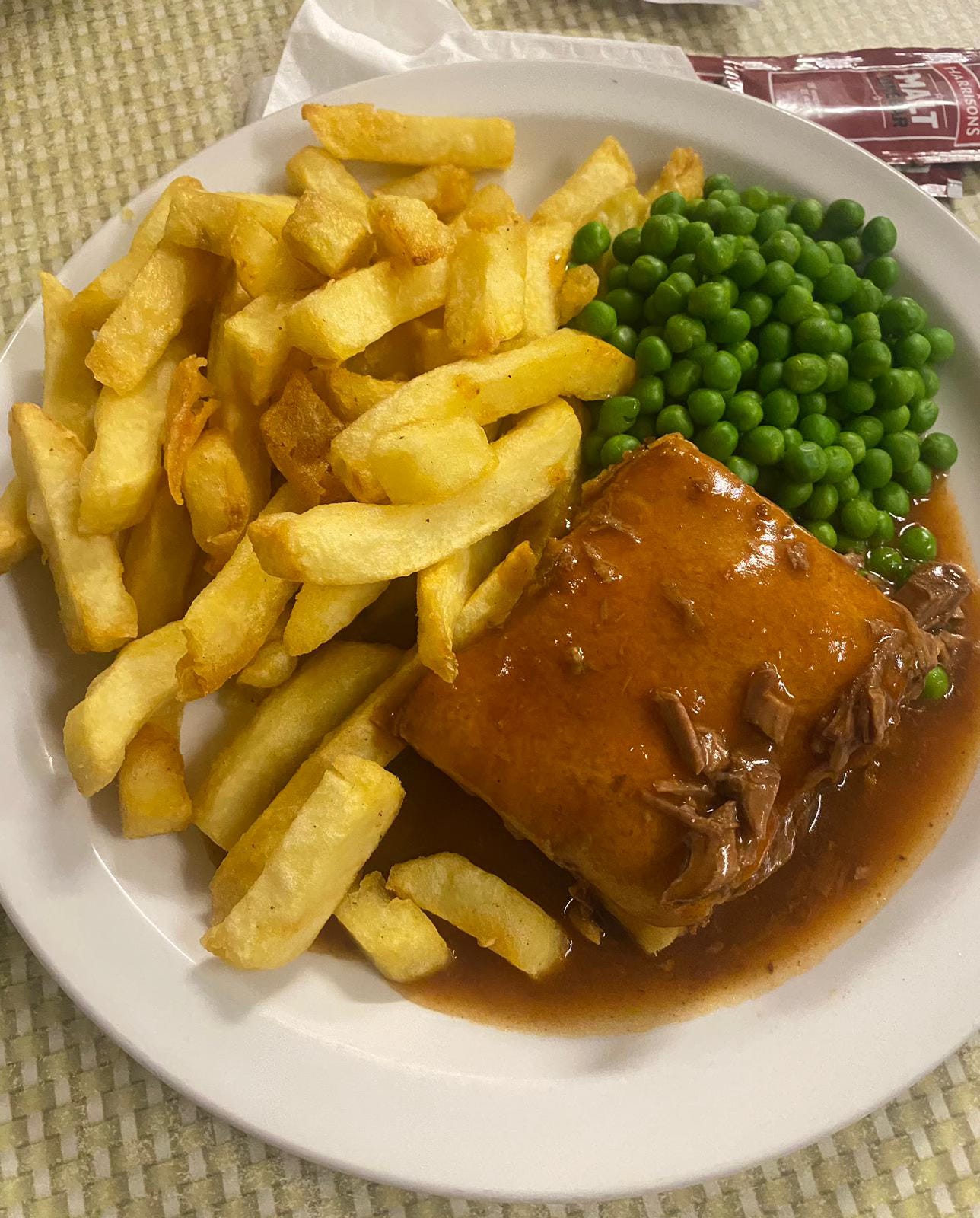
Every city needs a tourist trap that is legitimately good. New York has Katz’s, Paris has Breizh Café and London has the Regency. You’re now more likely to overhear Americans than black-cab drivers (who have decamped to the Astral, over the road), but the various cycles of Regency hype and recent change of ownership (it is now owned by the Turkish Gungor brothers) have not affected the food, which remains superb. The fry-ups are its trademark – real, fat sausages, eggs like milky glass eyes, slabs of bubble crisped up on the plancha – but what really sets the Regency apart is the care taken on the non-breakfast items. Come early afternoon, after the tourist rush, and a perfect rectilinear pie with braising steak and gravy will be your reward. Meanwhile, the bronzed chips, served with the pie, or with thin slices of cooked ham, or with the Friday fish, are as recognisable a Regency calling card as its green-and-white gingham-patterned tables.
7–19 Regency Street, SW1P 4BY
91. Toklas
Art-world-adjacent side project, Italian-ish canteen cooking, thespian diners, balcony by the Thames: it has not escaped me that Toklas is what The River Cafe might be had it not chosen to live out its life in stately isolation over in West London. This is also a testament to Amanda Sharp and Matthew Slotover (of Frieze Art Fair) for fashioning one of the great London dining rooms from a vast, resounding rectangle of concrete, as well as chef Chris Shaw who, since taking over in 2023, has pushed the food in crowd-pleasing directions. Toklas’s culinary lineage is the Cafe itself, combined with the painterly impressionism of Spring, Petersham Nurseries and Sessions Arts Club. It’s evident in the saffron orange of mussels escabeche, the butter yellow of good pasta and emulsified sauce and the seemingly endless supply of primary-coloured Todolí citrus animated from still life to uplift meat, fish and desserts. This is watercolour cuisine at its best.
1 Surrey Street, WC2R 2ND
90. Master Wei
Guirong Wei didn’t need to open Master Wei, having already mainstreamed Shaanxi cuisine at Highbury’s Xi’an Impression, but the name is a statement of intent. We know from experience (see A.Wong) that when a Chinese chef in London puts their own name on a restaurant, they’re no longer messing around. I’m not sure there is a single noodle dish in the city I love eating more than the pork biang biang with tomato and egg, an order for the indecisive that combines the caramel sweetness of the meat and its juices, the textures and acidity of tomato, a coddled cloud of egg and perfectly al dente belt noodles. And yet if there is one, it might just be Master Wei’s cool, polytextural liang pi, which is the noodle equivalent of sticking your head in an ice-cold bath. And these are just the main courses; I like to treat the (under-ordered) salt and pepper squid as dessert.
13 Cosmo Place, WC1N 3AP
89. La Barra
The calling-card of La Barra, a Colombian restaurant under the railway arches at Elephant and Castle, was given to its original owner Maria-Luisa Riascos Solis by one of her chefs: a recipe for pica pollo, the Dominican version of fried chicken. That recipe has followed La Barra through each of its iterations and ownerships, the one Dominican dish on a Colombian restaurant’s menu – a passing of the baton from one version of Latin London to a newer one. Recently, I returned to La Barra to find Maria-Luisa’s son Juan serving and the pica pollo as good as ever: five pieces of chicken with a thick jacket of batter that, in its death throes upon contact with hot oil, has twisted and spluttered into dark brown curlicues. At the weekend, you’ll find the restaurant packed to the rafters, the speakers blaring music from Cali as families share soups, bandeja paisa and excellent empanadas. Near them, inevitably, will be a table of young men tackling the biggest pica pollo available.
147 Eagle Yard Arch, Maldonado Walk, SE1 6SP
88. Chez Bruce
Food writers with a time machine only want one thing: to go back to Harveys in 1987 when Marco was sweating noradrenaline and taste the meal that launched a thousand imitators. Chez Bruce is the closest thing we have. It occupies the same space on Wandsworth Common and shares the same restaurateur in Nigel Platts-Martin, but there is something of the land that time forgot about it, with a menu reassuringly 20 years behind trends. Fay Maschler once said that Chez Bruce, for its unwavering consistency, is a more impressive restaurant than Harveys, and the dishes I want here are the ones that feel like you’re ingesting that technique-led lineage, particularly the impossibly-rich stuffed trotter (taken from Marco, who took it from Pierre Koffmann), which is usually only on the menu in February. A special shout to the cheese board, which is the dictionary definition of ‘well kept’, and the first one that has ever made me understand having cheese as a course.
2 Bellevue Road, SW17 7EG
87. Zeret Kitchen
In truth, almost any Ethiopian or Eritrean restaurant in South London would be at home on this list – we’re blessed with Rhoda, Ge’ez, Habesha, Saint Gabriel and countless more. But Zeret Kitchen on Camberwell Road is the one I keep gravitating to, partly because it’s one of the few that can attract both the art students and aunties wearing netelas, and partly because its owner Tafe Belayneh is a constant, reassuring presence, greeting you across the threshold as if you’ve entered her home. Belayneh works alchemy with lentils: her misir wot has an uncanny meaty depth of slow-cooked ragù, while the defin misir wot has the acidic butteriness of cottage cheese. The veg dishes are so strong that Zeret frequently gets mislabelled as a vegan restaurant, but the meat is equally good, particularly the spiced tartare of Belayneh’s special kitfo, or dulet – kidneys and tripe finely chopped into springy anonymity – which could win over even the most ardent offal sceptic.
216–218 Camberwell Road, SE5 0ED