Gan Chin Lin writes about how picnics are grounds for friendship and solidarity among migrant domestic workers in Singapore. Photographs by Gan Chin Lin.
Good morning, and welcome to Vittles! Today is the official publication day of Issue 2 of our print magazine! Copies have been arriving over the weekend and will hopefully reach everyone in the UK this week. If you’ve received it, please let us know what you’ve been enjoying!
You can still buy Issue 2 - titled ‘Bad Food’ - on our website here, along with prints from our favourite illustrators and photographers.
Issue 2 will also start to hit shops this week – you can find a full list of stockists around the world here. If you are a shop or restaurant and wish to stock Issue 2, then please get in touch with us, or our distributor Antenne Books at maxine@antennebooks.com or mia@antennebooks.com.
On to today’s piece: an essay by Gan Chin Lin on picnics held by migrant domestic workers or MDWs in Singapore, reflecting on the value of eating together for working class migrants across the world.
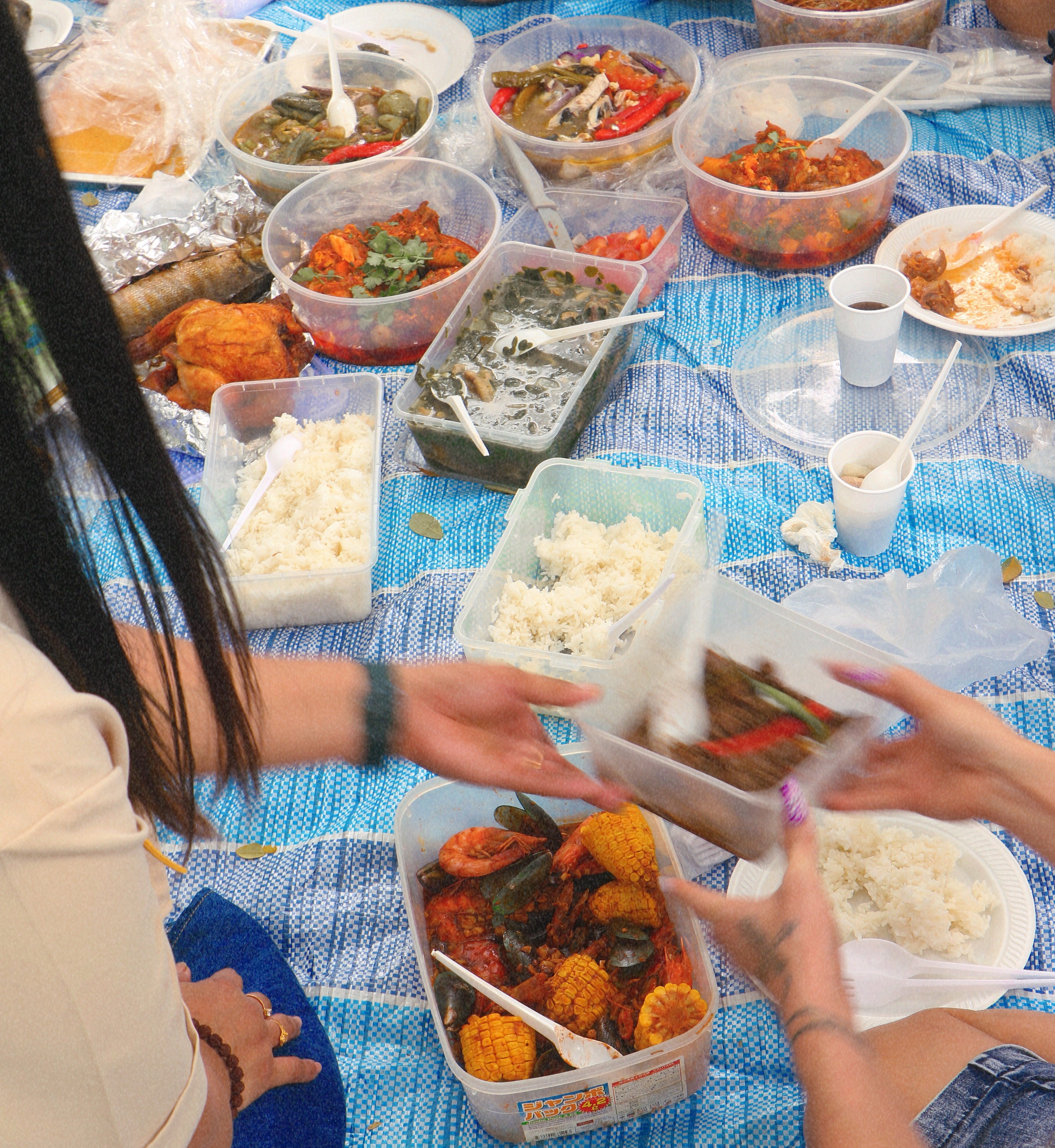
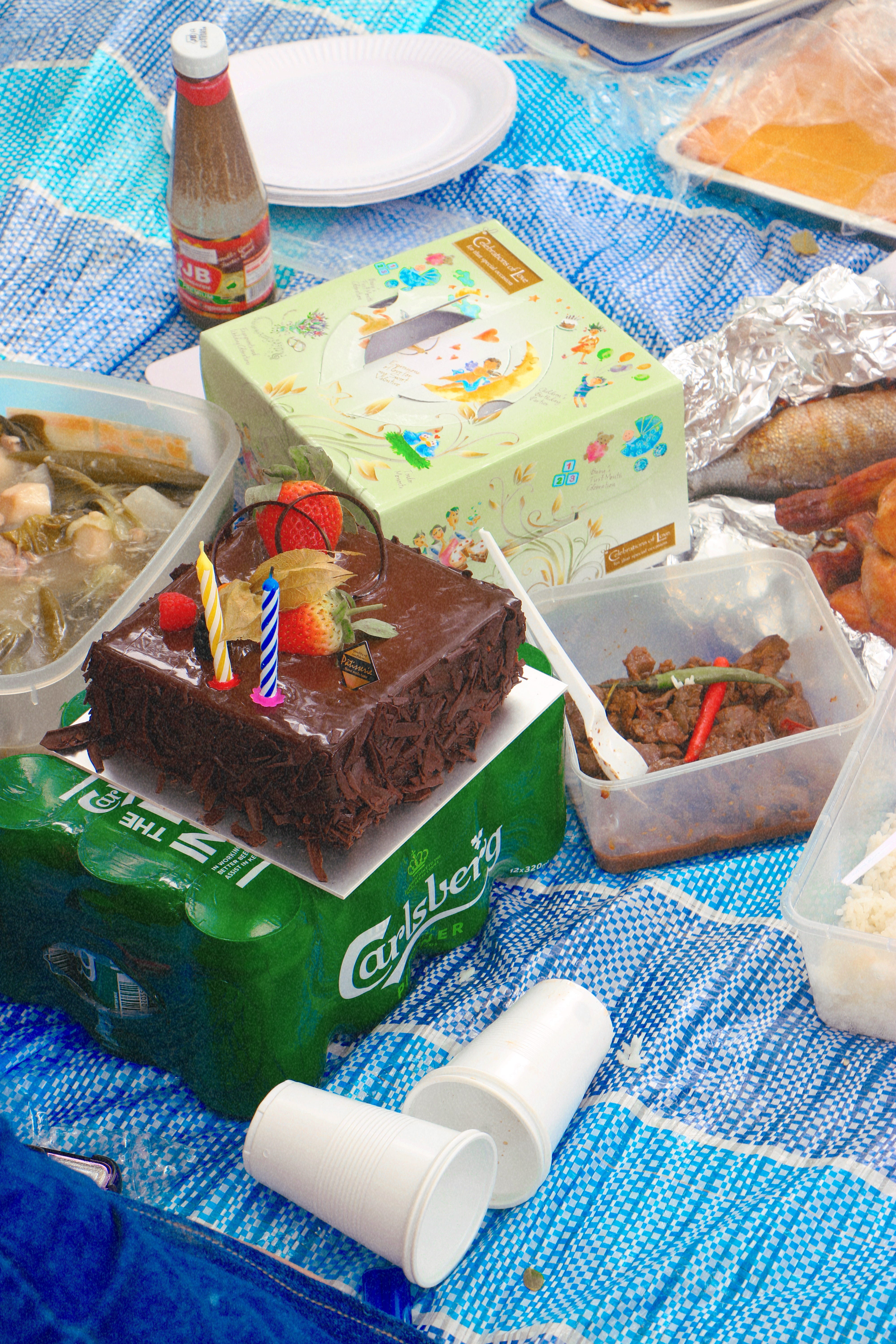
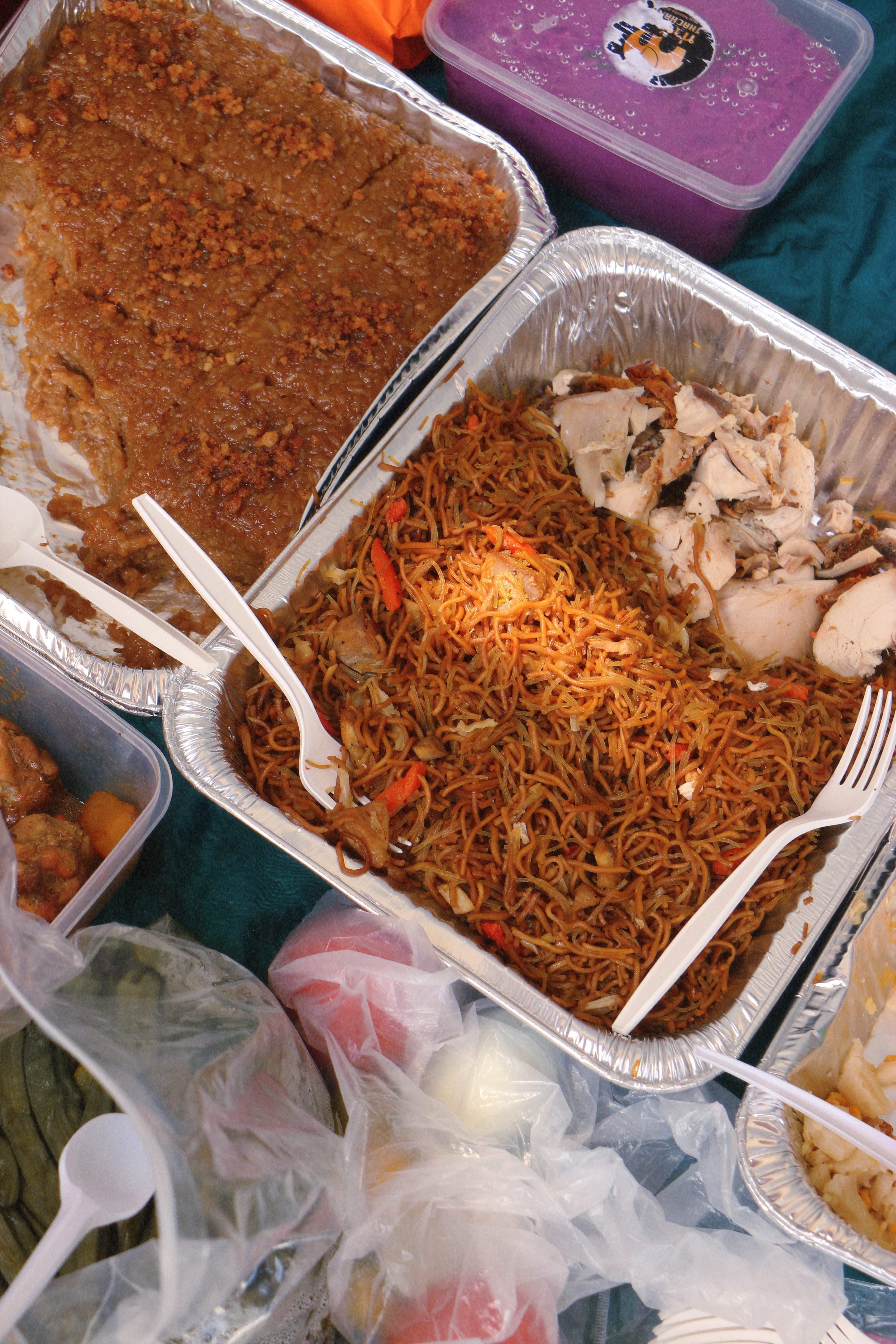
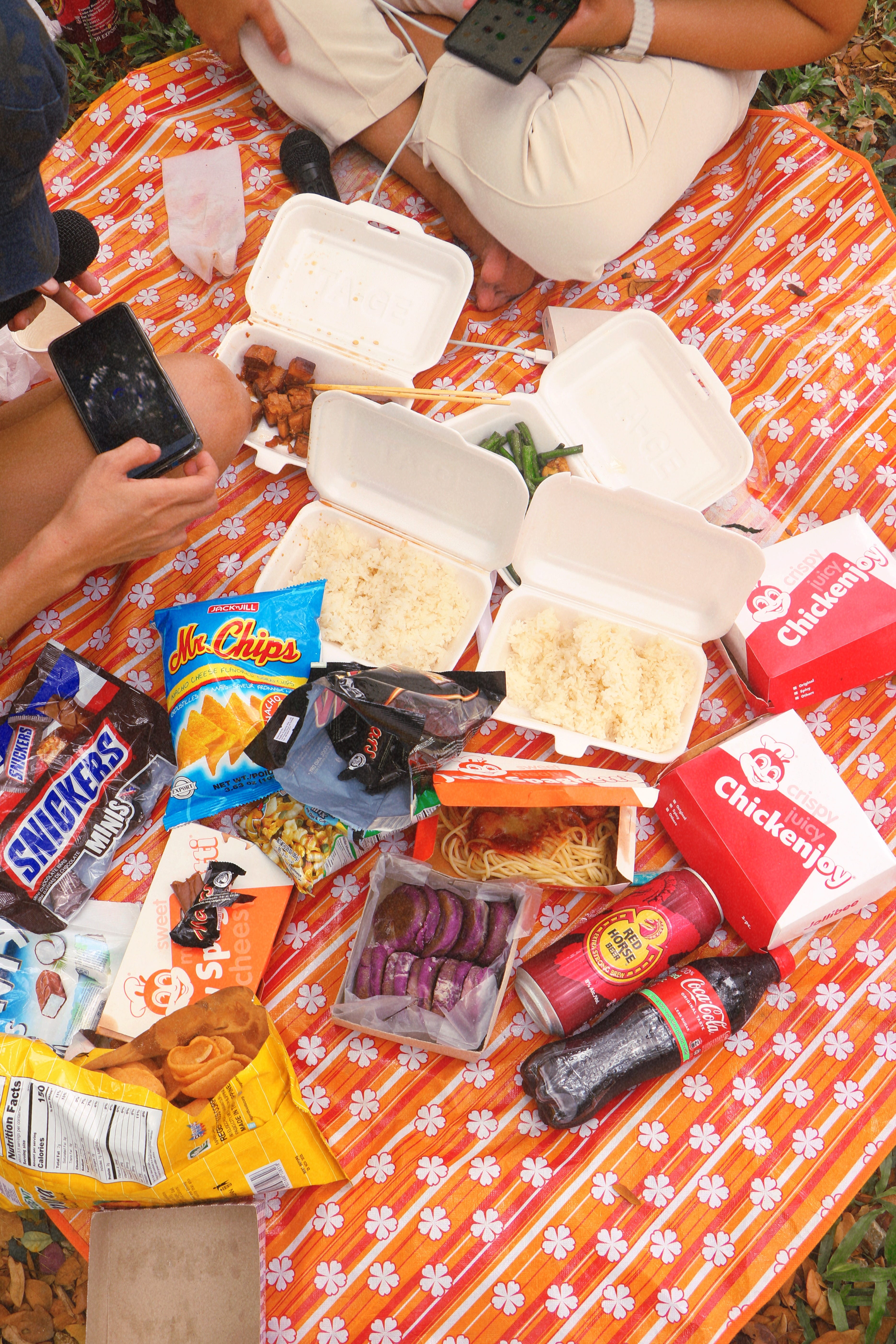
It’s a hot, windless Sunday at Dhoby Ghaut Green, a strip-sized urban park in Singapore. We are gathered at a birthday picnic: in the middle, a cake is perched on a twelve-pack of Carlsberg, sunlight dancing off chocolate mirror glaze. A ‘Happy Birthday’ techno remix throbs loudly from a wireless speaker in the background, against the pulse of budots and boombox pop from distant neighbouring parties. ‘Put here’, directs Jenny – whose birthday it is – as she leans to reposition a large plastic Tupperware filled to the brim with bicol express (Filipino pork and coconut stew). On the picnic mat, other ladies grandly arrange a prodigious spread, with lechon manok (roast chicken) and bangus (whole grilled milkfish) at its heart. There is also pinakbet, with pink shrimp bobbing amidst green beans and squash, alongside moringa-dappled ginitaang, kare-kare, and mounds of flossy pancit bihon.
‘Make a wish!’ Jenny’s friends cheer, as she brings her clasped hands to her chin: eyes closed, leaning over the cake. After she cuts it, the ladies snatch spoonfuls, ready to eat, exchanging compliments about the dishes cooked for their picnic today.
The ladies who fill this green are migrant domestic workers (MDWs), serving as live-in helpers at their employers’ homes across Singapore. Their duties, often starting at the crack of dawn and running from Monday to Saturday, include cooking, grocery shopping, laundry, cleaning, errand-running, childcare, eldercare, pet care and more. In 2013 a regulation was instated by the Singaporean government, entitling live-in domestic workers to one rest day a week. This day (typically designated as Sunday) is when the ladies convene for picnics, to eat together outdoors. However, this rest day is habitually infringed upon by agencies or employers, with many MDWs pressured into ‘no rest day’ contracts. (The power imbalance between employers and workers makes it difficult for MDWs to take warranted time off, despite the fact that in 2022, they were granted a mandatory monthly day of rest that cannot be compensated away.)
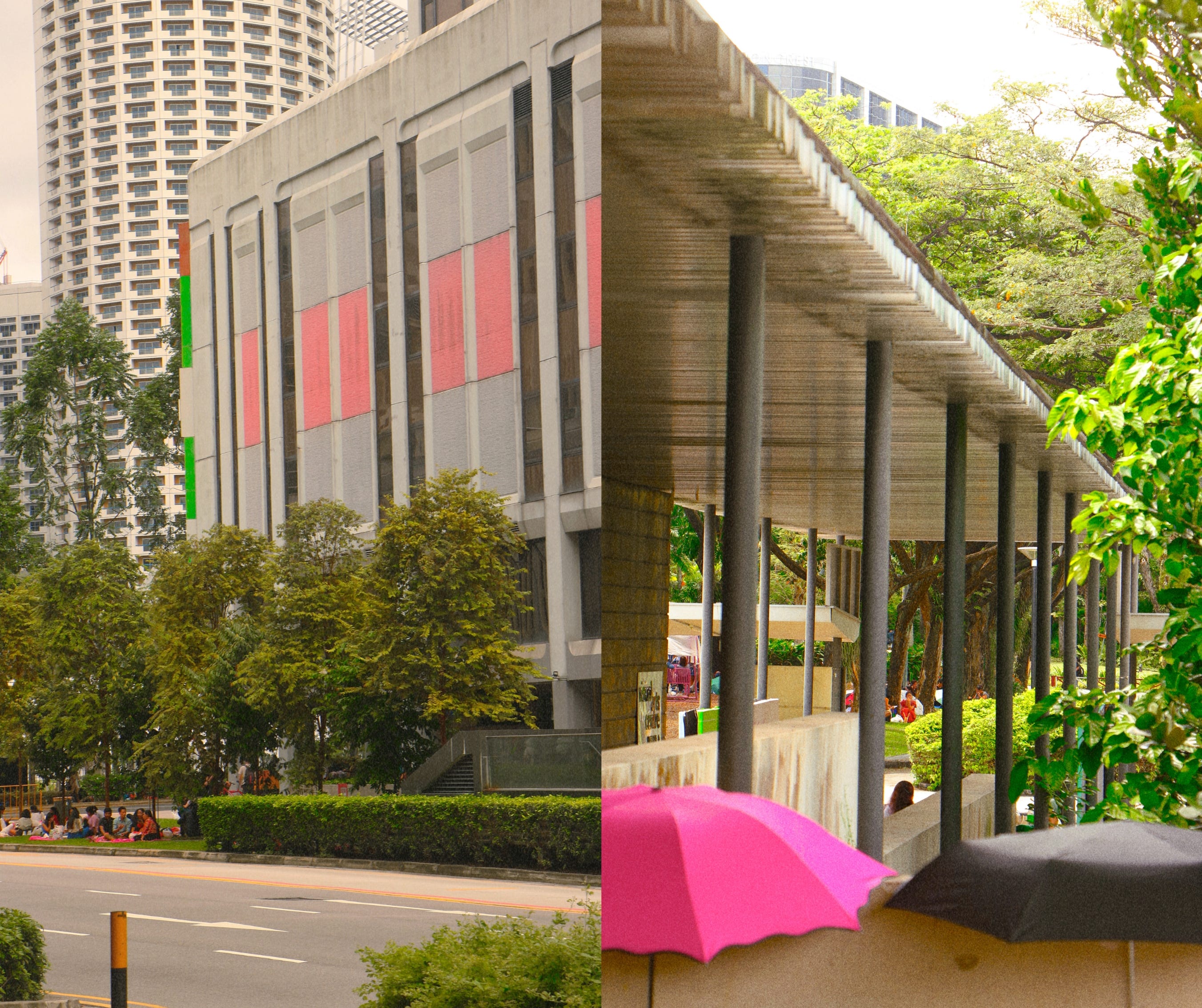
But every Sunday that they can, the ladies seek out places which are accessible and free to enter, such as Dhoby Ghaut Green. Their venues also include trees near roads and canals, for shade and soft grass, as well as pedestrian walkways and spaces beneath flyovers and highway overpasses. Often, their gatherings take place near shopping centres, like Peninsula Plaza and Lucky Plaza (community hubs for Burmese and Filipino workers respectively); or near churches, so the ladies can travel there straight after Sunday morning services.
To citizens, expats and tourists, Singapore’s Botanic Gardens and Chinese Garden are more stately locations for leisurely outdoor meals; however, the MDWs I speak to tell me that they are unwelcome at these spaces. Security staff come over and disperse their circles, claiming that their groups are too large, or that eating and drinking is not permitted in places like park pavilions. This makes public spaces like Dhoby Ghaut Green crucial – but even there, MDWs are subject them to unfettered racial and class-based discrimination. Forum letters complain about cramped sidewalks filled with workers, citing hygiene, movement difficulties and that ‘tourists in the vicinity [will] get a bad impression of Singapore’. There are accounts of citizens stopping to berate and threaten picnicking groups, kicking over their food or chasing them away. There have also been tragedies: in 2020, a car rammed into a picnicking group set up on a pavement near Lucky Plaza, killing two Filipino ladies, Ms Abigail Danao Leste and Ms Arlyn Picar Nucos.
Public spaces for picnics
To describe a gathering such as the one held for Jenny’s birthday, I instinctively turned to the word ‘picnic’, but Evelyn – a Filipino domestic worker from San Fernando, La Union, who has worked in Singapore for over twenty years – tells me that this term is seldom invoked by MDWs themselves. For a Singaporean citizen, ‘picnic’ denotes the intentional nature of dining outdoors, seeking leisure al fresco, but for MDWs, it’s less a matter of choice. ‘There are those who don’t have their own room and sleep in children’s rooms, living rooms. Some don’t even have a partition to separate [their space],’ Evelyn says. ‘So on Sundays, where is there to rest at home? Sometimes they just come to lie down on mats and sleep.’
Across Singapore, food establishments function as hubs of urban sociability. Locals often spend languid afternoons hopping between restaurants and cafes across the island. But this is not the case for all those living in Singapore. For MDWs: their pay of around US$480 (SGD$645) a month – far below the minimum wages set by their home countries – is inadequate for cafe hopping. Workers also spend the first few months of their job in a state of downward mobility, paying migration fees back to companies, friends and family – even loan-sharks. Even after that, dependents back home receive the majority of their earnings.
Also, for MDWs, days off are not entirely their own. Evelyn says that one condition of her Sundays off is that she can only cook once the [employer] family has risen, so the odours and noise do not disturb their sleep. Another condition is that she ‘must return before 9pm, so the barking of the family dog does not wake them’ (other peers have to return by 5 or 6pm sharp). Even though this is her day, her time is dependent on and controlled by the strictures of her employer’s household.
Other domestic rhythms – including, and especially eating – are also out of her control, Evelyn says. She reassures me that she is treated well by her employer: telling me that radically adjusting personal eating habits is simply part of the everyday reality for a MDW. Within the house, her employer keeps an inventorial watch over what can be cooked and eaten. For starches, they eat wholemeal pasta, or potatoes, and on rare occasion, brown rice. ‘If I eat white rice in the house, the children will say,“I also want! I also want!”’– she mimics their clamouring – ‘so I cannot.’
Ayu, another MDW who has been in Singapore for over a decade, explains that ingredients like belacan and bagoong – forms of fermented fish central to Southeast Asian cuisines – are forbidden from being used in cooking or for consumption within the space of her employer’s household. Even though fermented fish paste is widely used in canonical Singaporean dishes, the employers’ aversions to their use bely the cultural and racial hierarchies that exist within and outside domestic spaces in Singapore. The picnics, therefore, become a way to exercise the ladies’ own culinary lexicon: Evelyn tells me that the gatherings are structured as ‘meriendas’ – the Filipino term for light mid-afternoon meals, and food is prepared for a gathering intended to last a couple of hours. While ‘merienda’ is a Tagalog term, the picnicking groups contain women of all ethnicities, where the ladies bring forth flavours of home.
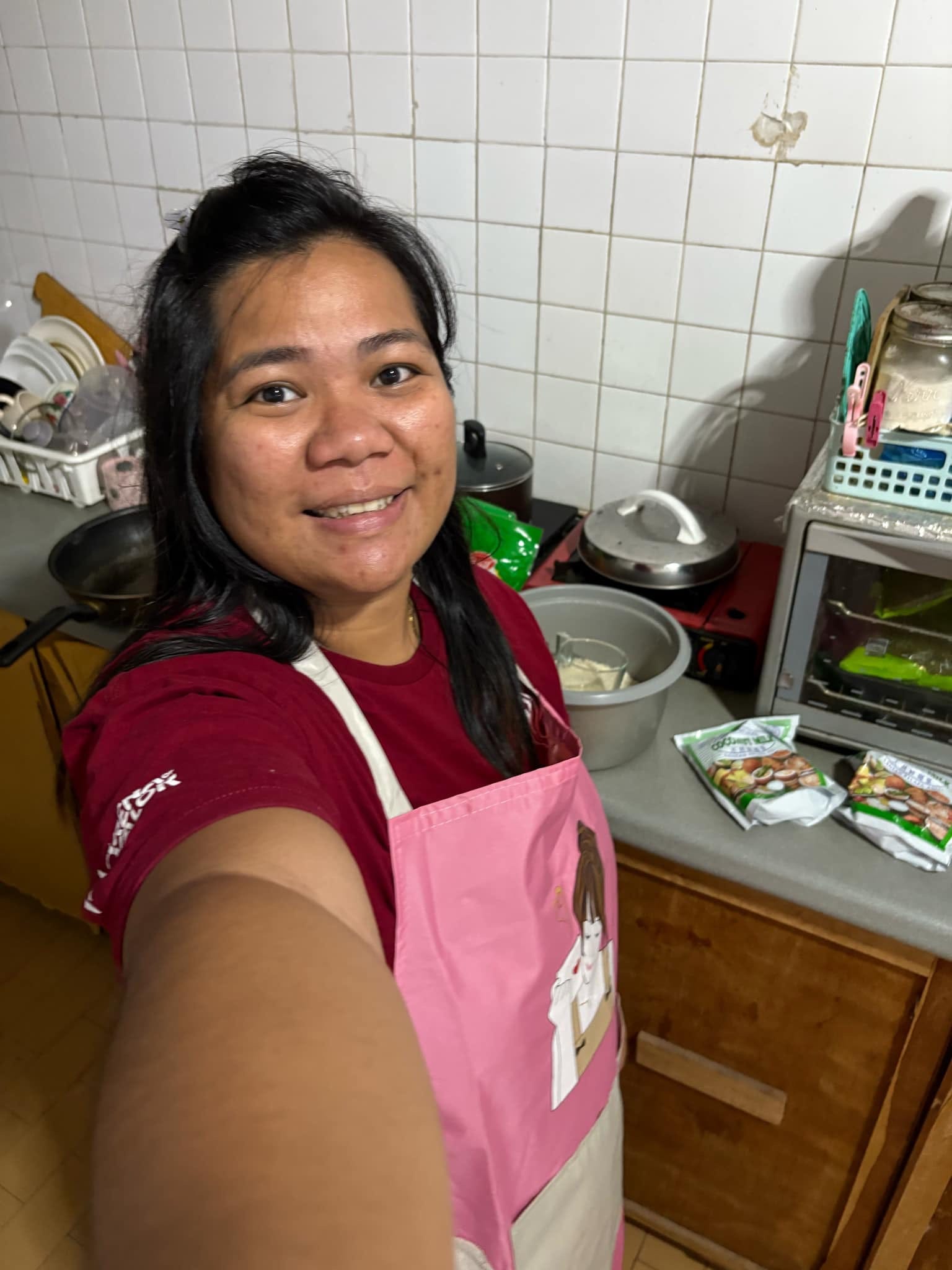
The culinary intimacy in sharing favourite dishes at gatherings also brings the ladies closer, making new friends from all kinds of different backgrounds. Jenelyn Alegonero Leyble – artist and author of 7 Years of Roar, based on her experience as a Singaporean domestic worker – tells me that she wakes up early to make her famous biko from scratch on Sundays, painstakingly frying fresh coconut milk until it caramelises into latik. ‘That’s my favourite to make and to eat, and all my friends love it, too.’
As Jenelyn and others express, the act of cooking for friends is a different flavour of work to their monied labour. They are rewarded with compliments, appreciation, and the excitement of sharing the personal memories tied to each dish (instead of fielding complaints or critique from employers). It is a process of learning about their peers, and vice versa: an exercise of the accommodation, empathy and dedication inherent in building long-term friendships.
Jenelyn cooking for her friends
Jenelyn has also learned new recipes. She tells me proudly about her trademark lemper ayam, taught to her by a friend – the distinctly Indonesian dish is one for which she’s now known. She came to love rendang, made the Minangkabau way, where meat or vegetables are slow-braised in coconut milk and spices until sumptuously tender. And, though the Indonesian ladies poke fun at their Filipino friends, who cannot take the level of heat in their traditional recipes, ‘they make it less spicy for us’, Jenelyn notes, beaming. When I talk to Evelyn, I ask about her favourite dishes to bring and eat at picnics. ‘Adobo, to bring ,’ she responds. ‘To eat? White rice’.
Currently, the Singaporean government does not set a food allowance for employers to spend on MDWs, but the Ministry of Manpower (MOM) specifies that employers must provide three free, adequate meals for domestic workers each day, appending a suggestive meal plan for a worker with ‘moderate’ activity. Somberly, Evelyn notes that despite these MOM circulars, many community members are not well fed; instead, they live off restricted quantities and varieties of food. At gatherings, she has had to encourage many to bravely initiate conversations with their employers, and to cite the ministry’s rules verbatim. But the inherent power imbalance, and the threat of repatriation, is an obstacle. ‘They’re scared of being sent home jobless, without money,’ she says.
For years, local NGO Humanitarian Organization for Migration Economics (HOME) has reported on how food is used as a tool of control by employers, where workers are restricted ‘not to the point of starvation, but are [still] not adequately nourished … leaving them constantly hungry’. This irony is grotesque. The ladies spend most of their lives feeding their employer families, learning and cooking dishes – from local cuisines and also Singaporean favourites – while at the same time, they are heavily deprived of nutrition, nourishment and pleasure for themselves.
Leong Man Wei, who helms Sayur Story – a ground-up initiative for and by MDWs – tells me that fruits hold a special place with the community. Members are frequently told by their employers that they are not ‘deserving’ of the fruits they must cut and prepare for employer families, or are mistakenly accused of eating fruit that someone has bought. Fruits are expensive, is the rationale given for this hostility. Not allowed to consume fruits they would commonly prepare and grow back at home, some members buy their ‘own’ fruits with their own money. On days off, they share these fruits, encouraging one another to have their fill.
Sayur Story understands the needs of MDWs, and also, the fullness of their desires. Man Wei collaborates with members of the migrant community to hold activities and conversations around ethnobotany, food and culture – like tours to farms and nature parks, and composting, fermentation, or cooking events. ‘It’s less about creating a new space, [more about] affirming MDWs in their sense of self within Singaporean society – reminding locals that shared spaces belong to everyone,’ Man Wei says.
In this environment, for all ladies – and especially those who live under distressing conditions – the commensal gatherings and sharing of food become a form of essential weekly aid, against the limitations of domestic strictures. At the picnics, the community pools advice for one another: like warning against borrowing from loan-sharks and navigating contractual obligations, plus how to avoid falling foul of employers in disputes. But often, they just need to talk, Evelyn says. ‘They release their feelings and burst into tears; and tell me they feel better after talking – but sometimes they don’t even take my advice!’ Only when they have eaten well, do the women feel safe and strong enough to unpack difficult topics. At these picnics, eating together is the first step to accessing other intangible and emotional forms of renewal and care.
Walter Levy, author of The Picnic: A History, notes that outdoor meals are distinct from quotidian eating because of their literal and figurative displacement, away from the mundane. For the MDWs, these picnics are sites of rest, yet actively maintained by individual and communal efforts. Repeated gatherings are enabled through ties that, as Tan Chee-Beng describes in Commensality: From Everyday Food to Feast, are ‘the highest expression of friendship’ which cultivate ‘a moral relationship of solidarity’ over time.
Residing in employers’ homes all over Singapore, it often takes over an hour for MDWs to travel to and from picnics, making for an incredibly expensive journey. Besides, off days are not always breezy, especially with the erratic monsoons and extreme heat that result from climate change. Outdoor gatherings often mean that the ladies face prolonged exposure to temperatures exceeding 30°C (36.3°C being the highest, in 2024). One day, I meet with Jenelyn and others during a monsoon surge over Singapore: incessant rain has caused flash floods, displacing entire communities in neighbouring Johor, Malaysia. The ladies shrug at the extreme weather, unconcerned: meteorological whims must be endured, against the inflexibility of one day per week. ‘Sometimes we bring a plastic sheet to hide under! Then we eat like this, under the rain’ – Jenelyn hovers her arms above her head in a Franken-pose, laughing.
One might assume that rest naturally infers stillness, but Evelyn explains that the health of the community is dependent on activity. ‘Every meeting, we will set an agenda. For example, someone who learns hand embroidery says that they want to teach it to everyone – OK! We all learn together! Or we will talk about our goals for ourselves, what we want to improve … everyone prepares to discuss.’ In groups, over meals, the ladies hold one another accountable on the progress of personal hopes and dreams. ‘The food is not the main focus,’ Evelyn points out, ‘but it is the glue that binds our meeting.’
All ladies agree unequivocally that they would appreciate clear communication from the Singaporean government about which spaces are available for them to gather, without authorities being called: better still, they would like spaces to be opened up just one day per week for them to commune. But these crucial weekly outdoor gatherings grant them access to a sense of dwelling, through deep community with one another.
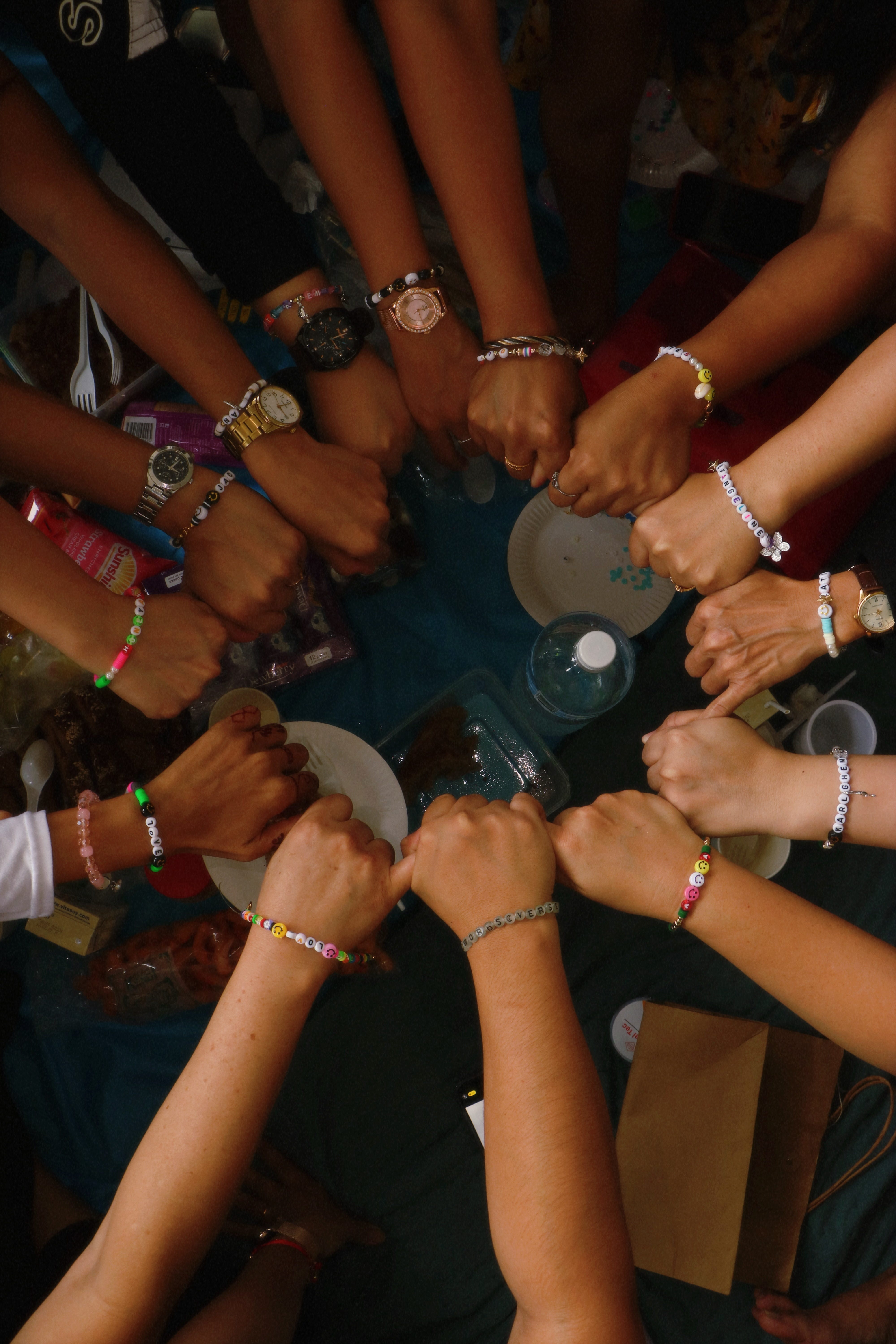
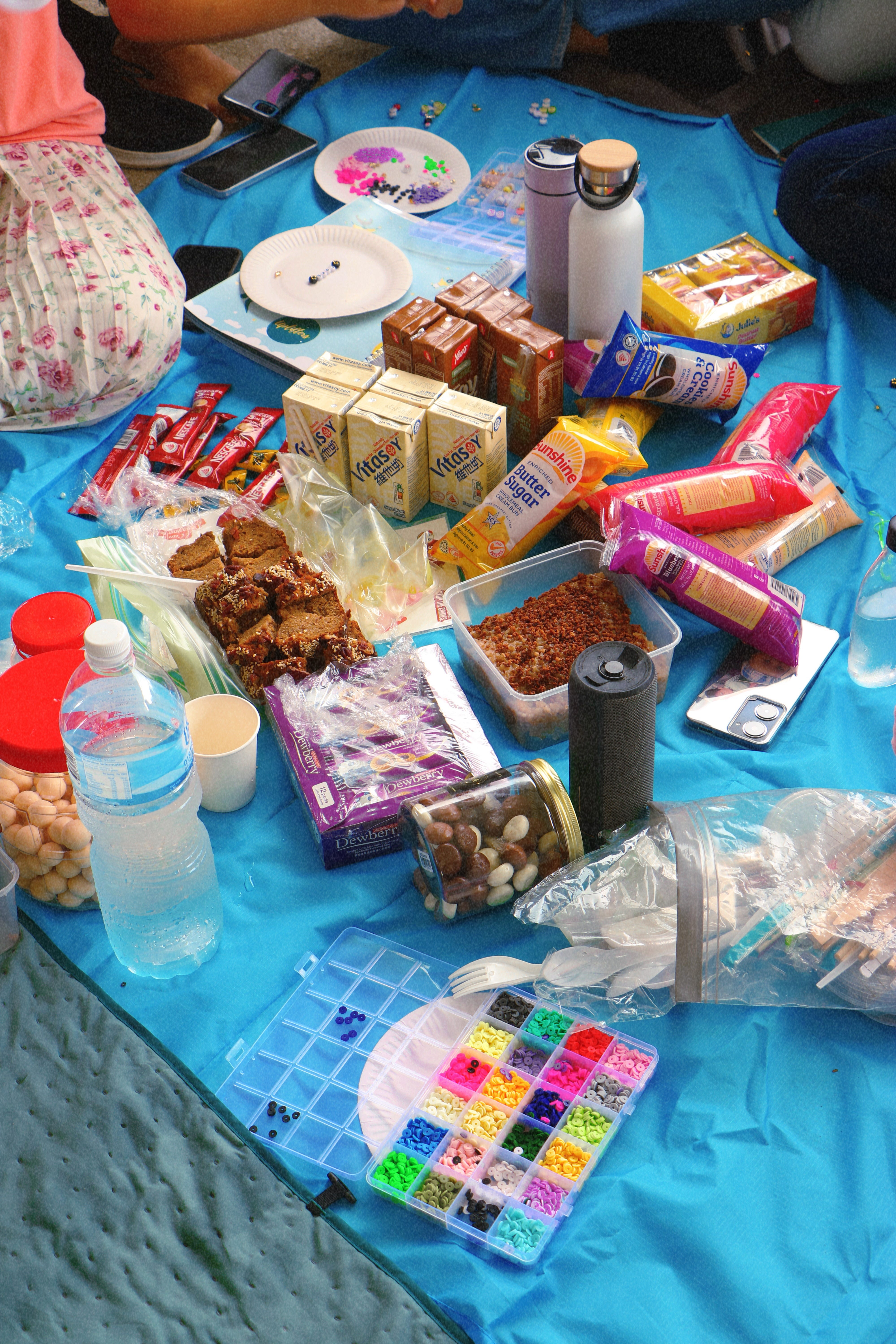
Over the course of two months, I sit with the ladies every Sunday, through rain and shine. We make friendship bracelets, celebrate their graduations from courses on financial literacy and self-betterment, share food and drink while sitting on hems of gingham, canvas, tarpaulin. Through their generosity, I experience flavours, textures and lives that are intimately connected to my own. As home cooks, we find common ground swapping recipes, the similarities revealing how our cuisines and our lives are cousins, yoked by interconnected roots.
Ayu’s favourite picnic has prevailed in her memory for ten years, since the day it was held on Pulau Ubin – an offshore island to the northeast of Singapore, accessible by ferry. The outing was special, being the rare coincidence of everyone’s day off (back then, some of Ayu’s friends were still working with a monthly rest day, instead of the current weekly convention). The ladies finally met one another in the peace of a sunny beach, away from the mainland, a solid distance from the grind of live-in labour. They carried dishes that they’d painstakingly prepared with one another in mind, such as kering tempe; and eggs in sambal. ‘We each brought something [representative of our home] … from East Java, West Java … All the different home foods’.
Ayu enthusiastically recalls each dish eaten together, every one an emissary for their villages, a jigsaw of home away from home. She smiles at the recollection, eyes flickering shut. ‘I remember each one till this day.’
Editor’s Note: ‘Ladies’ is the suggested term set by the MDW community, for locals to refer to them beyond their status as ‘migrant workers’ or ‘helpers’. This word is used in a different way than it is in Britain.
Credits
Gan Chin Lin is a Singaporean writer and recipe developer. She writes about domestic labour, alternative baking and Singaporean heritage foods through a regenerative lens. Her work focuses on the organic, ongoing conversation between heritage, nature, and navigating food futures. You can find her on Instagram at @tumblinbumblincrumblincookie.
Growing up in Hong Kong, we had similar sights in Central every Sunday - especially around Statue Square, and in the ramped and sheltered entrances into the MTR station; not far from St Joseph's Church and the Catholic cathedral. Even if she didn't take part (she was never a domestic worker), I think my mum enjoyed taking us around Central on the occasional Sunday just to hear the babble of various Filipino languages and the smells of the different foods of home. Even if she wasn't of the same socioeconomic status, there was a bit of solidarity with fellow Filipinos, especially when it came to the disdain some showed for them.
This is fascinating, and so sad. I lived in Singapore in the 70’s, naval wife, and I loved Singapore. I would love to visit again. I imagine it has changed beyond recognition. I was extremely fond of my amah, Hup, and I had friends in the boat boys at the Red House yacht club, I used to eat with them in their canteen. Disapproved of by other members, but I did my own thing. Thank you for this article.


Growing up in Hong Kong, we had similar sights in Central every Sunday - especially around Statue Square, and in the ramped and sheltered entrances into the MTR station; not far from St Joseph's Church and the Catholic cathedral. Even if she didn't take part (she was never a domestic worker), I think my mum enjoyed taking us around Central on the occasional Sunday just to hear the babble of various Filipino languages and the smells of the different foods of home. Even if she wasn't of the same socioeconomic status, there was a bit of solidarity with fellow Filipinos, especially when it came to the disdain some showed for them.
This is fascinating, and so sad. I lived in Singapore in the 70’s, naval wife, and I loved Singapore. I would love to visit again. I imagine it has changed beyond recognition. I was extremely fond of my amah, Hup, and I had friends in the boat boys at the Red House yacht club, I used to eat with them in their canteen. Disapproved of by other members, but I did my own thing. Thank you for this article.