

At Brixton Plaza, evictions threaten one of London’s most diverse food markets
Eight food traders have been given one month’s notice to leave - and more evictions may follow. Reporting by Vitória Croda.

Good morning and welcome to Vittles! In today’s essay, Vitória Croda reports from Brixton, where food and drink traders are being evicted from Brixton Plaza – a mini-mall of immigrant-run food businesses covered previously on Vittles. Potentially more evictions are on their way too.
Today’s article is not paywalled, but to report on situations like Brixton Plaza we rely solely on reader subscriptions. To support our work, please consider a subscription to Vittles for £7/month or £59/year, which gives you access to the last six years of the newsletter, including our restaurant coverage.
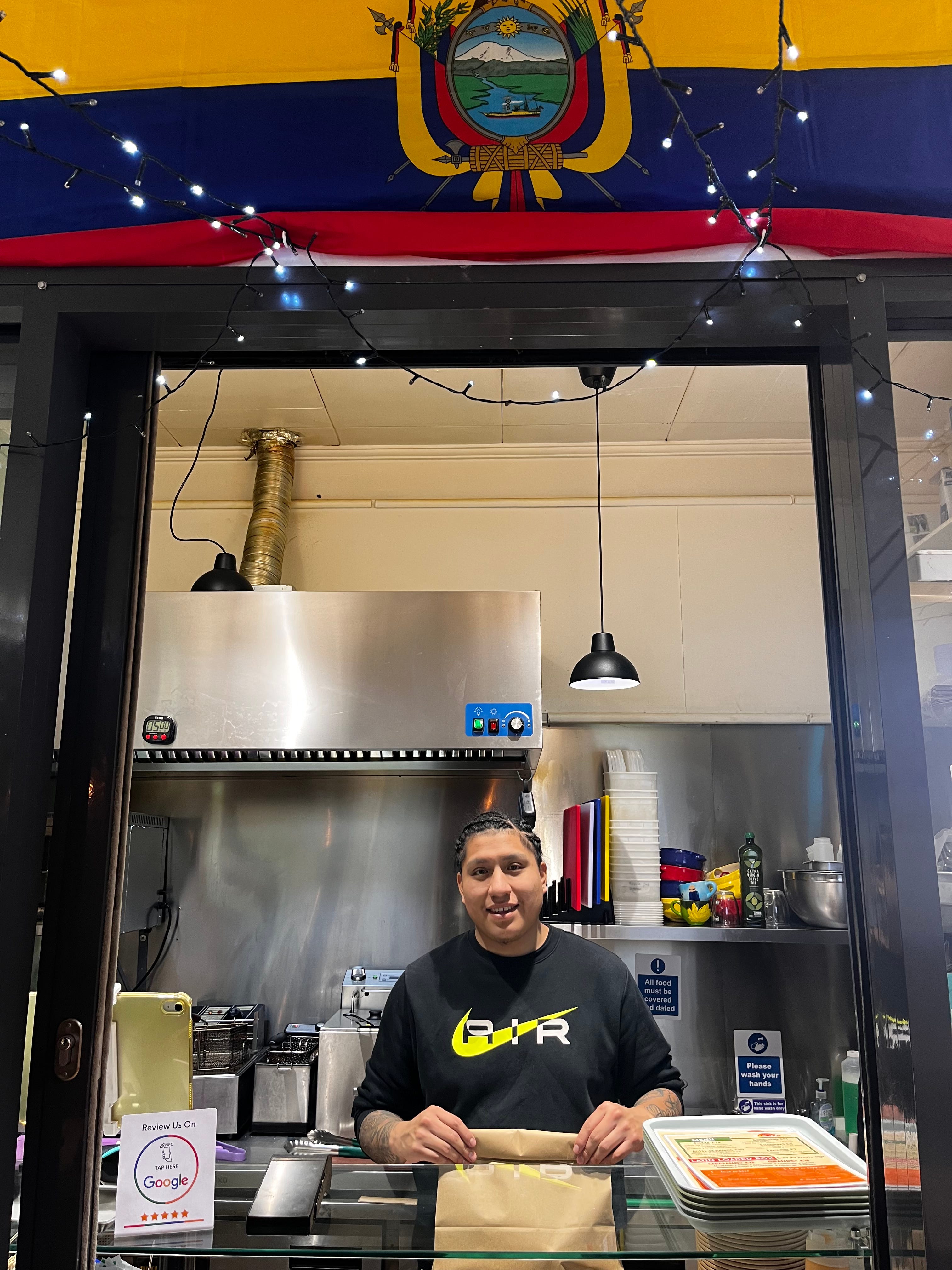
On 1 March, Kevin Agila received a phone call from the manager of Brixton Plaza, who asked him to withhold the upcoming month’s rent. Agila is the owner of the Ecuadorian restaurant Kasama, which opened less than a year ago and is one of eight small food retailers that operate in Brixton Plaza – a mini-mall inside a Grade-II-listed building on Brixton Road that also hosts Brixton Mall and SW9 Plaza. The retailers serve everything from Ethiopian and Chinese food to cuisines you would be hard-pressed to find anywhere else in the city.
Agila found the request to withhold rent strange, but the manager assured him it was just part of a regular procedure the landlord does every once in a while. A couple of days later, he received an eviction notice, telling him that he would have to leave by 7 April. He would have roughly a month to pack his stuff and find another location for Kasama.
Then all the other traders in Brixton Plaza received similar phone calls, including Cathe Figueiredo, who runs the Brazilian restaurant Delicathe Gourmet with her brother, Dery. Delicathe, which, as I wrote for Vittles last year, specialises in Afro-Brazilian dishes from the northeastern state of Bahia, and opened around the same time as Kasama. It was going well, thriving even, with regular customers every single day. Figueiredo had another reason to be happy: she was five-months pregnant with her first child, a little girl. The same week she got the news that Delicathe would need to move, she sadly lost her daughter too. ‘I honestly think it was due to the stress I felt,’ she tells me. Even though she was hospitalised, she kept receiving phone calls from the management company of Brixton Plaza, demanding that she pack up Delicathe as soon as possible. (The restaurant remains closed until Figueiredo is physically recovered from her loss.)
While Brixton Plaza’s traders were the first to get evicted, publicly available planning documents (note: you’ll need to search for the reference number 25/02874/FUL) show that the entire building – currently a heterogeneous mixture of small businesses, clothing retailers, barber shops and independent restaurants – has been approved for internal demolition by Lambeth Council. It will be replaced by an Aldi, according to the Brixton Plaza manager, although the documents make no mention of this. The future of traders in Brixton Mall and SW9 Plaza remained uncertain when I spoke with them last Saturday (21 March), although many are now reconsidering their future in the neighbourhood altogether.
‘Poor Shopfronts’
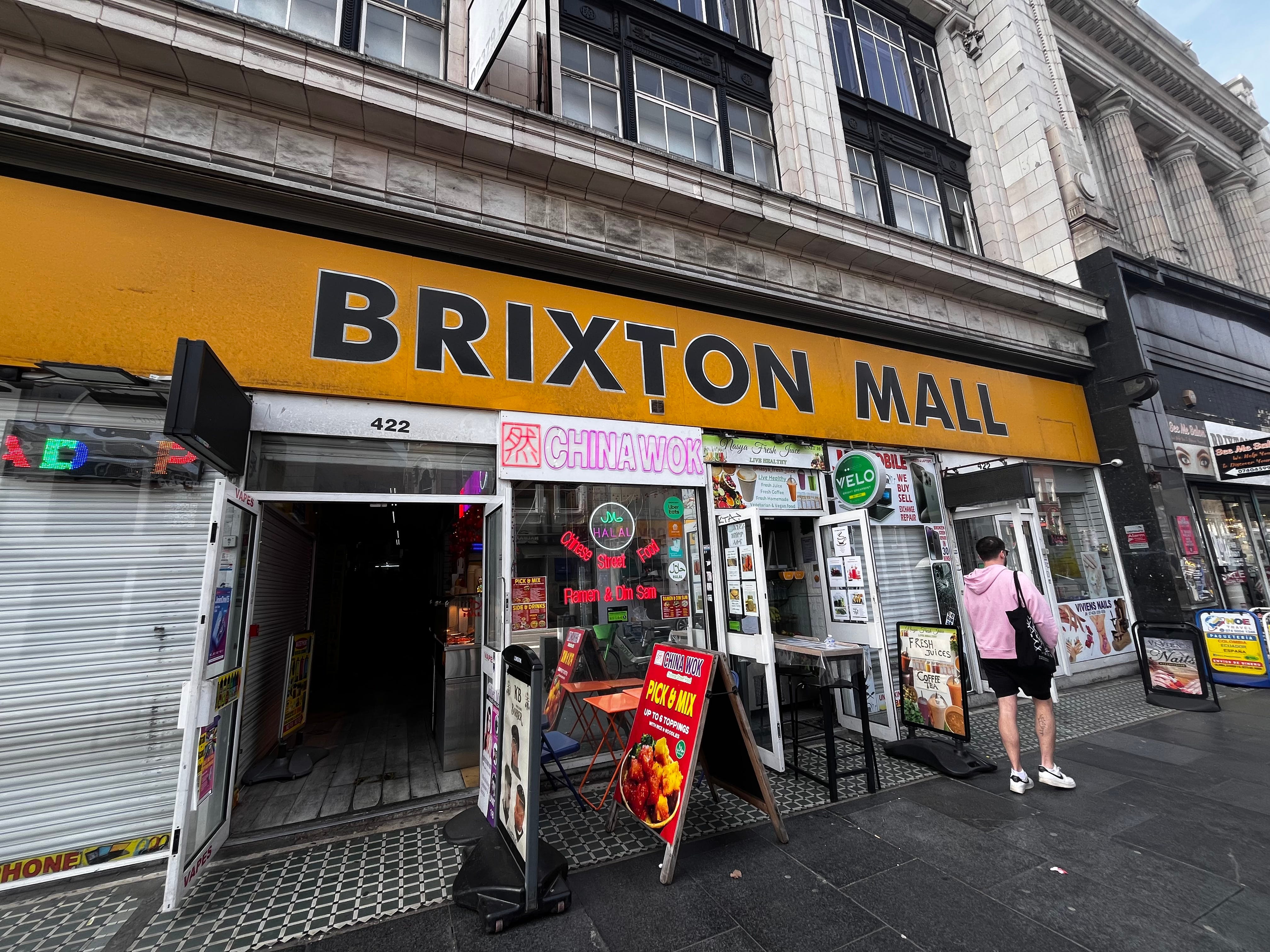
414–426 Brixton Road was originally built as a Quin & Axtens department store in 1906. The building was bombed during World War 2, but since the 1950s, it has been refurbished, listed and subdivided into units of mixed use (most notably, it was a Mothercare, until it closed in 2018). The building was quickly rebranded with temporary signage as Brixton Mall and Brixton Plaza (and, later, SW9 Plaza). These spaces are used interchangeably and have the same owner: Governside Limited, an offshore company registered in the Isle of Man, which has owned the freehold for the building and leasehold for the ground floors since 1999. The complex has been referenced in planning documents as having a ‘neglected and shabby’ appearance and accused of having ‘poor quality shop-fronts’ that ‘detract from the quality and significance’ of the area. The heritage report attached to the application registered with Lambeth Council says the new development could enhance the area and make it a ‘more attractive tourist destination’ for those coming to O2 Academy events.
However, once you step into the building, it is clear that the place is far more interesting than these documents claim. From young professionals queuing to buy shawarma at Forno, to entire families having a weekend lunch at Estación 504, the building is widely used by Brixton’s many communities. Its narrow corridors have been the testing ground for some landmark London restaurants: in 2022 it housed Burrito Cocktail, the first place to sell Honduran dishes in London; in 2024, the space now taken up by Delicathe was Pura Vida, London’s first Costa Rican restaurant, which has since relocated to Bounds Green. It is a spontaneous version of many purpose-built indoor markets around London, including elsewhere in Brixton. It is also the epitome of the diversity and bustling neighbourhood that estate agents brag about in their Brixton area guides.
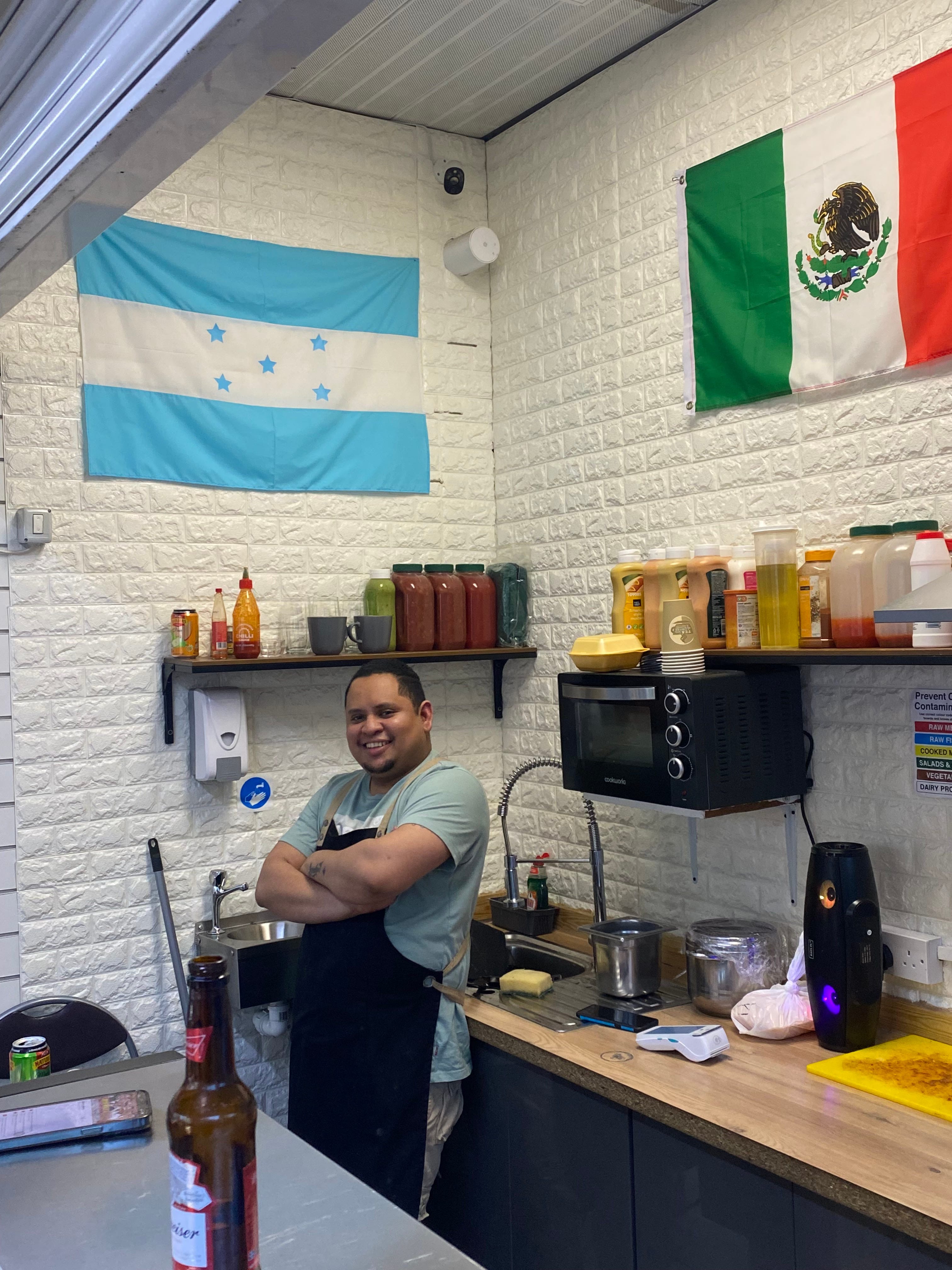
Nara Araújo, who is from Brazil and moved King Churros to SW9 Plaza a year ago, tells me how diverse her customers are. On the day I first interviewed her, many of them were heading to see The Vaccines at the O2 Academy Brixton, but there are many locals too – ‘especially women and the LGBT community, they have become my sweeties’. Inside Brixton Mall, Honduran restaurant Estación 504 offers traditional chincharrón con yuca and pollo con tajadas alongside daily soup specials for lunch (for no more than £7.50, you can get a beef shank soup with slow-cooked vegetables, also known as sopa de res). The restaurant’s customers have become part of a wider ecosystem that props up the Mall: before eating at Estación 504, they might also stop in at Vivien’s, the manicurist next door, then ship a package at Paquetería, where Jenny offers shipping services.


Mixed Communications
Like in Elephant and Castle last year, when multiple traders were evicted at short notice over non-payment of electricity bills, the traders at Brixton Plaza have little to no recourse for legal action. When they moved into the complex, they signed precarious fixed-term contracts with the management company that allow only one month’s notice to be given in case of eviction. But what has been most disappointing to the traders is how poorly communicated the regeneration has been to them. None of the traders at Brixton Plaza, Brixton Mall and SW9 Plaza have direct contact or contract with the landlord, Governside; instead all communication goes through the manager, Solomon Berhe, who is himself a tenant and who refuses to disclose information about the landlord.
Looking into the landlord, Governside, things get interesting (and a little complicated, so please bear with me). One of the listed ‘beneficial owners’ (ie a person who directly or indirectly ultimately owns or controls a corporate entity) of Governside is Mushtak Ibrahim. Ibrahim’s listed address is also the registered address for companies named Crown Insurance Services, which has a ‘Mustak Ibrahim’ as a director), Crown Properties and Yashmin Properties Limited. All three of these companies list Yaumna Sattar Mahomed as a beneficial owner. Among Yashmin Properties’ former officers, two – Mohammad Hassan and Haroon Abdul Aziz – have links to Golfrate, the company set up by property developer Asif Aziz. Asif Aziz is no longer involved in Golfrate, but via his other company, Criterion Capital, he has been linked with a slew of other evictions across London (which have recently been reported on extensively by London Centric).

We’re unable to say definitively that the Brixton Plaza landlord Governside is directly linked to either Golfrate or Asif Aziz, but the connection is strong enough that when Brixton Plaza opened, some residents believed that Crown Properties and Golfrate owned the building. Irrespective of whether the companies are linked, the evictions in Brixton involve a level of confusion similar to that seen with Criterion’s evictions.
Even though the planning application has been approved for the entire building, traders from the Mall and SW9 Plaza have been receiving mixed information from Berhe, who told them that Brixton Plaza is the only one being refurbished. (I reached out to Berhe for comment, who told me as a fellow tenant he ‘has no idea what they [the landlord] are going to do’.) ‘They told me that I would probably have more years here,’ Araújo says. ‘I just wish we could have been better informed. We haven’t been told anything.’
Some traders have told me they invested significant amounts of money in their businesses only to have the rug unexpectedly pulled from under them. James Vasco, who owns a small barber shop inside Brixton Plaza, moved his business to the premises just a month ago, and is feeling particularly frustrated after receiving his eviction notice. ‘We’re all small businesses. Something like this can destroy people,’ Vasco tells me. Vasco claims that Berhe told him he didn’t know about the demolition plans. ‘But how could they not know? Of course they knew.’
At Brixton Plaza, rumours were going around late last year about contracts potentially ending, but these rumours were quickly denied by management, who reassured traders that their businesses were safe. However, Lambeth recorded the proposal to redevelop the building in its database in September 2025. Until earlier this week, some vacant shopfronts in Brixton Mall still displayed ‘to let’ signs with a contact number. When I rang the number last Monday (16 March) and inquired about renting the space, the manager told me that it was promptly available at a monthly price of £2,500, with a contract that could be renewed every six months.
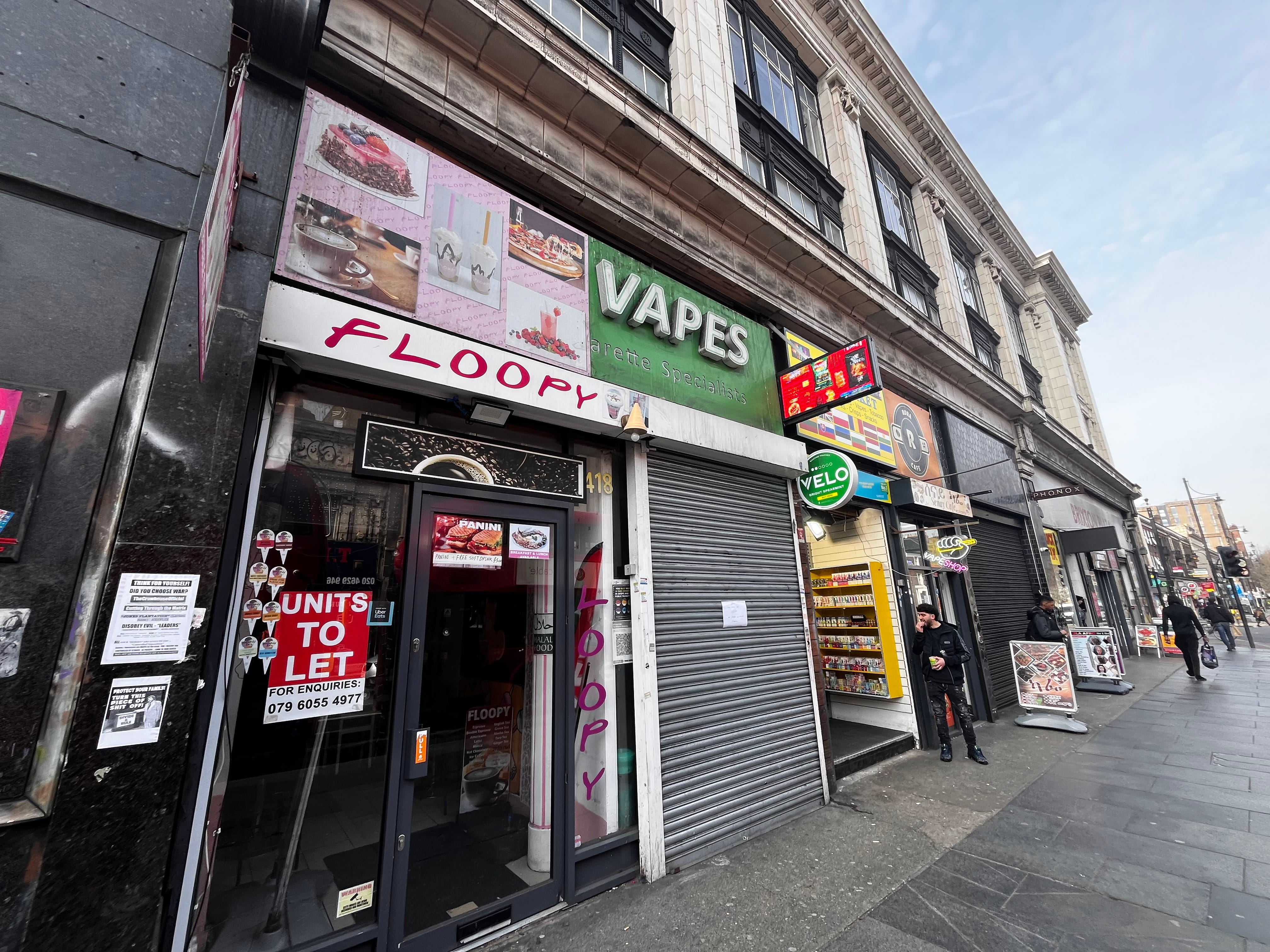
While many traders from Brixton Plaza are struggling to find other sites at short notice, proper communication could help those in Brixton Mall and SW9 Plaza to save money to move their businesses. As Brixton’s commercial rents continue to rise, many are still uncertain about their future in the neighbourhood. Araújo wants to stay in Brixton, as it’s where most of her clientele is. Jenny would like to be a part of the diverse ecosystem that the other Latin American businesses brought to her Paquetería, but is afraid that this might not be possible. Figueiredo has had to pause her search, which puts her at greater financial risk.
Agila, meanwhile, has found another place to rent for Kasama, though not in Brixton, where he was born and grew up. Kasama blends his Ecuadorian roots with British food culture. His alitas, chicken wings coated in sweet and slightly spicy passionfruit sauce, combine the street food of both of his heritages and are one of the restaurant’s most ordered meals. His menu’s success is reflected by the wide range of customers – a mix of Latin American diaspora and people trying Ecuadorian-inspired food for the first time.
Agila acknowledges some improvements in the area from his teenage years, but he tells me that advances shouldn’t displace locals. He emphasises how important small businesses are to the area; how chains like Leon and Costa tend to close in Brixton while its residents seek the sense of community that places like those in Brixton Plaza can offer. But the ongoing gentrification of Brixton puts this ecosystem at the risk of becoming homogenised. ‘People forget that the main reason people come to Brixton is the community, the small independent businesses,’ Agila tells me from behind his counter. ‘They don’t want to come here to eat at a big company. For that, they can go anywhere else in London.’
Vitória Croda is a journalist and immigrant from Brazil. She’s been in London for five years, and is currently doing her PhD at Loughborough University.
The full Vittles masthead can be found here.
100% why would we need an aldi in brixton, there's two sainsburys, a new shitty tesco (where the costa used to be), the M&S (recently refurbished, has been in brixton since 1920), the big tesco, the small tesco in the petrol station, iceland, and the amazing market and a bunch of other small independent shops. Also lidl is very close in stockwell.
Thank you for drawing attention to this. Is there a campaign or petition we can get involved with?