

Bad People, Bad Food, Bad Place.
Heather Parry writes about how Jamie Oliverism affected her hometown two decades after the ‘battle of Rawmarsh’.
Good morning, and welcome to Vittles! Today’s newsletter by Heather Parry looks back twenty years to the media panic in Rotherham which followed Jamie’s School Dinners. This is the fourth online-only dispatch from the Bad Food Extended Universe, which is the theme of Issue 2 of our print magazine. You can order a copy here.
We are also delighted to announce that we are partnering with the SOAS Food Studies Centre to run an essay competition this year exclusively for alumni of the Centre’s MA Anthropology of Food, to help bridge the gap between academic and popular writing on food. You can read more about it here. On 11 April, there will also be a day event on food writing which is open to all members of the public – you can sign up for the event here.
In the early 2000s, your options for contextualising Rotherham on a national scale were limited: the Chuckle Brothers, David Seaman, William Hague. Self Esteem had not yet formed Slow Club. The Arctic Monkeys had not yet immortalised the town’s name on Fake Tales of San Francisco, as the real birthplace of a grifting liar. Back then, Rotherham felt like a place isolated from the progress that seemed to be happening elsewhere, stuck in the tidal drag of slow decline.
In Rawmarsh, the Rotherham-adjacent village where I grew up, food choices still tended towards the traditional, both at home and in the school canteen: meats, boiled vegetables, big strong puddings. The arrival of a few Chinese takeaways doing chow mein with ‘gravy’ (a capitulation to the local dialect rather than an accurate descriptor) had done little to diversify the general landscape of food outlets, which focussed on excellent fish and chips, decent roast dinners and pub lunches that revolved around pies. However, by the end of 2006 – when the immovable object of Rotherham met the unstoppable force of Jamie Oliver – everyone in the country knew about my hometown and its food.
In 2005, Channel 4 launched Jamie’s School Dinners, a show in which the celebrity chef attempted to move a London high school’s lunchtime offerings away from processed food and towards something ‘healthier’. The show instigated a national conversation, highlighting the impact that a lack of nutritionally dense meals could have on students’ learning, alongside the shamefully low cost of school dinners (data at the time showed that Rotherham spent less per child on primary school meals than any other local authority in the country, with just 37p spent on ingredients for a school lunch charged at £1.50 per head.) Following Oliver’s lead, the British government announced £280 million of spending to tackle the school meals issue in England just two weeks after the programme ended. The next year, they introduced a piece of legislation called ‘The Education (Nutritional Standards for School Lunches) (England) Regulations’. This stated that secondary schools had to offer red meat three times a week, fish twice a week, and fried foods no more than two days a week. Banned altogether were firm favourites of the British teenage diet: burgers, chips, crisps and ‘fizzy pop’, plus chocolate bars and cereal bars.
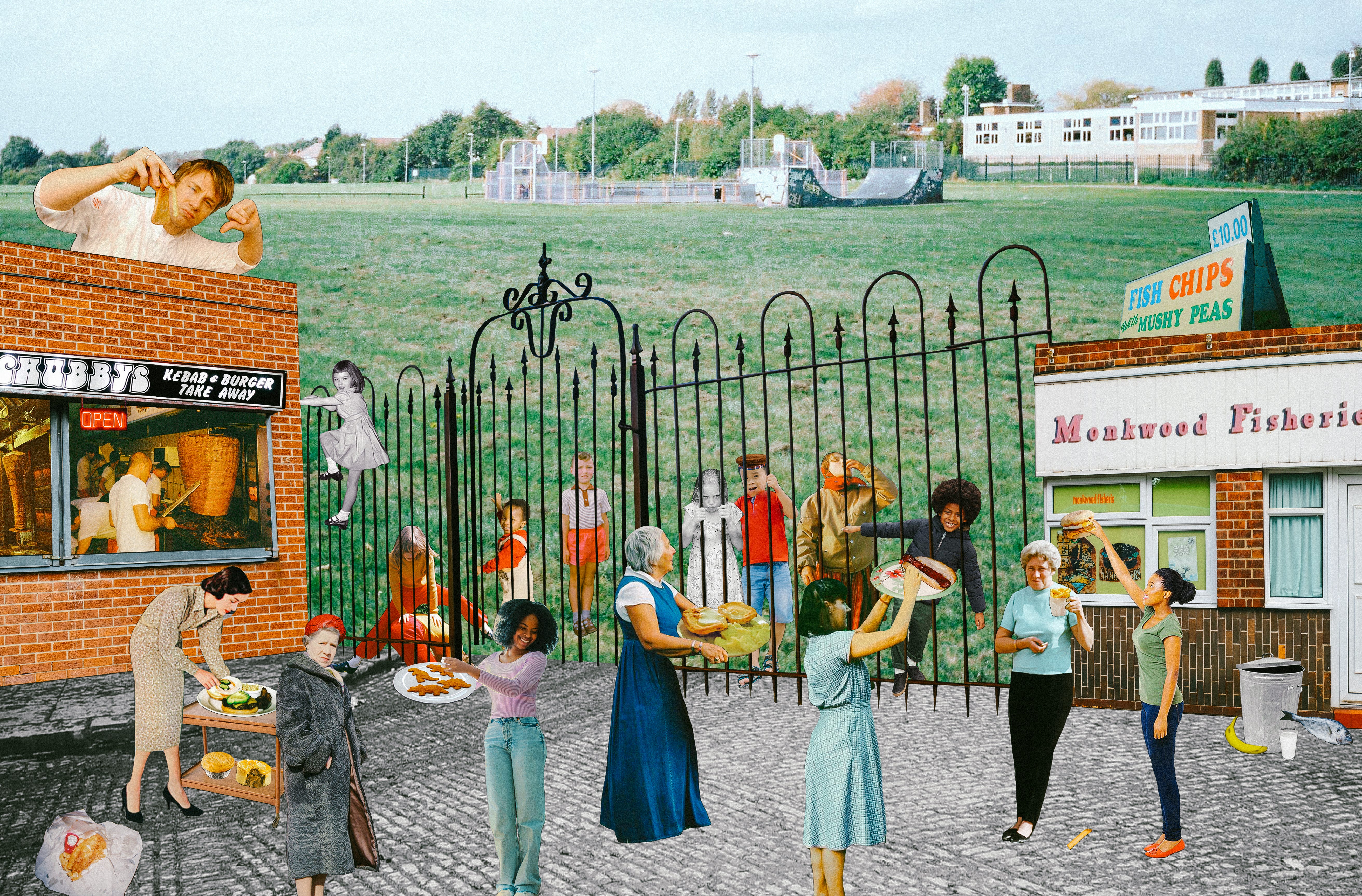
That same year, John Lambert – headteacher at Rawmarsh Community School (RCS), my old high school – saw in Oliver’s campaign an opportunity to end his students’ love of ‘junk food’ altogether. At the start of the academic year, a new menu was implemented in the school canteens with immediate effect; dishes on offer included chicken korma with vegetables, mixed grills and, allegedly, low-fat pizza. More controversially, Lambert decided to go a step further and lock the school gates at lunchtime, preventing the students from buying their own food from the trio of popular outlets (a sweet shop, a chippy and the unfortunately named Chubby’s, which sold sandwiches) at the school drive.
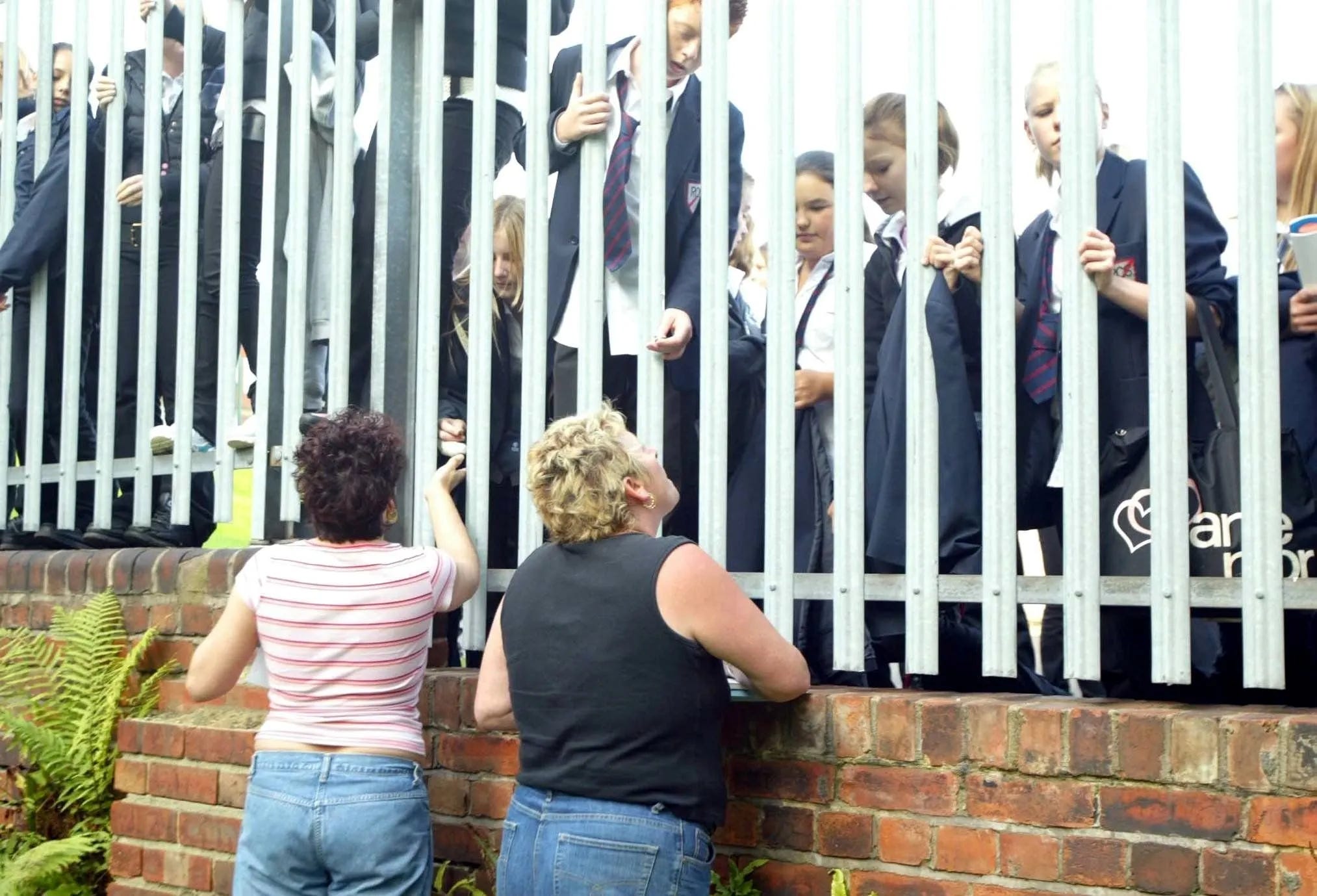
It wasn’t the updated canteen menu that captured media attention – instead, it was the almost immediate backlash to the students’ new-found lack of freedom that made the school infamous across the UK. Within days, disgruntled parents had mounted a campaign against the change, quite literally taking the matter of feeding the students into their own hands. Soon, photos of two mothers delivering pies, burgers and orders of fish and chips through the school’s closed gates were splashed across every national media outlet. The Daily Star reported the story using the headline ‘One Foot In the Gravy’. The Sun branded the mothers ‘Sinner Ladies’, and ran a cartoon depicting them as the ‘Fat Slags’ made famous in Viz. Even the New York Times reported on the story, warning readers that ‘weaning children who consider French fries a major food group is not easy. There is no nicotine patch equivalent for chicken nuggets.’
Academics Rebekah Fox and Graham Smith have since referred to the media response as a ‘moral panic’, and it’s hard to argue with that assessment. In September 2006, Giles Hattersley – now Executive Editor at British Vogue – wrote in the Sunday Times:
To an outsider, Rawmarsh sounds like hell; a place where fat stupid mothers fight for the right to raise fat stupid children … Rawmarsh is Jamie’s worst nightmare; shop shelves lined with cherry colas, toddlers eating Monster Munch in the street and the locals either bandy-legged twigs or, more often, fat – really, really fat in some cases. Some aren’t even ashamed of it: one fat man has taken his shirt off to eat a battered sausage in the afternoon sun.
Within a few days, Rawmarsh had gone from the sort of place you can only describe with vague geography (‘sort of between Sheffield and Doncaster’) to somewhere you could highlight with extreme specificity: You know the place where the mothers passed the junk food through the gates to the kids? Well, that’s my school, my town. Bad food, bad people, bad place.
As a Rawmarsh native, it was hard to look away from the media panic that surrounded the Jamie Oliver episode. Just over the Pennines, at university, my relationship to South Yorkshire was being reshaped and contextualised, everything from my broad accent to my phraseology suddenly marked as strange. Combined with the media panic and depictions of my hometown, the overall message seemed to be that where I was from was backwards, and the way we ate was wrong.
A few months ago, I spoke to Natasha Wilson, a former student at RCS who was fourteen at the time; she also remembers the episode well. Wilson had been a regular customer at the small businesses at the foot of the school gates, often getting breakfast from Chubby’s when her mother was busy: ‘One day a week my mum, when she was rushing out to go to work or something, she’d say, “There’s a couple of quid – go and get yourself a sausage sandwich on your way to school”’. With Chubby’s and the other outlets out-of-bounds at break and lunch, several mothers set up a covert delivery system for the students inside school grounds. ‘The parents would go to the shop, the shops would get it ready, and then they’d bring it back with, like, your name written on little bags. It was like some sort of seedy drug deal through the graveyard fence, but it was actually a bag of chips.’
It wasn’t just sausage sandwiches that the students were ordering from these places. Julie Critchlow, one of the mums involved, told The Times in 2006 that much of the food they were delivering was healthy, and that the accusation that the kids were given chips every day was ‘such a lie’. ‘We were taking all sorts – baked potatoes, salads, tuna sandwiches. You try getting teenage girls to eat a hamburger every day. Most of them won’t touch the things’, she said.
There was no consultation with the students about the change in menu; as student Andreas Petrou recounted to the New York Times, ‘They just told us we were having it’; meanwhile, Wilson remembers that ‘We basically showed up for the start of the year and they’d overhauled the menu, and everybody just went nuts over the fact that they’d taken all the fun stuff off.’ The aggrieved mothers’ response was industrious, but played into the idea of certain types of food being borderline contraband. Natasha gives a name to the mothers’ campaign: The Rebellion. ‘Sounds like Les Mis, doesn’t it?’
This sense of something illicit occurring – of the parents as reprobates – was exacerbated by the media. What was ignored in reports, however, was Rawmarsh’s sociopolitical context, and the decades of economic upheaval faced by those who lived there. While Tony Blair’s incoming 1997 Labour government had promised widespread national renewal, very little in the way of successful economic progress had made its way to Rawmarsh. Even in the early years of the new millennium, the decline of the steel industry – following the closure of the Templeborough Steelworks in 1993 – still cast a Thatcher-shaped shadow over the town. In 2001, Rotherham was listed as the forty-eighth most deprived district in England, and by 2006, Rawmarsh was listed by Rotherham Borough Council as an area of particular economic and social deprivation.
All of this affected people’s relationship to food, their choices and their openness to change. From the 1980s to the 2000s, neoliberal governments and council policies stripped away resident-owned shops on Rawmarsh high street and beyond, turning people towards multinationals and slowly eroding agency, especially with regard to food. For many years, there was a multi-purpose market just a fifteen-minute walk from the school; established in 1965, the market featured grocery stands and bakeries among other small businesses. By the early 2000s, though, this had fallen out of use, and was eventually subject to a compulsory purchase order (today, there is a Tesco and a Heron Foods in its place). Meanwhile, in 2000, Northern Foods – supplier of dairy products and desserts to stores like M&S, Sainsbury’s and Tesco – closed its Rawmarsh factory, causing the loss of 330 local jobs.
Now, I can’t help but look at the parents’ actions at the school as a flailing response to decades of economic and political disenfranchisement. When the Guardian referred to the situation as the ‘battle of Rawmarsh’, they invoked an event still heavy in the minds of people in Rotherham: the Battle of Orgreave on 18 June 1984, when thousands of striking miners picketed the Orgreave Coking Works, just seven miles away from the school. The protest resulted in almost 100 arrests for riot and violent disorder – the former crime punishable, at the time, by life imprisonment.
It is easy to dismiss these events as contributing factors in a lunch-based protest at a high school, twenty-two years after the fact. But when people are not consulted on changes that affect them, they will resist, just as students resisted the imposition of ‘Jamie Oliverism’ in Rawmarsh. At the time of the incident, speaking to the New York Times, Critchlow said of the school authorities: ‘They shouldn’t be allowed to tell the kids what to eat … They’re treating them like criminals.’ Another of the school-gate mothers told the Guardian: ‘This [protest] isn’t about us against healthy food, like they’ve been saying. It’s about how people change the rules.’
In early 2007, Jeremy Clarkson – a man who got his start in journalism writing for the Rotherham Advertiser – asked Jamie Oliver, when he was on the BBC’s Top Gear, about what had happened at RCS. This was an opportunity, perhaps, for Oliver to talk about the economic element of nutrition, or about how the many regions of the country had differing degrees of access to fresh foods, and distinct attitudes about what constitutes a good meal. Oliver did not take this route. Instead, he described the shock he felt upon seeing the Rawmarsh mothers – or, as he termed them, ‘big old scrubbers’, passing ‘Big Macs’ through bars to their children.
Eighteen months later, Oliver finally descended on Rotherham in person to film for Jamie’s Ministry of Food, a four-part Channel 4 series in which he set out to teach the residents of Rotherham how to cook. The idea that no one in Rotherham knew their way around a kitchen was supported by the show’s choice of interviewees – which included retired miners who had never prepared a meal and young mums who claimed to feed their kids mostly with takeaways – chosen from the pool of only 300 people who had replied to an advertisement for ‘non-cooks’.
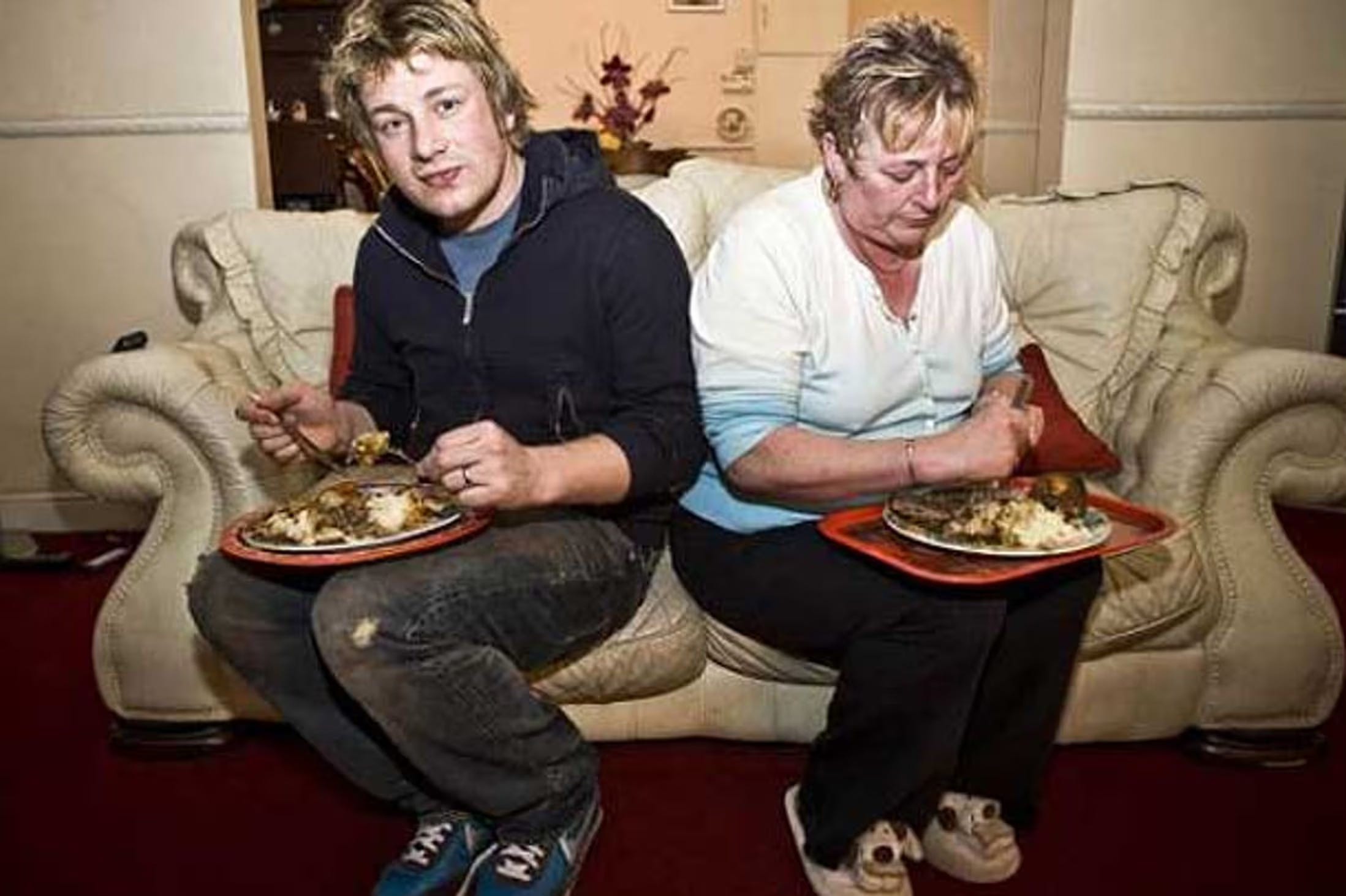
Most notably, Oliver met one of the women he’d derided as a ‘big old scrubber’: Critchlow herself. Minutes before this meeting, driving in a van past the end of my childhood street, Oliver had told the camera that Julie ‘represents everything that’s wrong with our relationship with food in this country’. When he entered her home, Critchlow gracefully welcomed ‘the elusive Mr Oliver’ with a handshake and a smile, before jovially asking for an apology for what he’d said about her on national television. Sitting next to her mother, Critchlow went on to tell Oliver about the recipes that had passed down through her family, and the ones she liked to make for her own kids: stew and dumplings, braising steak, Chinese pork belly; ‘I’ve always cooked,’ she said. Jamie, perched on the edge of her leatherette sofa, admitted that she sounded like ‘a proper foodie’.
After Jamie’s Ministry of Food, Oliver opened a social enterprise kitchen with the same name in Rotherham town centre. With funding from Rotherham council, the initiative employed two staff to run free ten-week courses about how to cook healthy meals from Oliver’s recipes. The project claims that it taught 10,000 people to cook over its lifetime; inarguably, Rotherham’s Ministry of Food did introduce people to new ways of eating. But its nine-year existence was not funded by Oliver, nor were its operations overseen by him. (When funding from the council ended, it was kept going by Leeds-based charity Zest.) When it closed temporarily in 2013, then-manager Lisa Taylor told the Yorkshire Post that Oliver – at this point a multi-millionaire – would not return her calls, nor assist her in trying to keep the project going: ‘We haven’t had one visit from Jamie Oliver since he finished filming and left’, she said. With this context, it feels like Rotherham, once again, has been abandoned as a failed experiment, a place that can be easily dismissed and forgotten.
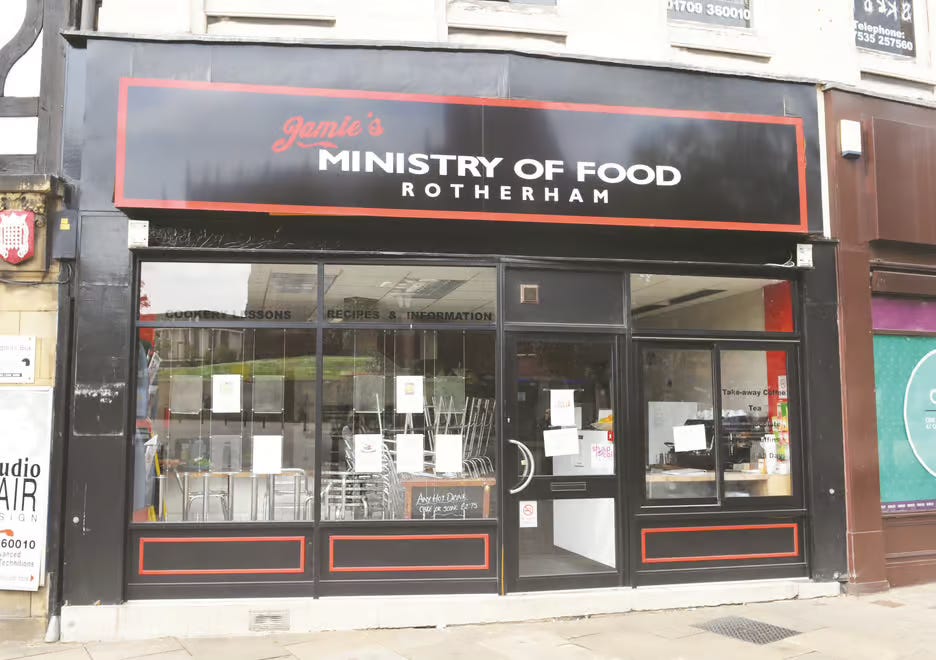
Two weeks ago, I reached out to Oliver’s team, asking if he would talk to me about the media episode in Rotherham and his follow-up show, and wondering whether, in retrospect, there was anything he would have done differently. In response, I received a brochure about Jamie’s Good School Food Awards (sponsored by edtech company Wonde), which details how Oliver and his team ‘[Call] on the government to make sure that this brilliant expansion of school food is backed by updated and enforced school food standards – so that every meal served is genuinely nutritious, delicious and worthy of our children.’ Today, Oliver’s Ministry of Food Foundation continues to announce new sites for its community cooking program – including Glasgow, Cambridge and Plymouth in 2024 (though it is unclear whether such sites ever came to fruition). These are funded in part by the Jamie Oliver Group, but primarily by local councils and other ‘partner’ organisations.
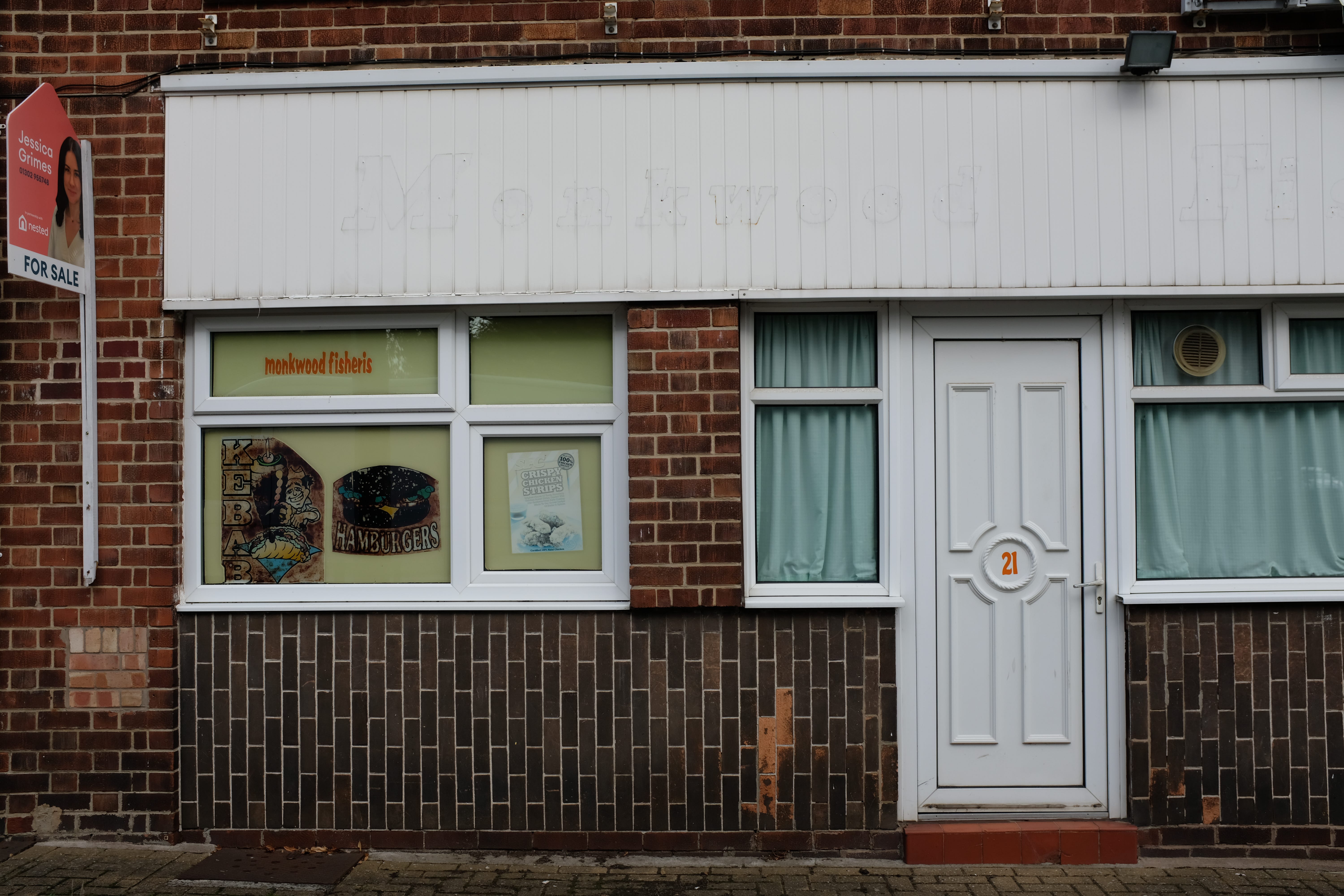
In Rawmarsh, meanwhile, the built environment around the school has drastically changed since my days as a student – and in a way that feels directly tied to its portrayal in the media. Today, two of the three food outlets that fed students during my time at the school are gone: Monkwood Fisheries, the much-maligned but formerly brilliant chip shop, is permanently closed; the sweet shop – where the female proprietor greeted the after-school rush with a rolling script of Yes love? Ta love, Thanks love – is now a (seemingly closed-down) pet supplies store. Chubby’s, too, is changed; rather than selling tuna breadcakes or bacon sarnies to the school kids for a quid, it now appears to sell pizzas, baked potatoes and kebabs to the evening crowd, only opening after the school day has already finished. It no longer matters whether the school gates are locked or not, because the small businesses at the foot of the drive are gone; the students of RCS have nowhere close by to eat.
In the twenty years since the media panic, during which I have established my life elsewhere, Rawmarsh has encountered further deindustrialisation, community-asset stripping in the name of austerity and waning government investment. In August last year, Britain’s third-largest steelworks went into administration, threatening 1,500 jobs across Rotherham and Sheffield and yet again leaving residents at the mercy of the market and neoliberal governmental neglect. Outside forces are only interested in Rawmarsh insofar as they can extract something from it: a TV show, an incendiary headline, a few years of cheap labour. Being left behind by the state over the course of forty years leaves a population with little choice and few ways to affect real change on a governmental level. While some work hard to build grassroots power, others have found an ‘enemy within’ to blame, demonising immigrants (and Black and brown citizens and residents) rather than looking at the real root causes of their material circumstances.
But still, there are establishments that focus on meeting the real needs of people, like the eighty-year-old family bakery Staniforths, which continues to sell the 65p jam tarts I ate when I was a kid, and the host of comparatively new businesses providing Rotherham residents with both a diverse menu and community: the Italian-run Miele Delicatessan, the popular Yemeni food-delivery service Mama Arab, and the town centre’s wonderful Cafe Noor, where you can sit down to two of the best (and most affordable) samosas you’ll ever eat. It is these places that carry the spirit of Rotherham and its people, serving up good humour, interpersonal care and social inclusion. These are the spaces where people find inspiration to embrace new ways to cook and eat.
When looking at spending per child on primary school dinners, Rotherham now sits thirtieth in the ranking (of 152 local authorities in total), with an apparent average of £1.77 per meal per student – an increase, in two decades, of just over a pound per meal, adjusting for inflation. While this is an undeniable improvement on two decades ago, it’s also worth asking – after twenty years, endless campaigning and the demonisation of an entire town – is this enough progress? Natasha Wilson certainly feels that the school dinners incident ‘massively’ affected her relationship with what she ate; as a ‘picky eater’, she was, at the time of Oliver’s intervention, the right age to be gently guided towards new and exciting food options, but ended up turning against a more diverse palate until well into her adulthood. For many children of Rawmarsh, like Natasha and myself, it has only been the experience of having more choice, more money and different influences that changed our diets for the better – not the diminishing of options, not being branded as one of the ‘fat stupid children’ in a Times journalist’s classist article, and certainly not being locked behind school gates.
In Rotherham, as elsewhere, the things that are impactful and enduring are led by its citizens, rather than those who parachute in to impose their ideas. Positive change happens when people are supported to explore new things, to challenge themselves and to broaden their horizons – not when rules are imposed based on the ideas of famous chefs who knew, and know little about a place, its people and its history.
Heather Parry is a Glasgow-based writer of fiction and nonfiction, originally from Rotherham. Her most recent book is Carrion Crow, a novel. She also writes the Substack general observations on eggs.
Alia Wilhelm is a Turkish/German collage artist, writer and filmmaker. Inspired by her multicultural heritage and a childhood during which she moved often, Alia is passionate about themes such as cultural inheritance, transience and belonging. Working across moving image, collage and the written word, Alia creates soulful and personal work with a handmade and nostalgic feel, using printed matter from decades-old magazines to create her collages. All of her work is grounded in visual and historical research.
The Vittles masthead can be viewed here.
If Jamie Oliver has no enemies, I am dead. He is the embodiment of smug, middle-class condescension.
This is a great piece that sensitively explores the relationship between deprivation and diet. Nice to hear from the people who were publicly shamed.
Articles like this are what makes Vittles such a good subscription. A brilliant read. And really terrible looking back at some of the stuff Jamie Oliver got away with saying, as well as how he clearly abandoned Rotherham as soon as the cameras stopped rolling.