

It’s All Greek To Me
How Zylia missed the mark, by Loukia Constantinou. Photographs by Caitlin Isola.
Good morning and welcome to Vittles Restaurants. Today, Loukia Constantinou visits a new ‘traditional Greek-Cypriot taverna’ at Arcade in Covent Garden and asks: what does the restaurant do for Cyrpiot cuisine in London?
Before the review, a reminder that this weekend is the last opportunity to pre-order our third print issue, ‘The Influencers’, a magazine about how the internet and short-form video has reshaped food culture. If you pre-order the issue before this Monday 27 July, you will receive it for a discounted price of 10% off, with an 20% discount for paid subscribers (see the original email for details). Order your copy here!
It’s All Greek To Me
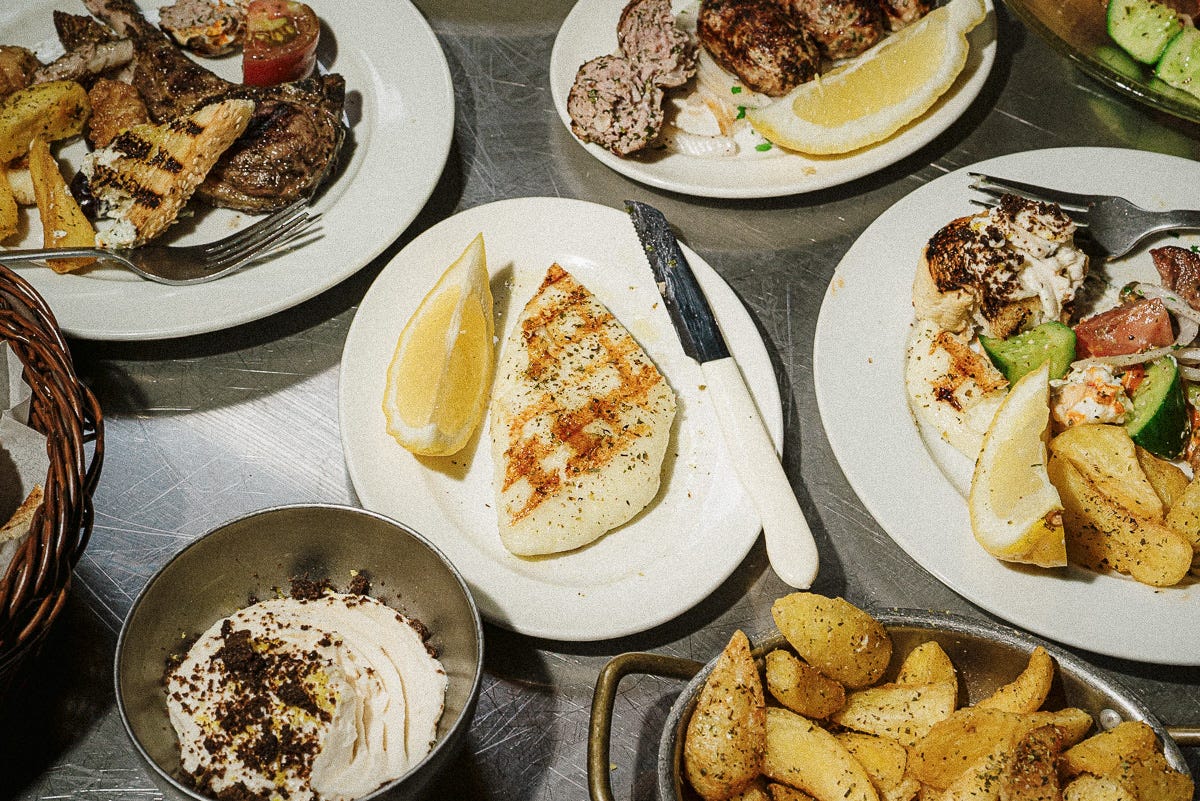
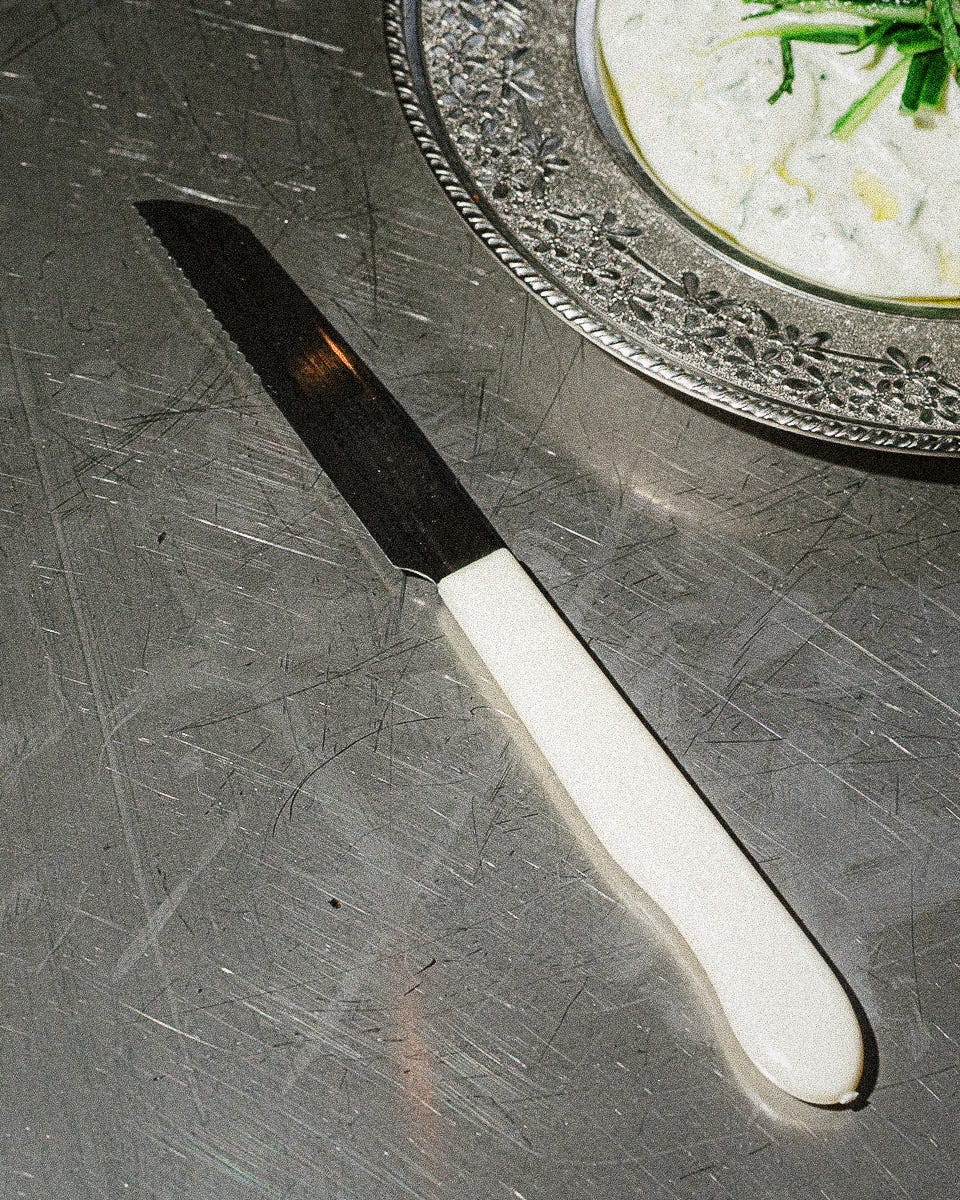
On my first visit to Zylia, a new ‘traditional Greek Cypriot taverna’ inside the latest Arcade Food Hall at the old TGI Fridays site in Covent Garden, I was instantly charmed by one of the knives in the cutlery set. Zylia is led by Athens-born Nick Molyviatis, the chef partly responsible for the success of some of London’s most lauded modern Thai and ‘Greek’ restaurants – Kiln, Singburi, Oma, Agora – alongside Barry Karacostas, who has Cypriot heritage. The bright, airy space is decorated with enough trinkets and knick-knacks, while you listen to repeat plays of the folk song Tillirkotissa, to trigger sentimental feelings of home in Cypriots of any generation, including me.
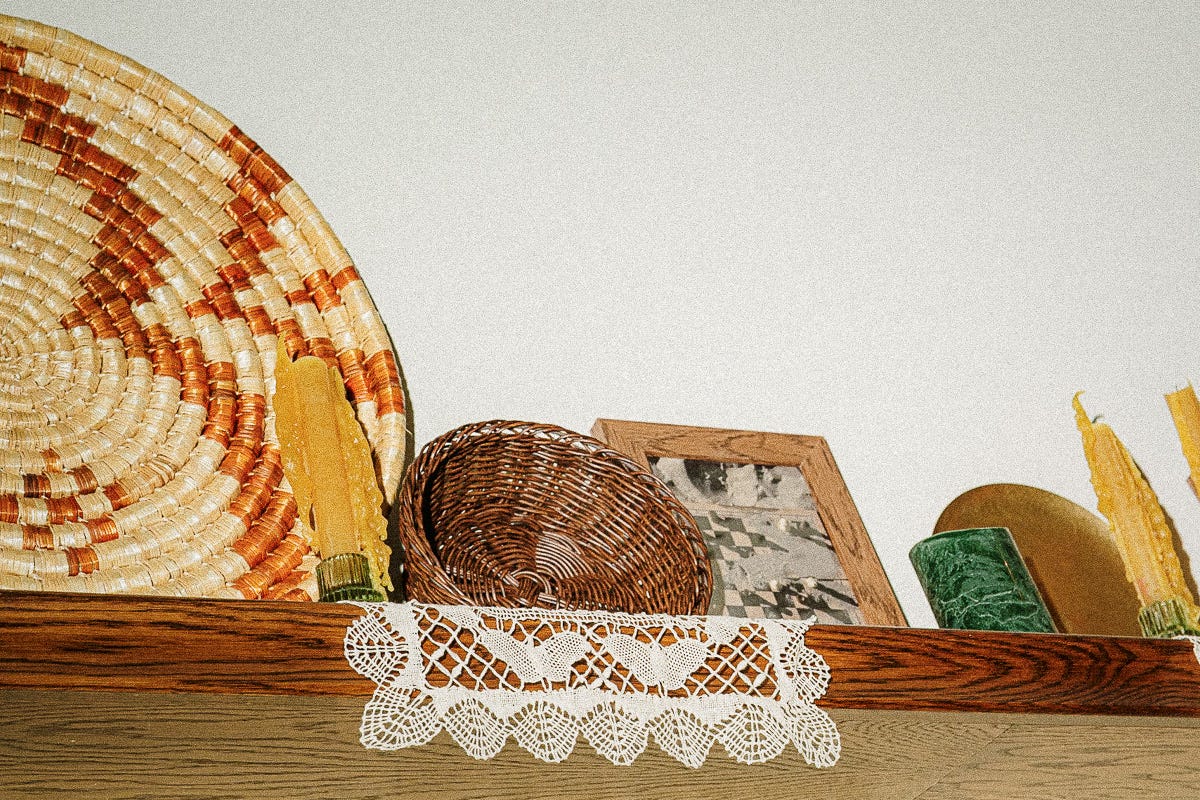
The knife is a minor detail in the grand scheme of paraphernalia on display – from Lefkaritika-style lace textiles dispersed along the shelves that frame the dining room to a selection of giant woven shallow platters (paneria) and sporadically placed clay jugs (kouzes) that look old enough to fetch water from the village well, and fragile enough to use in a traditional Cypriot dance of courtship. Of all these things, though, it was the knife that made me happiest. Simple, Italian-made, with a plastic handle that comes in various colours and a stainless steel blade, one third serrated and two thirds plain-edge, it glides through anything it touches with an ease to match the finest Japanese knives. This is the ‘Cyprus knife’ that we love and use for everything. Its presence was a promising first impression.
If only the early reviewers of Zylia had been as diligent in their attention to detail. Many of them managed to mangle the history and geography of both Cypriot and Greek cuisines. The Guardian described the food as being from two islands, rather than two countries. Broadsheet referred to Greece as ‘the mainland’ – a problematic term to apply, as it suggests that Cyprus is a Greek island (it isn’t). The Evening Standard went for a lazy quip about George Michael. This lack of accuracy may have been influenced by the restaurant’s own early PR drive, which led to industry outlets, like Hot Dinners and London on the Inside, describing Zylia as ‘Greek-Cypriot’ ‘Greek Cypriot’ and ‘Greek/Cypriot’ – subtle but important differences for two nations with such a complex, intertwined history. ‘Greek-Cypriot’ – which is not an inherently inaccurate or dubious term (it is widely used in Cyprus to refer to Cypriots who speak Greek) – is first and foremost a Cypriot identity. Zylia officially uses the term ‘Greek Cypriot’ (without the hyphen), which has predictably been changed to Greek-Cypriot in publicity, causing a lot of the misunderstanding surrounding its Cypriot-ness.
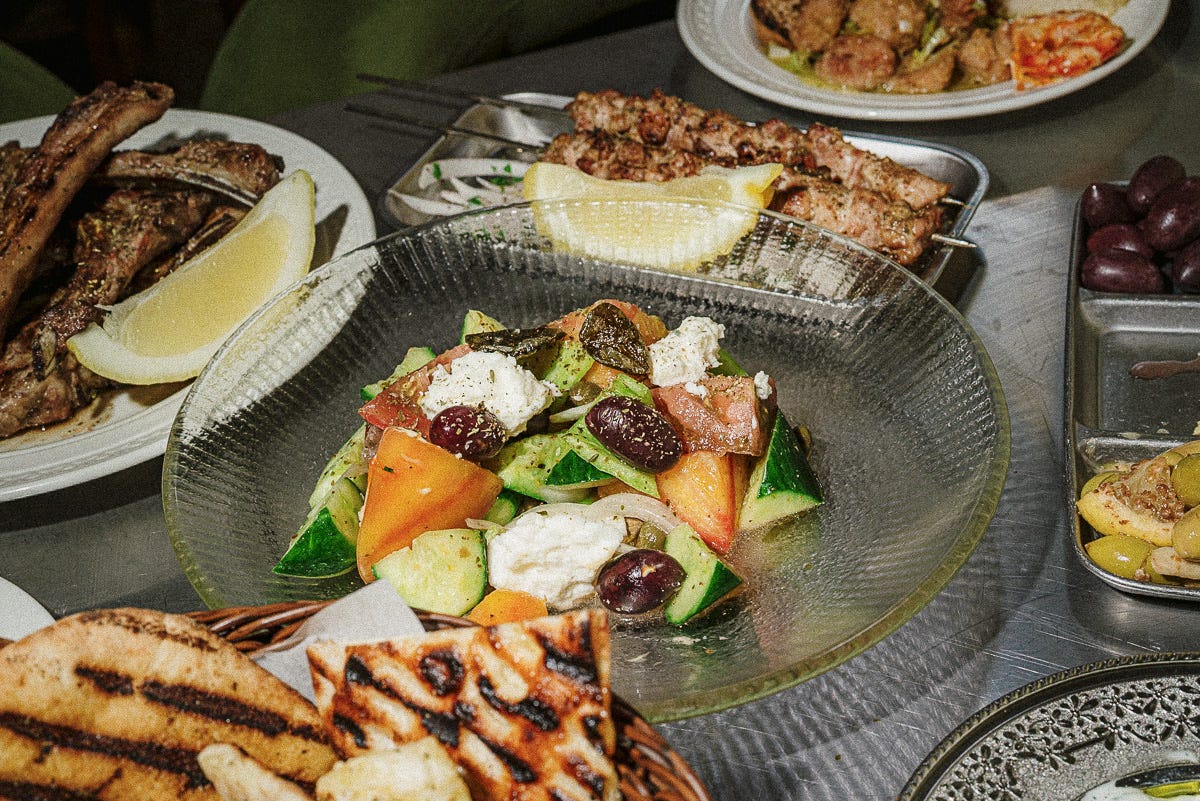
This slight slipperiness seemed to be reflected in the menu, which promised to combine ‘the depth of Cypriot cooking and the breadth of Greek tradition’, but offered noticeably more of the latter than the former. No sooner had it been announced, conversations about Zylia among Cypriots were happening both publicly and privately. Publicly, there were those who were thrilled – a group of writers and influencers who questionably choose to align themselves closely with Greece, despite having no Greek heritage to speak of. But there were more of us who took to group chats and private messages to sigh collectively at the unfolding narrative: not only did Zylia – or at least the discourse around it – appear to clumsily misrepresent Greek-speaking Cypriots, it also erased Turkish-speaking Cypriots entirely. Being in the restaurant and experiencing it myself on two separate occasions, once at lunch and again at dinner, did little to alleviate my concerns; all it did was make me question why Zylia bothered with the Cypriot angle at all.