

Melek Dreams of Soup
A meditation on the transportive power of soup, plus a recipe for a rich, unctuous düğün çorbası (lamb and rice soup). Words and recipe by Melek Erdal. Photos by Emli Bendixen.
Good morning and welcome to Vittles. A quick reminder that the Food in Print Fair at St. Giles Cripplegate on April 11 is just three days away - you can find all the information about the fair here. Remember, it is completely free to attend - no tickets needed!
Today, we are publishing a recipe from our Spring Recipe Supplement, which comprises three soup recipes by some of our favourite cooks. In this lead essay for the supplement, Melek Erdal recalls her attempts to recreate düğün çorbası (‘wedding soup’), a lamb and rice soup prepared for her by master chef Musa Dağdeviren. You can read the other recipes here:
Ixta Belfrage’s spicy fish soup with hot red pepper rouille
Songsoo Kim’s rampini doenjang guk (flowering spring greens soup)
All the articles in the Spring Recipe Supplement are paywalled. To view them, you can subscribe to Vittles for £7/month or £59/year. Your subscriptions help to pay all our writers, photographers and illustrators at a fair rate.
Melek Dreams of Soup
Were you born in the UK? No
Have you travelled to the US before? No
Have you travelled to Cuba, Syria, Iraq, Iran, Yemen or Libya in the last ten years? Yes
What’s the reason for your visit to the US? To make soup
I was sure I wouldn’t be let in, but my visa to the United States got approved days before my flight. I’d been invited to the annual Worlds of Flavor conference in November last year to demonstrate how to make yayla çorbası – a shepherd’s soup – in Trump’s America. The conference was held at the Culinary Institute of America in Napa, California; the furthest I’d travelled for work before then was Sandwich in Kent. And I would be cooking with the culinary anthropologist Musa Dağdeviren: I would be making the most classic Anatolian soup in front of the master.
A few days before the conference begins, I go to La Tapatia Market, a Mexican grocery store in town with a small canteen at the back. The place feels so familiar and welcoming it reminds me of the Kurdish community centre back in London. I sit in the only seat available, next to a man named Luis, a retired tradesman who still lays the occasional patio, but mostly spends his time drying candied pumpkin in the sun. Luis is eating Menudo, which has a deep terracotta seal of oil on top and large squares of tripe that appear each time he stirs the bowl. It’s a hangover soup served only on Sundays, he says. I tell him it reminds me of a soup called İşkembe (which tends to be made with lamb tripe rather than beef). Luis goes to the counter and orders me a ‘sample’ of another soup, the pozole, but they send a full-sized bowl. It comes with shredded cabbage, diced onions, fresh coriander and lime. I smile when I take a sip – all they need to see before turning away, satisfied.
We often speak of the power of breaking bread together, but nothing seeps into you like soup. As I sit with Luis, I think about the fortifying power of sipping soup together. The many people I’ve made soup for or who’ve made soup for me. I think about the çorbacıs (soup canteens) that punctuate the working day back in North London, serving affordable sustenance to the people who make the city run: soup to ease people into the day and to ease them out. About how these çorbacıs have also become the go-to destination to recover after the chaos of a 1000-person Kurdish wedding in a converted Argos warehouse in Edmonton, the late-night workers sharing space with groups dressed in gowns, with up-dos held in place with 1000 hair grips and half a can of hairspray, all sipping soup and catching respite.
‘We often speak of the power of breaking bread together, but nothing seeps into you like soup. As I sit with Luis, I think about the fortifying power of sipping soup together. The many people I’ve made soup for or who’ve made soup for me’
Soup is so substantial for something so formless. It forms around you: you become its container and in turn it seeps into you and alters your state temporarily. It’s a momentary escape – when eaten with others, it offers a form of elopement. I dream of the ocean at times in my life when big decisions or events are approaching; before this trip, I dreamt of soup. In my dream, Hasankeyf, one of the oldest continuously inhabited Kurdish towns, had not been washed away by the building of the Ilısu Dam. Instead it had been sealed in soup. An underwater city, forever preserved.
*
Chef Musa arrived in the conference’s test kitchen unassumingly and got straight to work making elaborate dishes that he was adamant were as authentic as possible – recipes that had travelled thousands of miles and as many years. I’ve never been to Çiya Sofrasi, his restaurant in Istanbul, but I imagine it has the buzz of an Edmonton çorbacı. With a name meaning ‘mountain table’ in Kurdish, his restaurant, which he opened in the late eighties (the same time my parents left), preserves the traditional rural food ways of his hometown of Nizip in Antep and wider Anatolia. His episode of Chef’s Table is my favourite. I remember thinking it was a love story: between him, his wife and the atomically charged era of Istanbul they met in, and between him and the master bakers, makers and workers he grew up around and learned from. He was meticulous and romantic, his pace slow and intentional, his voice gentle and earnest. I had long wanted to meet this master magician.
Musa immediately started sending me on side quests to source missing ingredients or find makeshift tools to enable him to keep recipes as close to how they would be made back home. I was both student and interpreter. When making katıklı dolma – dried squash stuffed with lamb and goat meat, cooked in broth and served with garlic yoghurt and chilli butter – he dispatched me to find ‘ice, a bowl and two wooden mallets’, then invited me to ‘beat the mincemeat’ with him.
We dipped our makeshift mallets (rolling pins) in the ice before beating the meat in synchronicity (much to the amusement and dismay of the rest of the kitchen). ‘The beating makes the meat mousse-like and the ice prevents the meat from bruising – but we must do this in rhythm,’ he explained. Learning from Musa felt like listening to folklore: you are told a compelling story, the reasoning of which is not always immediately apparent, but it will come to you in time.
Gentle nudges in the right direction without providing all the coordinates seemed to be Musa’s way, along with an insistence to keep going, to repeat something until you get it right. On the day of the demo, I made my soup. As the audience applauded, Musa leaned over my shoulder and whispered, ‘Well done, you did a great job. But this is not how you make yayla çorbası. Rice is the only thing you need to thicken.’ My mama had always added egg and flour, which emulsified the soup and gave it a silky texture. ‘That is a cheat’s way to thicken,’ Musa explained.
When I told Mama, she responded simply: ‘It’s not Musa’s soup, it’s mine.’ Torn between these two masters, I thought I’d revisit the question at a later date.
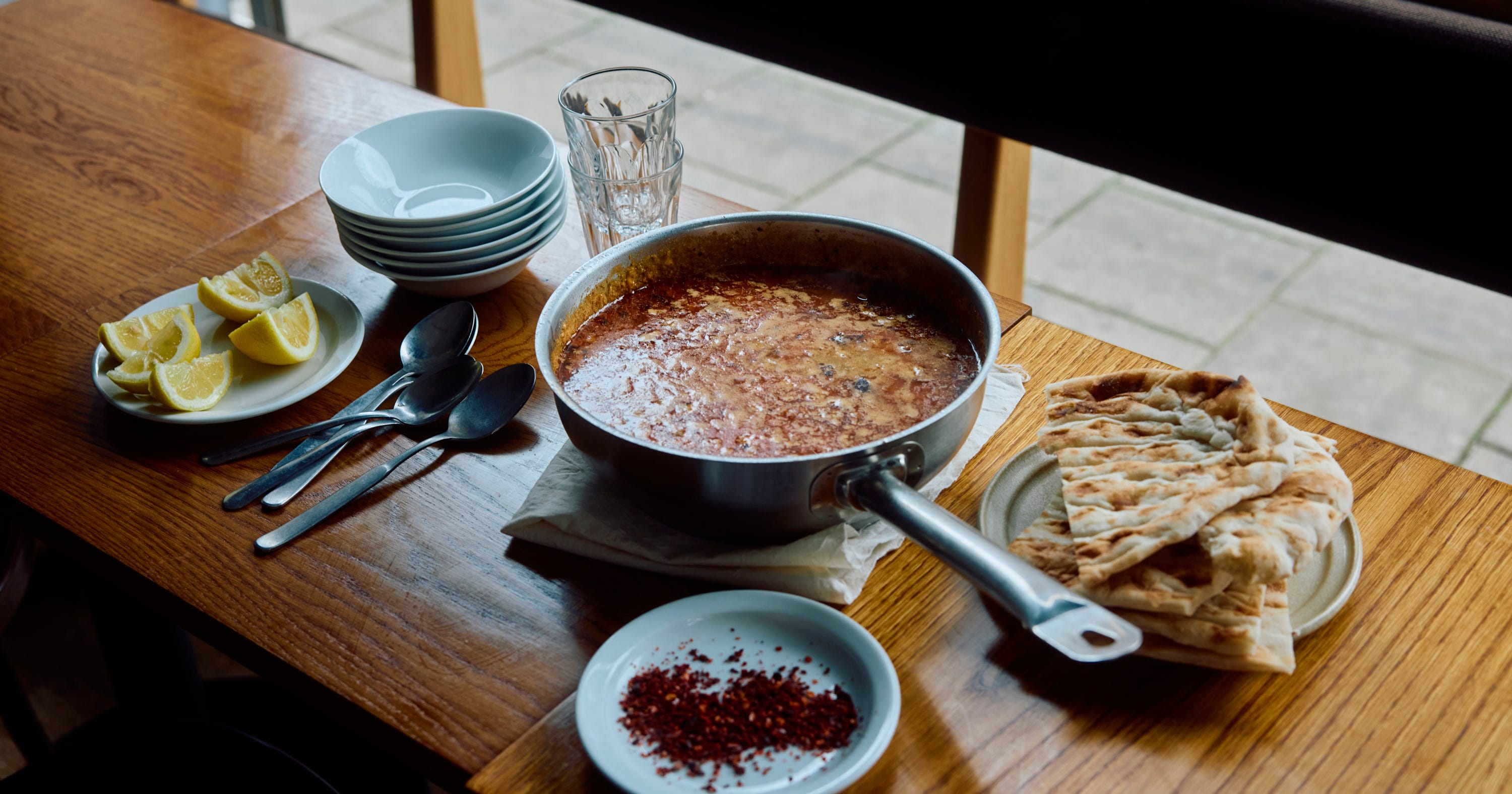
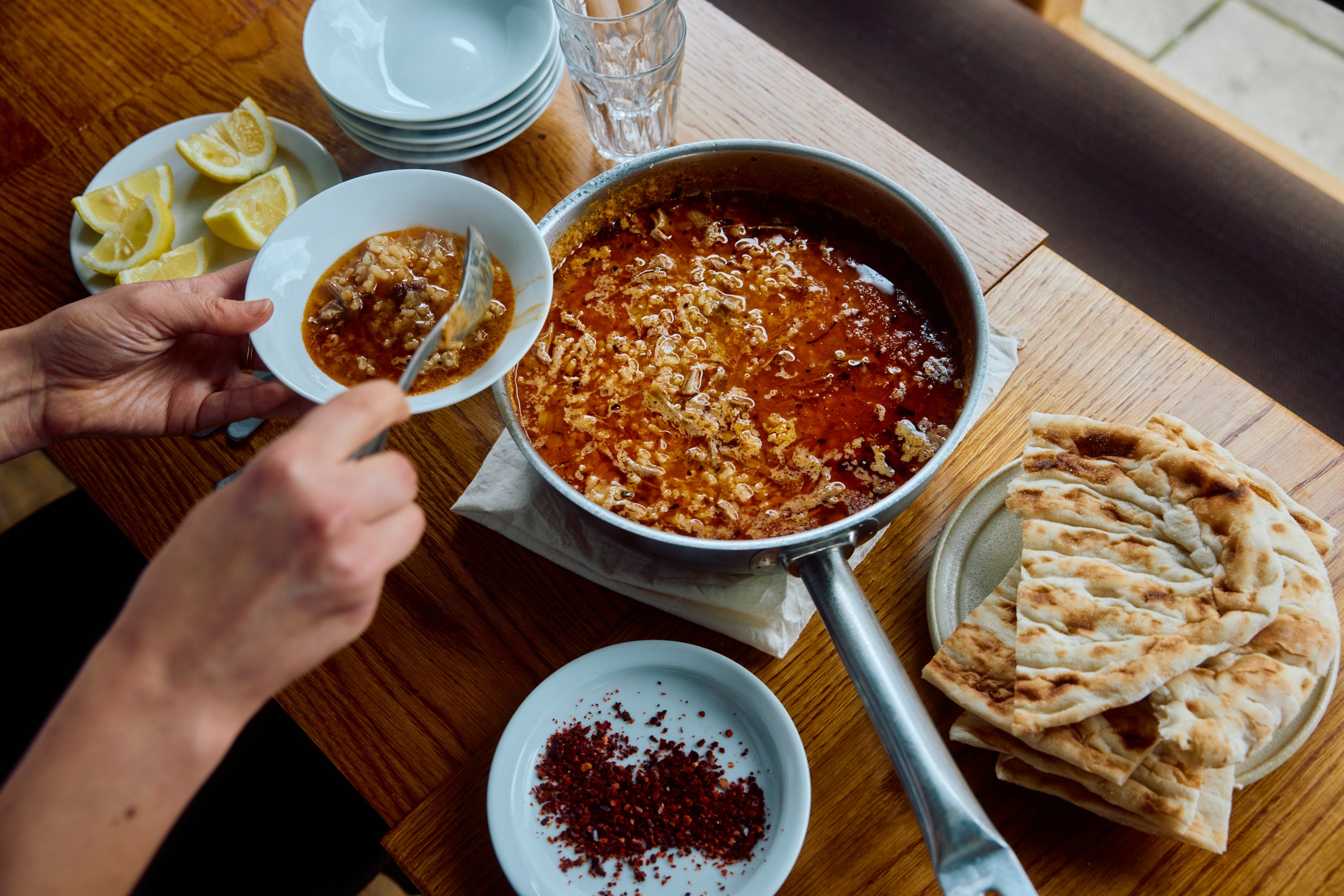
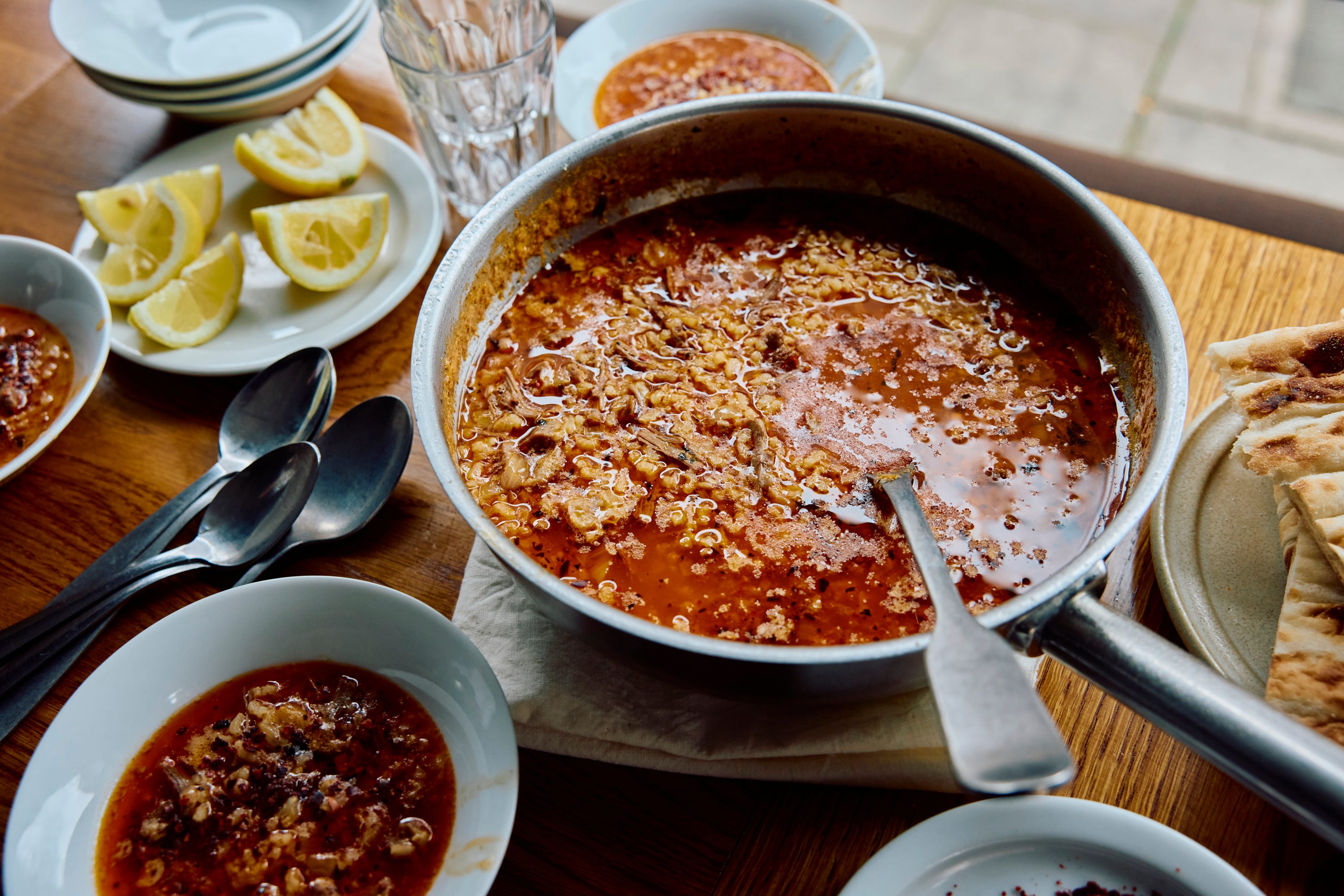
On our last day, Musa got up early and used the leftover ingredients from the week’s cooking to make soup for everyone. Of all the elaborate dishes made in the test kitchen by chefs from all around the world, this seemingly simple lamb broth with rice was the only one that made everyone pause for a moment, gathered around the stove. ‘Düğün çorbası’ (‘wedding soup’), Musa declared, stirring the large, still-bubbling cauldron, before ladling small bowls for everyone.
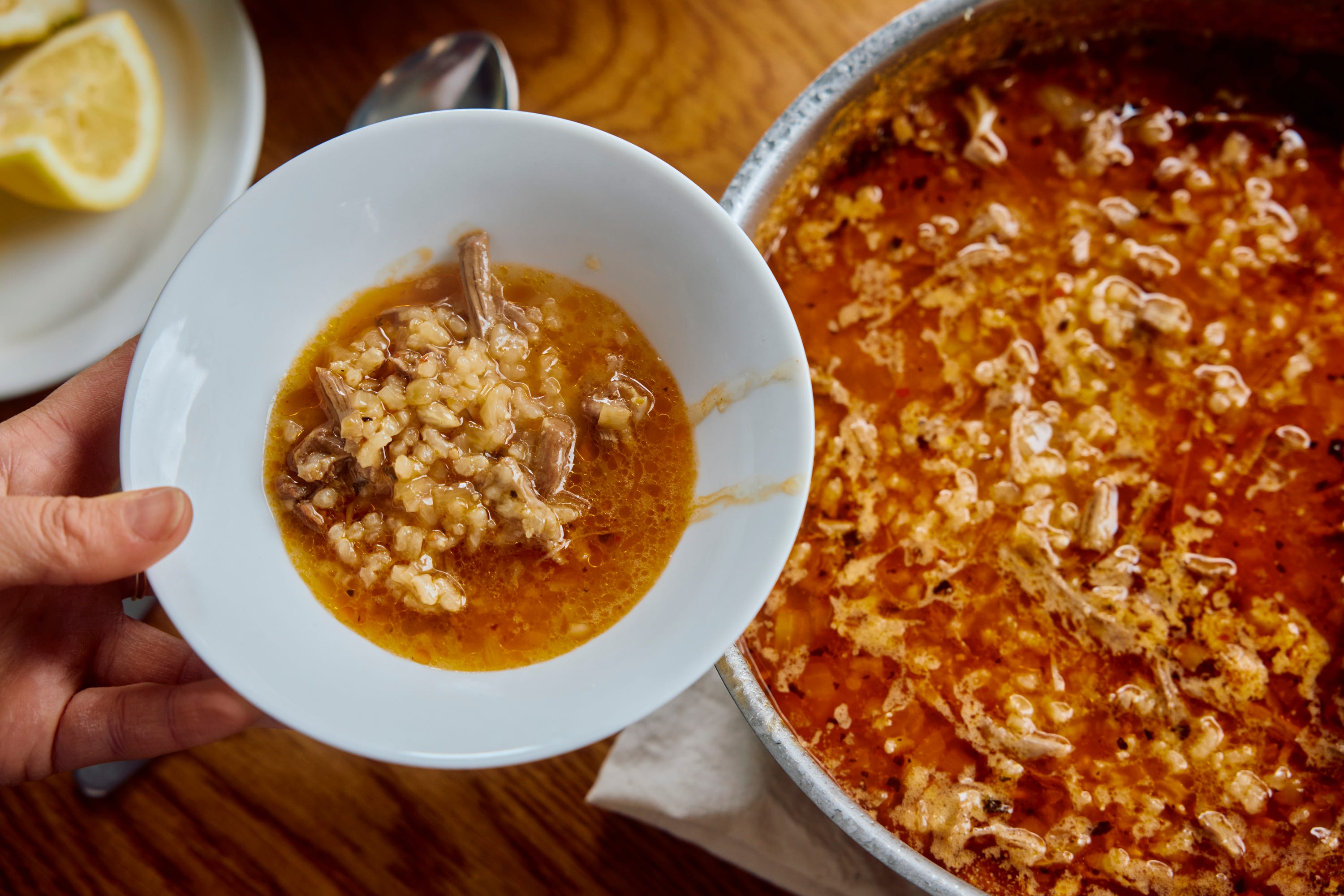
The soup was transportive: the depth of the broth with thin strands of lamb, thickened by rice but still with a fluidity; the smoky heat from the pul biber, and slight acidity from a subtle touch of lemon. I was reminded of the ‘Stone Soup’ folk tale, in which a wise new visitor to the town uses donated ingredients to produce a soup no one had ever heard of, but that was the most delicious thing anyone had ever eaten.
In the taxi journey back to the airport, I was already dreaming about making Musa’s soup. I wanted to recreate the taste and feeling of working with him and the others in the kitchen, but much like the fabled stone soup, it was a mystery how exactly he had made his düğün çorbası. (I was briefly snapped out of my reverie by the driver asking why my Uber rating was so low: ‘I swear if this was night time nobody would pick you up.’ Why exactly my rating had declined so much was also a mystery.)
‘The soup was transportive: the depth of the broth with thin strands of lamb, thickened by rice but still with a fluidity; the smoky heat from the pul biber, and slight acidity from a subtle touch of lemon’
As soon as I got home, I got to work trying to recreate the soup. If you look up düğün çorbası online, you will find recipes in which yoghurt is added to the broth. Musa had explained that his regional version was similar to a beyran (a lamb soup). Yet his cookbook contains recipes for both a lamb rice soup and a beyran, neither of which seemed to be the soup he’d made.
Beyond the basics – lamb, stock, rice and, obviously, onion – I guessed there was garlic in it. And there was definitely pul biber, which Musa treats as religiously as I do (he’d given me a batch from his hometown as a parting gift, and I treasure it as if it were expensive saffron). I begin my attempts by braising lamb neck in a pressure cooker, before adding water and slow cooking for three hours. Separately I cook down onions and then garlic, and then add the pul biber. I want to add some salça, but I message Musa and he is adamant there was none in his soup. I add a teaspoon anyway, along with some chopped sundried tomatoes. I strain in my lamb stock, then add pudding rice and simmer. I add the lamb meat and some lemon juice. The result is nothing like Musa’s dish – it’s too red and the rice is too thick, giving the soup a porridge-like texture.
The next time, I don’t add sundried tomatoes but add dried reyhan (purple basil). It’s a rogue addition, but I love the perfume it brings. Maybe the colour is still too dark from the salça – maybe he really didn’t use salça? The rice still isn’t right either, so I go out to buy more. I realise that ‘cracked (or broken) rice’ and ‘pudding rice’ are different things – the soup needed cracked rice! I’ve cracked it, I think.
I continue trying to make the soup almost every week for three months. The days get longer, indicating that spring has arrived on the doorstep. It brings fresh hope that I will perfect this soup in time to celebrate the season’s lamb.
On the first sunny day in what feels like months, my attempt at the soup finally feels right. I send Musa’s wife Zeynep a video of the soup first, to ask if she thinks Musa would approve. ‘He’ll say it has too much rice,’ she tells me. I message Musa. ‘It has too much rice’, he replies.
I decide that I’m OK with this. He is the teacher, but I am the interpreter. So, here is a recipe for lamb soup with too much rice – and a smidgen of salça.
Düğün Çorbası (Wedding Soup)
Serves 4
Time 2 hrs 30 mins