

The chef who invented the modern British Chinese restaurant
Bill Poon was as devoted to his community as he was to changing Britain’s understanding of Cantonese food. By Angela Hui

Good morning and welcome to Vittles. Today, Angela Hui writes about Bill Poon, one of Britain’s most influential Chinese chef-restaurateurs, who changed the country’s understanding of Cantonese food.
This piece is an online-only article about influence linked to our forthcoming third print issue, ‘The Influencers’ which officially comes out today. You can now order your copy here.
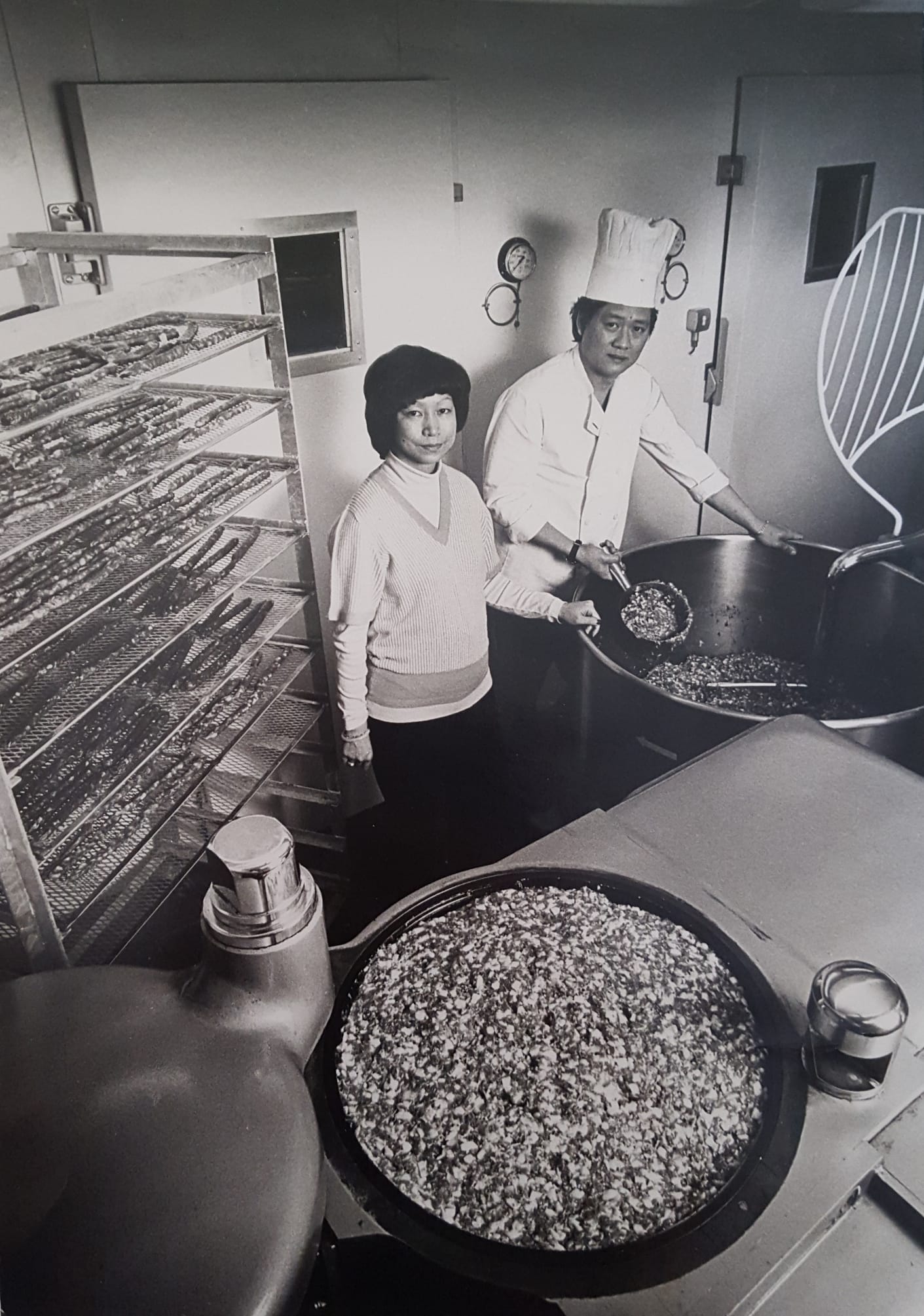
Bill Poon, who died last month aged 81, was a father, husband, restaurateur and one of the defining figures in British Chinese food of the 20th century. From his wind-dried meats business, which opened in 1970, through to his London restaurant empire, Poon’s, which closed in 2004 and was revived by his daughter Amy in 2025, his influence on Cantonese food in Britain has lasted for more than 55 years. Since his death, obituaries have highlighted the enormous legacy he left: he became one of Chinese cuisine’s great champions in this country, highlighting the importance of fresh ingredients and techniques, making unfamiliar flavours and cooking methods approachable without compromising their integrity, and also became one of the first chefs to earn a Michelin star for a Chinese restaurant. In doing so, helped change how Britain understood Chinese food.
What is perhaps less known is the direct influence he had on many of London’s new generation of British-Cantonese chefs, as well as the Chinese community at large. Those close to him remember someone who was always willing to give his time and energy to others, often in ways that went beyond what was expected of him. The number of people whose lives he touched was, perhaps, far greater than even his family realised.
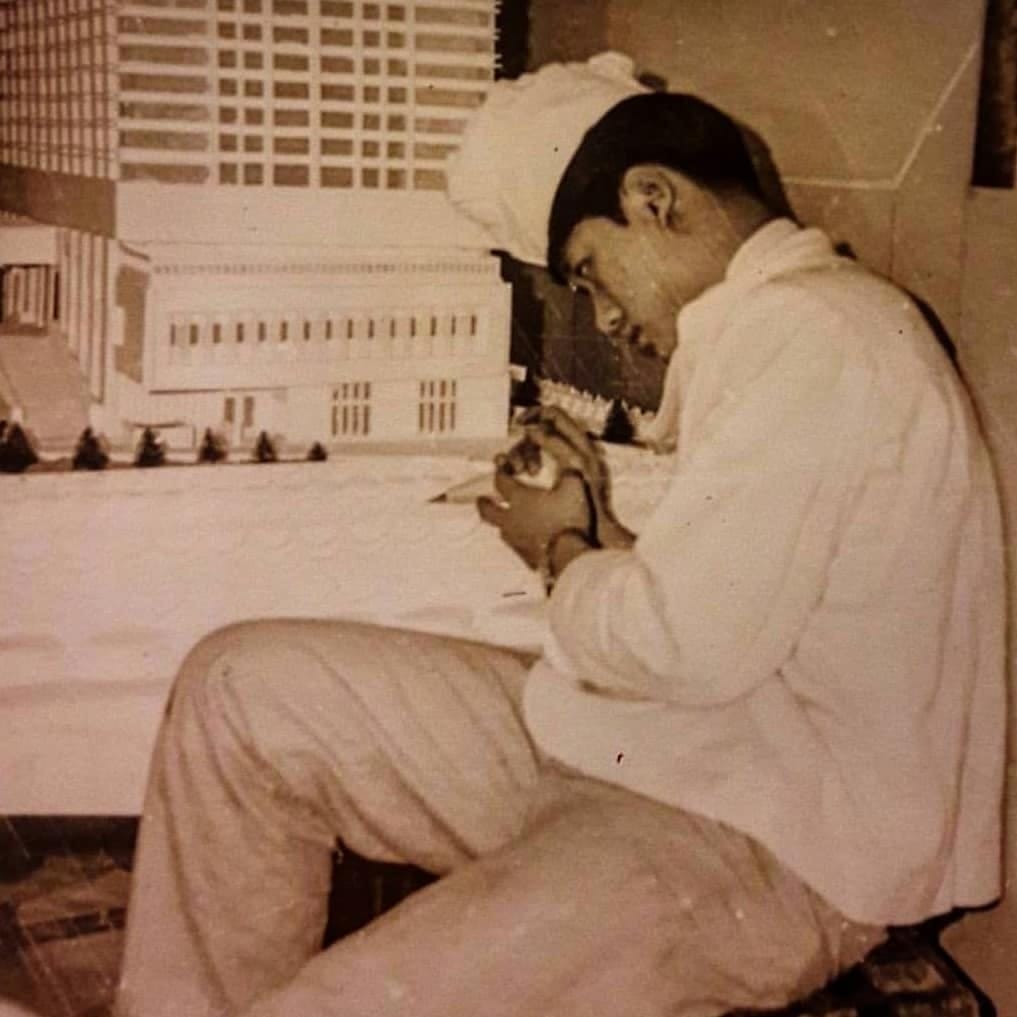
Poon was born on 3 December 1944 in Shunde, Guangdong province, into a family of chefs whose culinary heritage stretched back seven generations. According to family lore, his great-great-grandfather was summoned to cook in the Imperial Court in Beijing while another ancestor is credited with creating an early version of the stock cube. After the 1949 revolution, his family fled to Portuguese-ruled Macau, where his parents opened a restaurant.
The facts of Poon’s early life are well-documented. He began cooking at 14, starting as a kitchen porter, before training under a Swiss pâtissier in Hong Kong, where he met his future wife, Cecilia. She moved to the UK in 1963, with Bill following four years later. During their long-distance relationship, he once sent her a telegram that caused a panic. In those days, telegrams usually meant bad news, so when Cecilia was called home from work to receive it, she feared the worst. Instead, it simply read: “Darling, I miss.” Poon had run out of money because telegrams were charged by the word.
After arriving in Britain, Poon worked as a dim sum chef in Birmingham before moving to London. He took on whatever work he could, opening a Chinese takeaway, working at a fish and chip shop in Shepherd’s Bush, cooking for hundreds of Chinese students at a hostel, even working night shifts as a pastry chef at Hugh Hefner’s Playboy Club in Park Lane, where he drove the Bunnies home after work. Around this time, he began making wind-dried meats and sausages using his family’s closely guarded recipe, launching the business in 1970.
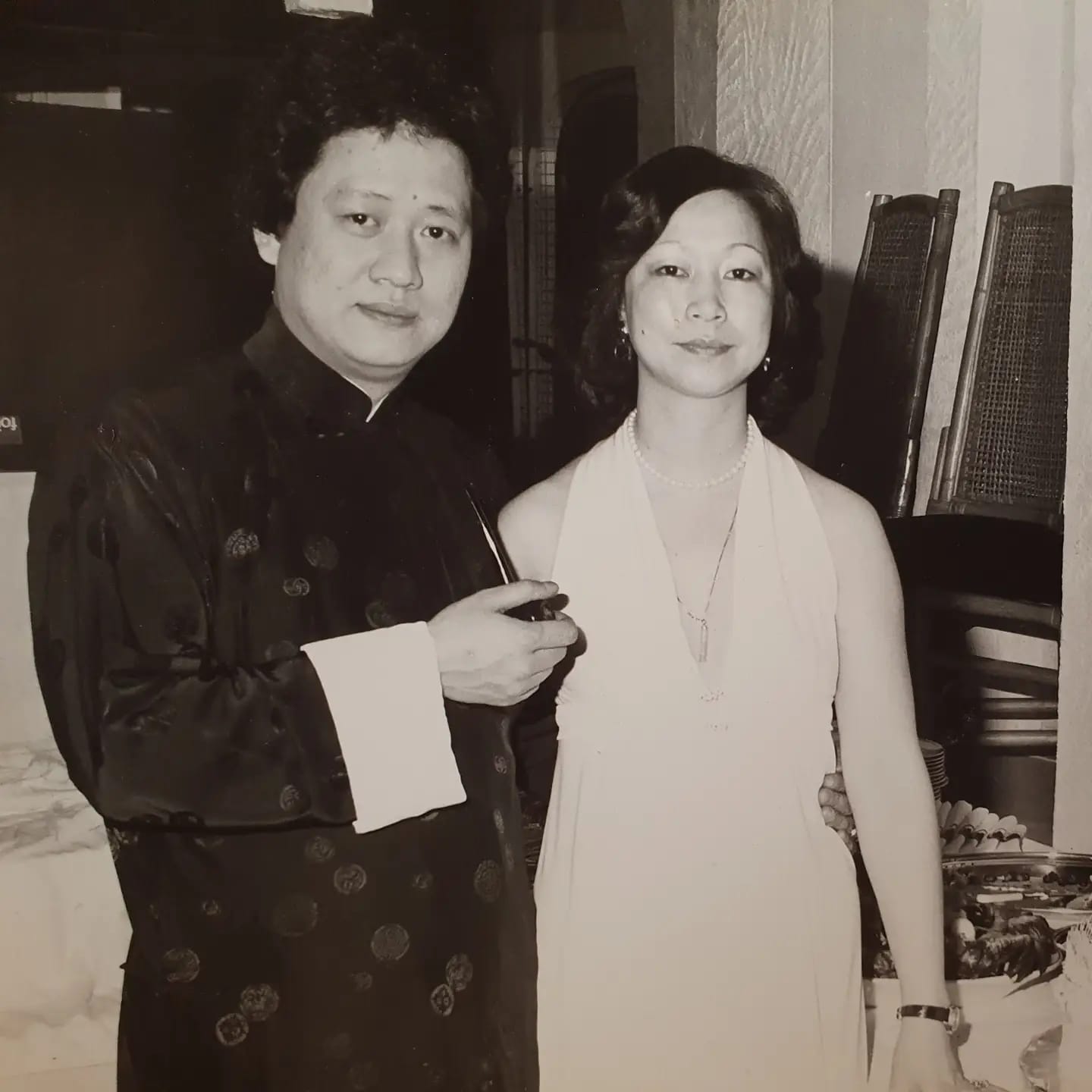
Poon grew frustrated by the standard of Chinese food available in Britain. By 1973, his parents had joined him and Cecilia in London, and together they opened their first restaurant, Poon’s and Co., at 27 Lisle Street in Chinatown. The restaurant won critical acclaim, including from critics like Egon Ronay and Fay Maschler, and soon built a loyal following. Among its regular customers were Lord Simon Tanlaw, a liberal peer, and Lady Rina Siew Yong Tanlaw, his Malaysian wife. Their family business, Inchcape, was one of Hong Kong’s oldest and largest international trading companies, and they encouraged the family to move to larger premises. In 1976, they became partners in Poon’s of Covent Garden, opening the restaurant at 41 King Street overlooking the Piazza, in the building now occupied by Arc’teryx.
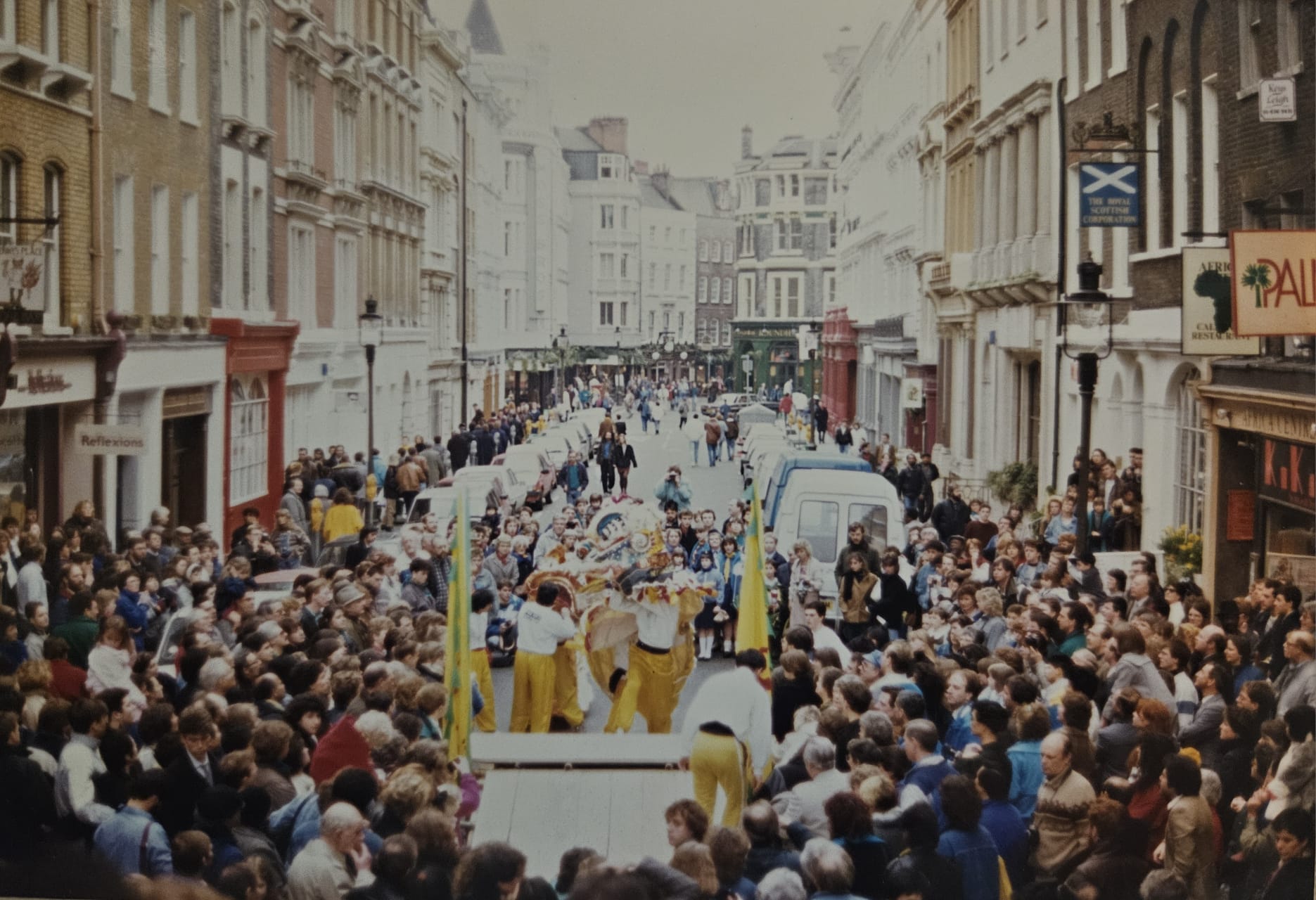
While the original Poon’s on Lisle Street was a casual café, the Covent Garden restaurant was more polished, with a brasserie-style dining room and a glass-walled open kitchen at its centre, a bold and revolutionary statement. At a time when Chinese food was often misunderstood, viewed as ‘exotic’ or ‘mysterious’ and reduced to a handful of anglicised takeaway dishes, the work behind the food was rarely seen. Rather than challenging misconceptions with words, Poon let his cooking do the convincing. His open kitchen allowed diners to watch chefs work the woks, carve roast ducks and prepare labour-intensive Cantonese dishes with care and precision. Maschler called the meal she had there ‘irrefutable proof of the greatness of Chinese cuisine’.
In 1980, Poon’s became only the second Chinese restaurant in Britain to receive a Michelin star, after Lee Ho Fook. Poon introduced diners to Cantonese dishes that were intricate, time-consuming and rarely seen in Britain at the time. Signature dishes such as baked crab with spring onion and ginger, stewed suckling pig trotters with sea cucumber, and a family speciality, eight treasure duck, reflected his belief that great cooking demanded patience, technique and respect for tradition. His daughter Amy said he believed you had to understand the rules before you could break them, and had a deep respect for the craft of cooking.
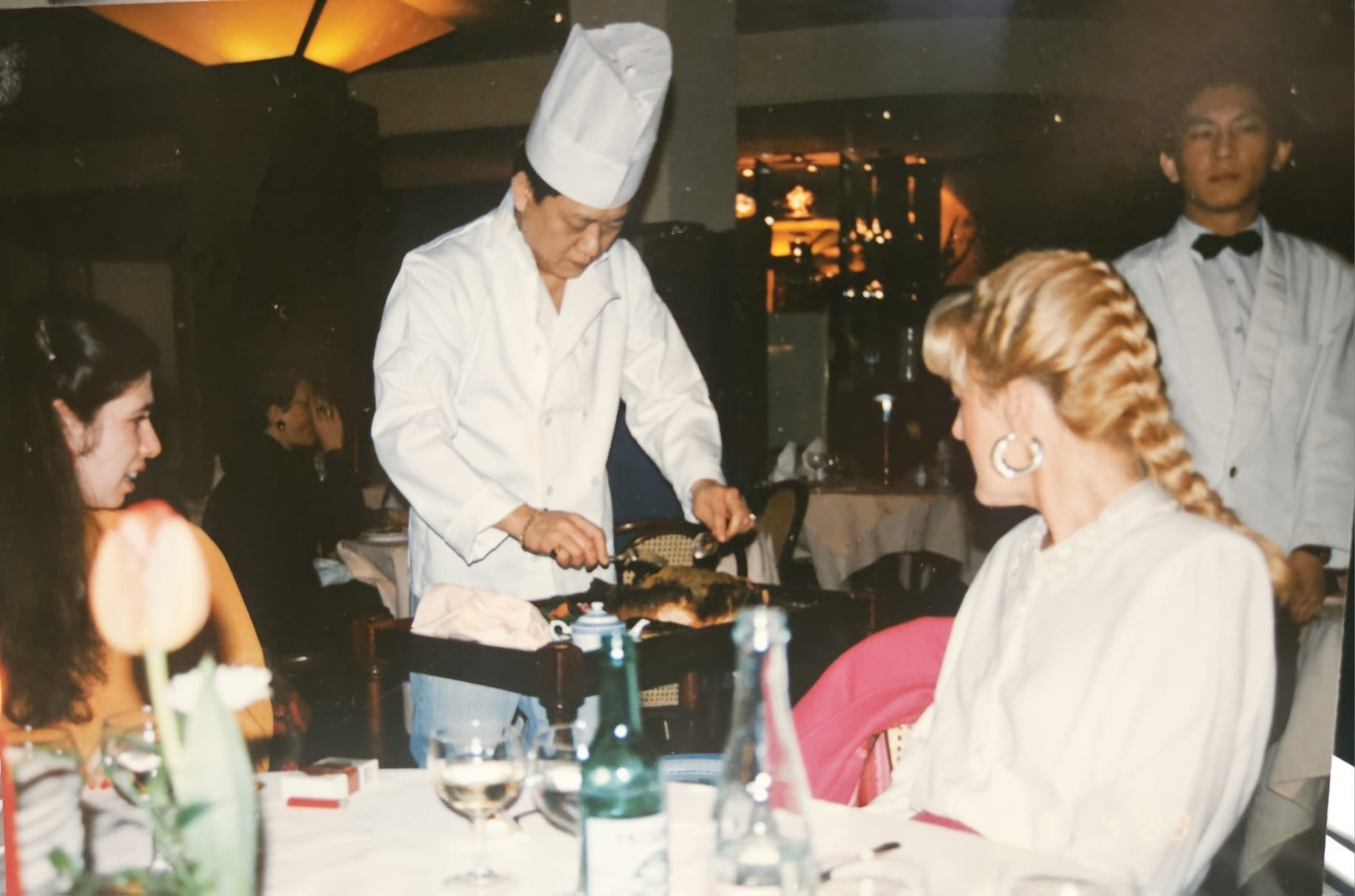
Poon was not the stereotypical strict and stoic Asian father. Instead, according to Amy, he was affectionate, generous, a bon vivant and a champion of the underdog. And although he was a master of Cantonese cuisine, he was never bound by tradition, remaining open to change throughout his life. He approached food and life with curiosity, warmth and optimism, seeing modernisation not as a threat to tradition but a part of its future. To source the best ingredients, he did not rely on the usual routes; instead, he bought a farm in Nafpaktos, western Greece, to grow Chinese vegetables closer to home. At the time, the imported vegetables from China did not meet his standards, so he hired a family friend known as Uncle Lam (林伯) from Hong Kong’s New Territories to grow produce for Poon’s restaurants. The plan, however, did not last. Poon eventually realised it had failed because Uncle Lam spent more time drinking than tending to the crops.
In 1985, Poon began exploring the possibility of opening overseas, scouting locations in Houston, Los Angeles, Paris and Brussels before settling on Switzerland, where he opened Poon’s of Geneva in partnership with Swiss watch brand Blancpain, who were investors. The restaurant operated for ten years before the business eventually went bankrupt, with Amy Poon saying the Swiss market was not yet ready for what they were offering. At its peak, the family-run business grew to seven restaurants, with his sister Shirley running the original Lisle Street site and his brother Jim opening branches in the City, Leicester Street, Russell Square and Whiteleys in Bayswater.
‘I think the closure of the restaurants really affected my parents, but they were so resilient,’ says Amy. ‘I’m not sure it’s something my parents particularly liked to dwell on, but they sold the house, they sold the cars, they moved into a much smaller apartment, and then they just kept going. I think it’s that immigrant mentality, you just keep going, right?’
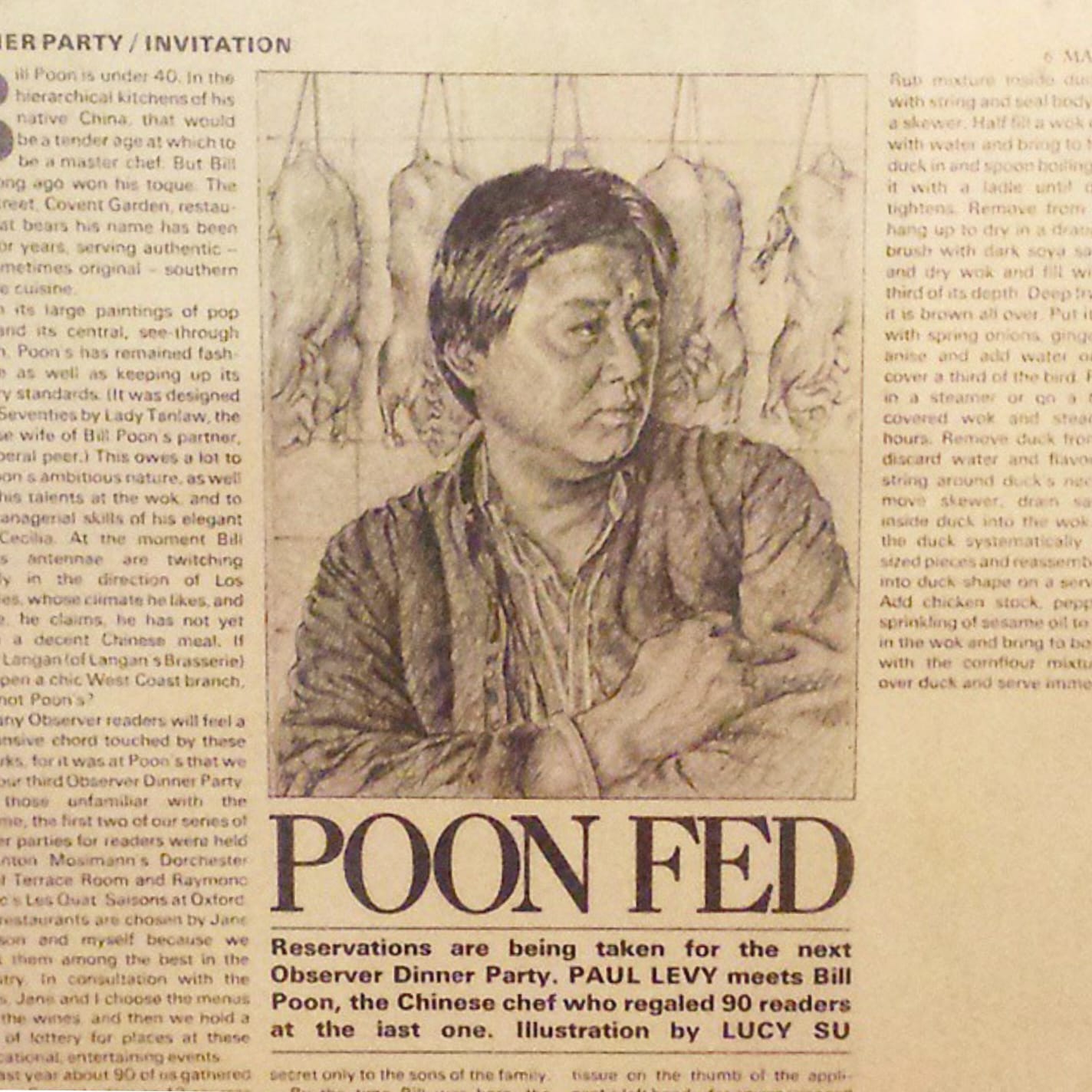
Despite the trials and tribulations of running restaurants, Poon helped prove that Chinese cuisine deserved the same respect as Europe’s great culinary traditions. The writer Paul Levy regarded Poon as a ‘peer of some of the great chefs of France’. Food writer and author Fuchsia Dunlop, who regularly visited the old Poon’s restaurant on Lisle Street while reviewing Chinese restaurants for Time Out in the 1990s and was fortunate enough to once be invited to the Poons’ house for dinner, noted that Bill was part of a generation of Hong Kong-born chefs who came to London with formal training in classical Cantonese cuisine.
‘What was striking about Bill Poon was his ambition to raise the status and prominence of Chinese food, and his success in that mission, as reflected in the Michelin star and the acclaim received by his Covent Garden restaurant,’ she says. ‘He is one of the only Chinese chefs of that era to have made his name, literally, as a skilled practitioner of Chinese cuisine.’
Poon retired from the restaurant world in 2003, but continued to oversee the wind-dried meat production and consulted from afar. After working in all of her parents’ restaurants, and later building a career in the arts, marketing and recruitment, his daughter Amy swore she would never enter the family restaurant business. But there was always something pulling her back. In February 2018, Amy revived the family name, starting with pop-ups in Clerkenwell and Fitzrovia before opening a permanent Poon’s site at Somerset House in central London in November 2025.
The new Poon’s head chef Joyeta Ng remembers Bill as someone unafraid to lead or follow trends. With experience at some of the world’s most acclaimed restaurants, including Den in Tokyo, Kitchen Table in London, Noma pop-ups in Japan and The Chairman in Hong Kong, Ng was inspired by Poon’s confidence in presenting Cantonese food on his own terms and cooking with pride and conviction. During recipe testing before the opening, Poon made her steamed pork with shrimp paste, carefully explaining each step, what to look out for and why certain techniques could not be rushed. ‘It reinforced something fundamental about Cantonese cooking: there are no shortcuts,’ says Ng. ‘He was always teaching me, but he always said we were simply “exchanging ideas”, though I was definitely the one learning.’
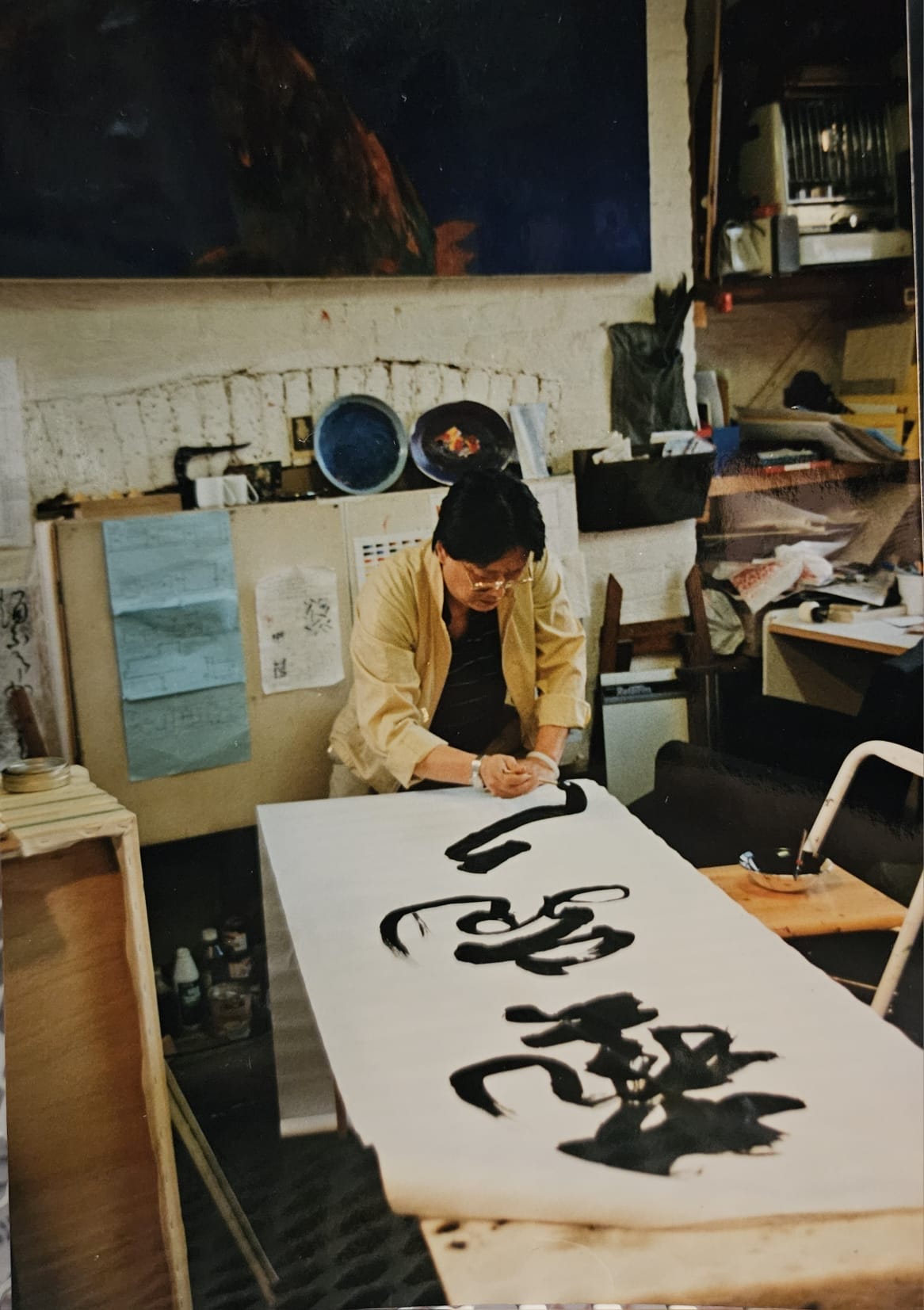
Poon was generous with his knowledge towards the next generation of British-Chinese chefs. He ran cookery classes at his restaurants, teaching those interested in Chinese cooking and sharing techniques he had spent a lifetime mastering. His apprentices left with certificates featuring his distinctive flowing black ink calligraphy, a reflection of the care he put into passing on his craft.
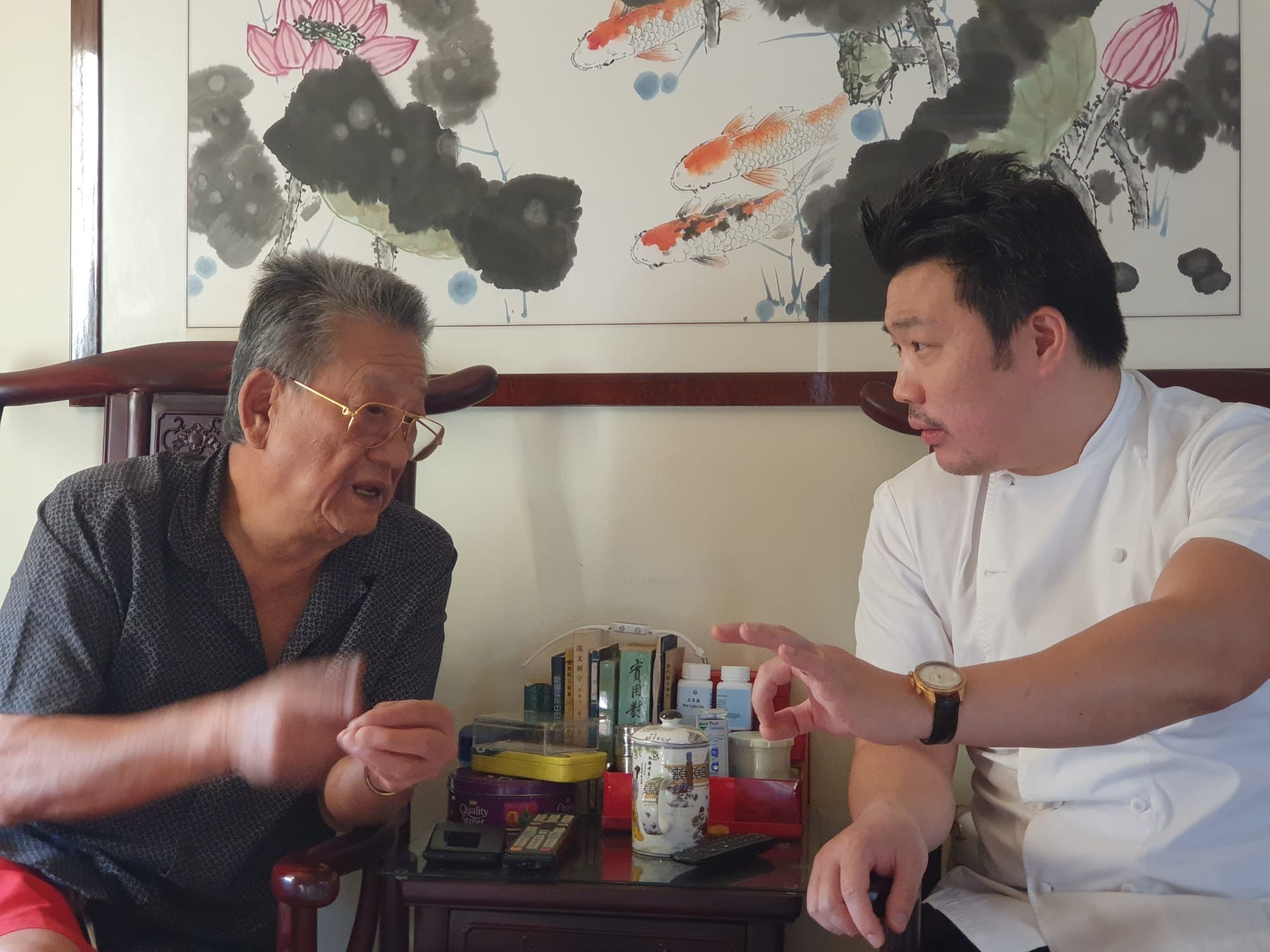
Among those who sought his advice was chef Andrew Wong, who later became the first Chinese restaurateur outside Asia to be awarded two Michelin stars for A. Wong. Wong believes Bill was a master chameleon even after retirement, adapting to his surroundings and the times. ‘He was fiercely proud of mastering traditional techniques, yet simultaneously encouraging me to be free in how I applied them,’ he says. ‘He always found time to talk, offer advice and became part of my own journey. I’ll remember his intelligence, wit and empathy most of all, along with the smell of his cigars.’
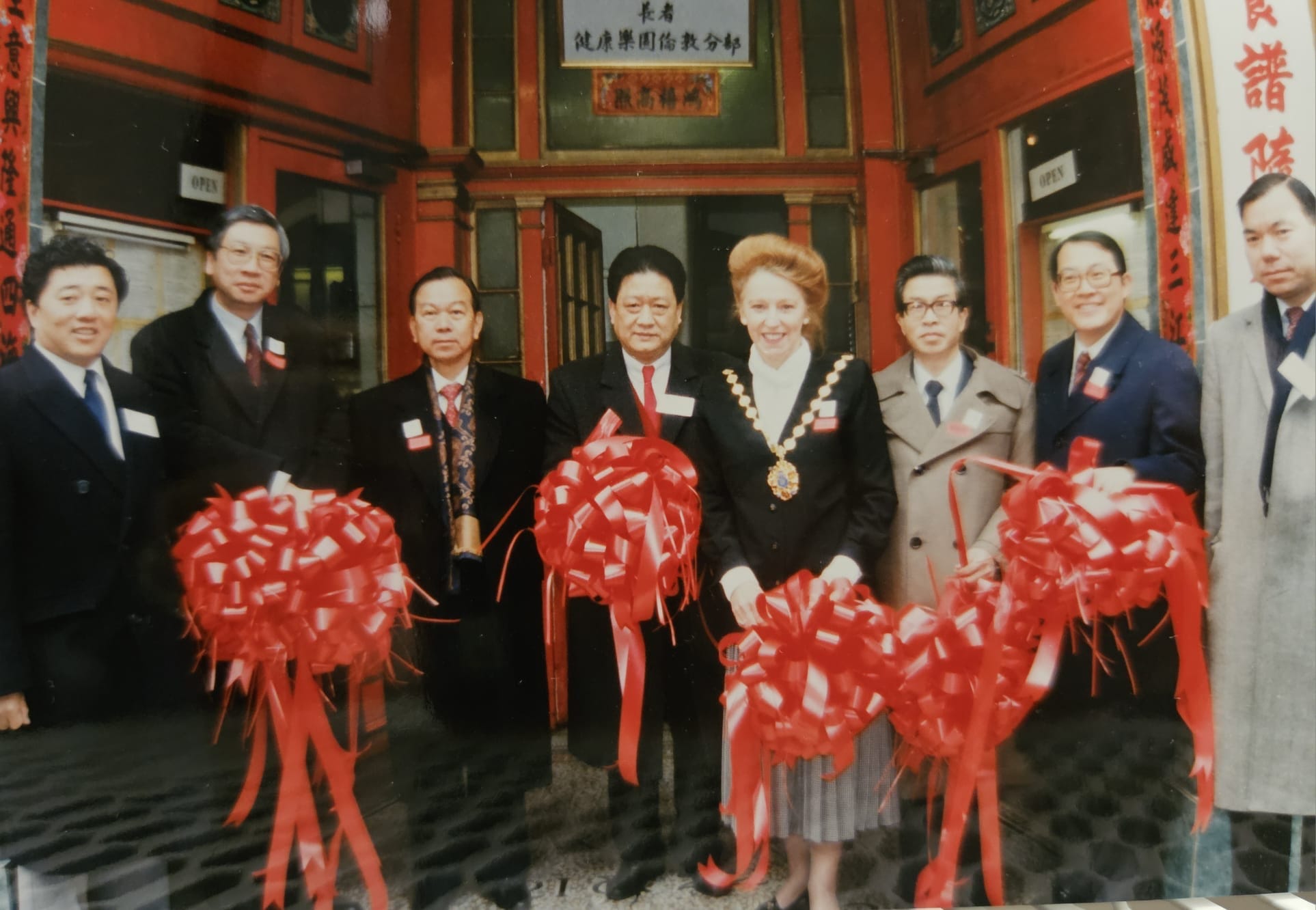
But Poon’s legacy stretched far beyond restaurants. He cared deeply about the community around him, making sure any unused ingredients were cooked while still fresh so Cecilia could take the food each evening to feed unhoused people at Waterloo Bridge. He also opened an old people’s care home in Chinatown above Golden Gate Cake Shop, creating a space for older members of the community. Poon hosted events there, cooked for residents and helped those who struggled with English. The project was sadly short-lived after it ran into management difficulties. At one point, Poon joined forces with members of Chinatown’s old guard, including John Hon Cheung Wong, owner of Chinese food supplier Sam Pan Foods, and Stanley Tse, founder of Asian supermarket See Woo, to raise money for a Chinese temple in Milton Keynes. Plans were put in place, but the project never came to fruition.
When he was diagnosed with cancer three years ago, doctors gave him six months to live. He decided against chemotherapy and turned to Chinese medicine instead. Spending hours in hospital attached to tubes and needles was not who he was, and he carried on as normal, eating, drinking and smoking, much to his family’s distress. It was only in the final months of his life that his health began to decline. Even then, Poon insisted on enjoying the things he loved, regularly sending notes to his family with requests for claypot rice, soups and fish congee, while also asking them to sneak red wine and cigars into the hospital. The staff would tell him off, but Poon rarely changed his mind. He remained determined, headstrong and convivial to the end.
Since his death, tributes have poured in from across the food industry. When asked what her father would have made of them, Amy says he would have brushed them off. ‘He didn’t like fuss,’ she says. ‘There’s a Chinese phrase, ‘除褲放屁’, which literally translates as ‘take off your trousers to fart’. It means making a mountain out of a molehill when something doesn’t need to be such a big deal.”
Bill Poon (3 December 1944 – 16 June 2026) was survived by his wife, Cecilia, daughter Amy and son Alan
Credits
Angela Hui is an award-winning writer and editor. She was the former food and drink editor at Time Out and lifestyle reporter at HuffPost. Her work has been widely published in the BBC, gal-dem, the Guardian, Financial Times, Independent, National Geographic Traveller, Refinery29, Vice, and Eater. Her first non-fiction book TAKEAWAY: Stories from a Childhood Behind the Counter was published in 2023.
The full Vittles masthead can be found here.
Delicious writing - paints such a vivid portrait of a fascinating character I previously didn’t know much about. Really animates the concept of influence, one I didn’t think I was interested in this day and age where it’s so cheapened by overuse. Thanks for making me change my mind today and for the educational journey through decades of culinary evolution across borders. Our palates are all the better for Mr Poon’s influence 😋