

The Golden Age of British Ice Cream
Cornetto to Magnum: How fifteen influential years changed British culture. Words by Ruby Tandoh. Illustration by Sing Yun Lee.

Good morning and welcome to Vittles. Today’s essay by Ruby Tandoh is about the most influential decade-and-a-half in British ice cream culture — a fertile period from 1976 to 1991 during which most of the ice creams you’ll find in a British freezer today were invented. This essay is adapted from Ruby’s book All Consuming, which was released in paperback last month. To buy it, please click here.
Today’s article is also part of our online-only series of essays on influence linked to our third print issue, ‘The Influencers’ which officially came out last week. Thanks to everyone who has bought a copy so far! You can order your copy here, and, while you’re there, you may as well throw in a copy of Ruby’s ice cream guide too.

The golden age of British ice cream started with a simple enough gambit: that there had to be a way of packaging the iconic ice cream cone. What if, instead of having to queue up outside a seaside ice cream hut, or a transient ice cream van, you could go into a shop – any shop – and find a cornet waiting for you, pre-made? What if it was fixed so that it was perfect every time – so that a smooth, dense volume of ice cream went all the way down into the cone, so that sauce ran through the ruffles and never fully froze and never dripped? What if you could make it so that it was physically impossible for the ice cream to fall off the cone?
An Italian manufacturer called Spica had already got the formula down in 1959. The success was partly down to the cone Spica designed: a bias-cut, crisp wafer construction that had been sprayed on the inside with a mixture of chocolate and coconut oil, forming a damp-proof barrier between the wafer and the ice cream. But the ice cream was important too. Full-dairy ice cream doesn’t hold up well when you try to pipe it or store it like this. The new ice cream was different. It felt colder on the tongue. It melted quickly but smoothly, with the precision of a racer taking a clean, sharp bend. What you ended up with was a cornet of compactly aerated vegetable-fat emulsion threaded with sauce, serving mainly as a pretext for the chocolate plug.
The ice cream did well in the homeland of gelato, but in Britain, the idea didn’t immediately translate. There’s only so long that wet ice cream can last in a crisp sugar cone before things start to break down, and the turnover of ice cream in a corner shop in Bolton wasn’t like that in a store in Rimini. So, when Wall’s – the biggest name in British ice cream – tried to launch it in the UK in the mid-sixties, it crashed out. It took ten more years of chemical tweaking to hit the impossible sweet spot: an ice cream with the physical qualities of Teflon that could withstand getting knocked around in a freezer cabinet but that also melted in the mouth. Eventually they nailed it, and Wall’s parent company Unilever bought the recipe. In the summer of 1976, the Cornetto entered the British corner shop.
Nearly 7 million Cornettos were sold that summer. You couldn’t have chosen a better time to release an ice cream. It was one of the hottest summers on record, with ice cream season extending long into autumn, and that same year, semi-luxury ice cream chains Baskin-Robbins and Dayvilles both entered the UK market and got people used to the idea that you might pay as much as 25p for an ice cream cone. Walls marketed hard, coming up with a proto-viral campaign - the ‘Just One Cornetto’ song. Within a decade, Cornetto had variants in strawberry, mint, and rum and raisin flavours, and was selling 70 million units a year. It was by far the most popular ice cream Britain had ever produced.
In the world of British ice cream, 1976 was the beginning of an influential fifteen-year purple patch that spawned pretty much every one of the ice creams you find in the freezers today. Go to a shop or browse the menu on the side of an ice cream van. You see the Mini Milks? 1976. Funny Feet – the ancestor of skinless, sculptural ice creams in the shape of Minions and Peppa Pig – debuted in 1980. The Twister, the coiled ice cream and sorbet hybrid? The format was invented in 1982 in Ireland as a strawberry, vanilla and chocolate ice cream, with the flavours it has today – the lime, pineapple and strawberry trifecta – allegedly, incomprehensibly, the result of a schoolgirl’s trip to the Gloucester Wall’s factory in 1987 courtesy of Jim’ll Fix It. Viennetta was invented in 1982. Calippo came to the UK in 1982, although the orange Calippo wasn’t launched until 1988. Feast – a horrible ice cream that seems unkillable in a hard-shelled, cockroach kind of way – was 1983. In 1988, we got Mars ice cream bars. In 1990, Carte d’Or. Bookending the period, was another titan launched in 1990 that surpassed even the Cornetto: the Magnum – the most popular ice cream in the world today.
This sudden leap forward in ice cream culture may seem mysterious, but it is often how things work once food gets to an industrial scale. Change happens quickly, and innovation comes in waves – amplified by economic changes, mergers, acquisitions and low-stakes corporate arms races. In the 1930s it happened with chocolate, with the release of Mars bars, Snickers, Milky Bar, Maltesers, Aero, Ritter Sport, Rolos and KitKats – a chocolate-bar formal repertoire we haven’t meaningfully improved upon almost a century later. Something similar has happened in the last few years: an era of unprecedented creativity in crisp flavourings. The golden age of ice cream was just fifteen years, roughly overlaying the late seventies and eighties, but it saw the biggest explosion of industrial British food culture in the last half century.
When ice cream was popularised in the UK in the late 1800s, it would have been hard to imagine that things would go this far. Italian migrants sold penny lick milk ices on the streets, sellers convening on the canals in the early morning to buy blocks of ice, then dispersing across the city. Milk was frozen with sugar and, maybe, egg; serving glasses were wiped out with an old rag and then refilled to order. Over time, the ice creams became more complex; during the thirties, the catering and cafe empire Lyons made ice cream cakes – campy things like Trocadero Wonder Gateau and Glace Pompadour, with ice cream moulded like a ball-gown skirt.
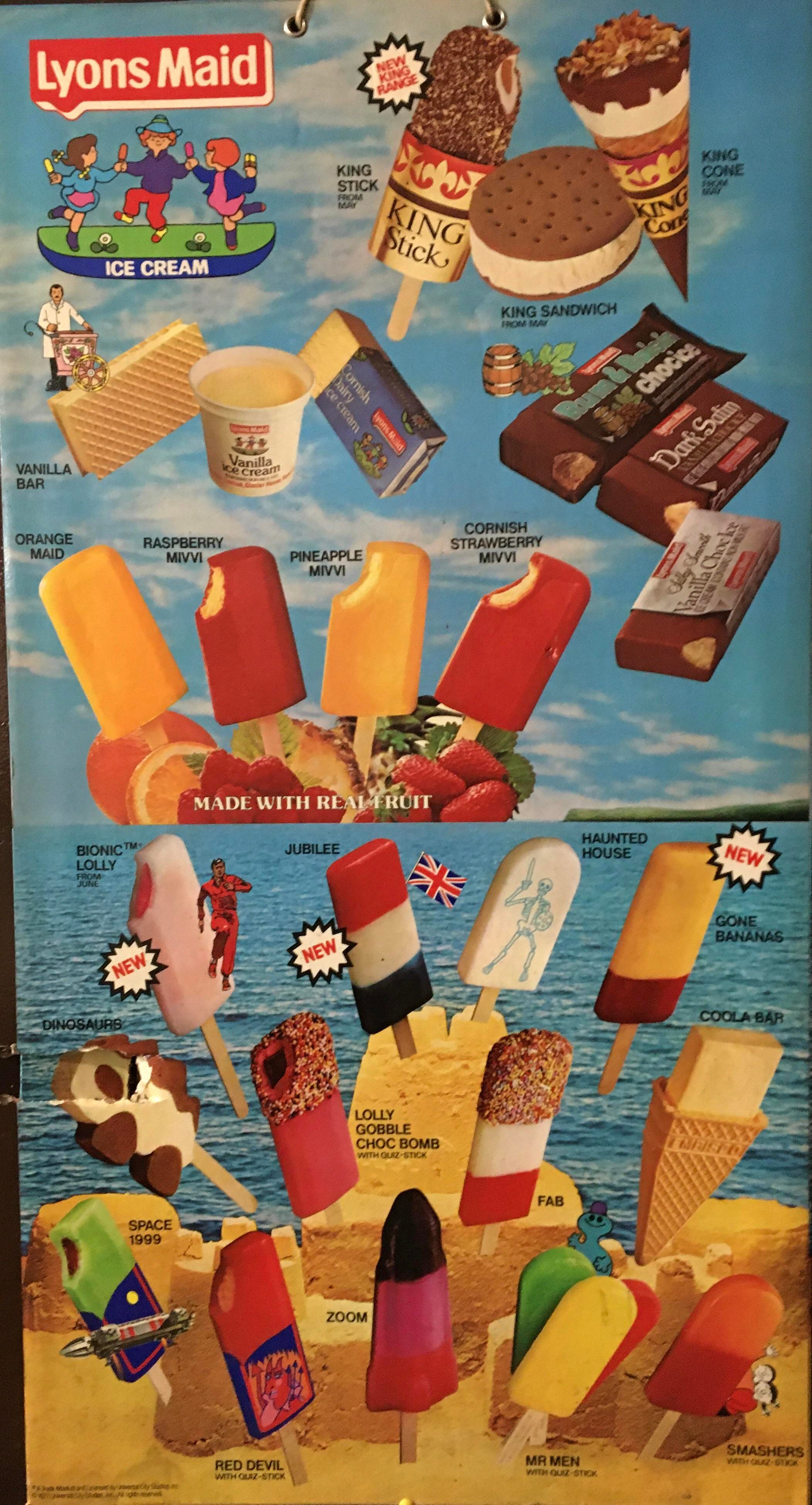
By the start of the World War 2, there were armadas of men on tricycles selling ice creams under the branding of Wall’s – a sausage manufacturer that had realised, astutely enough, that people weren’t really buying pork pies in summertime and so it probably needed a second income stream – which had been acquired by the progenitor of Unilever in 1922. Ice cream, however, was extraneous to the war effort and restrictions were put on how much dairy and sugar the industry could use. By the fifties, ice cream was more basic than ever; most Lyons ice cream – eventually brought under the banner of Lyons Maid – was rigorously functional: bricks, bricklets, cups, poles and rectangular choc ices.
With the end of rationing in 1954, the final wartime restrictions on food were lifted and spending power increased. During the war, the fleets of ice cream tricycles had been sold and scrapped, but they were succeeded by ice cream vans and convenience stores. Wall’s, which had once sold 90% of its ice cream on the road, now sold 90% from the capacious freezer cabinets of brick-and-mortar shops, from whose owners they could demand exclusivity. All of a sudden, and pretty much out of nothing, there was an opportunity to do something new.
The first technologically cutting-edge ice creams were basic by today’s standards. Take the Lyons Maid Mivvi, a fruit split with a strawberry or orange ice shell around vanilla ice cream on a stick that debuted in 1959. It was simple, but undergirded by some of the most complex technologies of the time. Fruit-flavoured syrup was pumped from plastic arteries into rows of moulds, a two-handed manoeuvre in which the moulds advanced in time with the pulse. Mechanical arms swung the moulds through a cryogenically cold brine bath, a motion just smooth enough to be legible to the human eye, during which a crust of fruit ice a few millimetres thick froze to the contours of the metal. After this, the moulds were inverted with the snap of a flamenco dancer’s wrist, tipping the unfrozen centres into a vat. Then, ice cream was piped into the empty shells through exacting metal mouths and wooden lolly sticks were shot from muzzles lining the sides of the conveyor. A machine like this could make tens of thousands of strawberry splits every hour. After it launched, over a third of the Lyons Maid ice cream sold came on a stick.
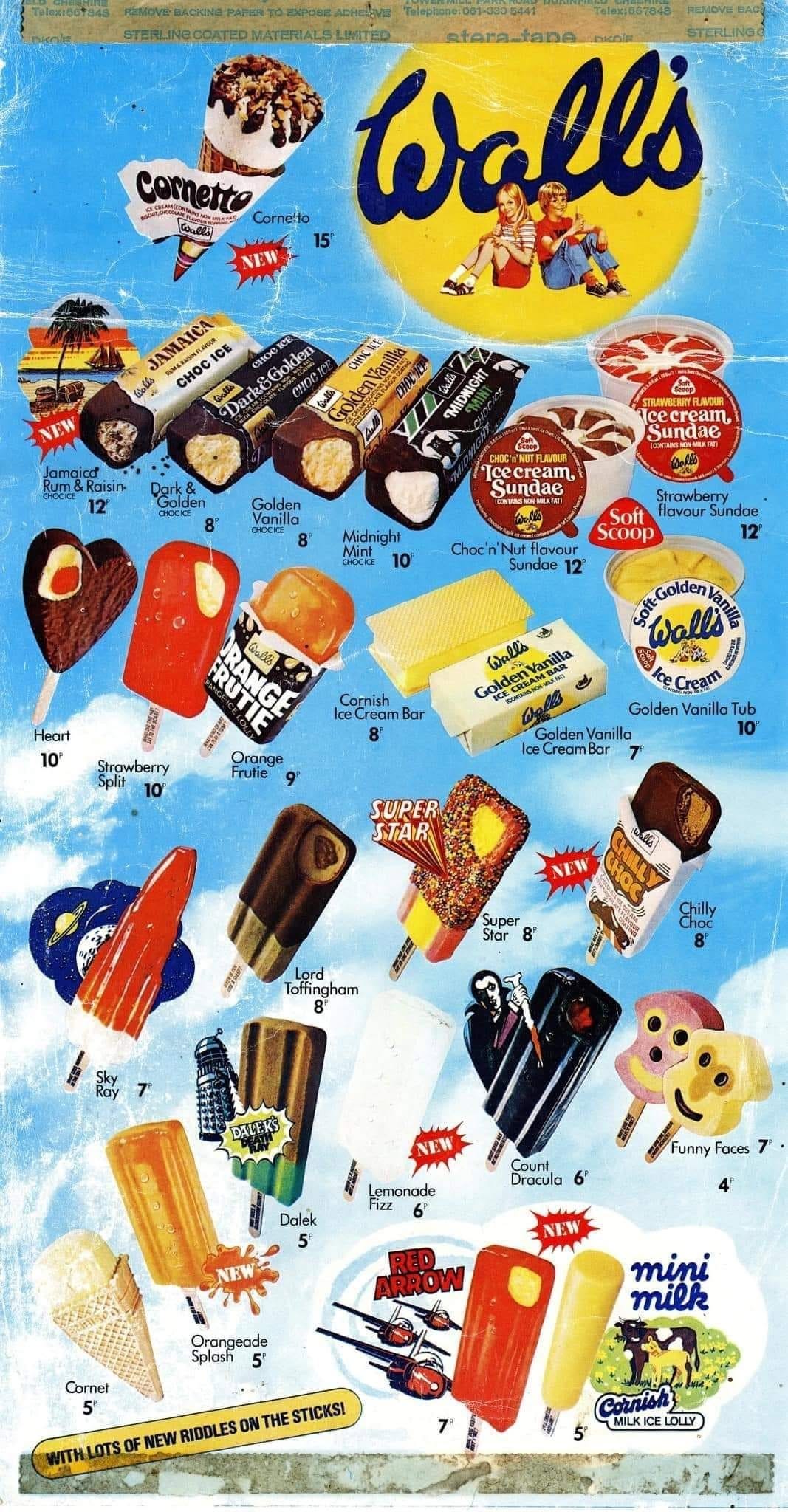
Technological changes in the sixties and seventies led to ice creams, predominantly geared towards children, that would’ve been unimaginable even a decade earlier. We got Haunted House ice lollies, which had blue ghosts printed into white milk ice. A new blood-red Dracula-inspired lolly had the craftsman’s line of a medieval gargoyle. As you licked a Magic Monster lolly, the face of Frankenstein’s monster appeared through the ice. Fab – an underskirt of strawberry ice, a wraparound of vanilla ice cream and an outer layer of sprinkle- beaded chocolate – was inspired by Lady Penelope’s FAB1 Rolls-Royce from Thunderbirds.
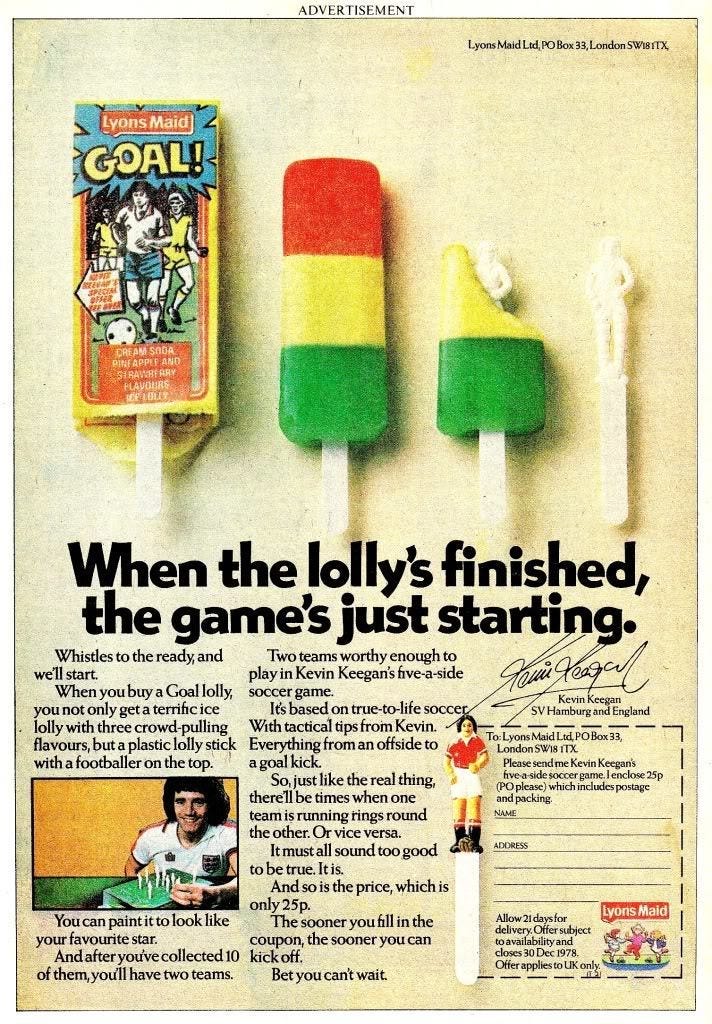
This particular thread of ice cream was beginning to wear out by the mid-seventies. The products being introduced were popular enough, but they were cheap and mainly bought by kids. Slowly, more people got home freezers, which opened space for bigger, take-home tubs of ice cream and supermarket multipacks of their own-brand lollies. Companies like Unilever had to come up with something bigger and better if they wanted to avoid going the way of Lyons Maid, which is to say, sliding into total irrelevance. When Walls struck gold with the Cornetto in 1976, it was the first of many answers to one simple question that would guide the company’s strategy for the next five decades: ‘How do you sell ice cream to grown-ups?’
In the years after 1976, Walls tried to improve and iterate on the Cornetto without much success. The man who finally managed to do it was Kevin Hillman, a product developer who started at Unilever on a scholarship in 1958 and didn’t leave until his retirement in 2001. For most of that time, he worked in ice cream, doing the imaginative acrobatics that you’d expect from Willy Wonka, but with granular attention to detail in the matter of things like emulsification, viscosity and the complex chemistry of milk. He was once head of product development for Unilever’s take-home ice cream – that is, the big tubs and desserts that you don’t eat on the go (in the ice cream world, all products are divided into take-home or impulse, which refers to Cornettos or anything on a stick).
By 1980, Hillman was a product development manager at the new Wall’s production plant in Gloucester. One day, when looking through a Good Housekeeping cookbook that he’d bought his wife, he saw a recipe for millefeuille: three sheets of puff pastry, each one with around 729 layers of buttery carbs and air, mortared with two layers of thick vanilla custard or cream. Hillman began to wonder what an ice cream millefeuille would look like. You could extrude drifts of ice cream, but instead of sandwiching them with pastry – which would soften and warp – you could interpolate them with the thinnest leaves of chocolate, he thought. Until the late seventies, take-home ice cream was a support act to impulse, but Hillman’s team had begun to experiment with ice creams that were good enough to work a crowd. Wall’s had already tried out Arctic roll, wrapping a log of vanilla ice cream in a jam-slicked sleeve of sponge cake, and there were also experiments in strawberry- and chocolate-flavoured log desserts, the foundations of a sundae compacted into a 600ml rectangular ice cream block.
The earliest prototypes of Hillman’s idea were basic – just the size of a Vesta matchbox, with rigid layers that tasted great but visually fell flat. But Wall’s discovered that if you squeezed a length of steel pipe in a vice until it had an aperture of just a few millimetres, you could extrude very broad, thin sheets of ice cream in an unbroken stream; in time, they also realised that if you increased the output speed, the ice cream would begin to pile up in collapsing sine waves. The engineers worked on adapting the machinery so that the process of plastic extrusion could be used to make something like edible art. In between each of the dozen ice cream layers, they sprayed atomically thin, stracciatella-style layers of chocolate, using an Elizabethan ruff as a visual reference. The result was a dessert the same size as the Motorola 8000X, an early, brick-like mobile phone that debuted that same year. When the team at Wall’s drafted the patent, they described ‘Composite confection products [that] comprise a multiplicity of superimposed extruded thin layers of extrudable e.g. aerated frozen confection, optionally separated by interleaved very thin second confection layers such as couverture thin enough to be at least partly discontinuous.’ But on the streets, they called it Viennetta.
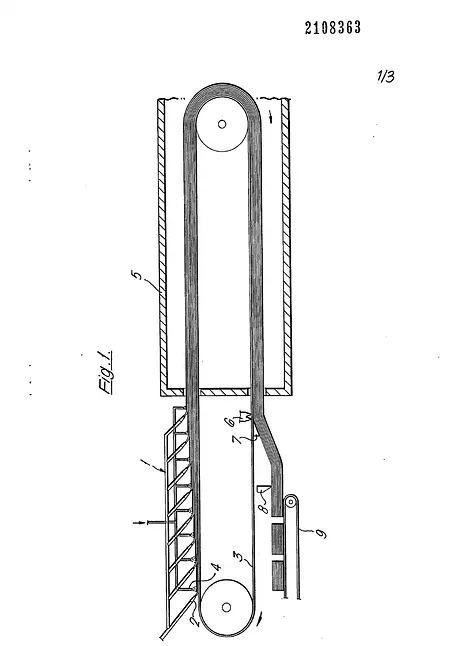
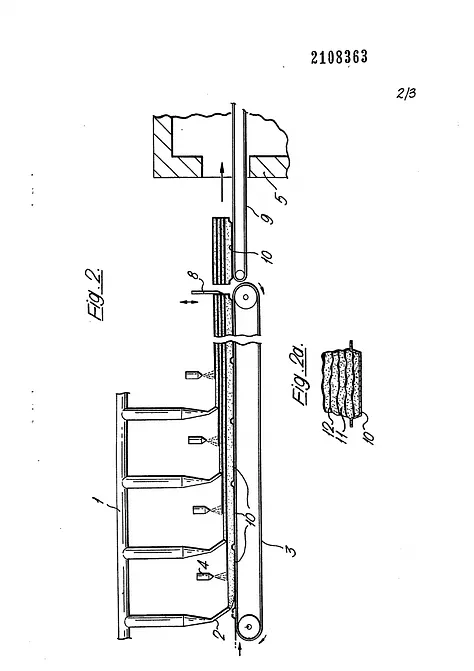
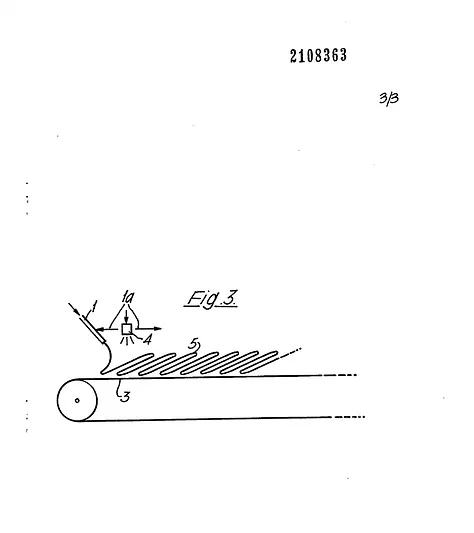
If you’re talking to anyone about ice cream’s greatest generation, Hillman’s name will inevitably come up for the Viennetta alone. But if you press him too hard about it, he gets shy. The Viennetta origin story is the kind of thing that is constantly brought up and broken down and misremembered; we like to hear fairy tales about these kinds of foods – the foods that are everywhere but that none of us knows how to make – but they are painstakingly engineered by teams at costs running into millions to game our dopamine systems into buying more. Hillman knows this better than anyone, which is why, when I interviewed him last year and asked about the lightbulb moment, he politely referred me to a corporate history book (Renewing Unilever: Transformation and Tradition) and left it at that.
But when I got him on to the real lineage of this ice cream – the myriad corporate, commercial, industrial and trans-European forces that led to the invention of Viennetta – he jumped right in. The spray guns for those ultra-thin layers of chocolate couverture were a trick they took from Cornettos: ‘Exactly the same technology,’ he noted, ‘is used to spray chocolate as is used to spray paint on cars.’ The ice cream, too, was the same as that used in Cornettos – that bright white, sculptable, continental-style ice cream made using vegetable fat, which gives the ice cream its plastic properties, arguably at the expense of taste. Unilever came from the merger of a Dutch margarine company and a British soap business, which means that it was set up nicely for the rise of highly processed vegetable-fat-based ice creams (Dutch colonial links to Indonesia made coconut oil a sure bet.) Then there was the packaging, which was borrowed from Unilever’s German ice cream brand, Langnese.
‘We had very close links. We could pick up the phone and get anything from [other Unilever factories in] Europe,’ Hillman told me. This is how Britain came to host the most productive decade in ice cream, globally, ever: it didn’t do it alone. Unilever had been slowly acquiring ice cream businesses from across the continent for decades. That particular white ice cream is a rethink of an Italian ice cream, perfected under Unilever’s Belgian business, marketed in the UK. Sometimes the impetus for creativity is romance, but most of the time it’s something more prosaic – a Medici, or a Unilever. The story of ice cream is really one of corporate tactics and injections of cash, of the movements of huge companies to create, and then aggressively enforce, a new agenda.
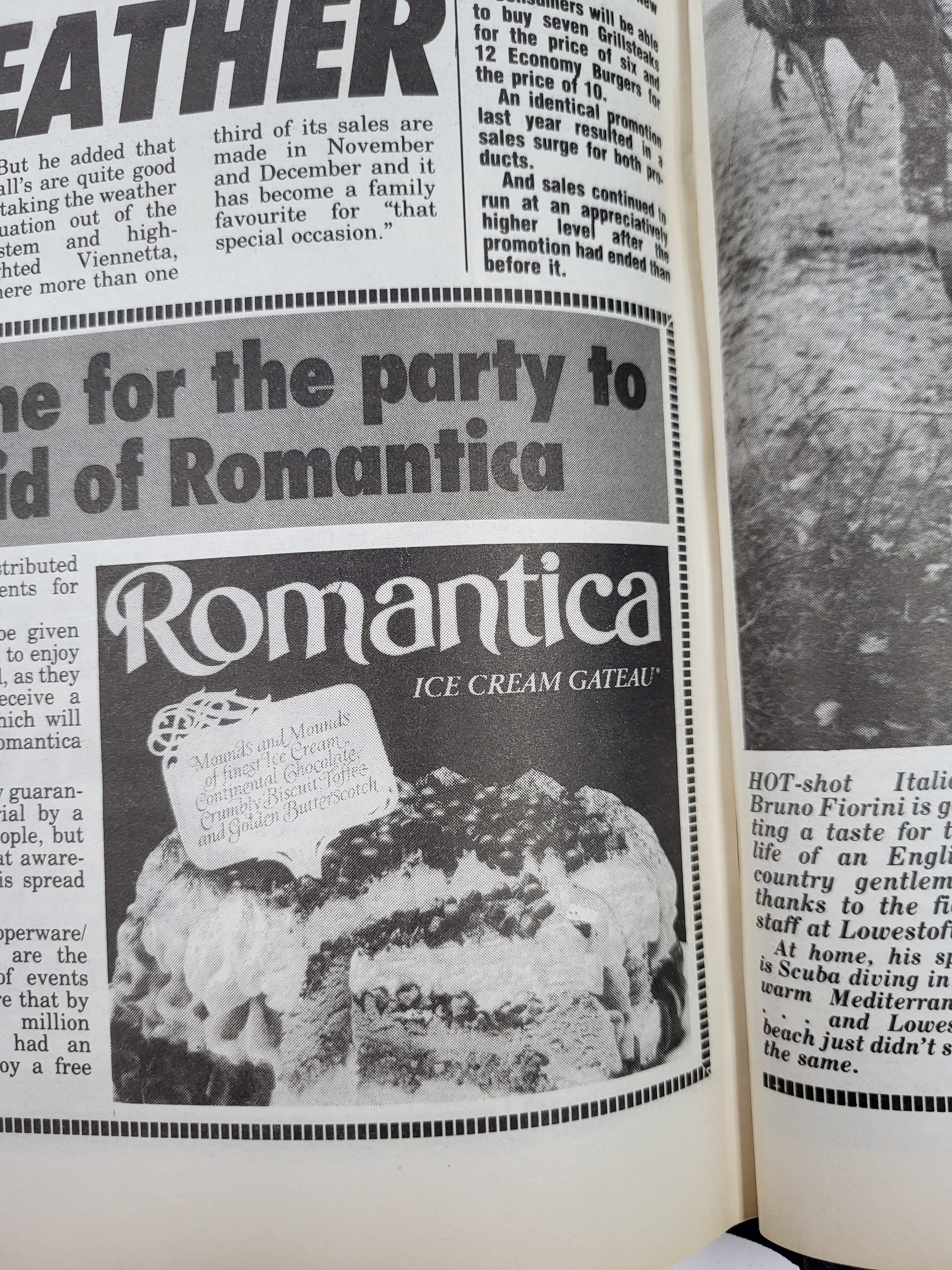
After Viennetta blew up, Unilever tried to squeeze a few more ice creams from that basic idea. They developed things like Romantica, Carissima, Sonata and Cassata Denice – all Italianate ice cream gateaux with the kinds of names a person would use to catfish on a sugar daddy site. In 1985, the company started ‘Project Renaissance’, exploring the hypothetical that ice cream could be, instead of a kids’ thing, ‘a secret affair – a lover to be “used”’. Look through the patent records and you’ll find dozens of patents for new ice cream ideas. There’s an ice cream inside a brandysnap-style tuile, capped with waxy chocolate at the ends. There’s another for a lolly made using tiny pellets of fruit ice, poured into a mould, and then frozen together with a contrasting-flavour ice cement. Everyone was doing it. Over at Lyons Maid, they rebranded their choc ice as Figaro and developed the Caprice – a chocolate bar with malt ice cream and caramel that now persists only in lore. Nutcracker, a vanilla ice cream bar with toffee sauce and peanuts, joined Caprice in what was marketed at the time as an ‘adult connoisseur range’.
The trouble with marketing ice cream to adults is that novelty isn’t enough. You need things to actually taste great, or at least to taste as luxe as they look. In the eighties, the principles of ice cream began to change, with a new focus on ingredient quality. Lyons Maid introduced a Gold Seal range, then Crème de la Crème – seemingly arbitrary gradations of luxuriousness. In France, Carte d’Or found a path from wholesale into the retail market. Pillsbury bought and popularised the pseudo-Scandinavian Häagen-Dazs. Ben & Jerry’s, which started as a shop in a Vermont garage, opened its first factory in 1985, sold on the strength of its countercultural credentials and natural ingredients. ‘Wanted!’ ran one Lyons Maid advert. ‘Real chocolate, real goodness, real fruit and double cream.’
Around this time, European subsidiaries of Unilever were developing a simple ice cream – vanilla, enrobed in chocolate, on a stick. It was the polar opposite of Cornetto and Viennetta, despite working towards the same grown-up principles. It had real vanilla ice cream, enriched not with coconut oil but with butterfat. Whereas most of the chocolate that Unilever had been using was imitation – cheap and adaptable, setting either to a waxy cap or the thinnest layer of craquelure – for this ice cream it developed a better kind of chocolate, one that could be deep-frozen, and that snapped loudly into big, angular shards, but still melted in the mouth. They experimented with the recipe, took it back to basics, and gave the lolly a smooth, cursive silhouette. The industry, which for much of the eighties had evolved in the same implausible way as a deep-sea fish, returned to simple forms. The Magnum debuted in Germany in 1989, and hit the UK the year after.
At the end of the day, a Magnum is a choc ice. But what a choc ice! ‘Magnumize your free time’, an ad would say, and show a woman lock the kids outside, so she can go hard on her Magnum in peace. ‘Magnumize your life’: at the office, she has unplugged the landline master socket. (It’s hard to capture just how horny the Magnum was.) If Wall’s started selling ice cream to get through the fallow summer months, then Unilever smashed the final frontier by finding a way to market ice cream all year round – any time, any place. It wasn’t about the sun or refreshment any more, but just an adult’s right to a moment of pleasure. In 1990, for their first big stunt, and the last truly exciting day in British ice cream, Magnums were handed out to thousands of commuters in three major London stations, in rush hour, in November. Within a couple of years, it was the best-selling ice cream in the world, and remains so today.
‘Of all the fast foods on sale in Britain,’ the food writer Jane Grigson wrote in the Observer at the start of 1990, ‘I would say that vanilla ice cream represents the most catastrophic fall from original virtue.’ But Grigson died just a couple of months later and so I have to wonder if she ever got the chance to try a Magnum?
The ice creams that came out of the golden age are as much a part of British food culture as cheddar cheese is. In fact, there are a lot of parallels between the two. Like cheese, ice cream is a dairy product that was given new vitality in the eighties. In the case of cheese, it was by looking back to traditional methods of cheesemaking. In the case of the ice cream, it was innovation, rather than revival, and it happened on the biggest imaginable scale. But unlike the cheese side of the dairy industry, which has continued to thrive, ice cream has stagnated.
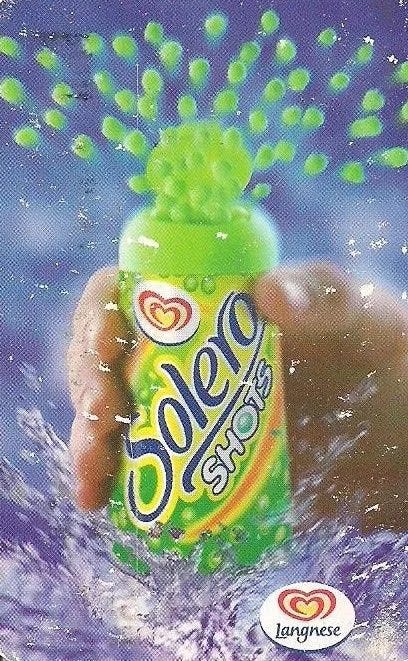
It’s not like people haven’t tried. In the early nineties, Kevin Hillman was fine-tuning the recipe for a new fruit version of Romantica – a Viennetta-inspired gateau constructed with stacked rosettes of vanilla and strawberry ice cream and sprinkled with beads of fruit ice. He found that if you used a kind of rudimentary shower head, you could spray globular drops of fruit syrup into a bath of liquid nitrogen, where they instantly froze into hailstones. Romantica never took off, but the idea was eventually recycled as Calippo – and then Solero – Shots: tiny pellets of fruit ice that you tipped back like the crumbs at the end of a bag of crisps. This was, for ice cream aficionados, a moment of hope, but these were discontinued within a few years and nothing good has really happened since.
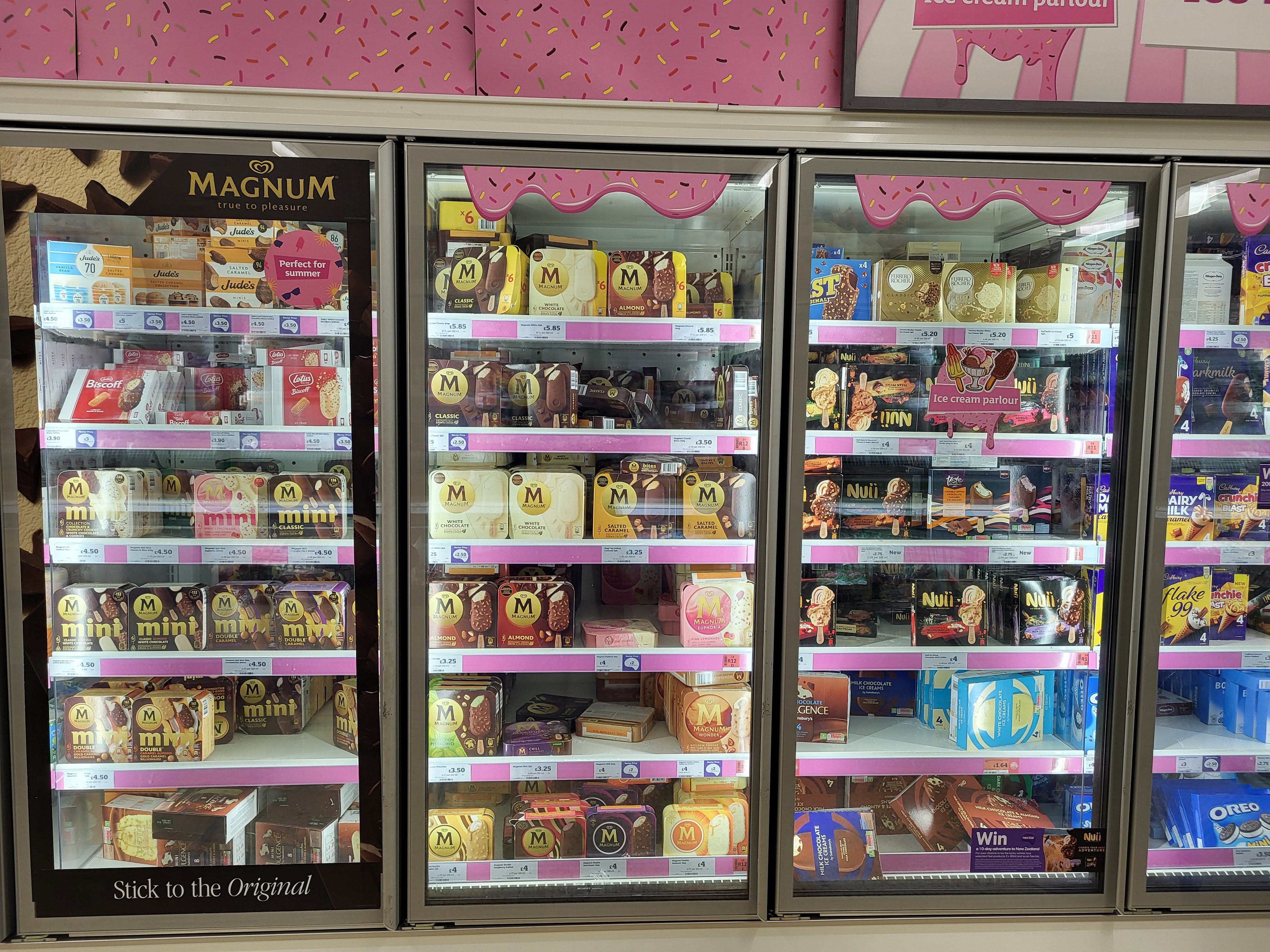
Today, if you look in that corner-shop freezer cabinet, there will be a Cornetto, a malformed Twister, and then a clade of Magnums: classic, double caramel, white chocolate, almond, mint. The novelties: Starchaser Chocolate Caramel & Popcorn; Gold Caramel Billionaire; Sunlover White Chocolate. Even in the same flavours, Magnums keep on finding culinary synonyms, from vegan Magnums to Magnum ice cream tubs (the chocolate shell turned into an upper crust), mini Magnums and Magnum bites. Everything else, from the chocolate ice cream bars launched by Mars, to the Solero, is a version of a Magnum. It never ends. Last year, Unilever demerged its entire ice cream portfolio, including all the ice creams of the Wall’s Golden Age, and remerged them into a new entity: The Magnum Ice Cream Company. The Magnum has ended up more famous than the company that birthed it.
Last year I went to a food industry expo at London’s ExCel Centre to see if the industry was turning out ice creams that I didn’t yet know about, but should. I hoped to see the prototypes of a new generation of ice creams, the technological and imaginative vanguard. What I saw was a vegan non-Cornetto brand at an unmanned stall. There was a Romanian manufacturer of ice creams modelled after Magnums, making a push for relevance after Unilever entered the Romanian market with the real thing. There were health-food anti-Soleros made from plant juice, fibre and pulp. A Slovenian brand had a product poster that could have been photocopied and transliterated from a Wall’s decal from 1989: Everest was a facsimile of a Magnum, Turbo was a Magic-Ice brand Twister, Free was a Maxibon. The only thing that really spoke to the idiosyncrasies of Slovenian taste was Adore – a mini imitation-Viennetta on a stick. I told Kevin Hillman about it, and he started asking questions that I couldn’t answer about exactly how many layers this thing had.
Near the exit of the expo, there was a stall from Jude’s, an upscale British brand in the same vein as Häagen-Dazs. Maybe it’s a sign of how much things have changed that now British ice cream, like cheese, can sell itself on how British it is. They were handing out samples. Clotted cream was doing well. Chocolate, always. The salesperson told me they were doing something different from the multinationals. They tried to give me a sample of ‘blue vanilla’ ice cream coloured with spirulina.
Behind, in the freezer cabinet, there were legally daring Jude’s not-Rockets and not-Mini Milks, indistinguishable at a glance from the real thing. The Jude’s version of a Twister was called a Fruit Twist: the same maypole but vegan, smaller, lower sugar. I want to say it’s all outdated, but nothing resonates with the current moment quite like constantly reliving, without resolution or growth, the limited victories of the fifteen years that transformed British ice cream culture. Jude’s biggest line was a range of ice cream sticks, not Magnums, but not not Magnums. They were rounded, slightly fatter at the bottom, with dairy ice cream in a thick chocolate shell. Belgian chocolate, salted caramel, peanut butter – the same as always and, maybe, as good as we’ll ever get.
Additional reading

Credits
Ruby Tandoh is a food and culture writer who has written about food, art, architecture and culture for Vittles, The New Yorker, The Baffler, Eater, Art Review, RA Magazine, Tate etc., The Guardian and more. Her book, All Consuming, was released in September 2025 and came out in paperback in July 2026.
Sing Yun Lee is an illustrator and graphic designer based in Essex. You can find more of her work here.
The Vittles masthead can be viewed here.
What an incredible bit of writing! Loved and hung on every word.
No mention of the Iron Lady herself’s contribution to the British ice cream industry as a food chemist? LBC listeners about to picket Vittles