

The Hater - The TV Food Man
A Biography of the TV Food Man, by a person who hates him. Words by Ruby Tandoh.

Good morning and welcome to Vittles!
A Vittles subscription costs £5/month or £45/year. If you’ve been enjoying the writing then please consider subscribing to keep it running — it will give you access to the whole Vittles back catalogue — including Normal Country, London restaurant guides and all new columns.
The Hater is a new column dedicated to the art of hating. Each week, a different writer examines something they hate, or observes a trend of hating in the British food world.
This week’s Hater is Ruby Tandoh.
This is a work of fiction. Any resemblance to actual chefs, living or dead, is purely coincidental. However, all details are spiritually true.
A Biography of the TV Food Man, by a person who hates him
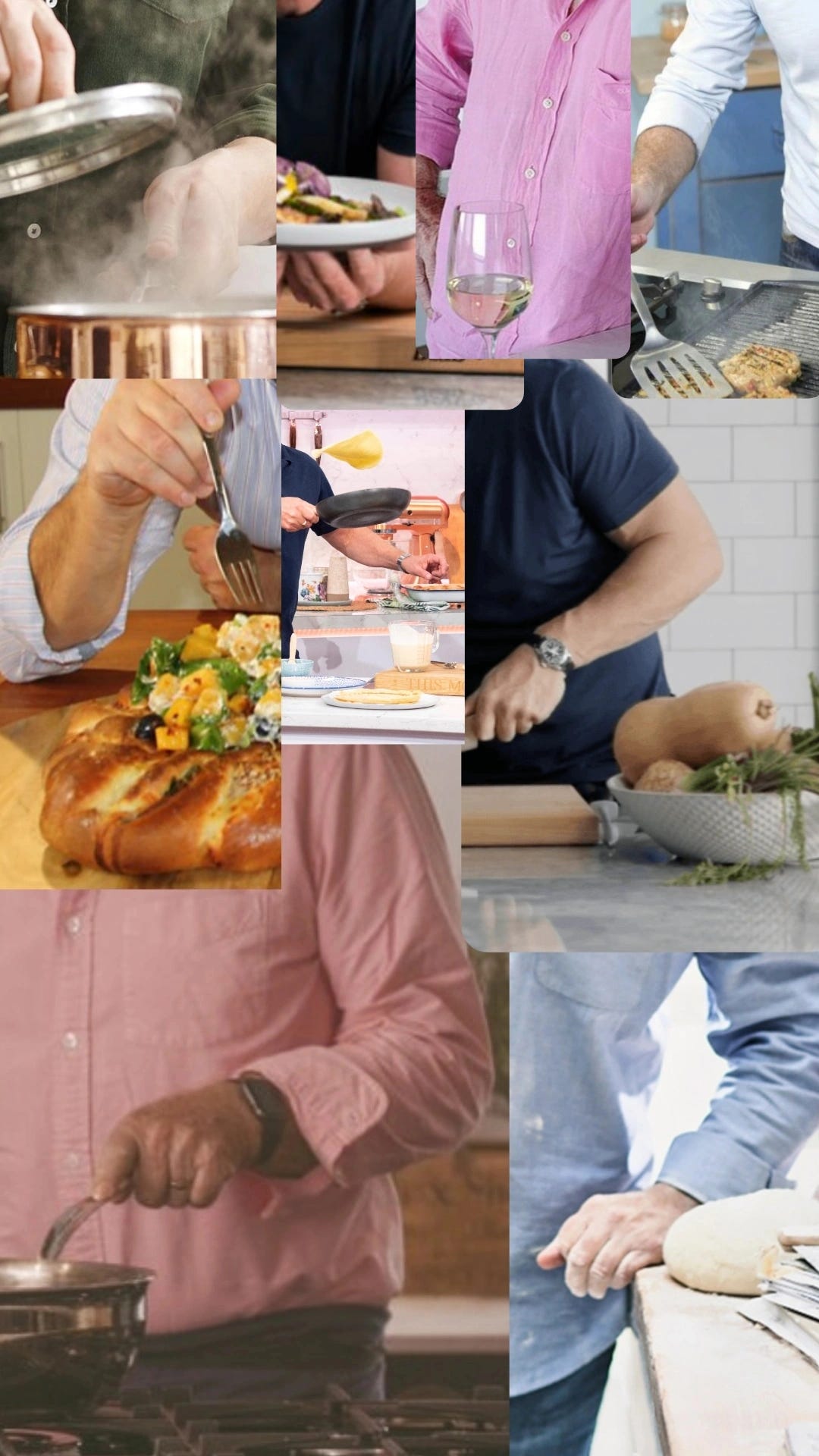
The TV Food Man was born in Welwyn Garden City, although he will tell you that he is Cockney, or – in a different guise, on a different day – that he grew up in the Ligurian hills, drinking olive oil from his mother’s cupped hands. His father was an accountant who specialised in cleaning up the financial missteps of the men he ate steak and blue cheese sauce with at the weekend.
His mother stayed at home and cooked: she was cooking when the birds woke and shook the sleep from their feathers, and she would be cooking until the moon rose over the cul-de-sac. He stood on a little stool in the kitchen and watched her make good food – simple food – putting her wedding ring to one side while she spun buttered shards of pastry from flour and fat or cooked pork chops in the pan. This was just the way things were done at the time, but it is also the right way for things to be done, because just look at the love of cooking that she instilled in him. Look at how a very good boy can be forged by being breastfed in a modest townhouse in Bath until the age of seven, or how a very bad boy can be redeemed by bellowing about linguine to two cameramen and an audience of women who, just like his mother, sweat in thrall to a small and roaring king.
He did not always know that he wanted to be a TV Food Man. He wanted to be a footballer, a gardener, a male model in a too-small ‘Italian-made’ suit for two days a week. At private school on the fringes of Woking, he was the most outrageous boy in his class of ten, and he struggled with the rigid and traditionally masculine life that his father – a benign if distant Mr. Monopoly – had planned. He rebelled by masturbating to the vision of duck breasts being placed, skin-side down, into a cold pan, and wore flares, and played bass in a band that once performed at the second-best-attended weekly open mic night in Didcot. Age 20, he broke into Alison Moyet’s house.
It was the kitchen army that saved him. At catering college he met a man who knew a man and was invited to join the ranks of the professional kitchen. Flames and knives soared through the air. It was boisterous, cavalier, reckless but reassuringly regimented. Some waitress would be chosen for special harassment and she would leave after a week or two but there would always be another waitress to take her place, although he will not divulge any of this today because he’s conscious of the responsibility he holds – as a dad of daughters, the son of a thousand mothers – to embody an impeccably neutered sex appeal. There is no fucking in the kind of food he makes today, although he will make a coy allusion to fisting while making a bouillabaisse, always maintaining deniability, and his capable hands will be singled out for a close-up while they squeeze, knead and caresse soft, pale balls of dough. He lifts them to his nose, staring down the camera, Look at that, just smell that, mmmm, leaving little dimples in the flesh. (He has not touched his wife since 2008 – he is at least peripherally aware that her cookbooks are better than his.)
It is hard to describe TV Food Man’s approach to cooking by reference to anything in the food itself; this is not a style of cooking, because that would mean looking at some facet of the cooking or the culinary heritage, when what is really important in all of this is him. A lasagne is rolled-up shirt sleeves, a look to camera, a summary clapping of hands, tea towel thrown over a shoulder, shouting over the noise of the food processor, Right!, striding without purpose, bish bash bosh, a white nose now pink with sunburn, throwing utensils into the air and catching them again, flirting with a woman who is trying to pipe meringue, Just go and ask your local butcher, chopping very quickly, talking loudly at people who are trying to explain how corn is grown, jeans that are either too large or very much too small, throwing things into saucepans from a height, The Thai are a beautiful people, pretending never to have heard of tinned salmon, big hands doing things badly but with absolute confidence.
Of course, as a man raised by a mother, as a man who can make dauphinoise potatoes with Gruyère and thyme, he isn’t all hollering machismo. Would a lothario open a hedgehog sanctuary in Royal Leamington Spa? Would a career criminal wear a Royal British Legion poppy pin from the very first moments of the Remembrance period? He has asked his agent to add to his Wikipedia a section about his extracurricular achievements, which include but are not limited to a campaign to take candy from babies, a documentary about banning pesticides and minutes from a meeting with the then-Duchess of Cornwall.
He does love food, the TV Food Man. He really does. He loves the farmers and the smell of the fields, which remind him of his grandfather’s ancestral game estate, or of the clumpy turf of a school playing field in Bootle. He loves meat, and hates people (usually women) who don’t understand that the cheap cuts are really the best. He loves the balletic prowess with which he can throw, blitz, bung, mash, wodge, rip, chuck, plonk, chuff, squelch and smash his way to a good meal, in spite of everything Dad told him about how a man should be. He loves trying new foods in new places: arriving there with a mind free of knowledge, ready to learn about the influence of Khmer Rouge on rural Cambodian foodways from a French man in a Tiki bar wearing a No Fear T-shirt.
In his heart, he feels that everyone should be eating well, just like he does when he arrives home from a long day of shouting and autocue and making home cooking great again and his wife (#5, they met on a fan forum about him) has prepared turkey mince bolognese. He dozes while she washes up, dreaming of the MBE he might get for teaching the nation how to eat.
His next big project is a brand-new format of food TV show: a Lads’ Trip with a twist. The twist is that, after a long day hanging off the back of Vespas, they do not have pints and bore local women but instead make negronis and eat pasta, extolling the virtues of a Mediterranean diet (while boring local women). The TV execs want diversity, so one of his co-presenters is bald and the other wears pink shirts on bank holiday weekends. A National Television Award could be heading his way, maybe the cover of the Observer Food Monthly. The exposure will be good for sales of the TV Food Man Espresso Martini Mix, now on sale in any good Waitrose, that he would never drink.
Credits
Ruby Tandoh is a writer and hater on food and culture whose work has appeared in The New Yorker, The Guardian, Vice, Taste, Eater, Vittles and more.
This newsletter was proofed and subedited by Sophie Whitehead.
Finally became a paid subscriber to read this and it was worth every penny 🔥
“A small and roaring king” - just perfect writing 💕