

'There’s injustice in Palestine that needs to be repaired, that’s the priority'
Nisreen Fox talks to Fadi Kattan of Akub and Sara Asad-Mannings of Bunhead Bakery about running Palestinian food businesses in London and the responsibilities of representation during a genocide.
Good morning, and welcome to Vittles. In today’s newsletter, Nisreen Fox talks to Fadi Kattan and Sara-Asad Mannings about working in hospitality during Israel’s genocide in Gaza, and the responsibilities of representation while running Palestinian food businesses in London. You can read Nisreen’s intro and the interviews below.


In October 2023, Israel began carpet-bombing Gaza, beginning one of the largest genocides of the twenty-first century. Since then, Palestinians in Gaza, and the West Bank have faced starvation, torture, forced displacement and access to little humanitarian aid. For decades now – since before the Nakba in 1948 – Palestinians have experienced massacres, displacement and suffering. What we see in the news, and on our social media, does not encompass the entirety of the atrocities that have and are still taking place, not only in Palestine but also in Lebanon, across the SWANA region and, more recently, in the US-led bombings of Iran.
Being the child of the Palestinian diaspora raised in Lebanon, I have experienced the inherent struggle in my family – and in my sense of self – as we grapple with these times. In the UK, Palestinians, Muslims, people of colour and migrants are facing increasing hostility which is upending their day-to-day lives while far-right anti-immigration protests have also been on the rise, with a Unite the Kingdom march in London only last week. All this has affected Palestinian, Arab and Muslim-owned food establishments in the UK. These establishments are part of Britain’s daily life and culture, but over the years I have thought about how Palestinians in hospitality may be working through increasing hostility and pain.
Last year, I spoke to Fadi Kattan of Akub and Sara Assad-Mannings of Bunhead Bakery. In these interviews, Fadi and Sara tell me about the burden and responsibility of representation during Israel’s genocide in Gaza, and how a food establishment can start to stand in for something more. Nisreen Fox
‘There’s injustice in Palestine that needs to be repaired, that’s the priority. We’re not going to make peace around a hummus plate.’
A conversation between Nisreen Fox and Fadi Kattan of Akub.
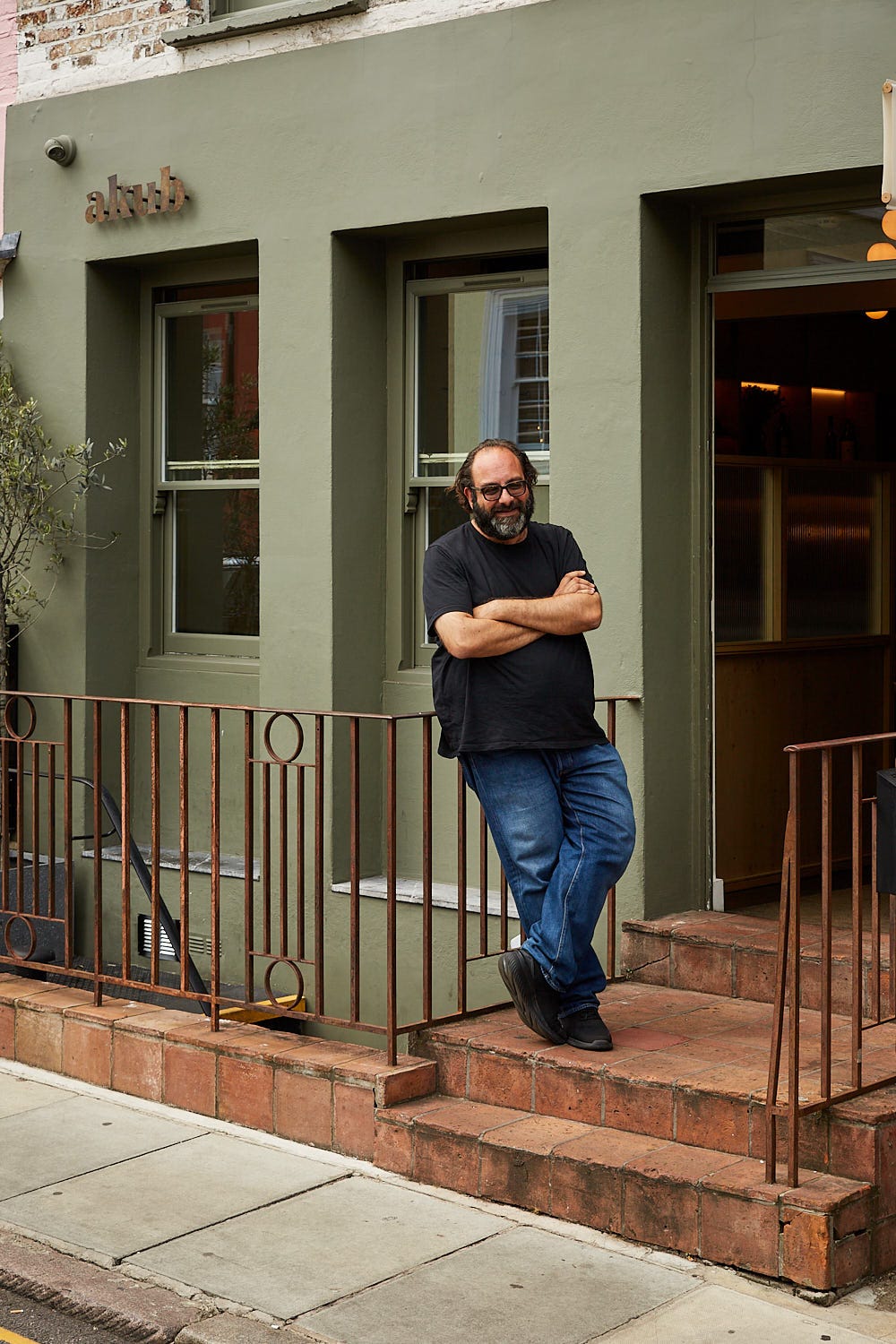
Note: This interview was conducted in August 2025
Nisreen Fox: Hi Fadi. How are you today? Can you tell me a bit about how you found yourself in the food business?
Fadi Kattan: I am Palestinian, born and raised in Bethlehem. I always loved food. I learned how to cook in my grandmother’s kitchen. My mother is an ongoing inspiration every day – I call her often when I am in Akub to ask for advice.
In the nineties, I worked in restaurants in Paris, then in London, after which I moved back to Palestine in 2000, where I started for the first few months working in a hotel. Then the hotel closed down during the Second Intifada, but I stayed in Palestine and joined my family business. In 2003, I organised the first Palestinian cooking competition, just at the end of the Second Intifada, and I saw that a lot of Palestinian chefs had been trained in the idea that only cooking non-Palestinian food was a sign of quality cooking. In France, there was a strong sense of the ‘local’, and I thought about why we weren’t doing this in Palestine.
‘In parallel, there was the theft of the land and the produce, to shape the narrative that gives legitimacy to the occupation by linking food to the land.’
Nisreen Fox: And why do you think that was?
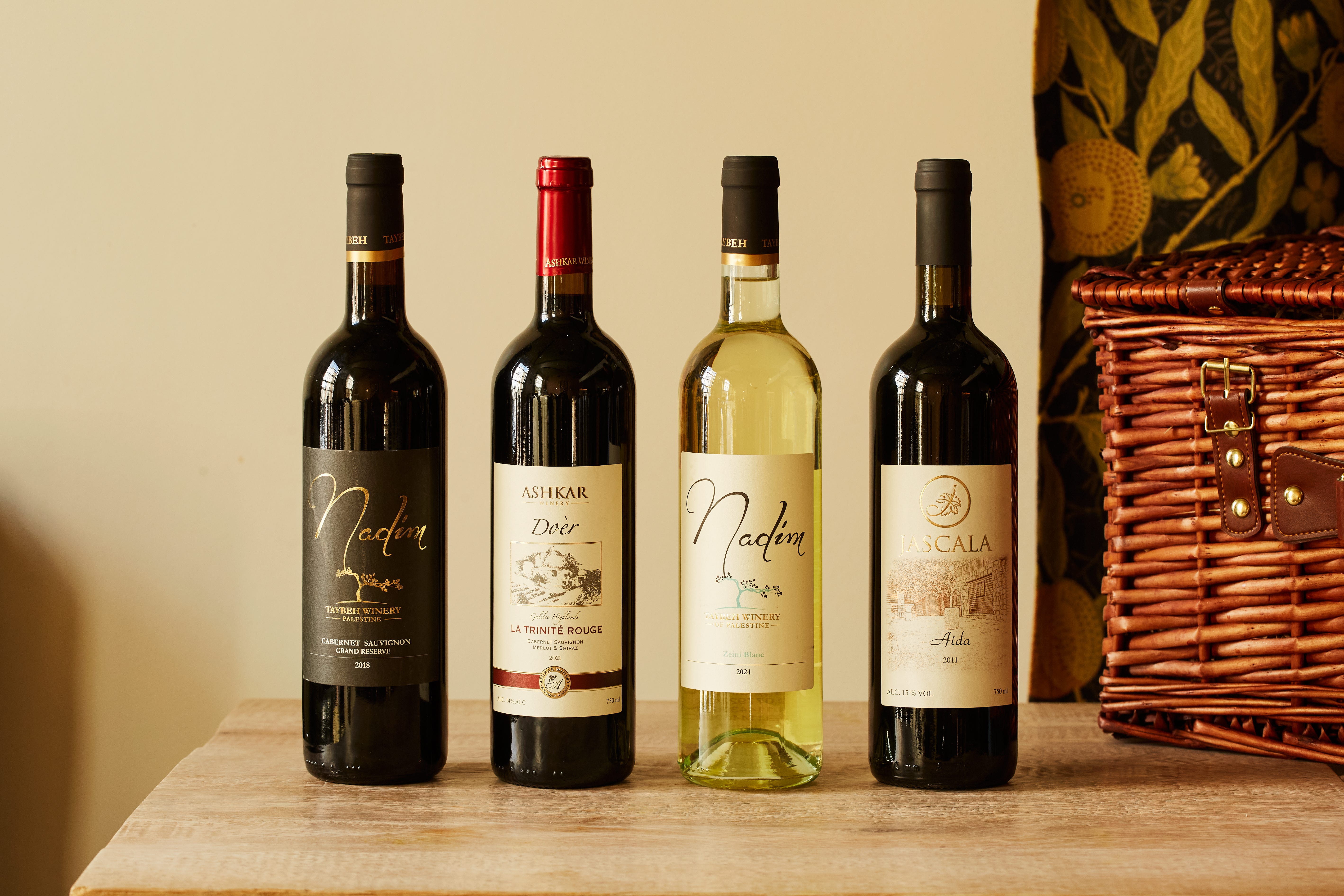
Fadi Kattan: Our Palestinian kitchen is being erased by the occupation, it’s being appropriated, it’s being stolen. Plantations are continuously being destroyed by Israel. It took me the best part of fifteen years to figure out how to take the beautiful Palestinian food being cooked at home into the restaurant kitchen. In 2016, I opened the restaurant ‘Fawda’ in Bethlehem. I decided: I will not have a menu and [will] cook whatever is in the souk that day, and I will only have Palestinian wines [Fadi now co-runs Nabeeth, along with Anna Patrowicz, that brings Palestinian wines to a global clientele]. It worked well. Now, being able to cook Palestinian food in the West, what I really dream of is to be able to normalise Palestinian food. I want Palestinian food to be like Italian food, or Chinese food. That should be how it is. There is an exceptionalism imposed on nations that were colonised.
Nisreen Fox: Got it. And how does that kind of thing transpire in London today? Are people ready to be part of the conversation?
Fadi Kattan: Nisreen, if I were European, or only French, you wouldn’t be asking me this in an interview.
Nisreen Fox: You’re right.
Fadi Kattan: So that’s the point, precisely. Switzerland is just a boring place in the middle of nowhere, but they have fantastic food and wines. If a Swiss chef up in the Alps was doing a fantastic fondue in Gruyères, he wouldn’t have to justify anything. In the last seventy-seven years, what we have seen with food appropriation is – first, the colonisers were looking down at our food, then they were finding it exotic and attractive, then they simply stole some dishes. In parallel, there was the theft of the land and the produce, to shape the narrative that gives legitimacy to the occupation by linking food to the land.
Nisreen Fox: I find it interesting that you say, ‘We want to have it be the same as anywhere else’ instead of wanting to ‘represent’ Palestinian food. I guess what I’m asking is – how do we get to that point of normalising it? Having Palestinian food be just food?
Fadi Kattan: Well, first, we get rid of the dogmatic idea that we all need to be cooking ‘authentic Palestinian food’. I hate the word ‘authentic.’ I also hate ‘Levantine’, ‘Mediterranean’ and ‘Middle Eastern’ because they are rubbish. But, authentic. What is authentic? For me, authentic is what my mother cooks. For my next-door neighbour, it may be the same recipe cooked differently. If you’re Palestinian originally and you were born in the UK and your parents were born in the UK, does it make you less Palestinian? No, it doesn’t. If you eat fish and chips, then add hummus, you’re still Palestinian. We shouldn’t be judgmental of this, because then what happens is we are falling into the coloniser’s orientalist trap.
When I hear people say, ‘Oh, but Palestine is a land of farmers’, I take a deep breath to not get upset, because Jericho is the oldest inhabited city in the world. No, we are not only farmers: yes we are farmers, yes we are cosmopolitan, yes we are diverse, yes the old city of Jerusalem has a Gypsy community, two African communities – one made out of Christian pilgrims and one made out of Muslim pilgrims. We have Sufi zawiyas that come from Tashkent and Bukhara. That is Palestine. We shouldn’t be tiptoeing away from that. Are we sixteen million people who have to agree on the recipe of falafel? La, I’m sure there are sixteen million different recipes of falafel.
But also, crucially, we need to reclaim what is being appropriated. We need to work towards more and more people’s awareness of what comes from where. It doesn’t mean others can’t cook it – I want everybody to cook Palestinian food. But they need to acknowledge Palestinian origin, especially today.
Nisreen Fox: And how do you see Palestinian food’s presence in the UK’s restaurant industry today?
Fadi Kattan: In the UK today, we see a lot of Israeli chefs who are being portrayed as cool Israeli chefs, but in reality, they are cooking Palestinian food. So – can you just acknowledge that this is Palestinian food? Say that batinjan battiri is from Battir and say that musakhan is Palestinian – don’t call it a national Israeli dish. Shakshuka is Tunisian, but then all of a sudden it is made Israeli? How? There are Israelis that come originally from Arab countries, including Palestine, and hummus is part of their cultural heritage, but it doesn’t make it Israeli.
Also, I don’t like it when people tell me that I, as a chef, am ‘preserving Palestinian food’. I’m not. It’s a cuisine that is alive, it’s alive in the diaspora, in Palestine, and it’s alive in Gaza also. Gaza is part of Palestine: it’s not a separate entity. Of course, I’m no fan of what I call ‘coexistence cooking’ because I think it’s bullshit. Like, we’re not going to make peace around a hummus plate.
Nisreen Fox: (Laughs.) Do you feel like we carry the responsibility of having to shine a light on the multiple aspects of Palestinian life? Do you feel like your restaurant, and cookbook Bethlehem, have the effect of introducing people to a broader perception of Palestine?
‘But also, crucially, we need to reclaim what is being appropriated. We need to work towards more and more people’s awareness of what comes from where. It doesn’t mean others can’t cook it – I want everybody to cook Palestinian food. But they need to acknowledge Palestinian origin, especially today.’
Fadi Kattan: I keep telling people: You know what a restaurant is about? Doing good food, serving good drinks and keeping our bathrooms clean. That’s what I should be doing – it shouldn’t be beyond this.
How many people go on holidays to Tuscany to learn how to make pasta? Why shouldn’t we see this with Palestine? Why shouldn’t we see beyond the horror of genocide and extermination and erasure? That energy and light are what also contrast the occupation’s darkness.
I have no pretence whatsoever to teach people, but I do think I have the luck with either the food that we do at Akub, [and] also with my book Bethlehem, to have people then ask themselves questions. And, for me, that’s good enough. However, in the time of Israel’s genocide in Gaza and the West Bank, it’s been exacerbating a lot of this moralising posture or pressure on Palestinians, where we also have to be very careful with what we say.
How many people go on holidays to Tuscany to learn how to make pasta? Why shouldn’t we see this with Palestine? Why shouldn’t we see beyond the horror of genocide and extermination and erasure? That energy and light are what also contrast the occupation’s darkness.
Nisreen Fox: I feel like, especially since the genocide started, I’ve gotten a lot more work just for being Palestinian. I live in Brighton, and a lot of people will say, ‘Let’s go and support all the Palestinian businesses,’ whether they even think the produce is good or not. How do you feel about this wave of thinking?
Fadi Kattan: If somebody walks into a restaurant that is Palestinian or buys Palestinian olive oil online because they feel it should be part of what they can do to support Palestine, then OK. But, as Palestinians providing a service, we have to remember those parameters and be very humble with it. When I talk about Palestinian wine, it’s not just because it’s Palestinian, it’s actually because it’s very good wine. As for the olive oil we source – I know the farmers, and it’s very good olive oil. The sea salt we use comes from a family that is the last Palestinian family on the shores of the Dead Sea. I personally think it’s the best raw salt in the world. Our cooking and food production techniques come from a heritage that has been around for a long time, from processes that have always been practised by the people of the land. So, don’t buy from us because you feel bad for us – buy Palestinian produce because it is fantastic.
But that said, the reality is that there are hundreds of people being killed every day in Gaza, and across Palestine. When my book came out, it was shortly after the start of Israel’s genocide, but I had written it and it had gone to print before the genocide began. I was very confused about whether it was the right time or not. If I’m being honest, I’ll say that I know that there is a part of the sales because there’s a genocide happening.
I think that [for] every Palestinian – whatever our life journey is – if we can tell the story through our link to the land, our link to those recipes, our link to the transmission of how we cook, then it challenges that narrative of occupation. But do we have to self-flagellate for being Palestinian? I don’t think so. I think it goes both directions, this idea of being Palestinian, being a voice for Palestine and at the same time it’s important to have that balance and that humility. Here at Akub, we have a team of twenty-six people, from nineteen different nationalities. And they all serve Palestinian food.
Nisreen Fox: To end, do you think there is any kind of priority for us when it comes to Palestinian food in the UK today?
Fadi Kattan: There’s injustice in Palestine that needs to be addressed and repaired: that’s the priority. Once that’s done, maybe we could do hummus together.
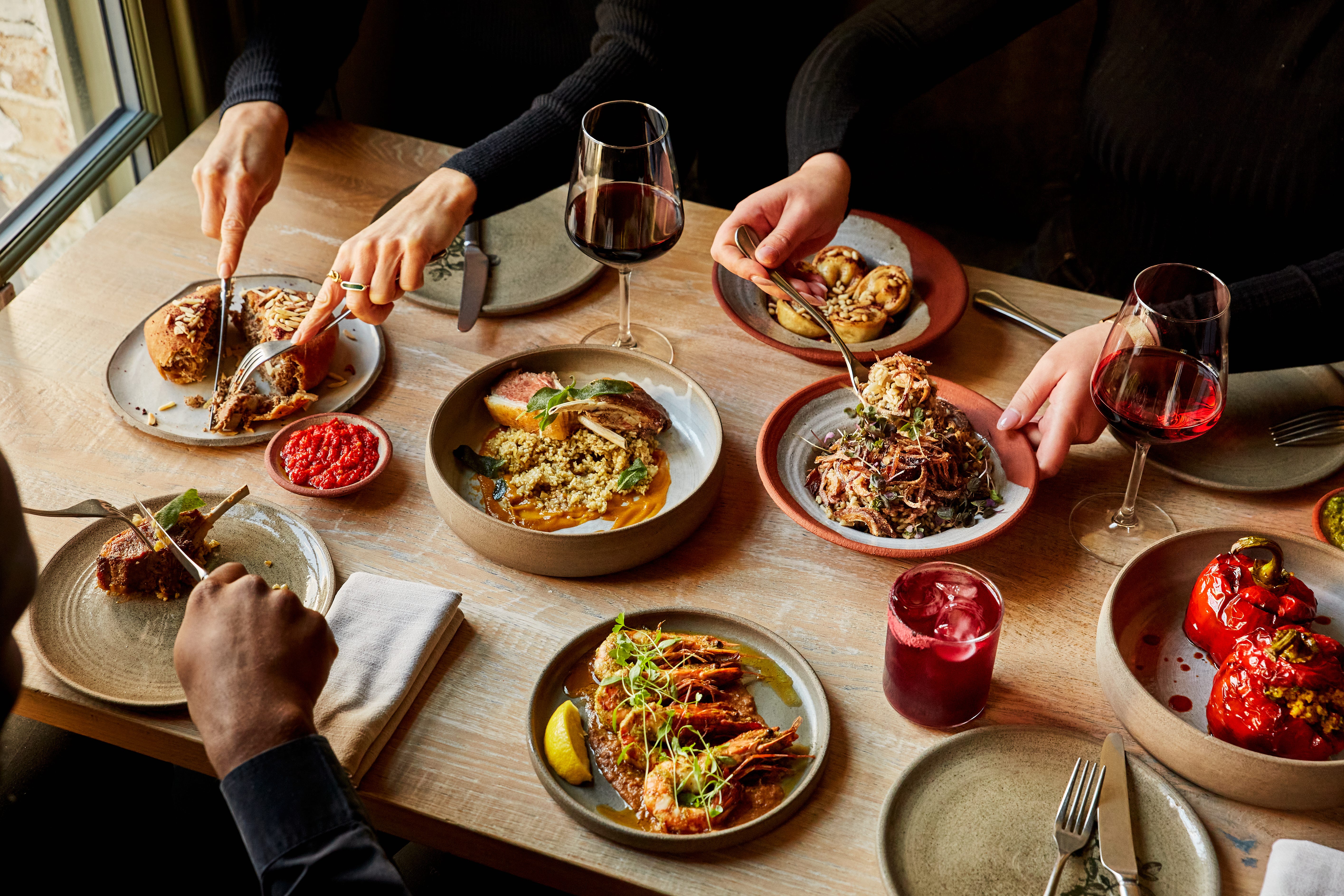
‘It feels there is this pressure that looms to prove that we are deserving of life’
A conversation between Nisreen Fox and Sara-Asad Mannings of Bunhead Bakery.
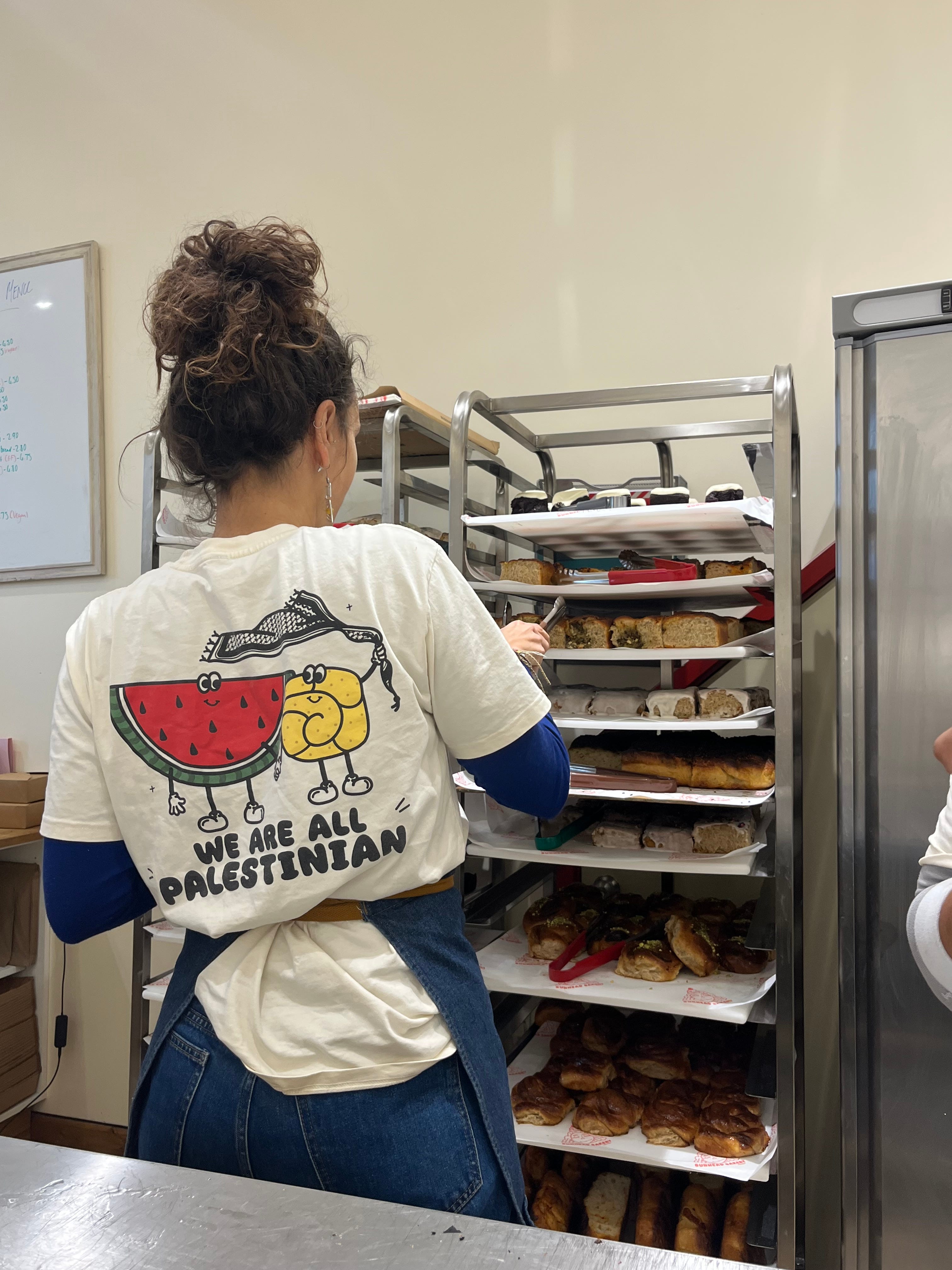
This interview was conducted in August 2025
Nisreen Fox: So, tell me about how you started Bunhead Bakery?
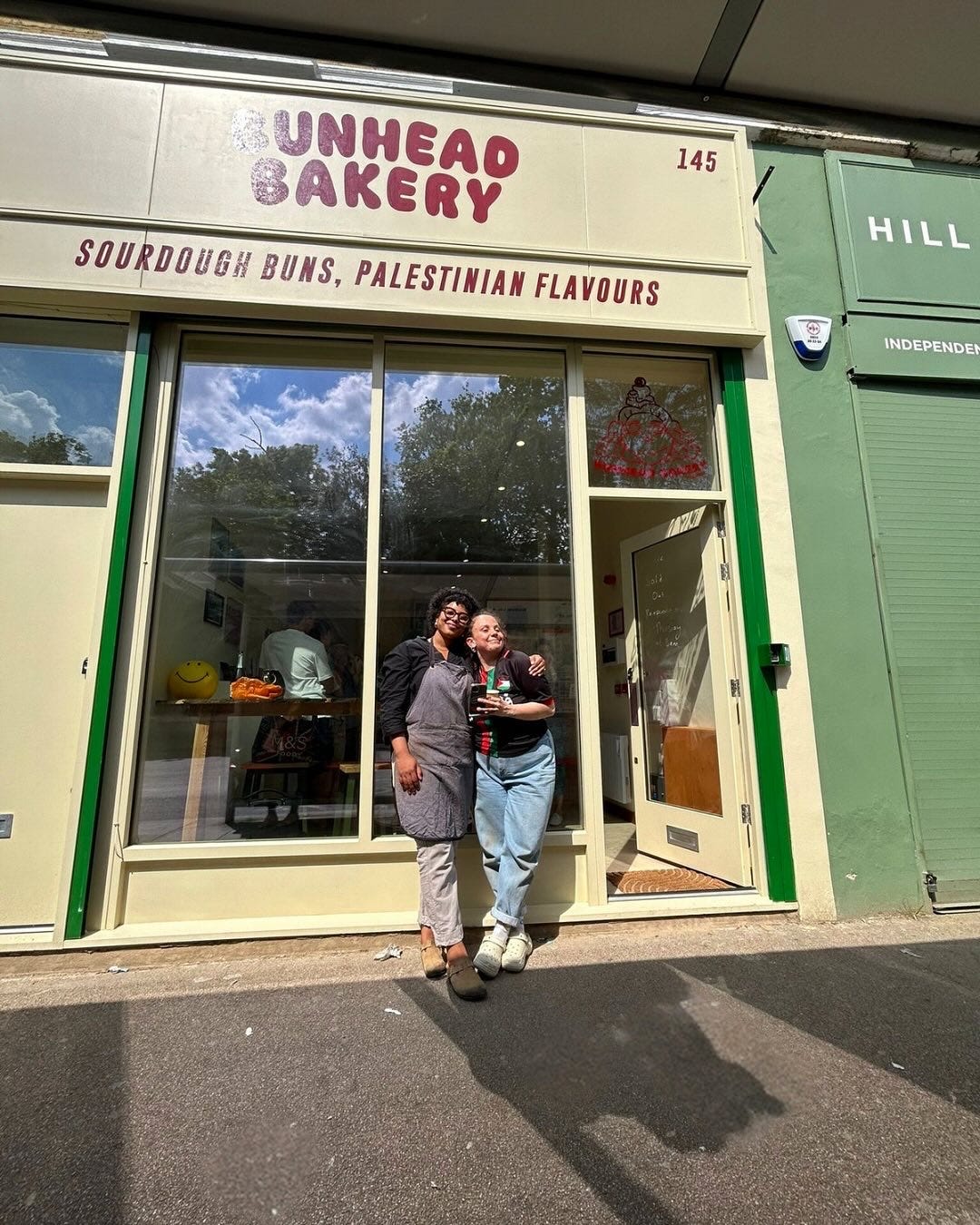
Sara Asad-Mannings: I have worked a little in some professional kitchens, but not really worked in food before. Even so, I’ve always cooked, I’ve always baked. In 2020, during the pandemic, I made some buns and dropped them off at my sister’s house, and she suggested I should start selling them. I just went, OK! I guess I’ll start selling them. When I first started the bakery, I wanted to show a representation of all the parts of my life. I had a bun that represented my British side (lemon drizzle), I had one bun that represented my Palestinian side (rose and cardamom,) and a bun that represented my step-mum being from New Zealand (milo).
Nisreen Fox: I live in Brighton, and we have maybe a few outwardly Palestinian businesses in the city. I feel there is definitely a gap throughout the country. Did this drive you when you started?
Sara Asad-Mannings: Being Palestinian, I’ve always felt passionately about having spaces that truly represent us. When I was growing up, some places would say they were ‘Lebanese’ but then you’d talk to the owners and find out that they [were] Palestinian. But there was nowhere that I remember that was Palestinian and proud, so it was a very conscious decision for us to have ‘Palestinian’ on the shopfront. It also speaks to when I was growing up and people would ask me where I’m from, I’d respond saying Palestinian, and they’d either say, ‘Oh, you’re Israeli’ or ‘It doesn’t exist’. Palestinians have been forced to grow up in so many places, with London being one of them. It means our expressions of identity are so varied, so it’s important we are represented within the diasporas that have raised us.
Nisreen Fox: I often feel like I have to be the token ‘good Palestinian’. As your bakery is part of the hospitality business, do you feel pressure as a business to be a positive force in the community?
Sara Asad-Mannings: I think so. Part of the motivation with Bunhead is to present a joyful Palestinian narrative. But, I do feel a pressure to always be doing the right thing. I remember when we first opened, we had just done our first round of fundraising, and made T-shirts that had the watermelon, the bun and the keffiyeh. We posted a picture of me holding it up, saying, You can come and collect them. Someone commented on the picture saying – I’m not going to get this exactly correct, but something along the lines of, ‘You have these T-shirts, but you don’t even have one Palestinian flag up in your shop, it stinks of capitalising [on the conflict] to me.’ And I commented back, saying, ‘As the Palestinian who owns this business, what you’re saying is deeply offensive. You’re welcome to come into the bakery and see lots of pictures that my dad took in Palestine. Hope to see you soon.’
But, I do think it’s a slightly problematic narrative to push solely onto Palestinian businesses that it is our duty to raise funds. In some respects, I do agree, there is a responsibility that comes with representing our community which I don’t take lightly, but I also think that we are deserving of our success. Both things can and should exist at the same time. I do imagine it comes from a good place and people’s sensitivities are higher right now, rightly so. But for many people, it has been three years of witnessing Israel’s genocide in Gaza and the West Bank – for us, this has been our whole lives.


Nisreen Fox: Right. And have there been any issues – which you are comfortable sharing – that have arisen due to having ‘Palestinian’ on the front?
Sara Asad-Mannings: Obviously, when we opened, I was expecting have a lot of pushbacks from Zionists and Israelis, but actually, some of the most uncomfortable situations that we have had are people trying to catch us out. The question that really just goes straight to my heart is: ‘So, what’s the connection to the Middle East here?’ or ‘What’s the connection to Palestine?’ and then someone or myself will answer that I am Palestinian, and they’ll go, ‘Oh, really?’ or, ‘Well, I never had any buns while I was in Palestine.’
I think a big motivator for me was to come into the scene and be known as a Palestinian business, saying who we are from the very beginning. To be able to achieve some form of popularity or success whilst being Palestinian felt like a big achievement. But it’s a difficult line to toe. We put in the offer for the shop in September 2023, so this has all happened alongside the genocide. It’s not lost on me that part of [our] success probably comes from that. This is painful, but it’s also more reason than ever to be loud about who we are, and make our mark.
Nisreen Fox: It’s like survivor’s guilt in a way. I don’t want to be exploitative, either, but it’s nice to hear that people other than myself are struggling with that. I feel like I see a lot of criticism against Palestinians or Lebanese people, saying that they are profiting off their own culture because they know it is ‘popular’ right now. But people who are not Palestinian have been profiting for a long time.
Sara Asad-Mannings: I guess there is pressure to share our culture, our food, something that isn’t scary to the world. So maybe, yes. I don’t think I’ve ever thought about it like that. There is a part of me that just wants to show people that Palestinians and Arabs are just people. But it feels [like] there is this pressure that looms to prove that we are deserving of life.
Nisreen Fox: Let’s talk about some positive experiences. Could you share any stories about how your customers or supporters have come together for your business during these challenging times?
Sara Asad-Mannings: There are the small things – like we do a strawberry sumac bun and a syrup with our matcha, and it’s just like, flown off. When people come in to ask what sumac is, I get to see my front-of-house staff (who are not Palestinian) explain it. It’s so great knowing that we are sharing ingredients and dishes with people who will then go away and know that they are Palestinian. On a personal level, just people who have come from Gaza, and they take pictures of the shop, pictures with me … and it’s just … very emotional.
I always think of this moment, where I was at the table working, and these kids came into the shop with their dad. He said, ‘My kids are half Palestinian’, and the kids were looking really happy – they were also looking right at me. I replied with, ‘Me too’.
To donate to Sameer Project’s Eid Al Adha campaign here. Their other campaigns, including the Refat Al-Areer Camp, can be found here.
Credits
Nisreen Fox (@nissfox) is a social justice journalist who specialises in marginalised communities that mean something to them. Growing up as a Palestinian in the West is a ever difficult struggle with identity, and she uses her journalism to seek out familiarity with community.
Sara Asad-Mannings is the co-owner of Bunhead Bakery, alongside Georgia Wickremeratne.
Fadi Kattan is a Franco-Palestinian chef, the author of Bethlehem, and the co-founder of London restaurant Akub, and Nabeeth Wines.
The full Vittles masthead can be found here.
It was an honour to be part of this article and be able to do the interviews! So insipiring to talk to Fadi and Sara x
Wow thank you for this excellent interview. I have never known anyone to work as tirelessly as Sara, she is both modest and generous to a fault (If you're reading this I hope you took that holiday or even one day off?!) Last year Bunhead Bakery made some delicious treats for our fundraising events and for the
"We are still here" booklaunch for my undergrads in Gaza - https://darajapress.com/publication/we-are-still-here/?srsltid=AfmBOooh84PSqCRDQhZMh-hJ8uYxS2rC_lf9pwLXWLN9aLD0G0crxmDz The bakes were delicious and people still ask about those chocolate and sumac biscuits!