

‘Top Brand from UK’
A Chicken Cottage pilgrimage across Pakistan-administered Kashmir. Words by Kunwar Khuldune Shahid. Photographs by Nida Mehboob.
Good morning and welcome to Vittles. Today, Kunwar Khuldune Shahid writes about the surprising relevance of the British brand Chicken Cottage in
Pakistan-administered Kashmir.
If you haven’t picked one up already, we still have copies left of our second print issue, on the theme of ‘Bad Food’ – we highly recommend buying a copy.
The Grand Trunk (GT) Road has run through the northern part of the Indian subcontinent for millennia. Referred to as Uttarapatha – or the ‘Northern Road’ – in Vedic and Buddhist scriptures, the GT Road runs from Kabul to Teknaf (near Bangladesh’s border with Myanmar). Today, it also connects connects Wahgah on the Indian border to Torkham (which crosses into Afghanistan), and in Pakistan, the highway also unites many of the country’s chicken-burger aficionados with their favourite British fast-food chain: Chicken Cottage.
Chicken Cottage started its life in Wembley, London, in 1994. Founded by Mohammed Khalid and Tahir Jamil, the brand offers halal renditions of the grilled and fried chicken dishes that are popular in chicken shops across the UK. Pakistan-born Tahir aimed to cater to South Asian and Muslim communities in the capital, and in 2004 the brand was franchised in Pakistan (which is now one of ten countries to host the chain, alongside Nigeria, Iraq and Malaysia, among others). While a number of the franchises have shut down over the years, there are currently ten functioning Chicken Cottage outlets in Pakistan. Five of these are situated in the mountainous region of Kashmir, a disputed region divided between India and Pakistan (Islamabad refers to Pakistan-administered-Kashmir as ‘Azad’, or free).
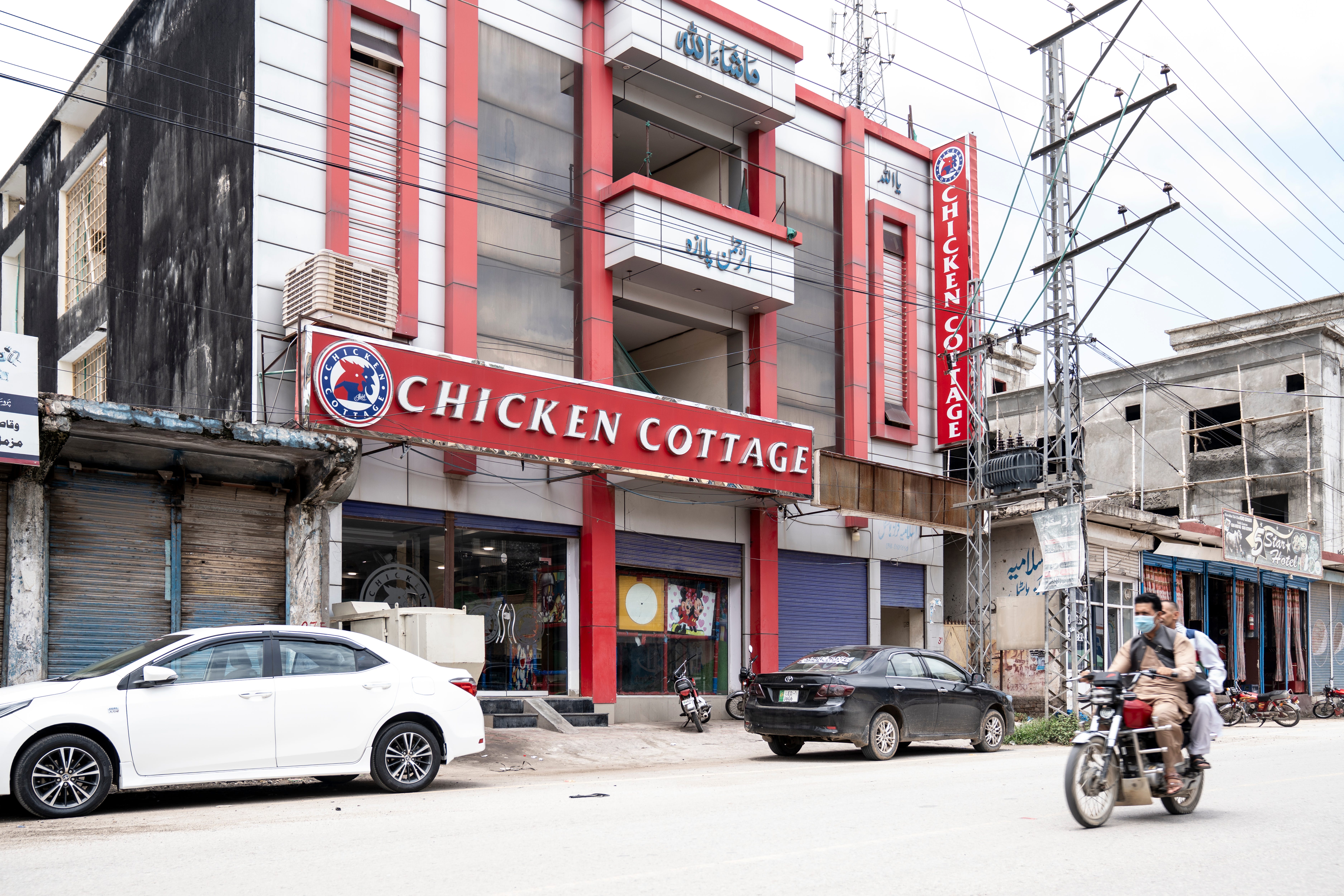
What is a British chain that is only mildly popular in Britain itself doing in the northernmost reaches of the subcontinent? In a country where chicken is popular on menus, and burgers so entrenched in the culture that they have become a nickname for an entire generation and class, what has prompted people to flock to this specific brand? Thousands of miles from its place of origin, Chicken Cottage is now the most popular fast-food franchise in Kashmir. In July last year, I went on what I could only call a Chicken Cottage pilgrimage – travelling to the Chakswari, Kotli and Sehnsa branches – to find out more.
Chicken Cottage’s popularity has some connection to the fact that approximately 70% of those who identify as British Pakistanis come from Mirpur, in Pakistan-administered Kashmir. ‘Many [British-Pakistani] travellers from the UK make sure they break their journey at Chicken Cottage. In fact, even many of our international customers eat the first meal they have after landing in Pakistan [at the chain]’, Noman Tariq, co-owner of the franchise at Jhelum (a border town between Punjab and Kashmir), tells me.
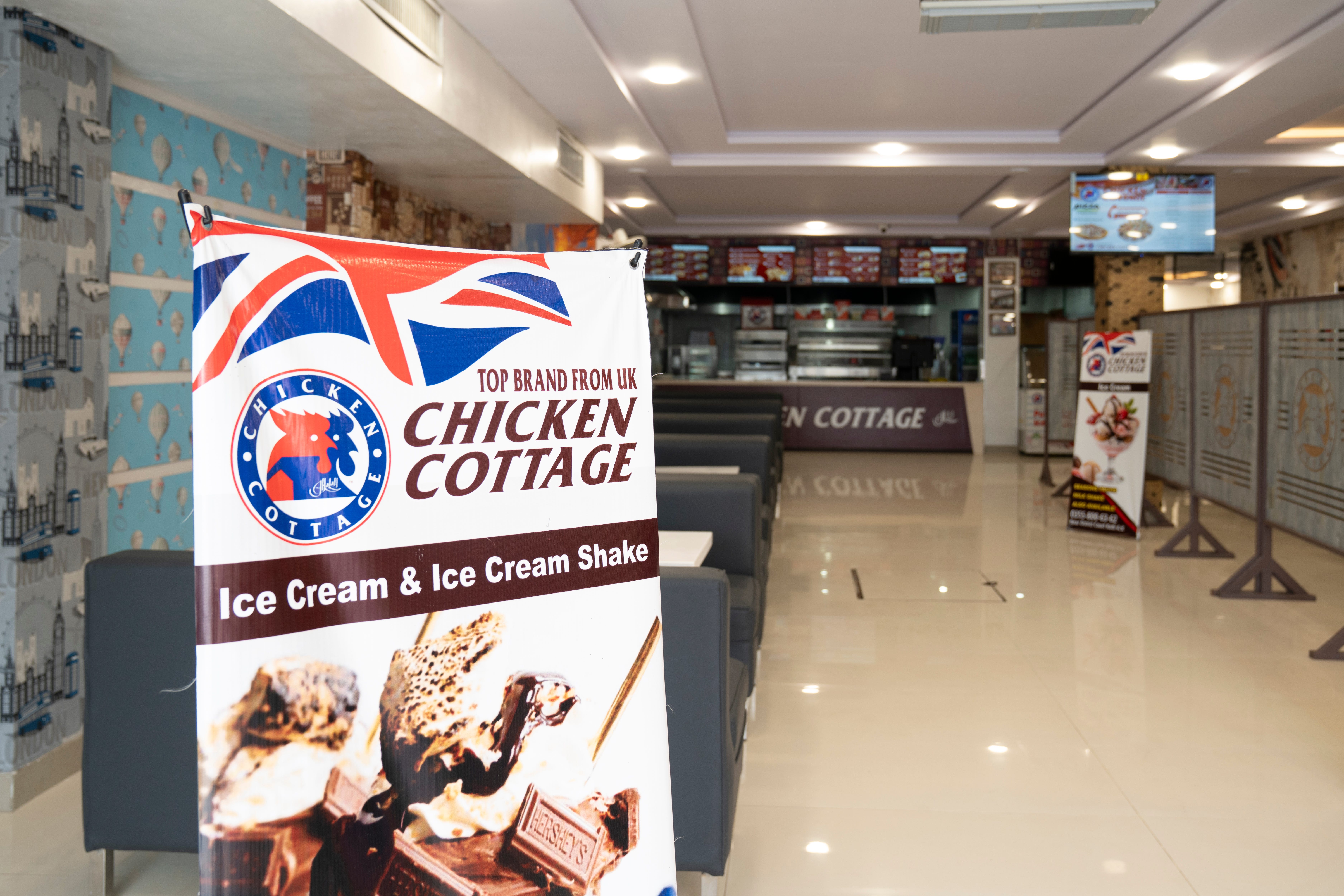
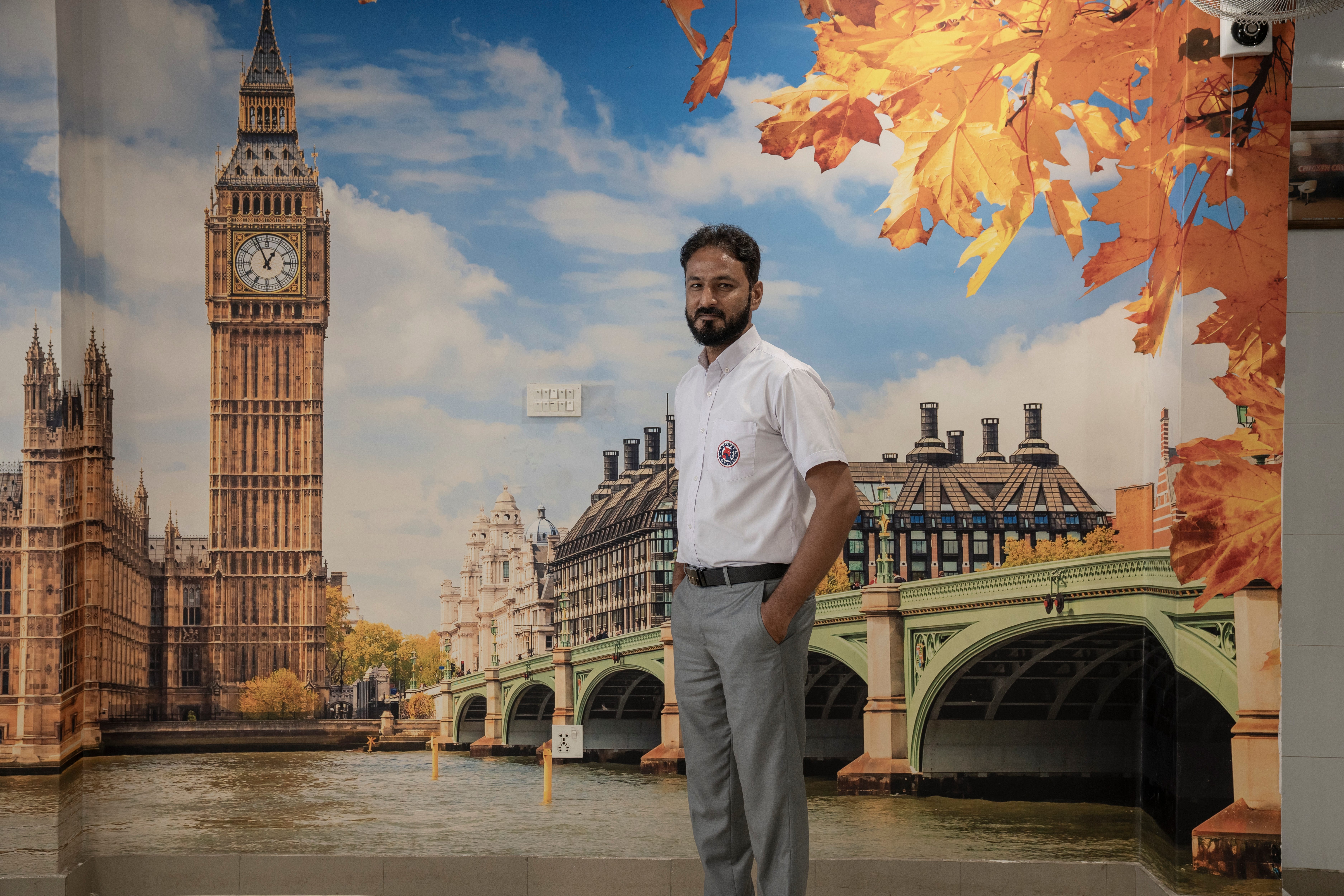
On my way to Kashmir, it is the Jhelum outlet that I stop at first. It is 8pm on a Friday in July, and the restaurant is gradually being packed with customers eating plates of burgers, fries and fried chicken; others order takeaway wraps. Inside the mammoth two-story building, the walls are decorated with large paintings of Westminster, Piccadilly Circus, and the London Eye. Outside the window there is the rush of perpetual GT Road traffic, and inside, even as the dining area is fast filling up, the atmosphere is somewhat tranquil. At the entrance of the restaurant, a board reads ‘Top brand from UK’.
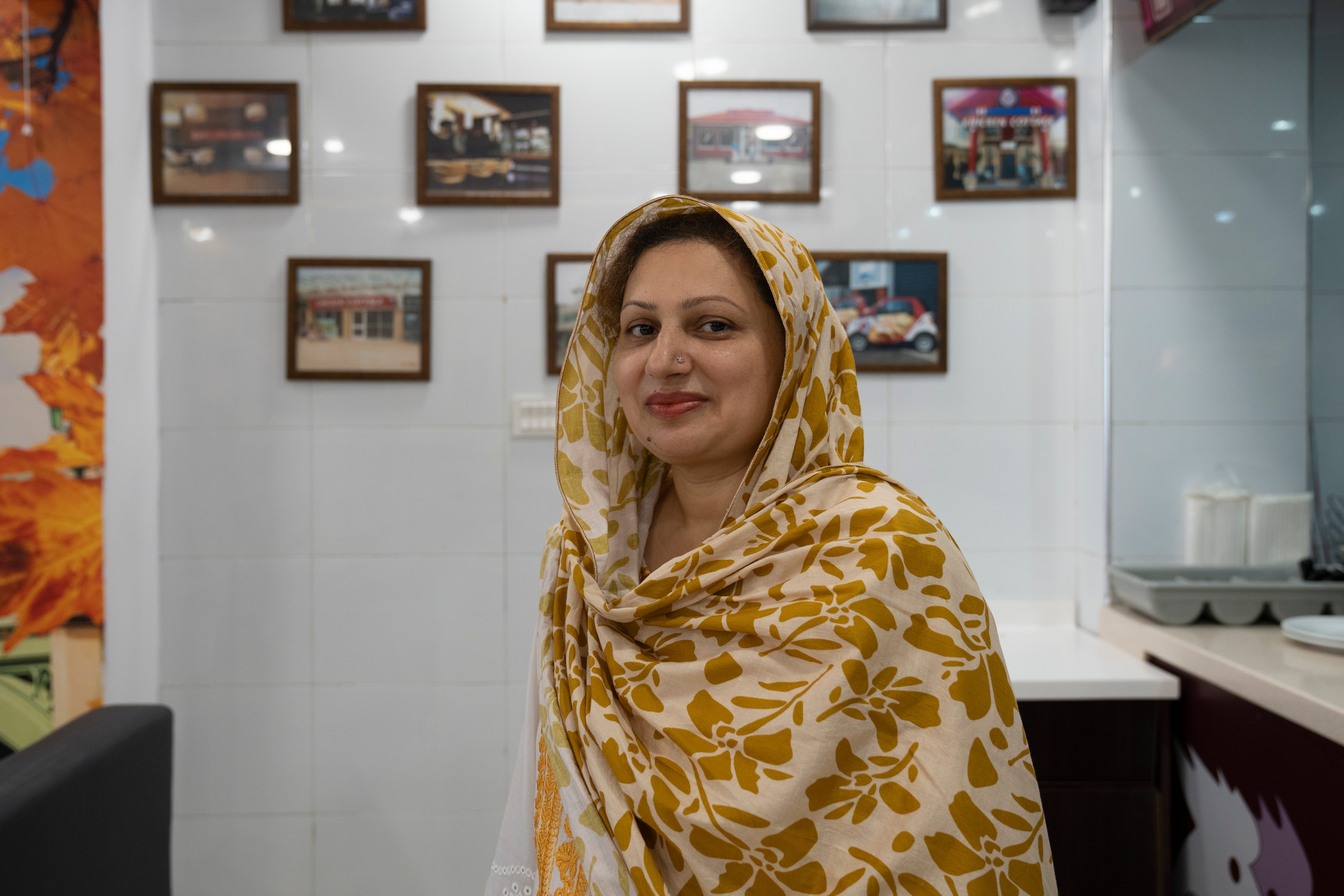
This ‘British ambience’, as Tariq calls it, is an integral feature of all Chicken Cottage restaurants in Pakistan. Aasia Ishaq, the franchise owner of the Kotli branch, tells me how recipes at the Chicken Cottages in Pakistan precisely follow the guidelines from the UK: ‘Hum chaahtay hain humaaray logon ko, khaas taur pe who jo kabhi UK nahi gaye, bilkul England waala zaaiqa aur mahaul milay [We want to give all of our customers, especially those who have never been to the UK, the authentic taste and ambience from England]’. This is why there are photographs of Piccadilly Circus. ‘We want to make everyone feel as though they are there’, Ishaq adds.
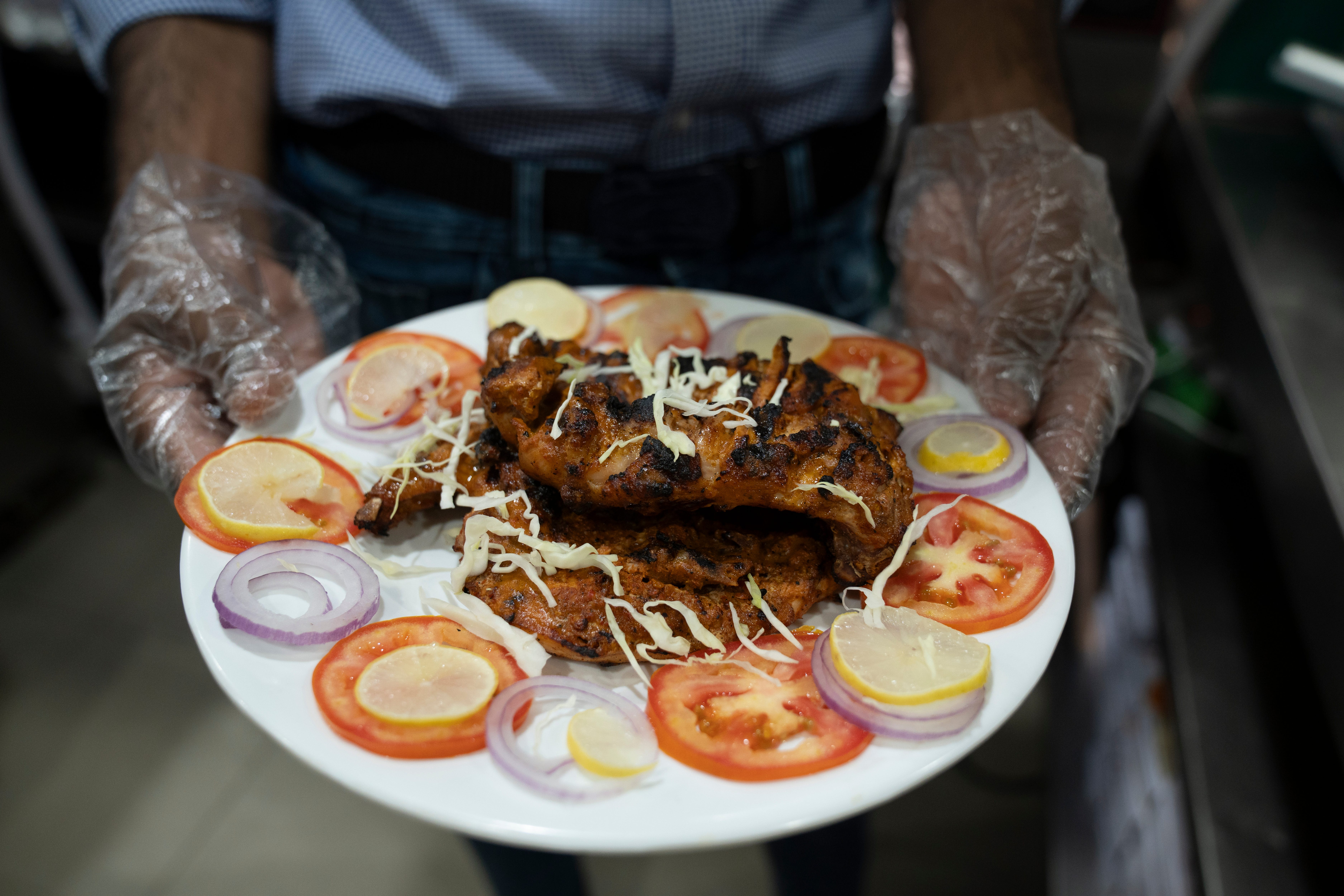
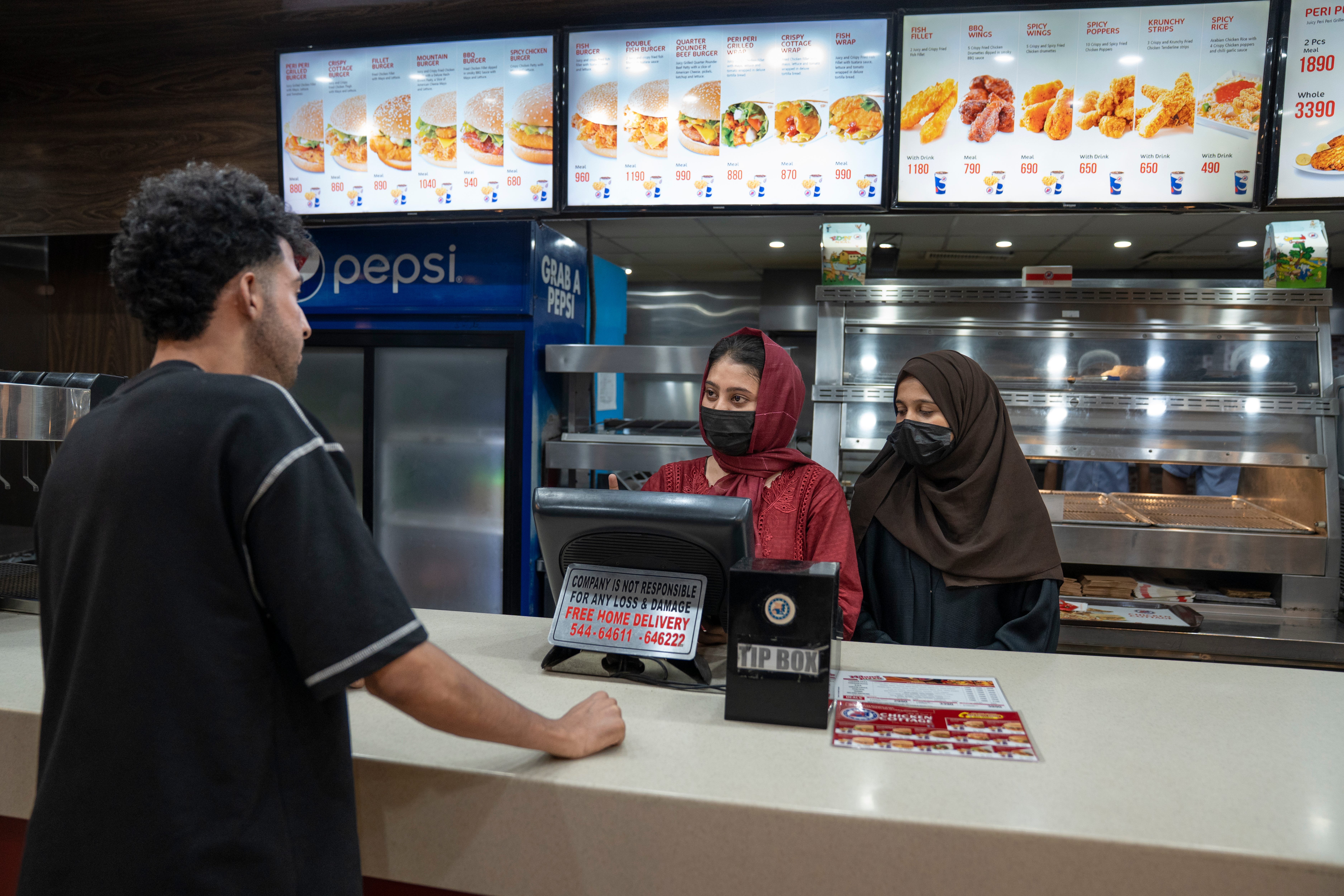
In the UK, the dishes at Chicken Cottage range from BBQ wings to grilled peri peri chicken and mozzarella dippers. In addition to offering items from the original British menu, the Pakistani outlets’ offerings include ‘Crispy Cottage’, ‘Spicy Chicken’ and ‘Mountain’ burgers. They also serve renditions of local specialities such as biryani, and pizzas with toppings that include tikka, barbecue and kebab. While the pizzas are hot sellers (‘Our people like bread’, Mohammed Bilal, the manager at the Chakswari branch, tells me), it is the burgers that hold the main appeal. ‘We started to come here when I was a baby, and now I am much older and it is still my favourite restaurant’, says thirteen-year-old Zainab Waqar – whose preferred dish is the peri peri burger.
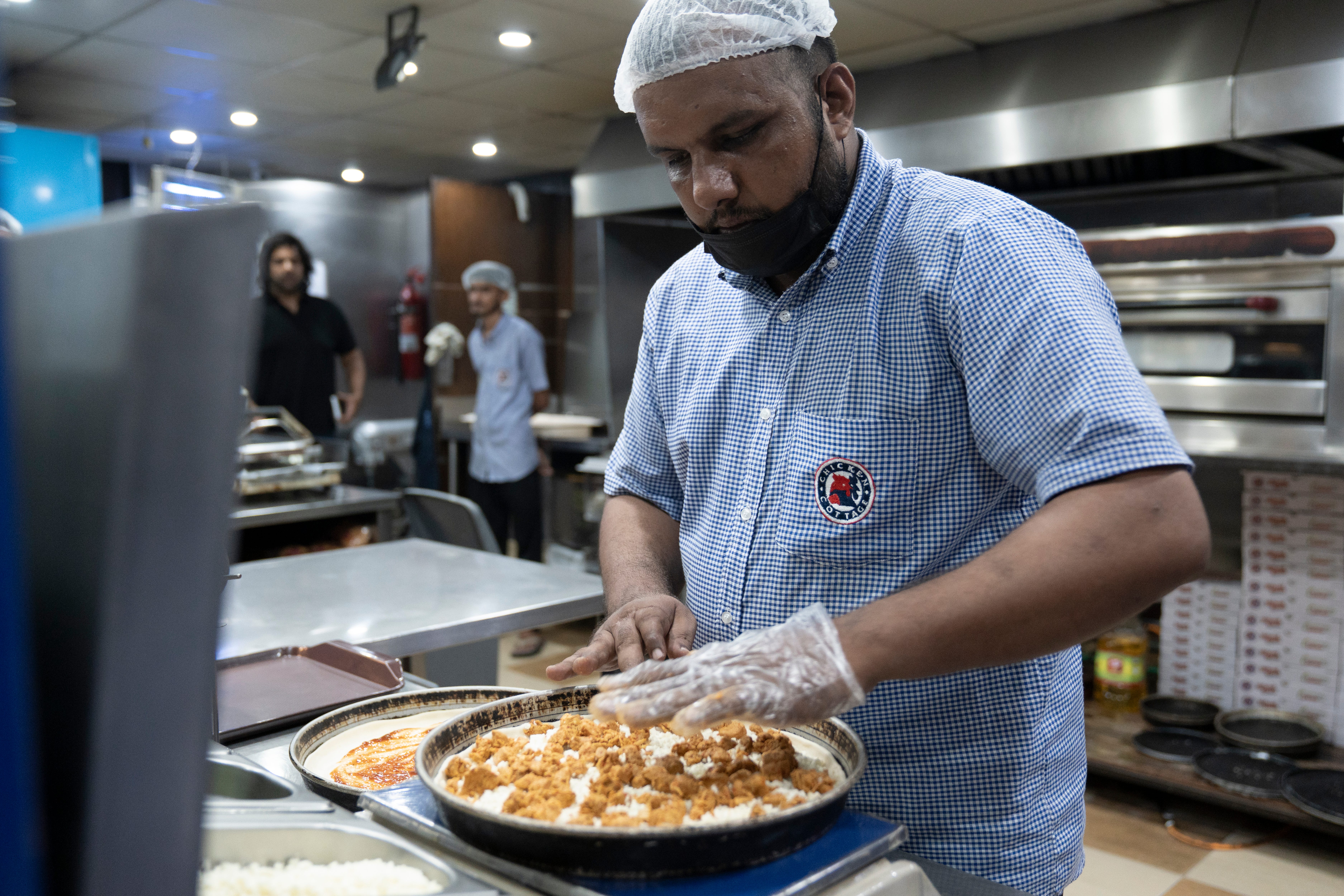
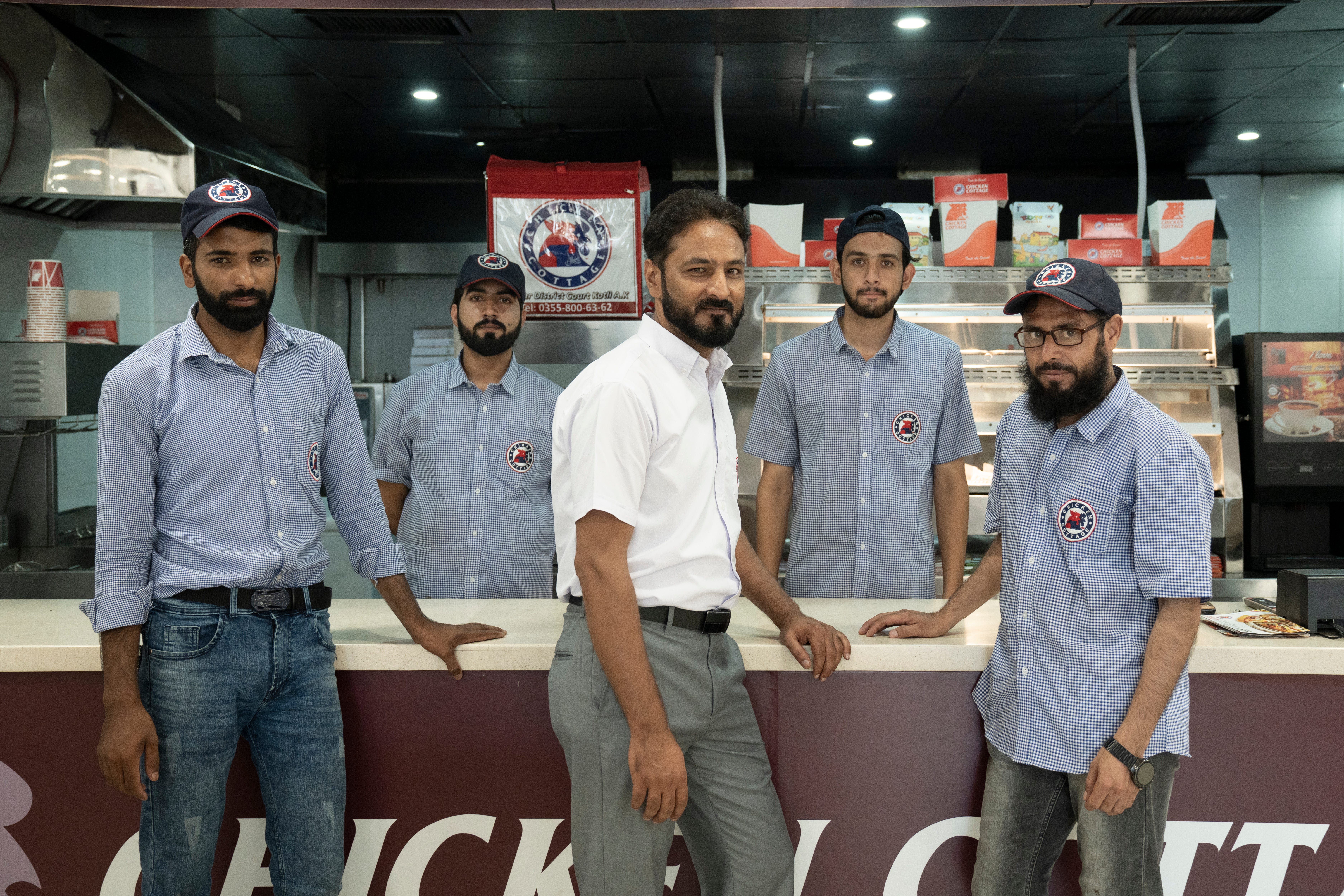
After a couple of hours, during which I eat the chicken fajita pizza, I head off across the border of Punjab to visit the branches in Kashmir. At the Chakswari branch, Bilal demonstrates the cooking process, which is identical across franchise outlets: defrosted chicken is battered with seasoning and breading, then deep-fried. While the chicken and the bread are local, much of the seasoning and condiments used in the Chicken Cottage restaurants in Pakistan are the same ones used in the UK, Bilal says. ‘Unlike in other brands, which can only do desi variations of their Western offerings, in Chicken Cottage the recipes are authentically British’, adds Raja Zaheeruddin, general manager of Chicken Cottage across Kashmir. At the same branch, I meet Imran Khan, a chef who cooks at Saracens restaurant in Nottingham. He tells me he is a big fan of the chicken at the Chicken Cottage. ‘Aey sab ton changa aey [It is the best]. I visit every summer and regularly eat Chicken Cottage here in Kashmir’, he says, his accent a combination of thick northern British and Punjabi.
While the British origin and blend of South Asian flavours remain its unique selling point, Chicken Cottage also faces an existential challenge, rooted in the colonial British legacy of South Asia. The political consequences of the British partition of the subcontinent mean that the region’s favourite fast-food joint is affected by the volatility that disrupts life in Kashmir. In the months I visited, Pakistan and India were in a ‘state of war’, their deadliest clashes in over twenty-five years, when, following an attack by suspected militants in Pahalgam (in Indian-administered-Kashmir), India arbitrarily attacked Pakistan.
Since partition, the two nuclear-armed neighbours have fought four complete wars, along with numerous other skirmishes and constant crossfire across the Line of Control that always directly affects Kashmir. Even though businesses across Pakistan suffer every time there is cross-border turbulence, Kashmiri life is especially upended, and Kashmiris face the brunt of the crossfire every time the two countries engage in warmongering. The Chicken Cottage branches in Kashmir are no exception to this. Right before the Kotli branch was to be opened in May, Indian missiles began to hit the city, and the branch’s owners faced an agonising wait over the fate of their investment in the restaurant. One of the missiles even struck close to Zaheeruddin’s apartment. The Chicken Cottage branch at Khuiratta was literally in the line of fire and had to be briefly shut down. ‘We were a bit concerned when the war started, but this is unfortunately the reality of our region,’ Ishaq says.
The staff at Chicken Cottage also detail how branches reopened a few days after the clashes. ‘Most of us had vacated the area during the war, but we returned immediately once things calmed down,’ Zaheeruddin says. ‘Aik taraf se missile aa rahay thay aur duusri taraf se customers. [As the missiles were coming our way, so were the customers.]’, he adds. Others also tell me that the days around the clashes saw a rise in footfall at their Chicken Cottage branches. Bilal expected this, and he prepared his staff about how to provide comfort to customers during wartime. ‘Visiting Chicken Cottage brought respite to many locals who were naturally stressed by the unfolding events’, he tells me. ‘We are sick of the power play [between the Indian and Pakistani governments] and the blame games. We just want a regular life, and lasting peace.’
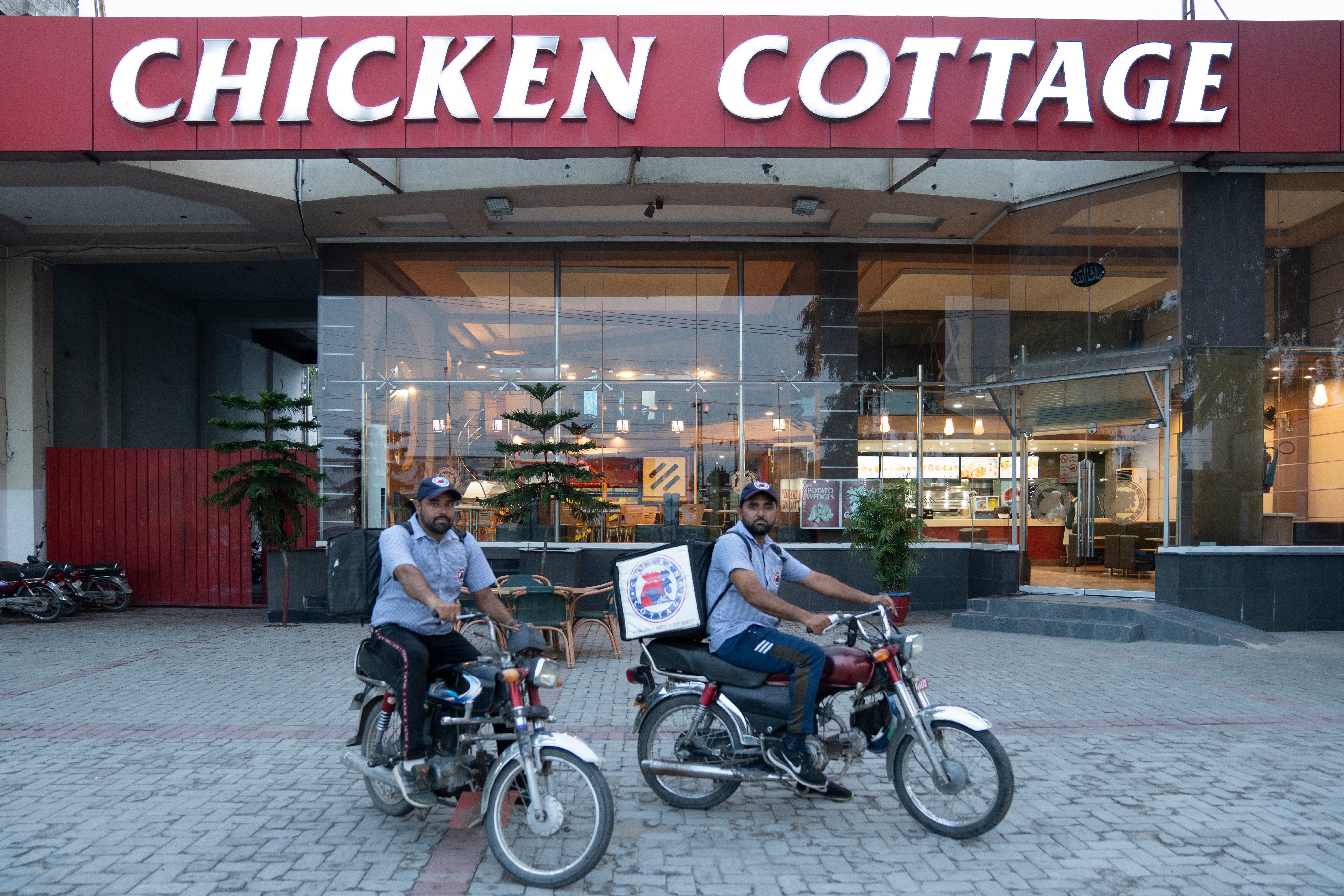
Neither the anti-immigrant sentiment in the UK, nor the fact that these borders were drawn by the place where the brand originated, appear to have a sway on the clientele that flock to the Chicken Cottages in Kashmir. Even as restaurants across Pakistan undergo financial constraints and closures due to cross-border tensions, more Chicken Cottage outlets are being opened.
Before I left on my return journey to Lahore, I suggested that the brand consider a butter chicken menu item, given the dish’s current popularity in the UK. As I took off, I could not help recall the request of Zainab’s family: ‘We miss the British hash browns they used to give with the burgers. They used to go so well with the chicken. It would be great to bring them back!’ they had said, citing yet another popular food item associated with British cuisine that did not originate in Britain.
Credits
Kunwar Khuldune Shahid is the Pakistan correspondent for The Diplomat. His work has been featured in numerous international publications, including the Guardian, the Independent, Foreign Policy, Asia Times, Haaretz, Al-Jazeera, among others. He has written and reported on food and culture for NPR, BBC, America’s Test Kitchen, Texas Monthly, the Food Section, Philadelphia Magazine, and others.
Nida Mehboob is a Lahore-based photographer and filmmaker specializing in documentary and editorial storytelling. Her work has been commissioned and supported by organizations including the Magnum Foundation, Goethe-Institut, and Berlinale Talents, with projects published and exhibited internationally. You can find more of her work here.
The full Vittles masthead can be found here.
Fascinating. Talk about cultural cross-overs in reverse!
I was struck by Chicken Cottage when I first started visiting South London. Whilst there are/were many chicken shops it seems like it was aspiring to be a little more than that. The Pakistani outlets look even more aspirational - middle class family fast food rather than a place for teenagers like so many UK chicken shops