

Eat This, Not That
Robin Craig on the relationship between food and kink. Illustration by Olivia Sterling.

Good morning and welcome to Vittles! In today’s essay, Robin Craig writes about the role that food plays in his sex life, and the broader connections between food and kink.
In other news, there’s just one week left to apply for the British Library’s Food Stories Fellowship Award. The winner of this fellowship will receive £1500 to support them to use the British Library’s food collections to produce a piece of new writing on some aspect of contemporary food or drink culture, which will be published in Vittles. More details are available here (deadline 27 April).
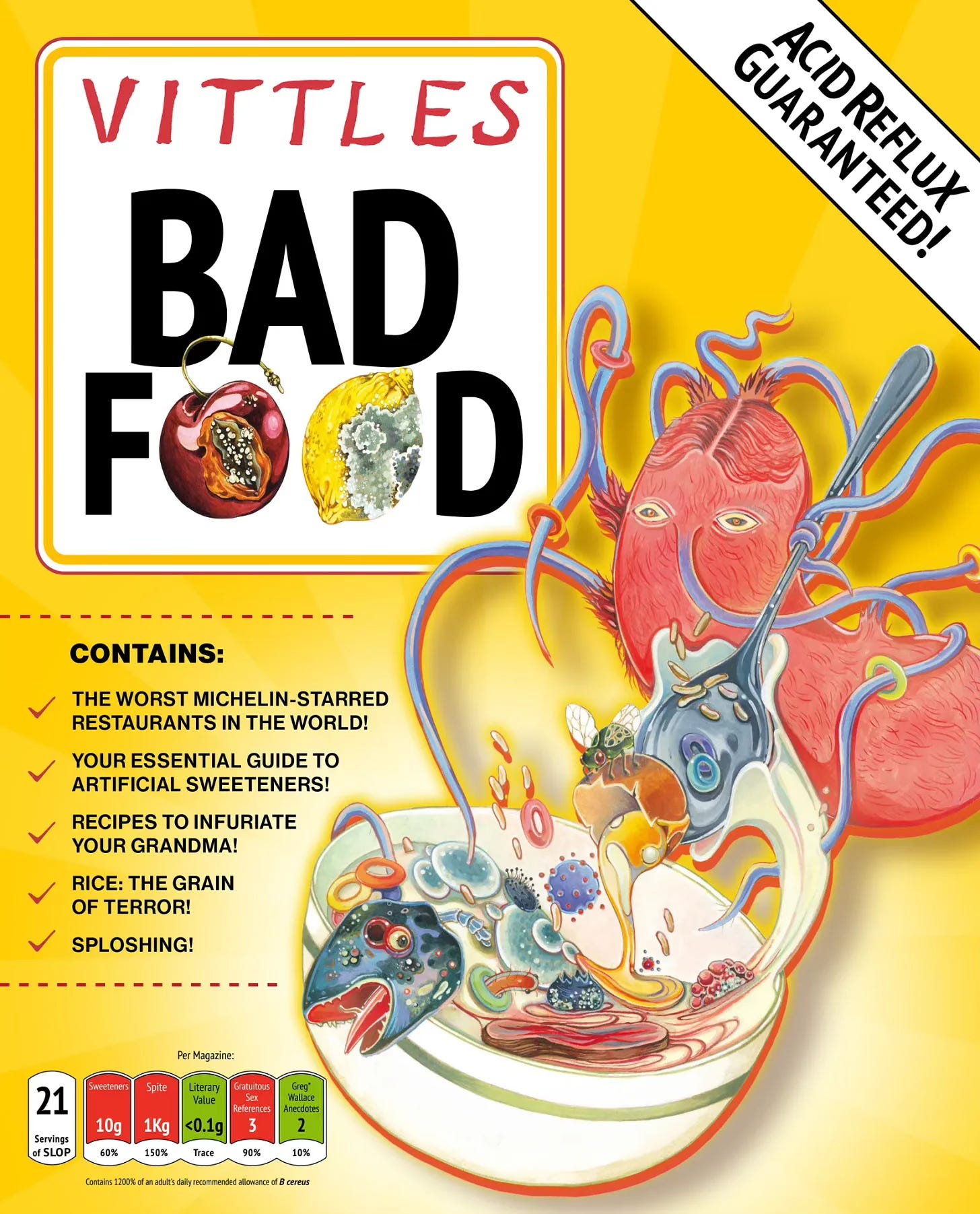
Today’s essay is free to all subscribers. To support our work, please consider a subscription to Vittles for £7/month or £59/year, which gives you access to the last six years of the newsletter, including our restaurant coverage. You can also support us by buying Issue 2 of our print magazine, on the theme of Bad Food, which is available here.
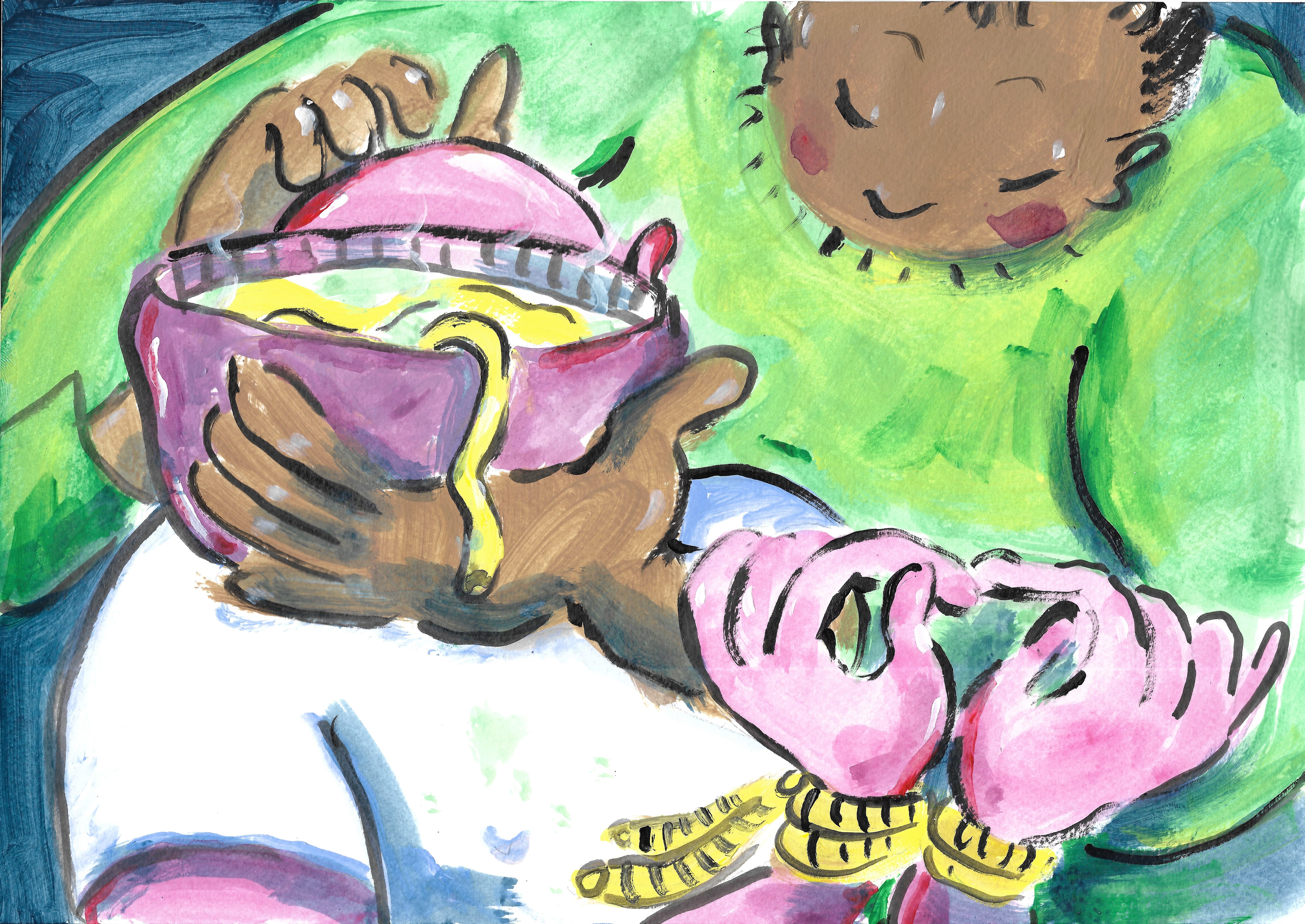
There is a pile of pad thai in front of me, ordered from a delivery app and hastily dumped onto a plate. It’s still hot – steam rises in tendrils, the noodles glistening, coiled and ready like snakes, in the low light of my bedroom. The sight makes my stomach churn. I petulantly turn my head away and say that I don’t want it anymore.
For a moment, there is silence. My palms are clammy and my breath comes in short and shallow; I know there will be consequences for my transgression. Slowly, my companion’s hand finds its way to the back of my neck, where it rests in a display of both care and domination. He sighs deeply, as though disappointed.
‘Eat it,’ he says. The hand on my neck squeezes slightly. Again I say ‘No’ and try to turn my head away, but the hand slides up into my hair and grips it tightly, then pulls me back towards the plate. He scoops up a forkful of noodles and pushes it against my lips.
‘Eat it,’ he repeats, and I relent, opening my mouth for him. The pad thai is salty-sweet on my tongue and slides easily down my throat. He watches me chew, and swallow, then raises another forkful to my lips for us to begin again.
*
This was a pre-arranged kink meet-up (also known as a scene) I did a few years ago, in which I had explicitly requested to be treated poorly. Specifically, I wanted to be fed – or rather, forced to eat – and my scene partner, whom I knew well, enthusiastically agreed. The scene was part of a wider dynamic of domination and submission: I willingly gave him power over me in exchange for a space where I could relinquish autonomy and drift, easily, on the decisions made by someone else. Within its confines, there in my bedroom, I could pass control of my life over to his competent hands for a few hours, including what to say, what to do – and, crucially, what to eat.
It was not the first time I had asked someone to control my food intake. Over the past decade, I have sought partners who have variously ordered for me at restaurants, held my hair back and forced me to down a pint of water, and tied me to a chair and fed me cake as part of erotic play. Each of these scenarios was requested and pre-negotiated, and each fulfilled a need in me: often, my partners have play-acted ‘forcing’ me to eat foods I like and enabled me to indulge in my desires. I have a relentless drive to give control of my food over to someone else – I have, in a sense, hungered for it.
My proclivity for being fed is defined as a kink, as sexual activity or desire that falls outside social norms. Kink is, however, difficult to define on its own terms: as soon as you land on a stable and steady definition, it begins to morph again into something new. (It is also relatively common: in a Canadian study, nearly half of the 1,040 individuals surveyed expressed an interest in an ‘unusual’ sexual desire like voyeurism or masochism, while a third had tried out an unusual sexual practice at least once.)
‘I have a relentless drive to give control of my food over to someone else – I have, in a sense, hungered for it’
Of the many kinks that involve food, one of the better-known ones is feederism – sexual attraction and gratification related to fatness or gaining weight, often involving highly eroticised feeding sessions in which one partner feeds the other ‘unhealthy’ or high-fat food with the sole intention of inducing weight gain. Beyond feederism, food shows up across the kink spectrum in various ways, whether in softer acts of sensory deprivation (think: feeding a blindfolded partner erotically charged foods like whipped cream or strawberries), sploshing (being covered in gooey substances like pudding or pies) or as an element of pet play, in which one partner play-acts as an animal and may be fed treats for good behaviour. In my case, food is part of a Dom/sub kink dynamic I have enjoyed with various partners over the past decade, where food acts as a tool of control.
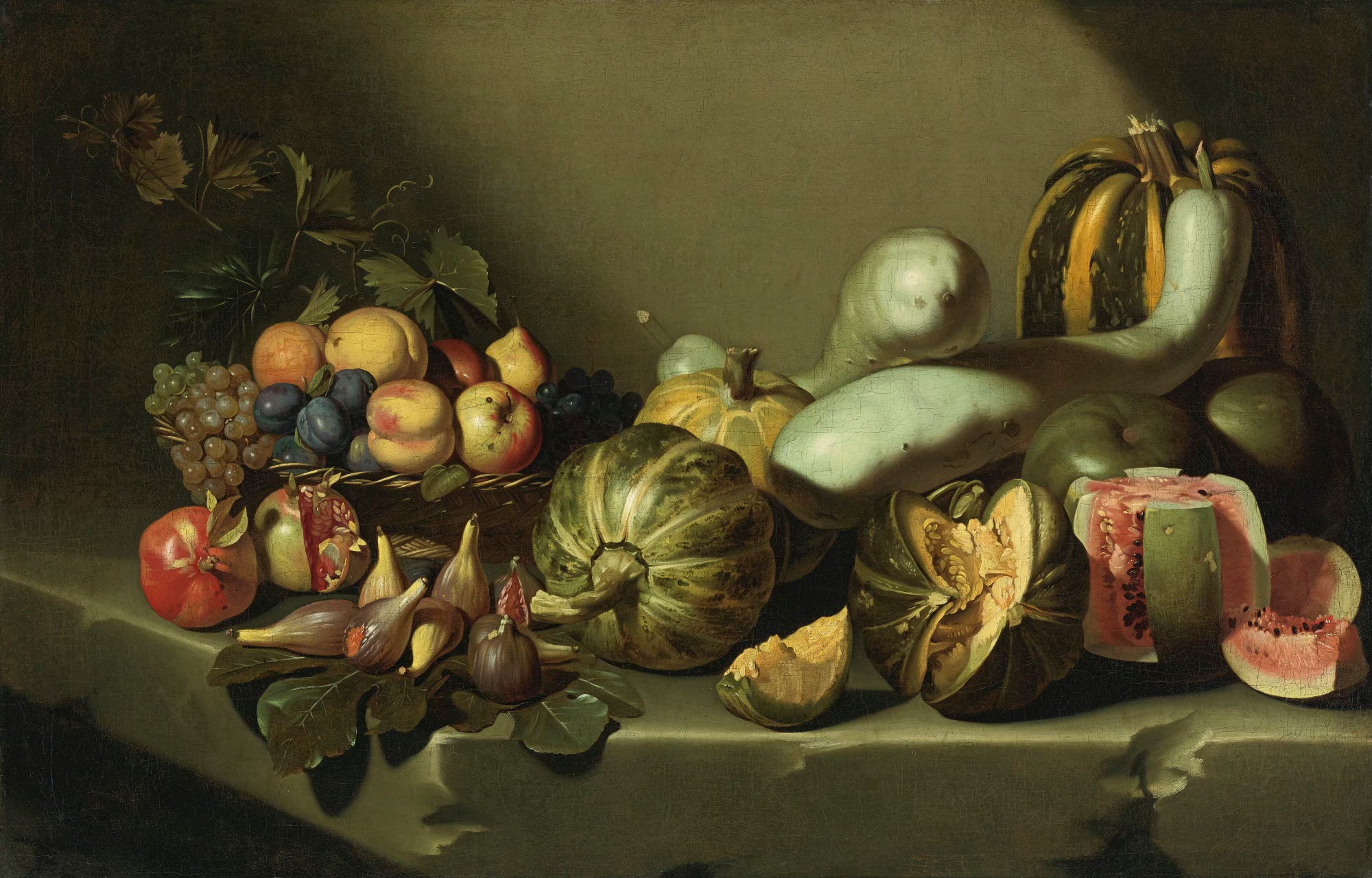
Since antiquity, food has been associated with sexuality, pleasure and carnality, with phallic gourds and sapphic figs cropping up throughout art history, and the connection remains strong in the contemporary imagination. So, the link between food and kink is not particularly surprising: kink takes the often unspoken associations, power dynamics and desires that are already present in culture and renders them visible, tangible.
‘Our cultural relationship with food is very complex,’ Anastasiia Fedorova, author of Second Skin: Inside the World of Fetish, Kink and Deviant Desire, tells me. ‘It’s a cornerstone of feelings like shame and desire, especially if we think of diet culture.’ Food also has ‘huge associations with control and agency, which can be eroticised by voluntarily and consensually giving that agency away,’ she continues. ‘It can be a way to let go of shame and control.’
Certainly, that is true in my case: food has personal associations with both shame and indulgence that, when forced upon me, are fertile ground for erotic enjoyment. To give control to someone else in this manner can be intensely vulnerable – they can do what they like with you, and letting someone else feed you is allowing them to put whatever they want inside your body. With this vulnerability comes intimacy and care: the person doing the feeding provides an almost parental act of nourishment. For my part, in a culture in which our worth is consistently defined by our bodies, our weight and our diets, giving over responsibility for what goes in my mouth can be blissful. The constant awareness of calories – and the imperative to make ‘good decisions’ and ‘healthy choices’ – slips away, and I am, for a moment, left to simply exist and eat. Playing at refusing to eat and then being ‘forced’ to, as with the pad thai, is merely a way of pushing at the boundaries and being pleasurably reminded of my place within them.
‘To be fed is to be sustained, looked after and, often, to be loved. Kink hits many of the same notes’
Feeding someone during a scene can bring just as much enjoyment. A friend of mine who likes baking for people as part of kink dynamics tells me that she enjoys the mixture of care and discomfort. ‘When someone is eating [something you’ve made], they’re in a very vulnerable place,’ she says. ‘You’re watching the person eat, watching their response, and making sure they finish it. It’s not an explicit domination, but it’s a subtle and quite powerful one.’ Gender factors into it, too: she describes her baking kink as a form of ‘empowered feminine eroticisation’ that takes a traditionally feminine role and reconstitutes it as a domineering form of care.
Fundamentally, this heady mixture of care, shame and control is at the heart of kink and our cultural relationship with food. To be fed is to be sustained, looked after and, often, to be loved. Kink hits many of the same notes. When I ask someone to feed me as part of a scene, I am seeking their attention and care just as much as their control. Truly comprehending what makes a person tick – and how to provide that for them, safely – takes significant effort. It’s an act of devotion similar to cooking a dish for someone that includes their favourite flavours. Certainly what Fedorova says about the importance of care in kink could just as easily apply to making a meal for a loved one: ‘You take your time understanding the person and they take time articulating their boundaries and desires. Then you care for them in a way which maybe they can’t be cared for elsewhere.’ That is, perhaps, all we can hope for from another person – regardless of whether they are feeding us, fucking us, or both.
Credits
Robin Craig is a sex, health and culture writer based in London. He has previously written for the Guardian, Huck, and Feeld, among others, and is currently working on his first book, Perverts: A History (John Murray Press, 2028). He runs the Substack Body Hunger and can be found on Instagram (@robin__craig).
Olivia Sterling (born 1996, Peterborough) earned her BA in Fine Art from the University of Derby in 2018 and her MA in Painting from the Royal College of Art in 2020. She has had solo exhibitions at Dirimart Pera (2026); East Gallery, Norwich University of the Arts (2026); Meyer Riegger (2024); Goldsmiths CCA (2021); and Cob Gallery (2021); and participated in group exhibitions including ‘I’m so gay for you’ (miłość gallery, 2025), ‘Rage Comics’ (Huxley Parlour, 2023), ‘Out Here’ (Steve Turner Gallery, 2023), ‘Saints and Sinners’ (Guts Gallery, 2023), ‘The Object Stares Back’ (Tube Culture Hall, 2023) and ‘London Grads Now’ (Saatchi Gallery, 2020). Residencies include HQI Summer Residency (2020) and Extended Contexts, National Trust IIam, UK (2016). Olivia lives and works in London.
The Vittles masthead can be viewed here.
Further Reading
‘Disaster Cooking’ by Robin Craig
‘Sweetness and Substance’ by Robin Craig
Hannah Levene on the role of food in lesbian feminist literature
And this is why independent media needs to exist. Where else would I read this? Great writing!
“I have a relentless drive to give control of my food over to someone else.” Not real control, though. It’s play-acting that’s been negotiated in advance with a carefully-chosen partner. On an intellectual level I get why it might seem or feel freeing to play at ceding control in highly controlled scenarios like the pad thai one the author describes, but the suspension of disbelief that seems to be required in order to distance oneself from the reality of having brought the scenario about, is massive.