

How to make Bin Soup
Imogen-West Knights investigates the journey of food waste - from disposal, to recycling. Photographs by Wunmi Onibudo.
Good morning and welcome to Vittles. Today, Imogen West-Knights traces the journey of food-waste in Lewisham, from bin collection to slurry ‘soup’ and conversion into biogas.
On Monday, we announced our third print issue, ‘The Influencers’, all about how the internet and short-form video have reshaped food culture. The magazine includes everything from an exhaustively reported deep dive into the economics of food influencing, investigations into MFK Fisher’s role in popularising Japanese cuisine, to long reads on how Natoora came to be the dominant force shaping restaurant menus.
If you pre-order the issue before 27 July, you will receive it for a discounted price, with an extra discount for paid subscribers (see the original email for details). Order the magazine here!
I fancy an orange. It’s a Friday afternoon, and I’m in Tesco in South London. There they are, bright and jolly in their rows. I pick one up, check it for blemishes and put it in my basket. This orange came from Valencia. It was harvested on Tuesday and loaded into a refrigerated train that night. From there, it took about fifty hours to reach my local Tesco by rail and by truck, travelling a distance of at least 1,800km through the Pyrenees, the north of France and the Channel Tunnel to the UK. It arrived in Barking in the early hours of Friday morning and reached my Tesco just before the store opened. But I am not thinking about any of that. I’m not really thinking at all. I just want the orange, and so I buy it.
Friday evening gets away with me and I find the orange skulking in the bottom of my bag on Saturday afternoon. I don’t fancy it anymore. It goes in my fridge crisper drawer. It rolls to the back, and I forget about it until two weeks later when I am rummaging for some passable onions. Oh yeah, the orange. How long are oranges good for in the fridge? I’m not sure. It seems fine, less lively than it looked when I bought it, but still: probably edible. I peel it, zest spritzing into the air around my fingers, and eat.
Now I have orange peels. What could I do with these? I could turn them back into food by candying them. Add them into a simmering pot of marmalade. I could dry them and use them as fire starters. But let’s be honest, I’m not likely to do any of those things. So, I throw them in the bin.
This is how most British people eat and dispose of their food waste. In the UK, the majority of food waste goes in with the general rubbish and ends up in landfill in places like Essex, Airdrie and Falkirk. There, the process of its degradation contributes to global warming – in 2024, the House of Commons reported that ‘waste food and drink in the UK creates an estimated 18 million tonnes of CO2 each year’. The UK also exports its waste – generally plastics – to places like Indonesia and Malaysia, in what is sometimes called ‘waste imperialism’, but food waste tends to remain here. While big businesses like supermarkets are key players in producing food waste, it is households that produce the most, at 60%. The average household in the UK wastes about £1,000 worth of food every year.
Sometimes, the moment that food becomes waste is stark. The shock of a dropped ice cream. Other times it is more gradual, but no less final. Few of us are going to root a mango peel out of the compost bin so we can scrape off a last morsel of fruit. But other times, we have to use our discretion to make the call between food and ex-food. There’s the five-second rule, the three-second rule and best-before dates (which lead to a huge amount of food waste because they determine the hard cut-off by which you need to eat the food or throw it away). I’ve certainly had these conversations with friends. Do you eat a biscuit three seconds after it’s fallen on the floor? Do you chuck the milk out the day after it’s due to go bad, or do you give it a sniff and see whether it’s got another twenty-four hours?
Many who are interested in food know about the miles our produce travels before it reaches us, but fewer of us know what happens once we’re finished with it. As I put the orange peel in the little green bin that sits on my countertop, full of loamy teabags and unloved vegetable remnants, I wondered: What journey does my food take after I start considering it waste? Early one morning last October, I took the bus over to Lewisham, South London, to the rather drab-sounding Wearside Service Centre, to find out.
When I arrive at Wearside, an operational hub for the council consisting of a few two-storey buildings and bays for the rubbish trucks, I meet Mamadou, the refuse manager. He gives me a hi-vis vest and a lift so I can link up with a team of binmen doing their rounds nearby, in Ladywell. They’ve been recycling food in Lewisham for the past four or five years, Mamadou tells me, and the uptake here in Lewisham has been healthy. (In the period of 2025-2026, Lewisham council collects around 5.7 tonnes of food waste each year.) Across London, there has been a steady increase in the number of boroughs offering food waste recycling. Bexley were early adopters – they’ve been doing it since 2004 – and by 2020, there were twenty-four London boroughs offering the service. ‘The majority of residents are very, very keen on it, I can tell you. People are always [asking] questions about what happens to food waste’, Mamadou says as he drives.
What happens to it, in the first instance, is it gets picked up by people like Terry, Carla and Steve. This is the team I am joining today, and we find them making a quick pitstop for coffee and cigarettes, their van parked up behind the railway line. I wouldn’t have said that waste removal was a job with glamour to it, but Carla is certainly bringing some. She started work at six this morning and is wearing a luxuriant pair of false eyelashes and pristine acrylic nails. Carla has been at Lewisham council as a loader for four months, and before that she worked for private-waste collection company Veolia. She likes the early starts, she said. Back at Veolia, the shifts meant she was often out on rounds when her son got home from school. This way, finishing at 2pm (or earlier if they’re fast), she gets to spend more time with him.
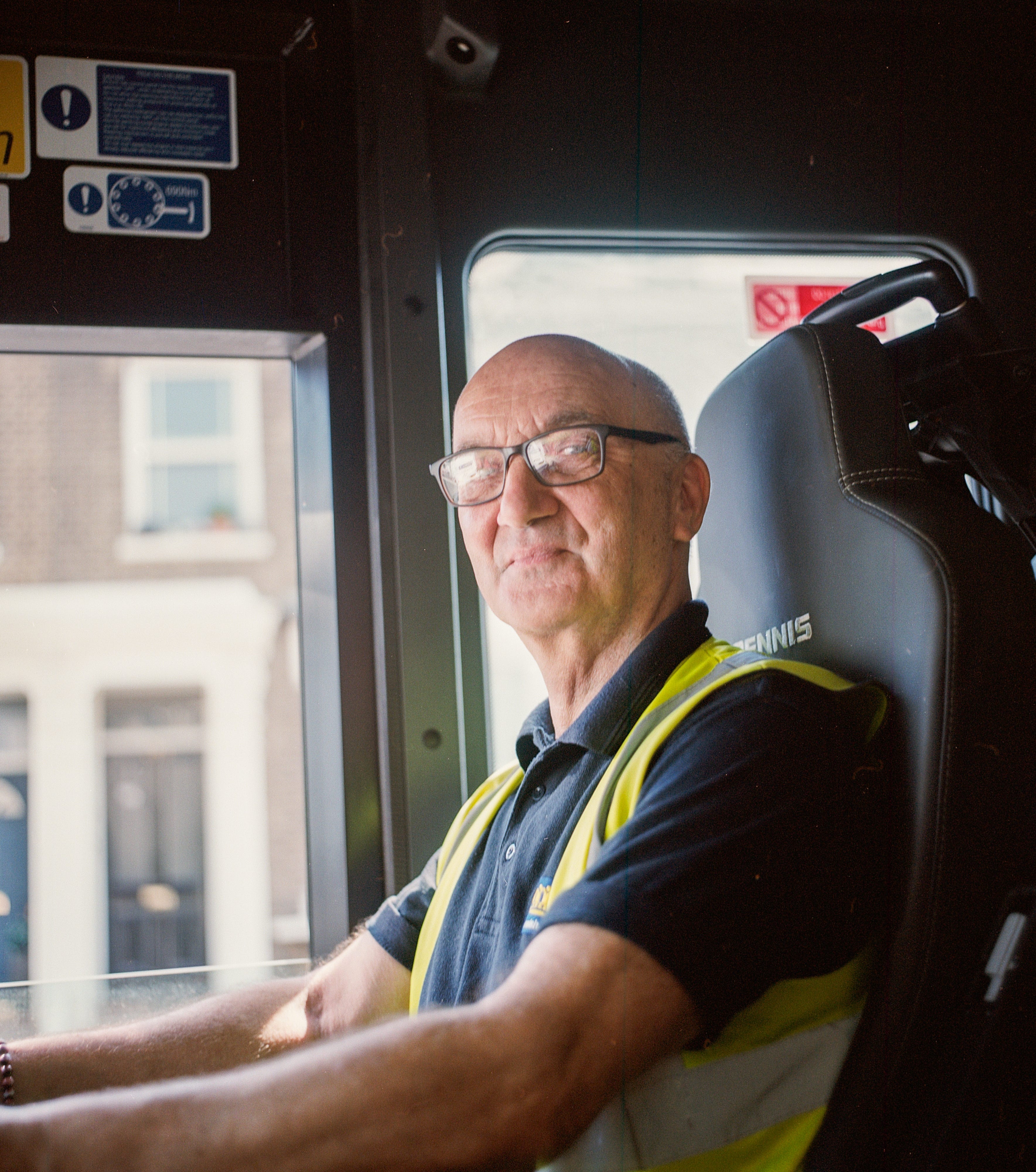
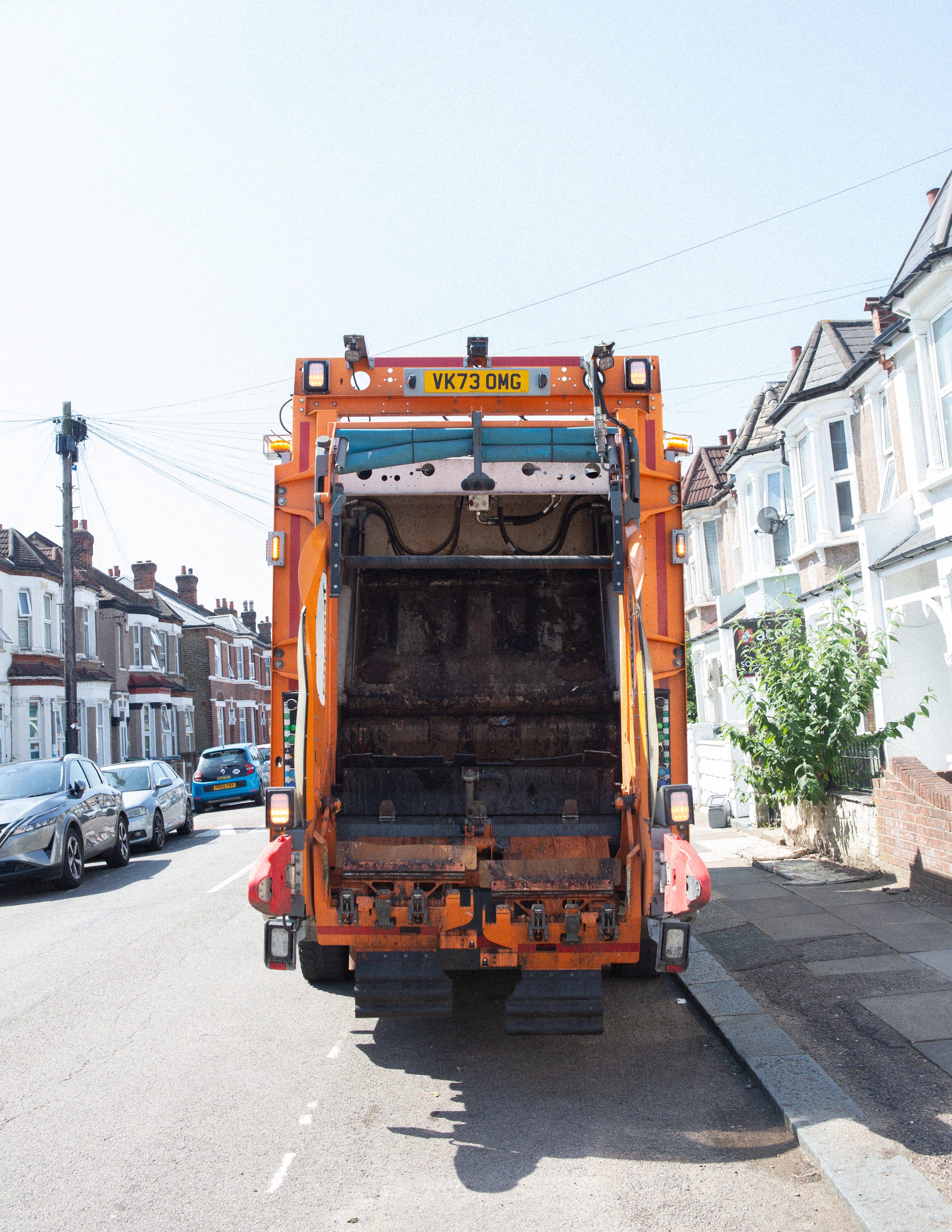
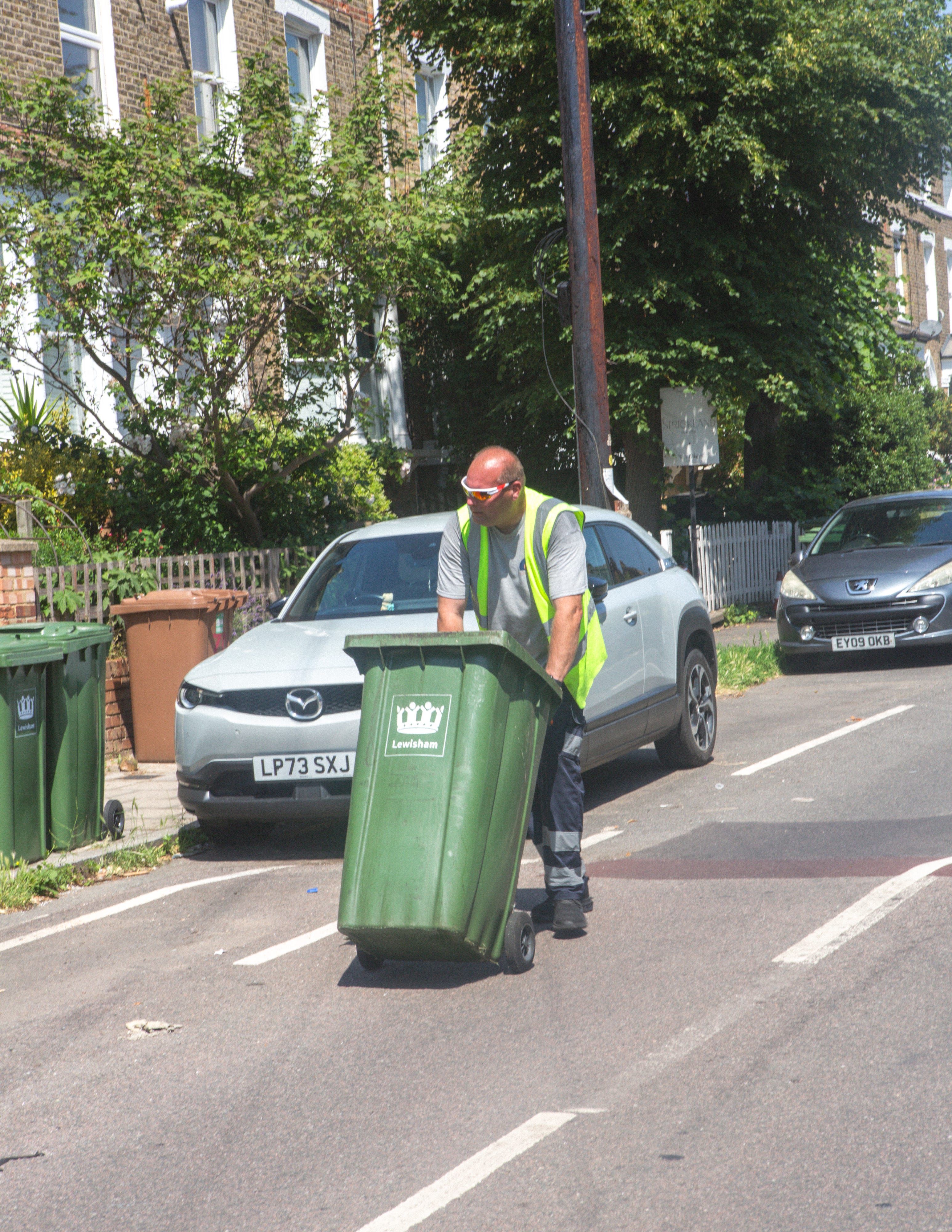
As I climb up into the cab of the truck, where there are three snug passenger seats, Steve warns me that ‘It’s very smelly, the food waste.’ It is, in that strong, sour way that anyone who has left their bins for a little too long will recognise. Terry, the van’s driver – a man in his sixties from Essex – drives us to the next strip on the route (which takes them to approximately 5,000 properties per week in Ladywell). The team know this patch inside out. Terry parks the van, and Steve and Carla jump out, grab a wheelie bin each and set off to collect the food. Carla opens one bin on a housing estate and shakes her head. Leaves. ‘We don’t take leaves, that’s garden waste’, she tells me. They have to be strict about what they do take: from a food management perspective, a leaf is distinct from a salad. There’s nothing unsightly today, but there can be. ‘People put all sorts of things in there. Nappies are the worst,’ Carla says.
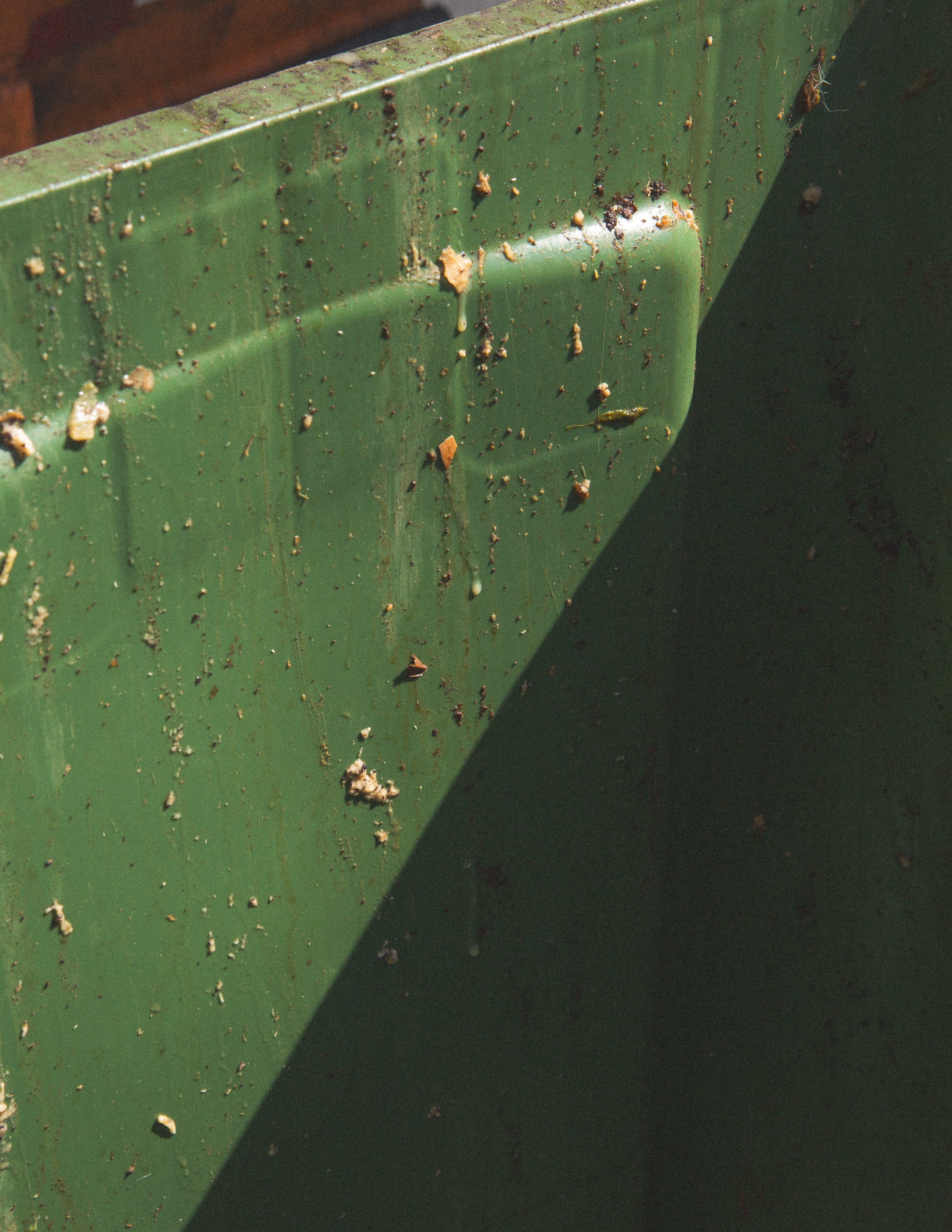
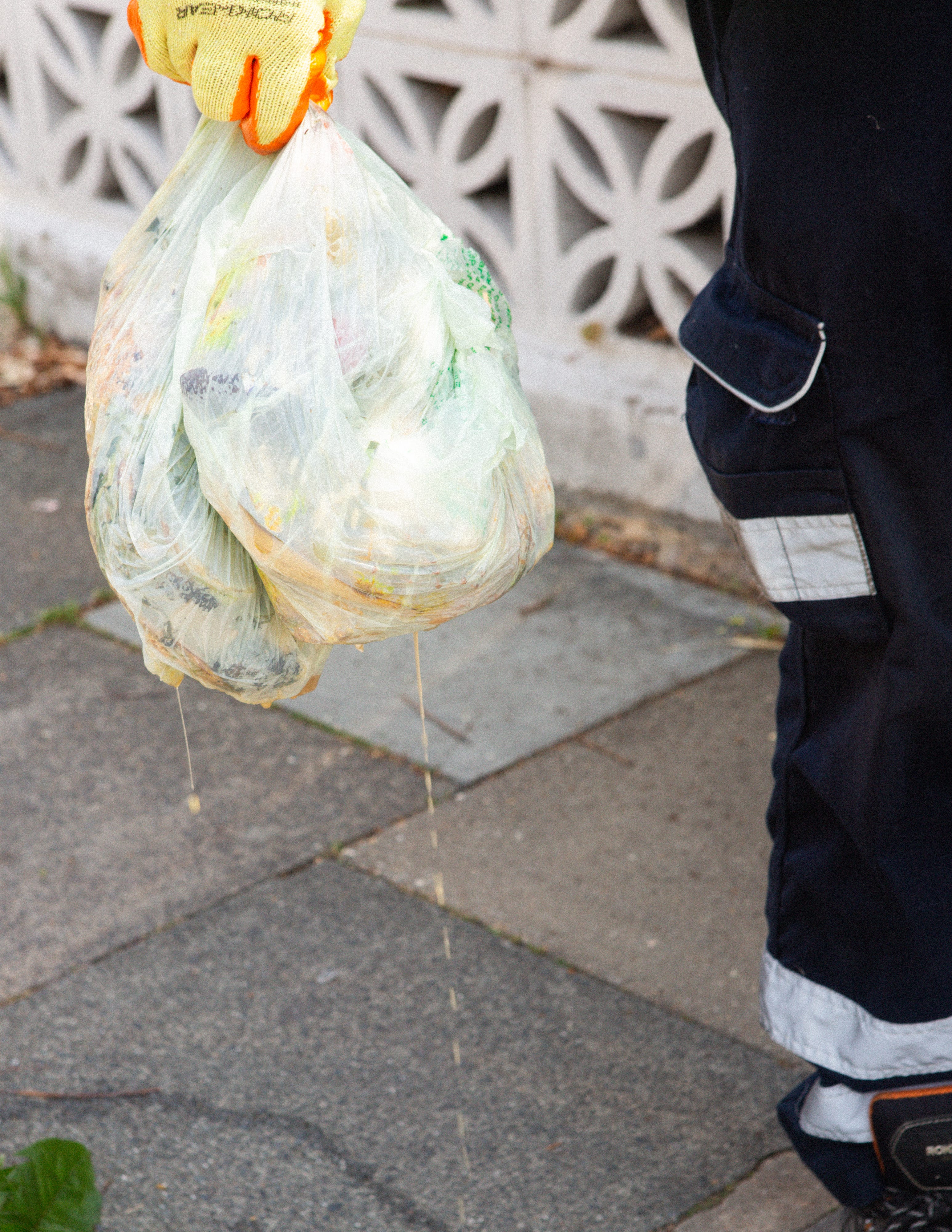
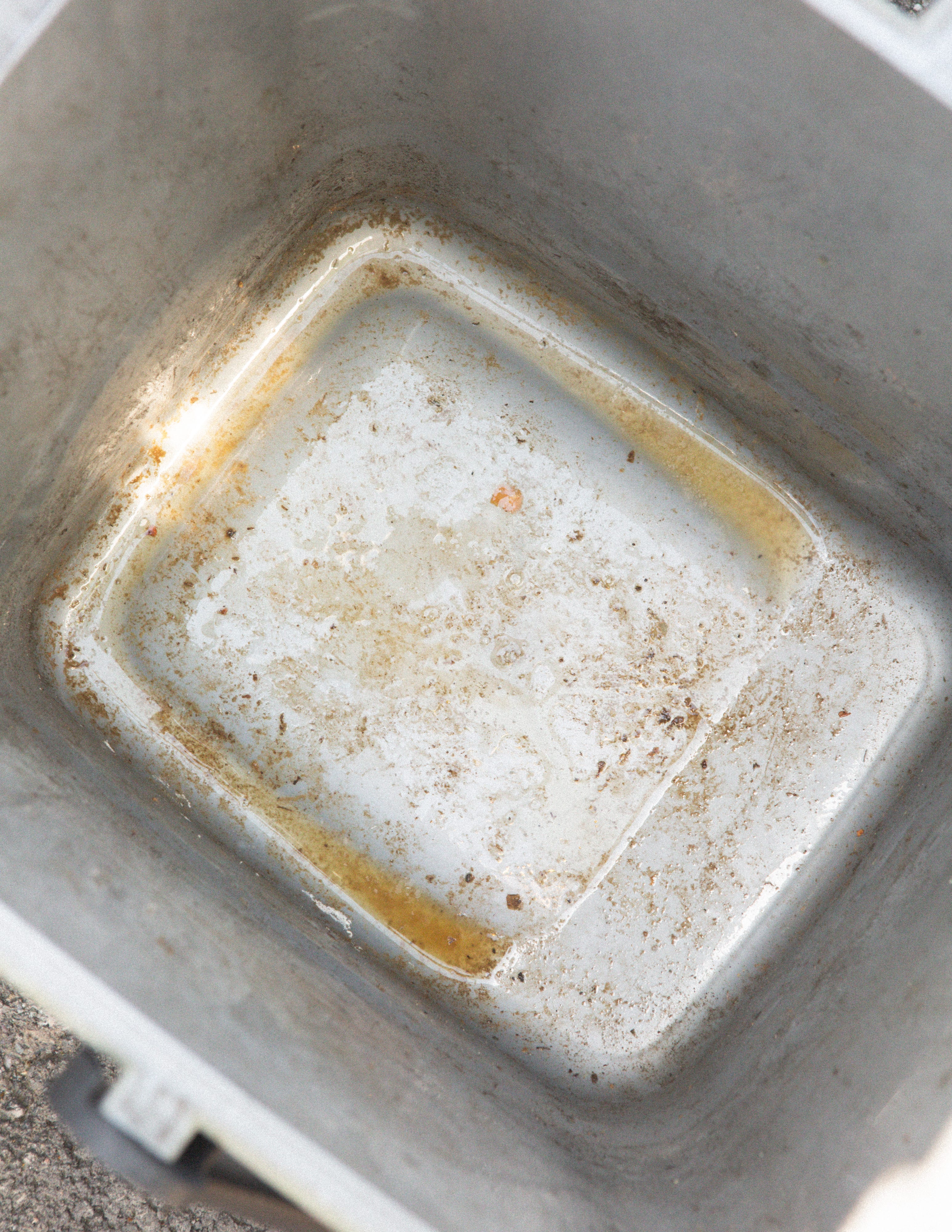
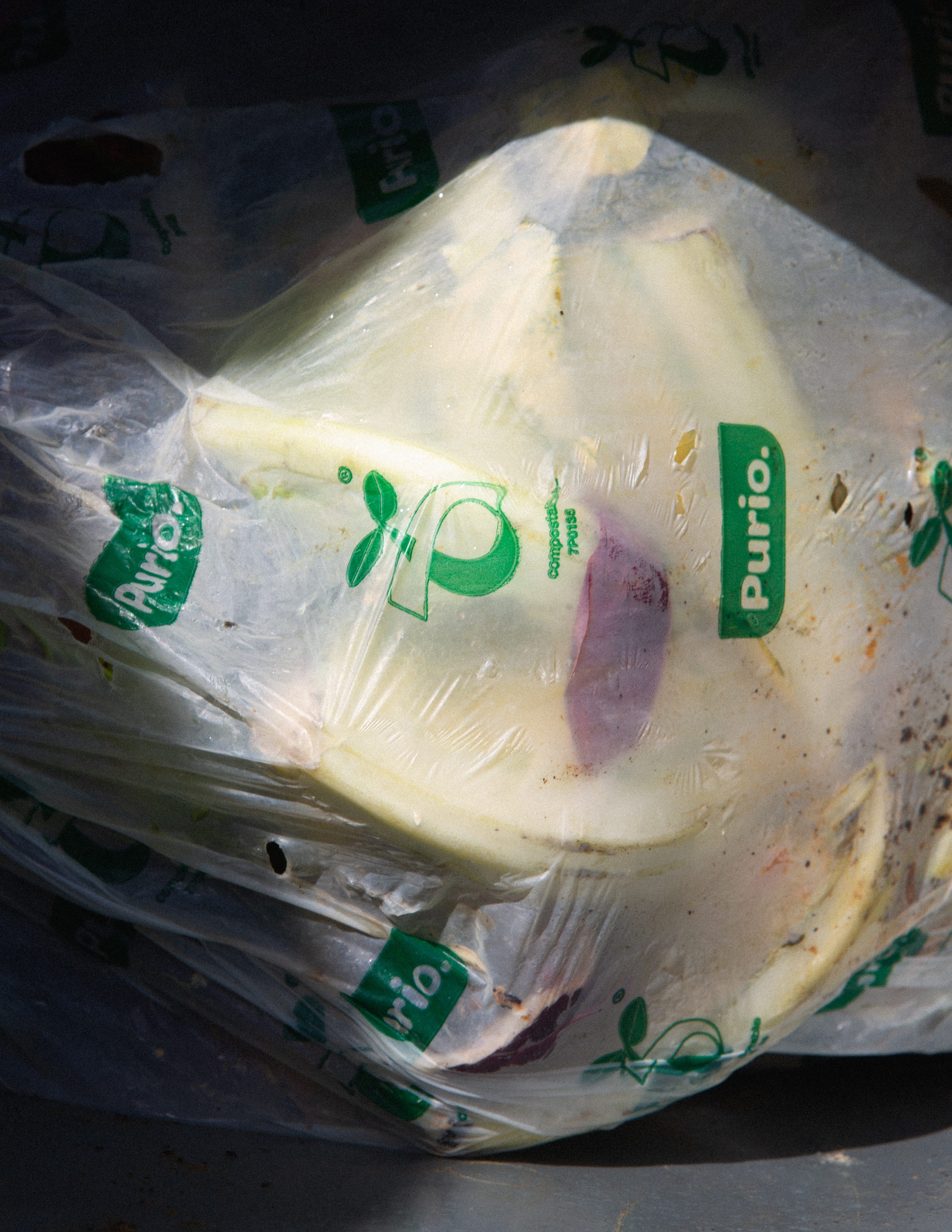
We drive on and stop again, on a terraced street off the A20. Terry opens one food bin. The bin itself is spotlessly clean and the little green bag is tied up like a Christmas pudding. ‘See that, that’s beautiful,’ he says, and tosses it in the wheelie. But they’re not always like that, and the food is not always in the bag. Bin juice is, naturally, a problem, but it is early October and the team are spared from the worst potential contents of these little bins: maggots. In summertime, things are different. ‘Feel like I’ve become an expert in maggots. Come in all shapes and sizes’, Terry says, shuddering. As we drive around, people rush out of their houses with their bits and bobs, food waste or otherwise, to meet the team. A resident with a wine bottle comes up to Terry and hands it over. ‘Is that for me? It’s empty!’ Terry says, and they both laugh.
As we drive on, Terry tells me he used to be in financial services but decided to get out of that game after the 2008 crash and train as a heavy goods vehicle (HGV) driver, which is what the council now employs him to do, driving the waste van. There’s always work for HGV drivers. He likes that there is this people-facing element to being a binman – meeting the residents, getting to know a neighbourhood. ‘It’s the satisfaction of a public service, keeping the streets free of vermin and rubbish,’ he says. I ask him whether collecting food waste has made him think differently about food, and he pauses for a moment. ‘Nah,’ he says, ‘food is food. You gotta eat innit.’
On the day I visit them, the Wearside Lewisham waste team work at a rapid clip and there are no unforeseen complications, so at ten past ten in the morning, after a little over four smooth hours, Steve and Carla are done. After the collection, the others leave, and Terry and I set off on the next leg of the rubbish journey – to the waste centre in Dagenham, a fourteen-mile drive away. Here, he warns me, the smell will be more intense. The drive takes us through the new Blackwall Tunnel, past the IKEA in Greenwich and that great monument of giving something a second life, the O2 Arena. As we get further out of London proper, we are surrounded by a Hovis factory, Tate and Lyle, large hubs for Tesco and Co-op. Then, just a little further out, the waste facilities. In Dagenham, there are two side by side – ReFood and East London Biogas, the latter of which we are heading to with our haul.
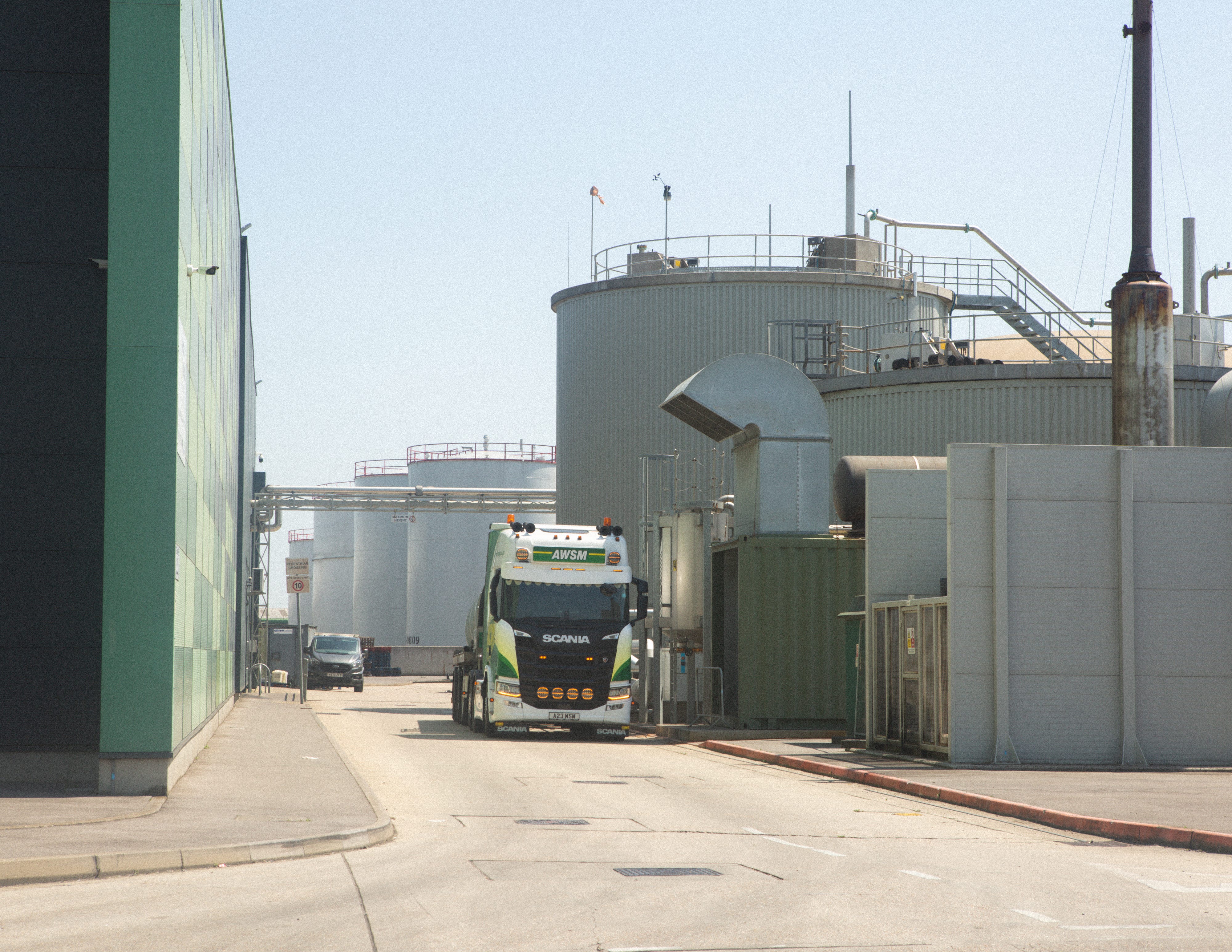
East London Biogas, which opened in 2014 as the first anaerobic digestion plant inside the M25, buys food waste from Lewisham council (for £30 per tonne), as well as other councils like Essex. The plant has been owned by a private company called Bio Capital since 2019. When they receive the waste, East London Biogas convert it into energy and compost (rather than sending it to landfill, where it releases greenhouse gases as it rots). They do this via a process called anaerobic digestion, in which food waste is put into tanks and broken down by microorganisms. The site processes up to 70,000 tonnes of food waste every year. When I fancied my orange, it never occurred to me that the skin I would throw away had the potential to be turned into fuel. Terry told me that there are five trucks out in Lewisham each day, and each truck takes an average of about 5 tonnes. So, call it £3k a week in profit for the council.
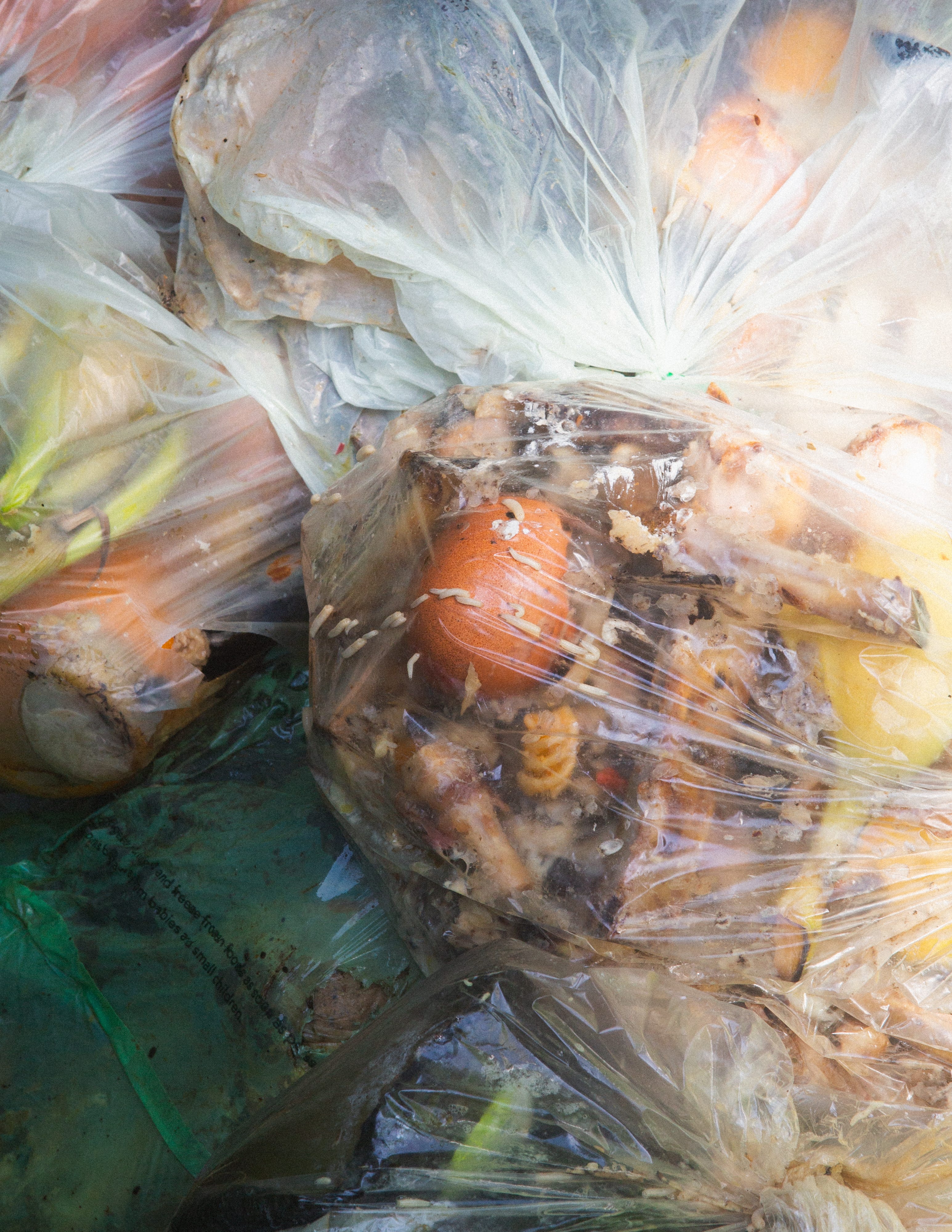
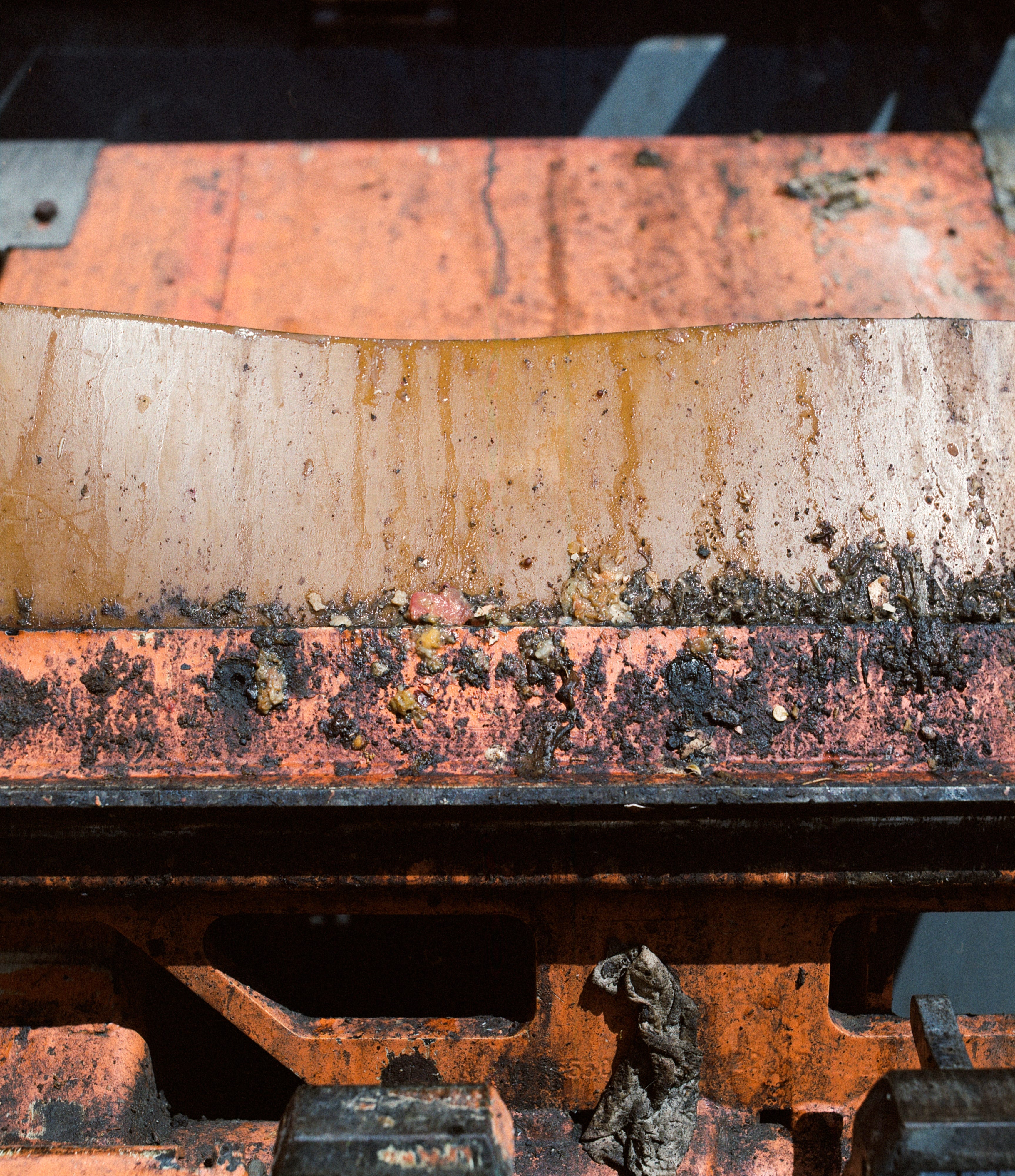
As Terry had warned, the smell of food waste begins as we get closer to East London Biogas. Eggs, sulfur, farmyard. On arrival, he drives us over a weight bridge that measures how much waste in the truck today: 4.4 tonnes. ‘Not bad’, he says. We head into a huge hangar space which contains three dumping bays and reverse into one of them. There are hills of rotting food in here, light grey and speckled with the more intact detritus. Scraps of Sainsbury’s bags swim in the slurry. A whole melon sits looking lost on the ground. Waste workers are knee-deep in the stuff, moving it around with shovels. An orange peel peeks out at me, slicked with indeterminate mulch. Beside us, large as a house, is a vat where the food waste is turned into what the company genuinely call a ‘soup’.
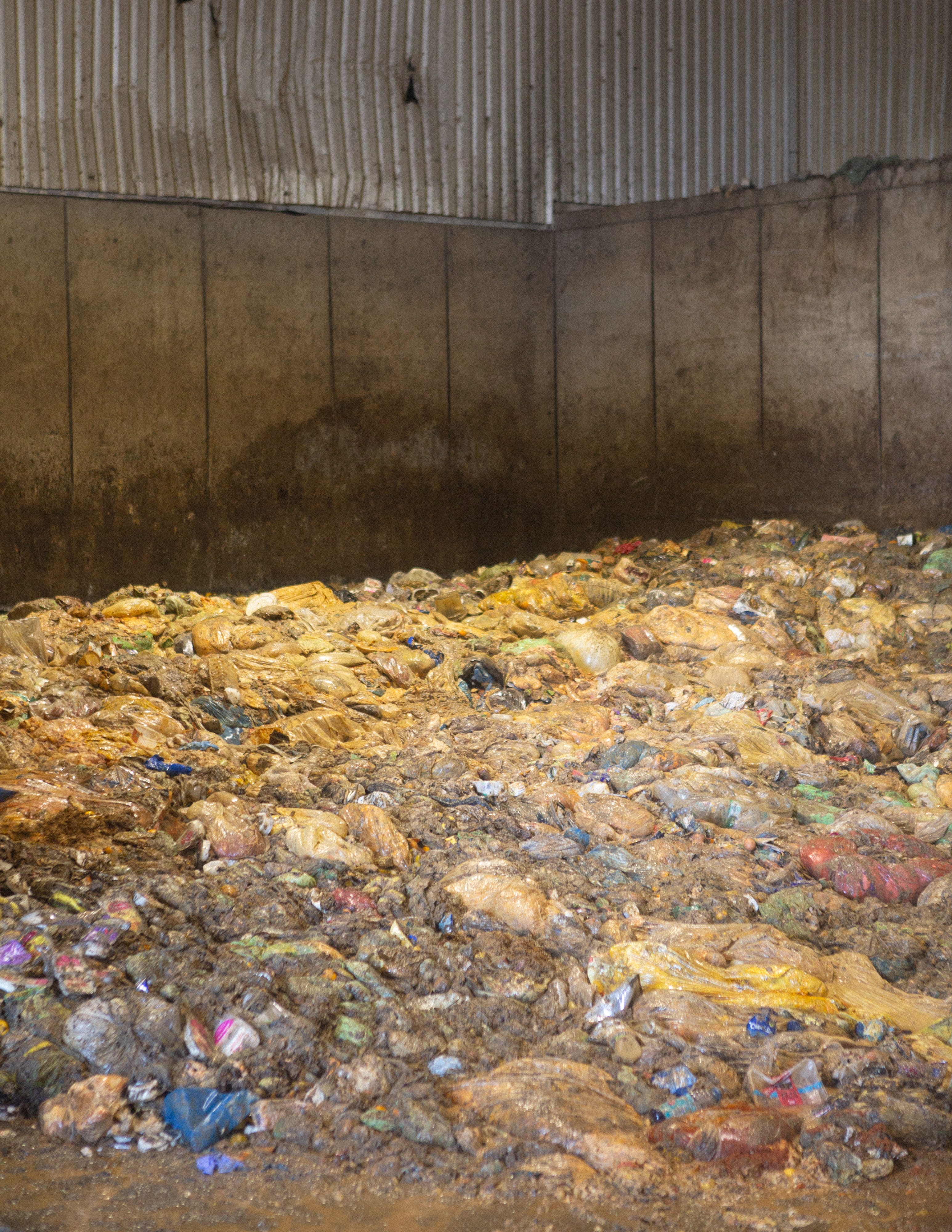
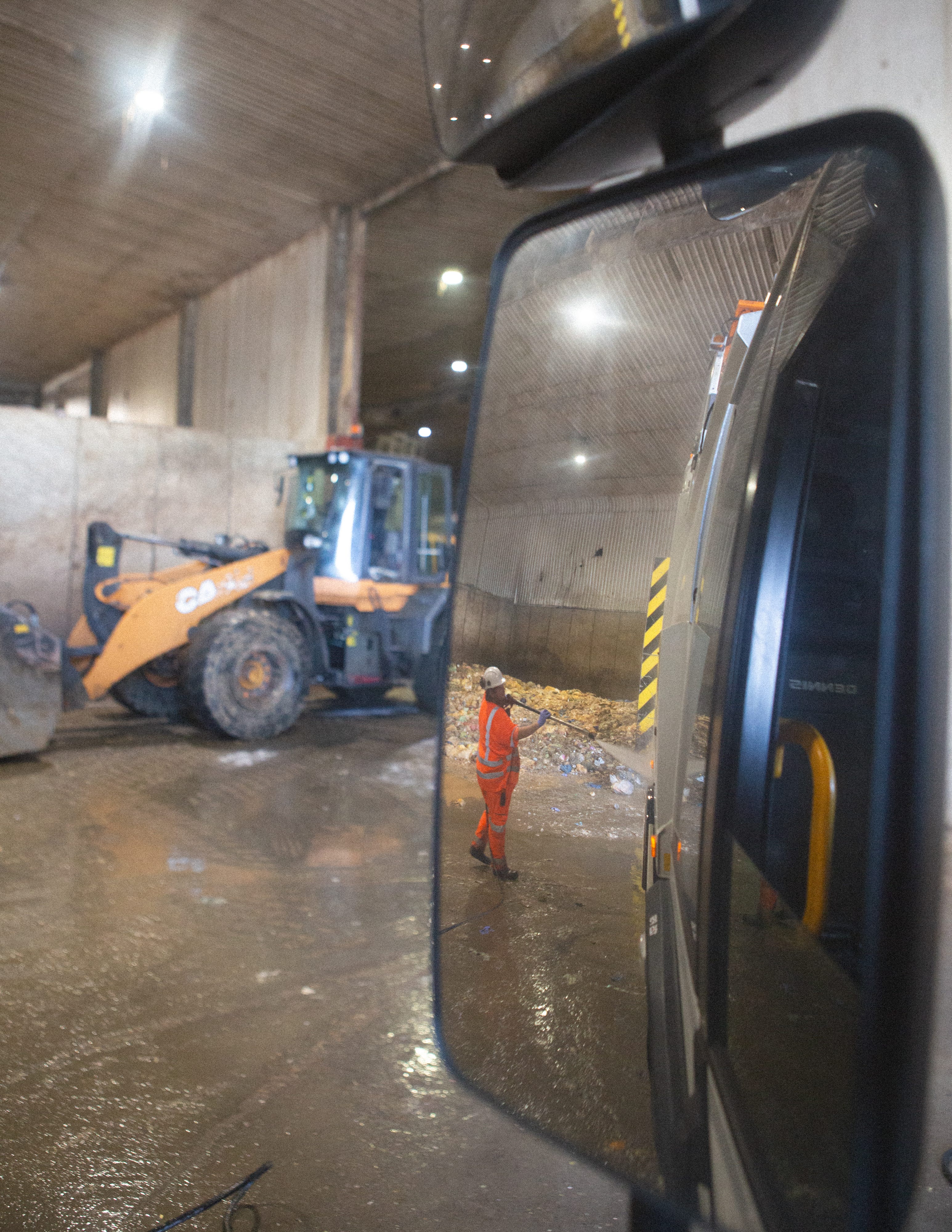
To begin the process of anaerobic digestion, bulldozers scoop the food waste up into the vat. Here it gets pre-treated to remove the plastics, diluted with water and heated to 70°C for one hour to kill all pathogens in the food. Then it goes into an enclosed, oxygen-free tank where it is broken down by microorganisms and begins to emit a low-carbon biogas, which is then transformed into green energy. Recycling six teabags in this manner produces enough energy to boil the kettle for the next cup, they say. Then the material that is left over – biofertilizer, as it is called – is supplied to agricultural companies and farmers local to this plant, so they can grow more food.
Today, the parent company, Bio Capital – which is in turn owned by British developer Equitix – has eight such plants around the UK, and as of late 2025 there are 750 biogas plants all over the country. The proliferation of privately owned anaerobic digestion plants is largely thanks to government incentives like the Green Gas Support Scheme, which was introduced in 2021.
But anaerobic digestion isn’t the only useful thing that can be done with food waste. Eleanor Barnett, in her richly informative book Leftovers, writes that up until the nineteenth century, it was common practice in England for food waste to be fed to pigs, who roamed town streets scarfing down piles of food left outside people’s doors. Feeding food waste to pigs was banned in 2001 due to foot and mouth disease, but some have argued that a version of the pig solution is one that ought to be brought back, like the (no longer active) campaign group ‘The Pig Idea’. There is also a more labour-intensive but valuable process whereby specific kinds of food waste can be mined for useful chemicals and compounds. Waste coffee grounds, for instance, can have caffeine as well as chemicals that create the coffee aroma extracted, which could then be used in the production of instant coffee.
Still, it is biogas that is considered among the best possible uses for food that is no longer fit for human consumption, Paul Hellier, an expert in sustainable energy at UCL, tells me when we speak on the phone in early May. Even though biogas isn’t a perfect product (‘There’s the issue of there being impurities like hydrogen sulfide once the biogas is produced – which smells like rotten eggs and does not providing energy when it burns’), overall, he says, ‘it’s viewed as a very useful resource.’
We can also do more to intercept food from supermarkets and restaurants before it makes the transition into being considered waste at all. This is the model of companies like Oddbox, which rescues aesthetically imperfect but edible food from being thrown out by supermarkets, or Too Good To Go, which matches hungry customers up with businesses that have excess food at the end of the day.
The Waste and Resources Action Programme (WRAP), an environmental action NGO, visualises the food waste hierarchy as an inverted triangle. At the bottom tip of the triangle is sending food to landfill, the absolute worst, most wasteful final destination for a food product. Near the top, there is redistribution to people who need it. ‘Ultimately, the objective is: if we can halve food waste, [we] will be able to make more of the food that we’re growing,’ Rosemary Brotchie, who works at WRAP, tells me, ‘and improve food security, not just for individuals, but also for the UK as a whole.’
How can we waste less? In an ideal world, food is produced, it reaches you, you eat it in its entirety, you turn the food into energy and, well, flush the resulting waste. But that is only how it goes some sixty-odd per cent of the time – in the Western world, at least. In 2011, a report by the UN’s Food and Agriculture Organization acknowledged that it lacked household waste data from outside Europe and North America; it estimated that around one-third of food produced globally was lost or wasted. People famously do not think about the journey an orange, say, makes across the continent – or even across the world – before it gets to them, nor do they appreciate the energy that was expended in the process.
As of March this year, it is now mandatory for all councils across the country recycle food waste. This is part of the UK’s commitment to a UN Sustainable Development Goal to halve food waste by 2030. We could certainly be doing more to recycle our household food waste in this country. South Korea, for instance, has a ‘pay-as-you-throw’ system that charges depending on how much food waste is generated; this has led to more than 95% of its food being recycled. While all councils will now be required to offer the option to recycle food, it remains to be seen whether people will step up and take advantage of this. While it can be easy to feel powerless in the face of cost-of-living and environmental challenges, Rosemary believes that waste is an area where the individual consumer can and should make a difference, keeping food out of landfill and money in their wallets. ‘If you’re seeing the quantity of what you’re wasting, there are opportunities there for us all to stop and think, “Well, did I have to waste that?”, she says.
After dropping off our load at East London Biogas, Terry and I set off back to the depot in Lewisham. Terry explains that they’re at a tipping point: the work that the team does each day is sufficient to deal with Lewisham’s current food waste recycling output, but if everyone suddenly started recycling at once, there would be too much waste to process and the system would break.
When I bid goodbye to Terry, I sit down at the bus stop. There, in a pavement groove, sits a dusty Haribo sour cherry. I think about the packet it must have come from, the sugar-coated fingers that fumbled it at the last moment and let it fall to the ground. Where this food item that came within touching distance of being eaten will end up next is anyone’s guess. But I’m going home for a shower, and to use up some of the leftovers in my fridge.
Credits
Imogen West-Knights is a journalist, novelist and video game writer based in London.
Wunmi Onibudo is a photographer based in London whose work reflects human stories and modern culture. You can find her at www.wunmio.com or on her Instagram at @wunmio.
The full Vittles masthead can be found here.
Another fascinating very well written article - thank you. Sadly where I live Shropshire have removed food collection because of cost - it’s an awful backwards step.