

Patrick
‘As adults, food became a shared language when words failed us.’ A graphic essay by Ella Bucknall about eating with her brother.
Good morning and welcome to Vittles. Today, we are publishing a graphic essay by Ella Bucknall about eating through childhood, and grief. We strongly recommend reading this version of Ella’s essay, which has been drawn and designed by Ella, in your web browser, but you can read it in standard text format below.
We have sold three-quarters of our print run for Issue 2, themed around ‘Bad Food’. You can buy a copy here.
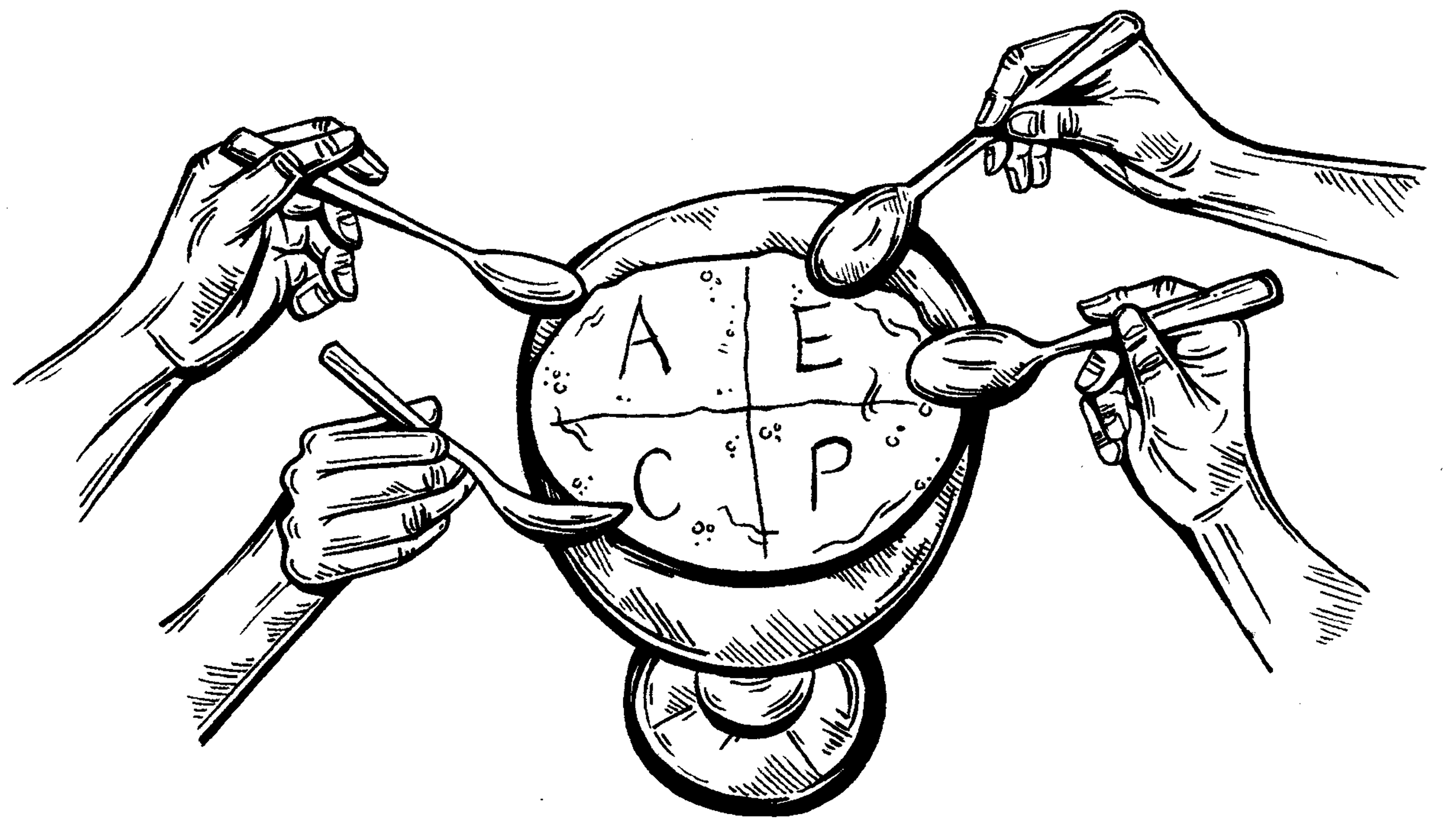
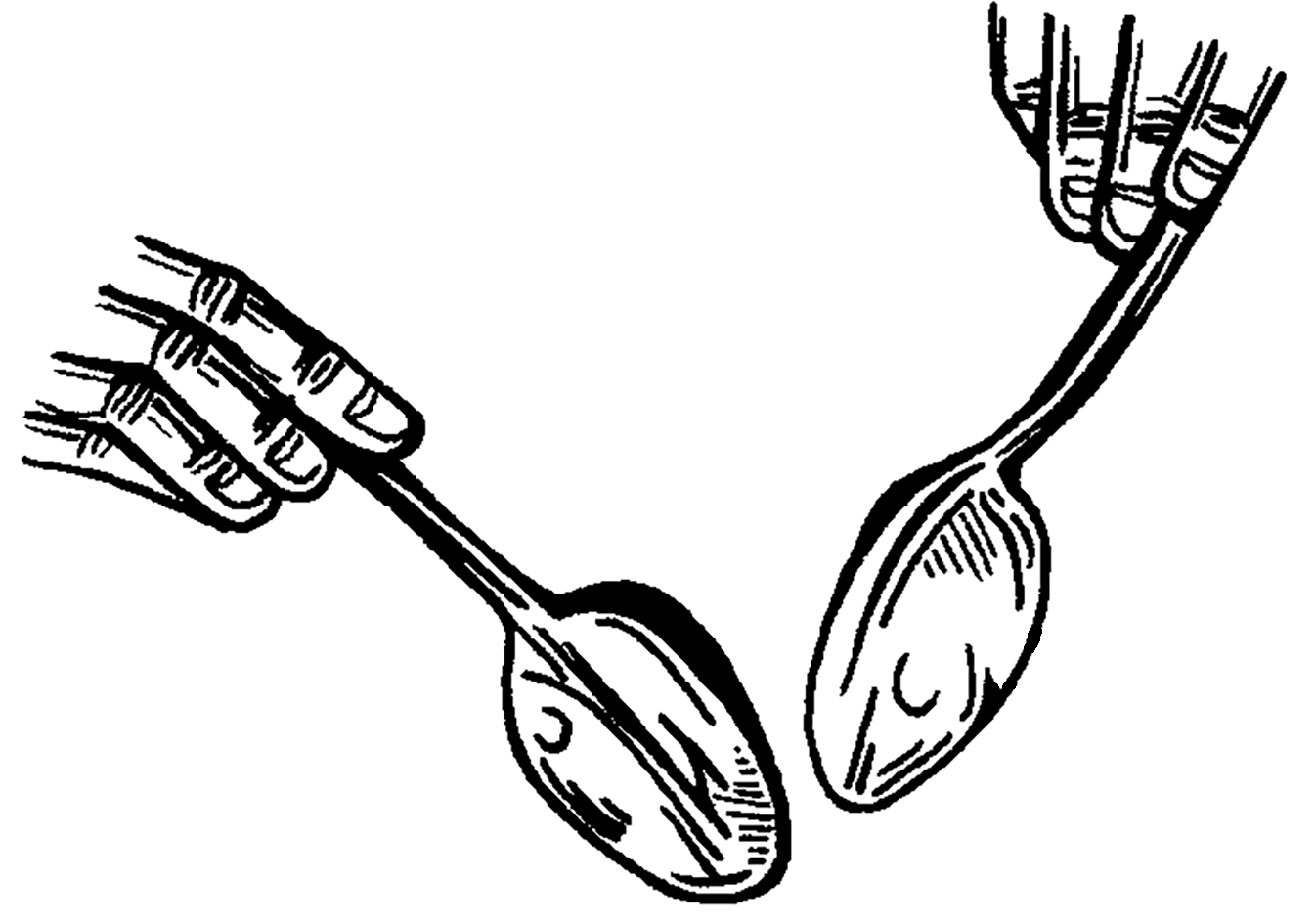
As children, my brother Patrick and I were obsessed with sharing. When a big glass bowl of Angel Delight was deposited onto the kitchen table, we would carve a territorial X onto the sugary surface of the mousse and mark each butterscotch quadrant with our initials: C for Caroline (Mum), A for Aidan (Dad), P for Patrick, and E for Ella. Even so, the milky dessert could still become a battlefield if – at a certain angle – the convex backs of spoons threatened the delineated borders.
Aside from Angel Delight, Patrick often rejected food, a cause of great anguish for our Mum. She tempted him with vegetables through green bean races and blind pepper tasting games but, for the most part, he only wanted sweets. I often joke that I became vegetarian around the age of six because of The Simpsons – that haunting image of the little lamb bleating ‘Please Lisa, I thought you loved me’ – but I wonder now if it wasn’t also a bid for parental attention. As we grew older, my eating habits became more constrained, while Pat’s former fussiness turned into an expansive and indiscriminating appetite. He had seen my hunger win praise, I had seen his restrictions garner concern.
In any case, no one ever refused Angel Delight. It experienced a revival in the nineties after a promotional campaign featuring Wallace and Gromit. On Christmas Day in 2024, Aardman Animations released a new Wallace and Gromit film, Wallace & Gromit: Vengeance Most Fowl, which Pat watched while working his way through a party-sized cylinder of Twiglets – one of several – which he always ate during the festive period. In the spirit of Wallace and Gromit, we also ate plenty of cheese over the holidays, dipping toast into baked camembert and sharing Waitrose fromagerie selection boxes.
We were no longer so scrupulous about equitable divisions by the time we were adults.
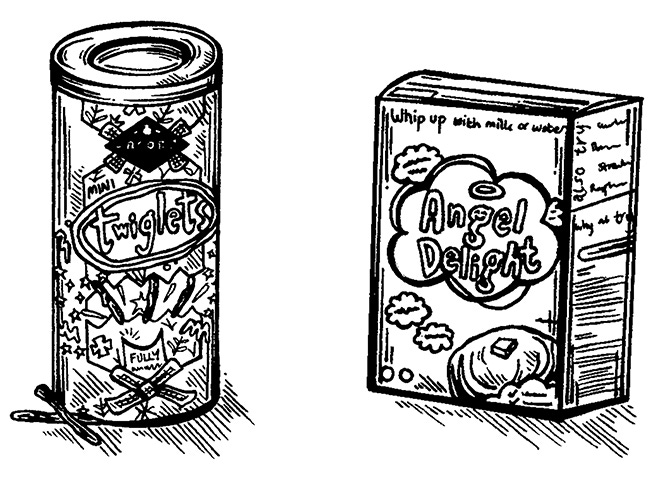

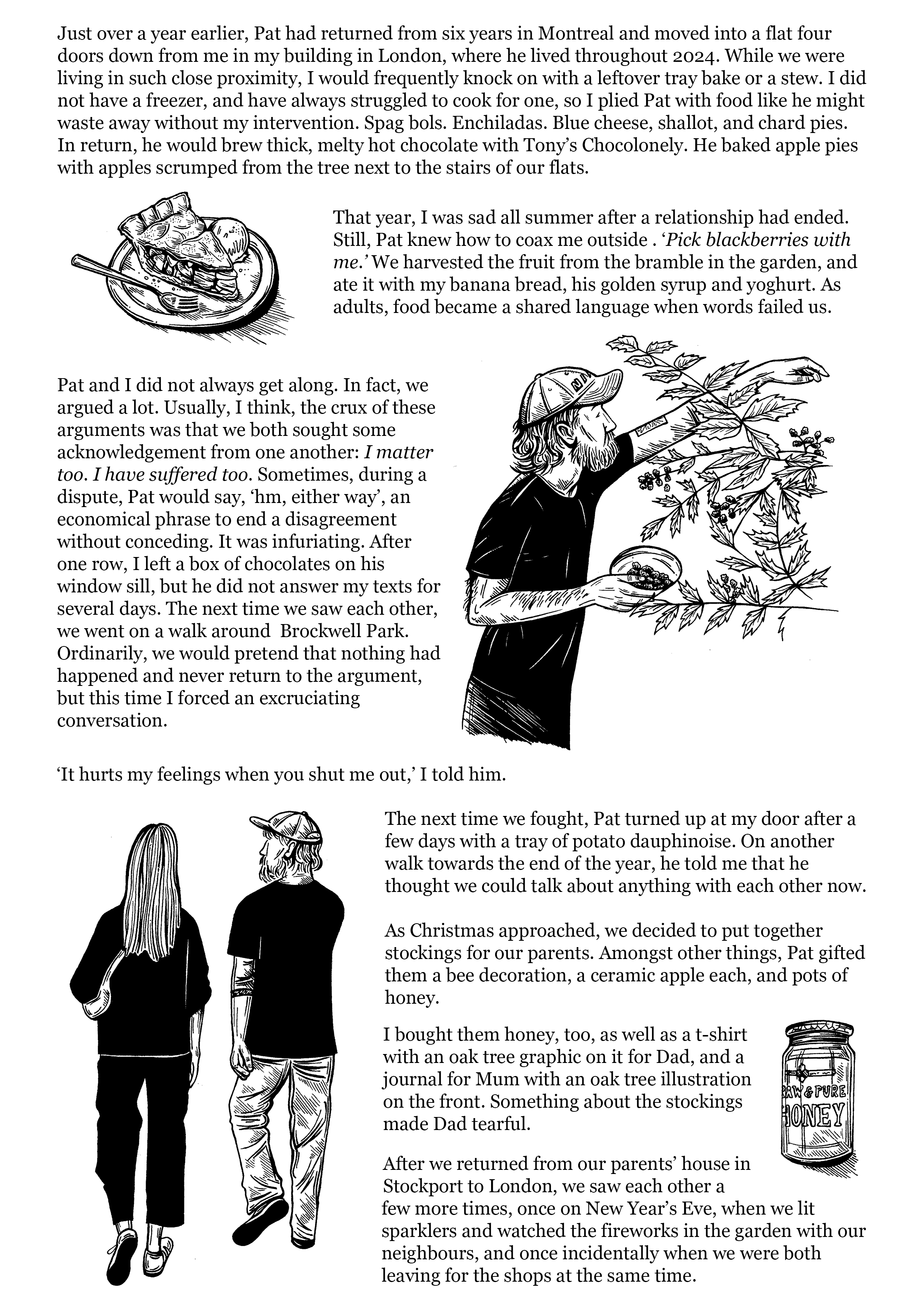
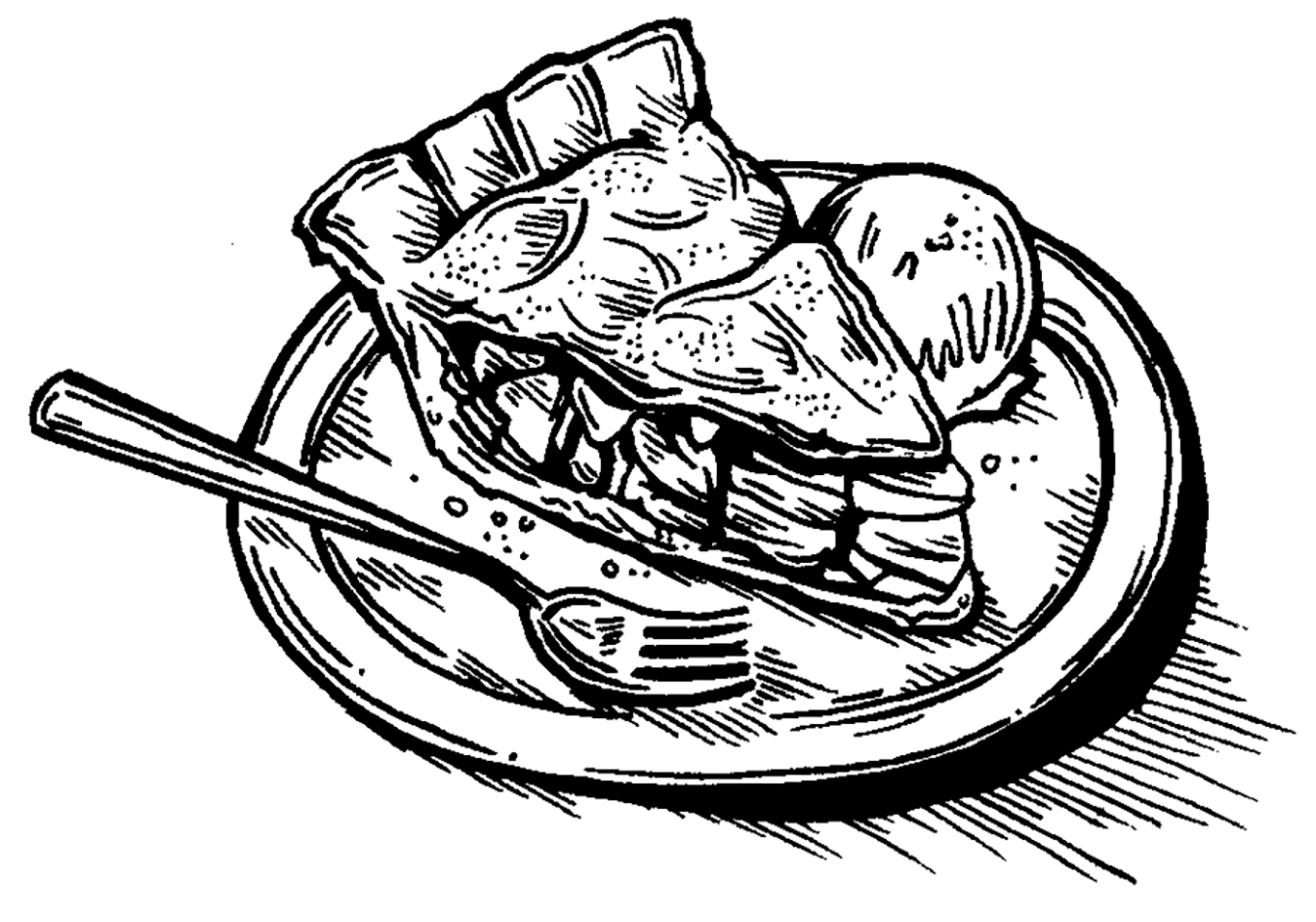
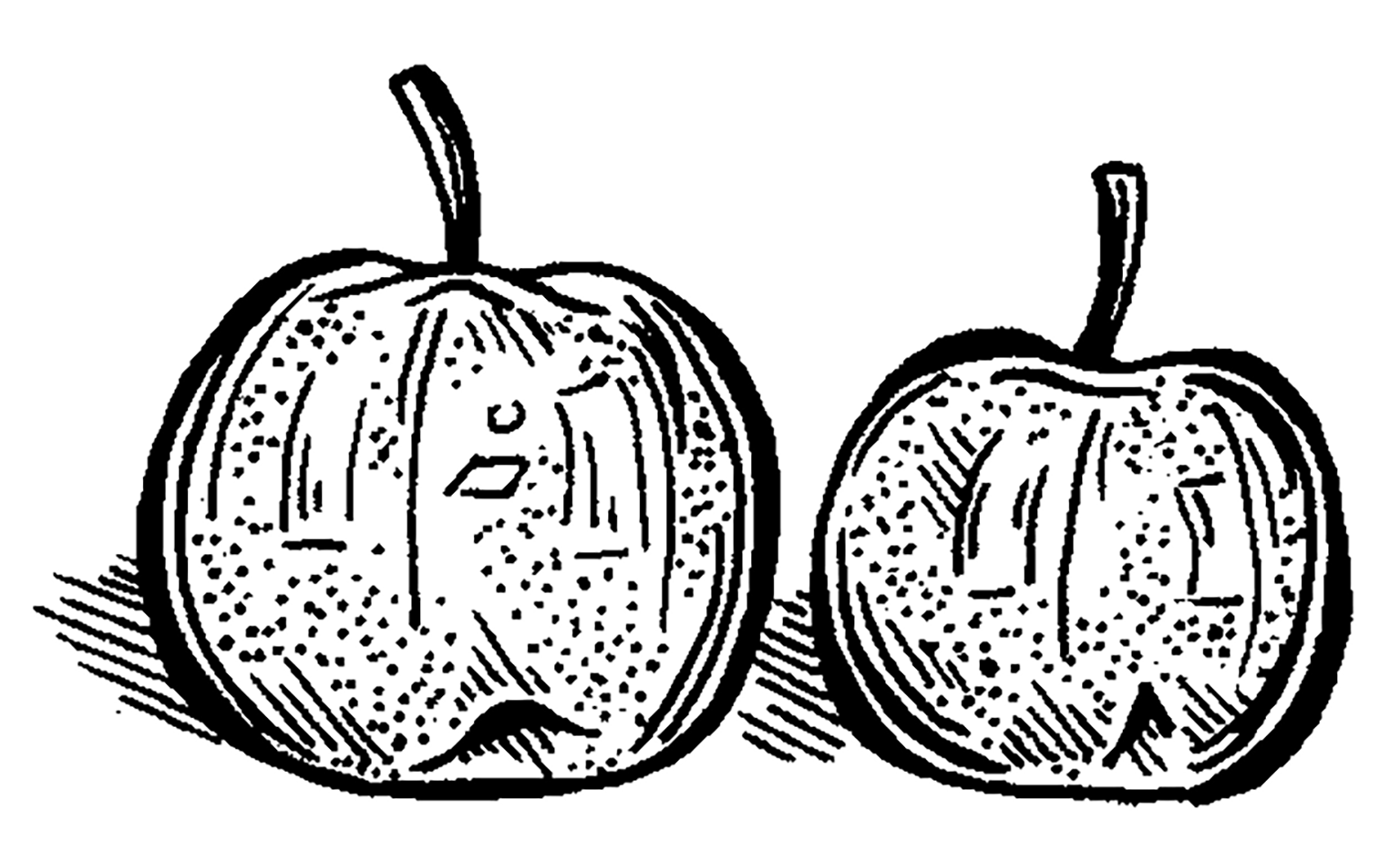
Just over a year earlier, Pat had returned from six years in Montreal and moved into a flat four doors down from me in my building in London. While we were living in such close proximity, I would frequently knock on with a leftover tray bake or a stew. I did not have a freezer, and have always struggled to cook for one, so I plied Pat with food, like he might waste away without my intervention. Spag bols. Enchiladas. Blue cheese, shallot and chard pies. In return, he would brew thick, melty hot chocolate with bars of Tony’s Chocolonely. He baked apple pies with apples scrumped from the tree next to the stairs of our flats.
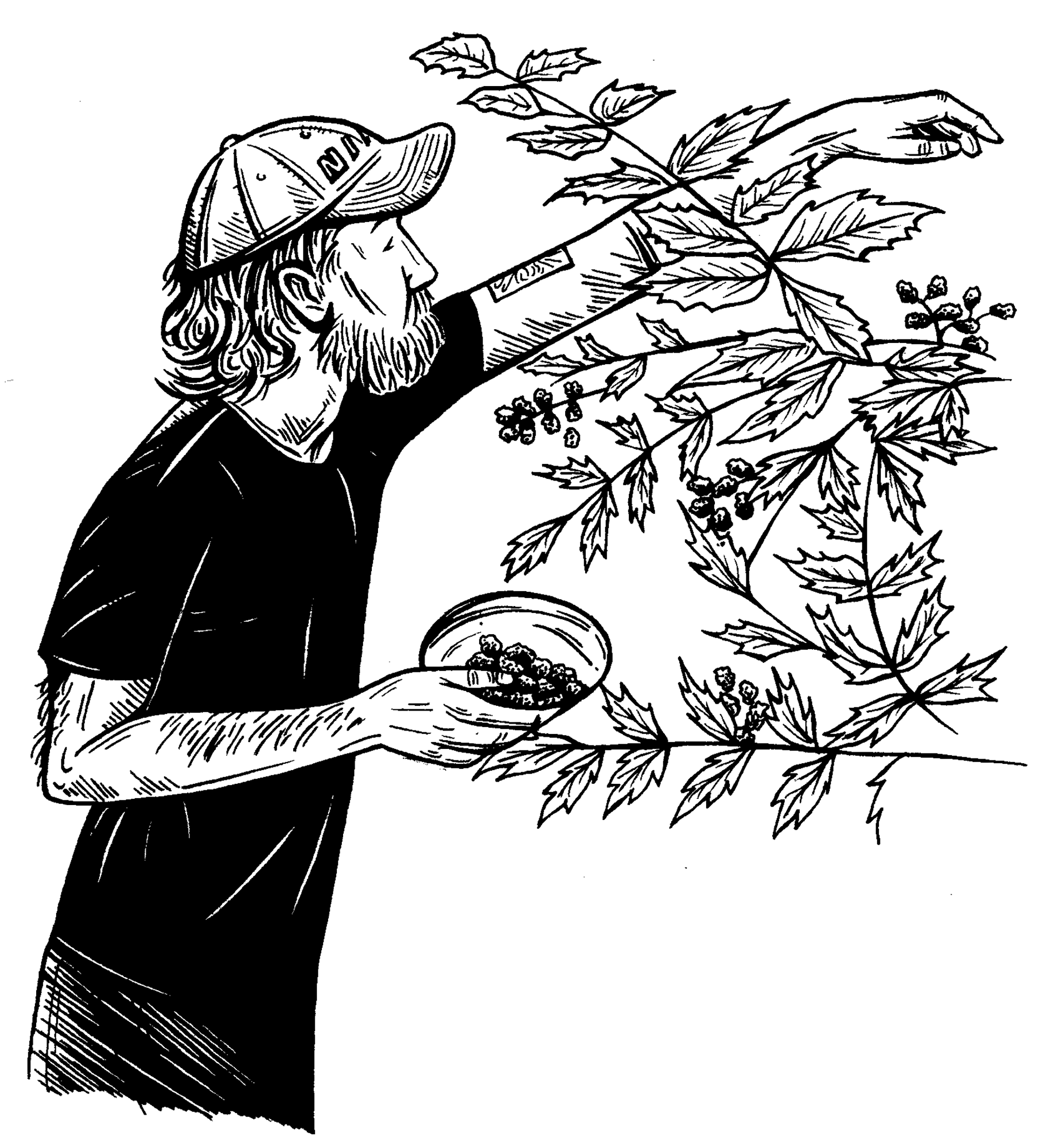
That year, I was sad all summer after a relationship had ended. Still, Pat knew how to coax me outside. ‘Pick blackberries with me.’ We harvested the fruit from the bramble in the garden, and ate it with my banana bread, his golden syrup and yoghurt. As adults, food became a shared language when words failed us.
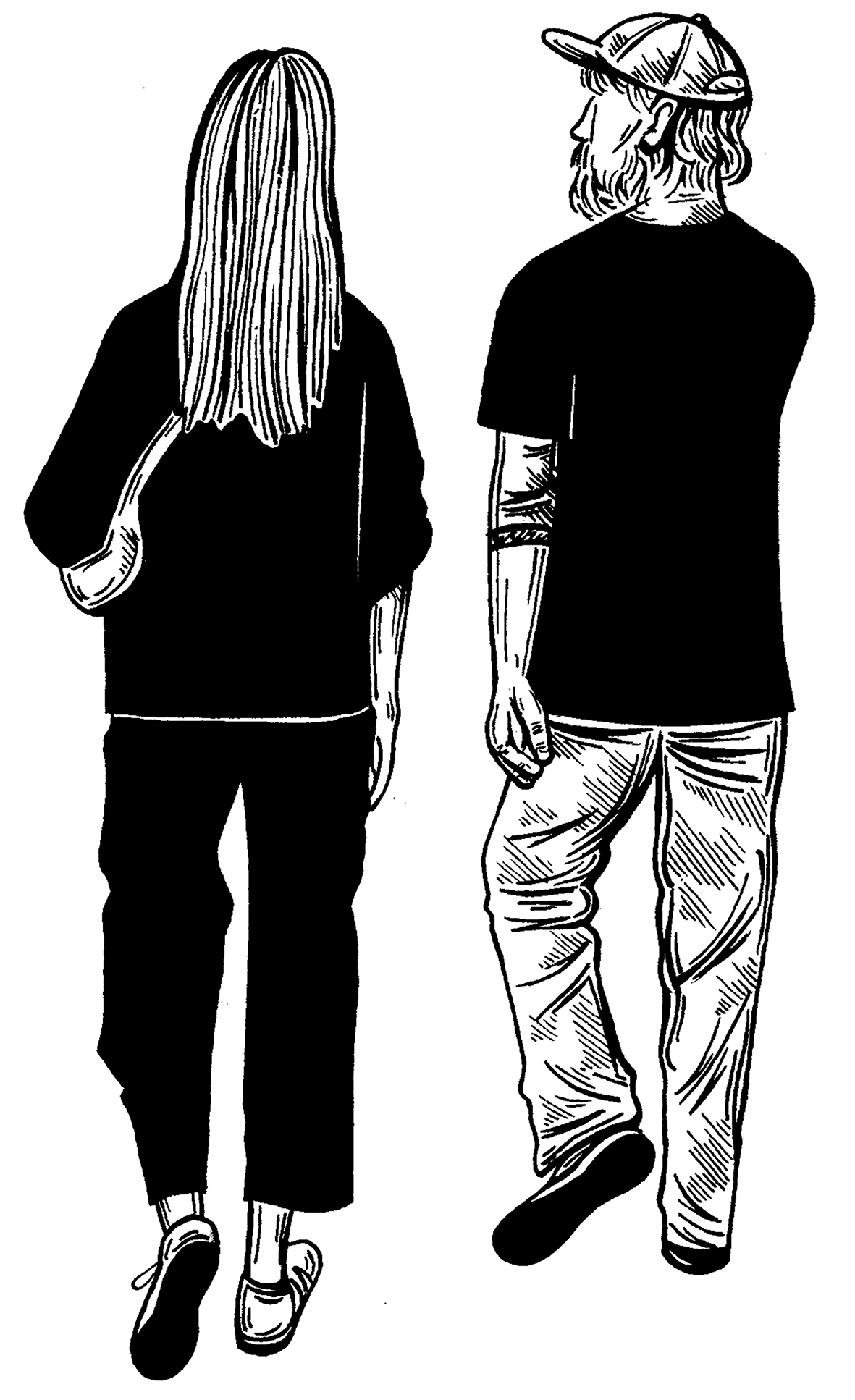
Pat and I did not always get along. In fact, we argued a lot. Usually, I think, the crux of these arguments was that we both sought some acknowledgement from one another: I matter too. I have suffered too. Sometimes, during a dispute, Pat would say, ‘Hm, either way’, an economical phrase to end a disagreement without conceding. It was infuriating. After one row, I left a box of chocolates on his windowsill, but he did not answer my texts for several days. The next time we saw each other, we went on a walk around Brockwell Park. Ordinarily, we would pretend that nothing had happened and never return to the argument, but this time I forced an excruciating conversation.
‘It hurts my feelings when you shut me out,’ I said.
The next time we fought, Pat turned up at my door after a few days with a tray of potato dauphinoise. On another walk towards the end of the year, he told me that he thought we could talk about anything with each other now.
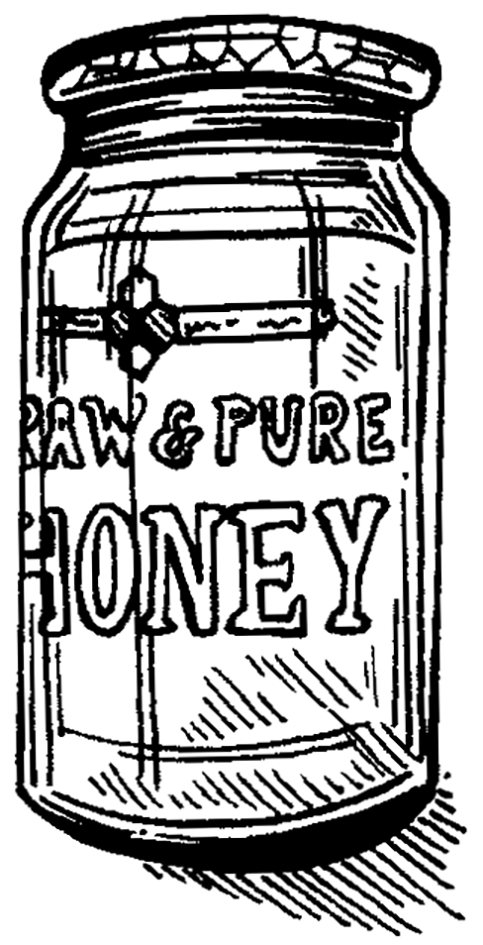
As Christmas approached, we decided to put together stockings for our parents. Amongst other things, Pat gifted them a bee decoration, a ceramic apple each, and pots of honey. I bought them honey, too, as well as a t-shirt with an oak tree graphic on it (for Dad) and a journal with an oak tree illustration on the front (for Mum). Something about the stockings made Dad tearful.
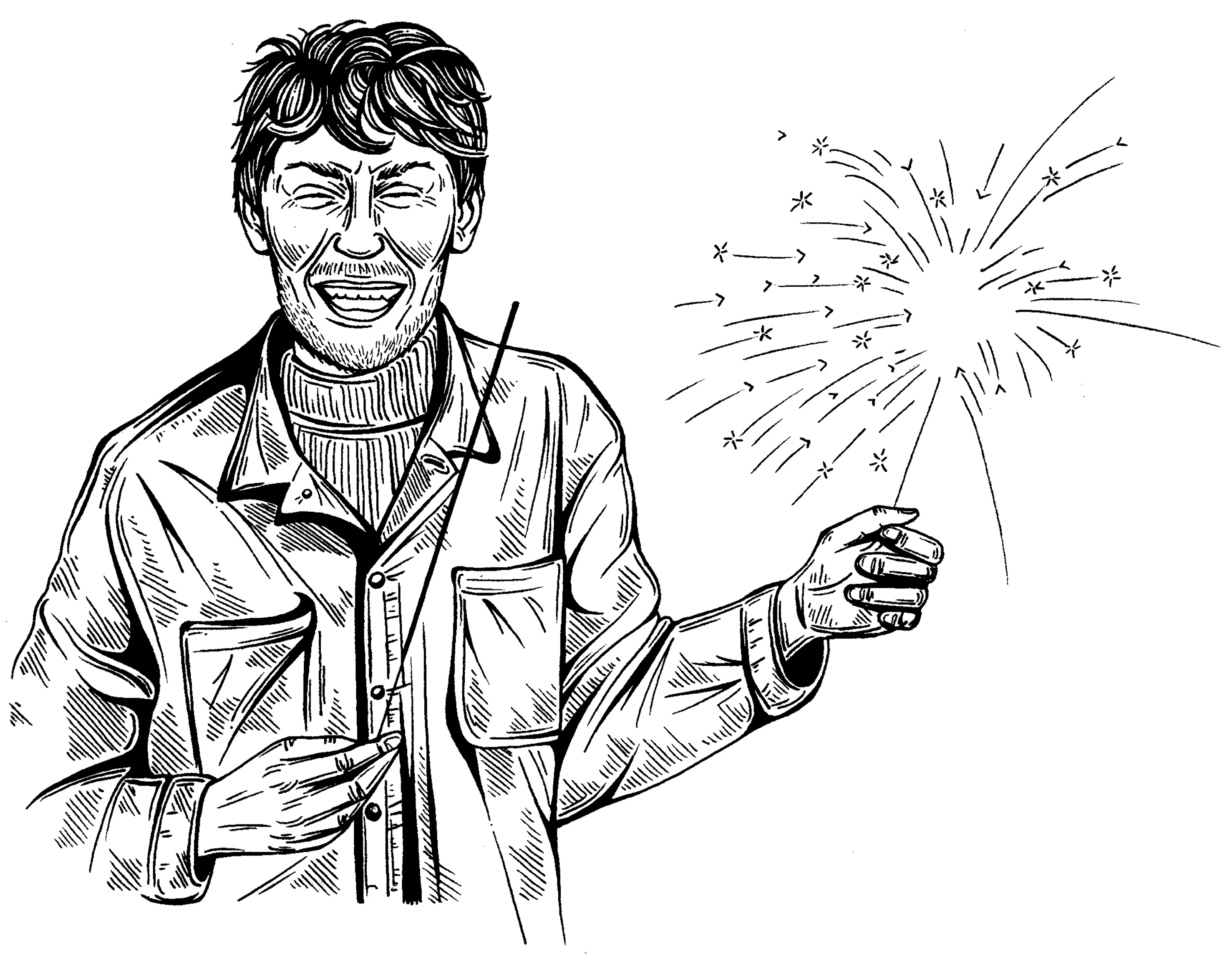
After we returned from our parents’ house in Stockport to London, we saw each other a few more times, once on New Year’s Eve, when we lit sparklers and watched the fireworks in the garden with our neighbours, and once incidentally when we were both leaving for the shops at the same time.
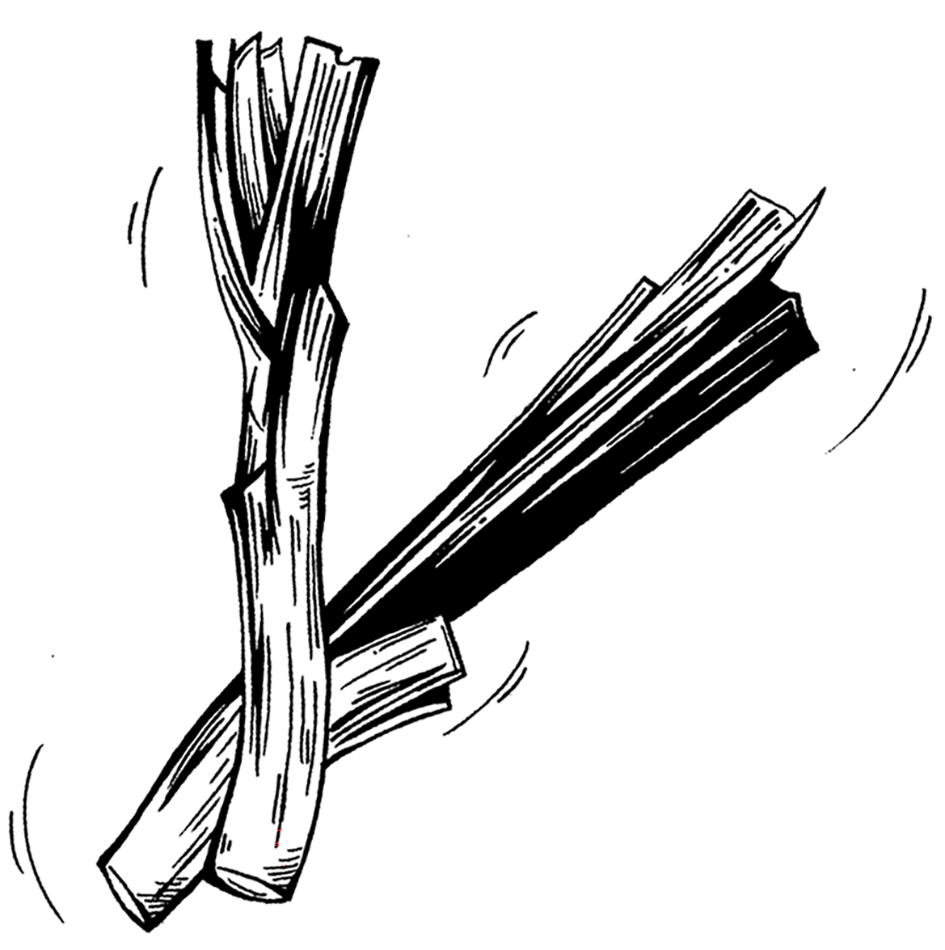
Pat was very excited about a new shop which sold pistachio spread and organic veggies. Walking home, vegetables flew out of his overloaded backpack. ‘My leeks!’ He exclaimed, comically, hands raised to the sky, as he scrambled to retrieve them. I had bought a loaf of sourdough. When we got back to our building, we broke the bread in two.
Less than a week later, Patrick was dead.

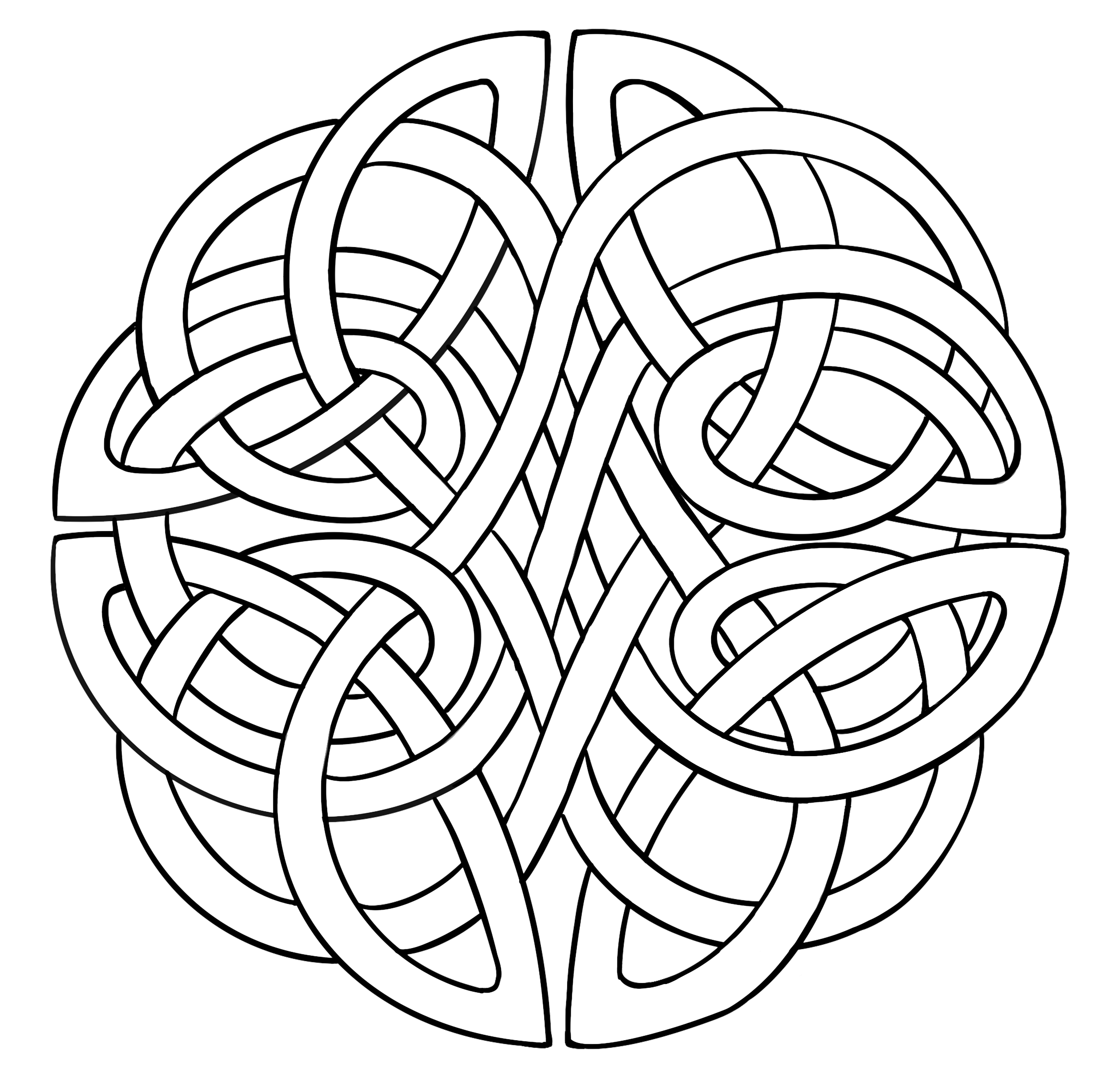
Patrick died of a heart attack on 6 January 2025, completely unexpectedly. Since moving back to the UK, he had become especially interested in English and Celtic folklore, inspired by our joint English and Irish heritage. The day before he died, he had been drawing a Dara knot, which symbolises the oak tree, a gateway to the Otherworld. Celtic knots are intricate never-ending lines that represent eternity, the interconnectedness of life, and the cyclical nature of existence – a striking image for Pat to have etched just hours before death.
In retrospect, other things he had done in that last year started to feel like signs. His return to London, our birthplace. His insistence that we visit Glastonbury Tor, considered a gateway between worlds or a ‘thin place’, en route to our Granny’s funeral in October. Even the stockings for our parents – bees being messengers of the dead in Celtic mythology, apples the fruit of the Otherworld. It felt as if somehow, unconsciously, he was preparing.
I think that I had been preparing, too. The night before I discovered Patrick’s body, I picked up a book from my over-stocked bookshelves and read the first fifty pages. It was I Will Crash by Rebecca Watson, which charts the aftermath of a sister who receives a phone call saying that her brother has suddenly died. In an entry in my diary dated seven weeks prior, I had written: ‘I am terrified about Pat learning to ride a motorbike. I feel like I can foresee his death; it’s awful … I need to exercise patience and enjoy him for his quirks etc. while he’s here.’
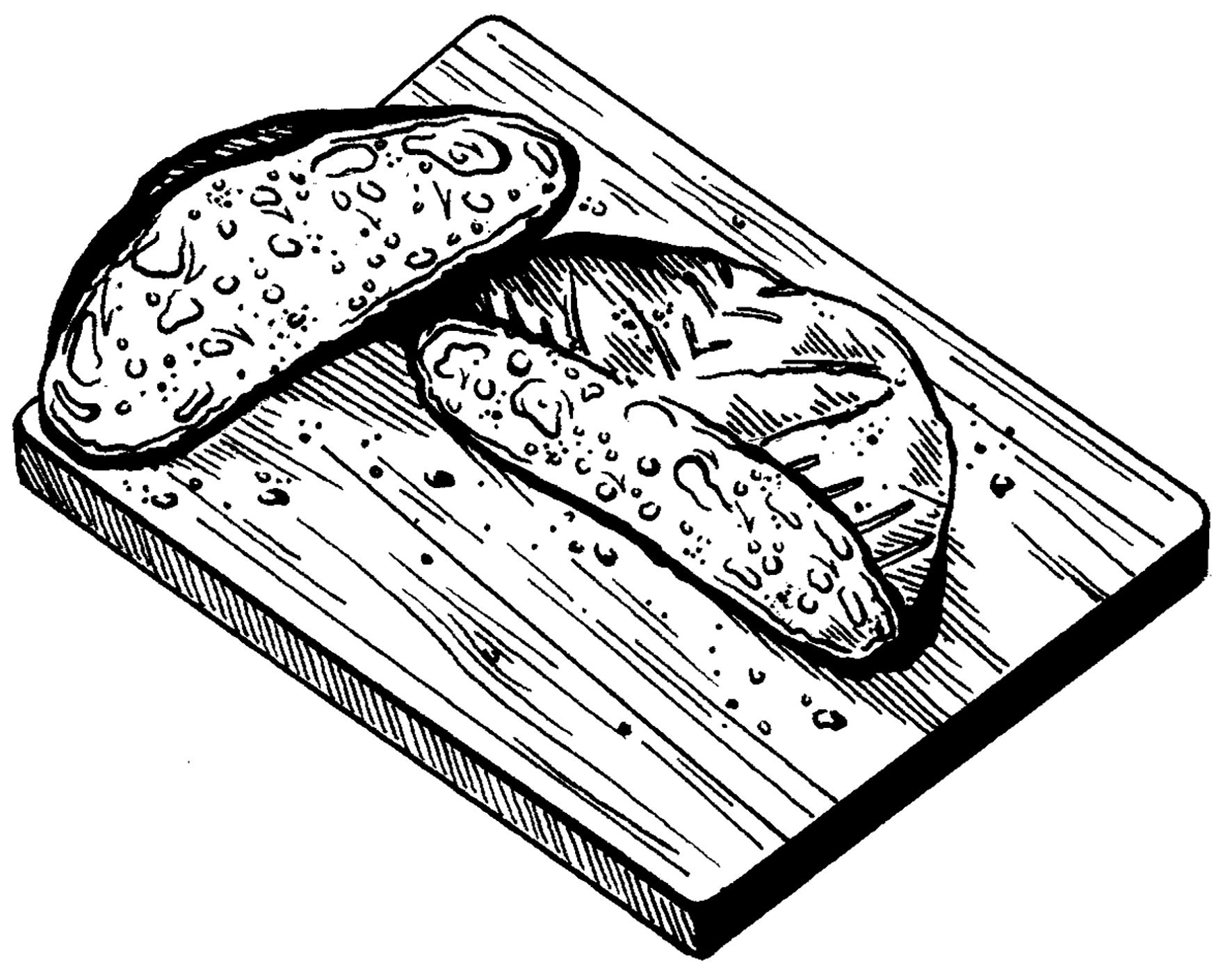
In May 2025 after he died, I went to Wales with my friend Sophie over Beltane, a time in the Celtic calendar when the veil between worlds is believed to be thin. Having dreamt of Patrick in the night, I awoke with a sense of living half in reality, half in a dream. It was a beautiful spring day, and Sophie had made sandwiches which we took with us to a nearby lake. They were among the best I have ever eaten: fresh white bread cut into thick, pillowy slices, melting butter, sharp cheddar, tart and chunky pickle. We were hungry for them after a swim and ate quietly, drying off in the heat of the sun.
I broke the silence to tell Sophie that, since Pat had died, I had been fluctuating between a feeling of complete ‘what’s the point’ nihilism, and then feeling like I wanted to savour every bite. ‘Maybe it will always be like this,’ I reflected. Nevertheless, right then, in that moment, I felt joy.
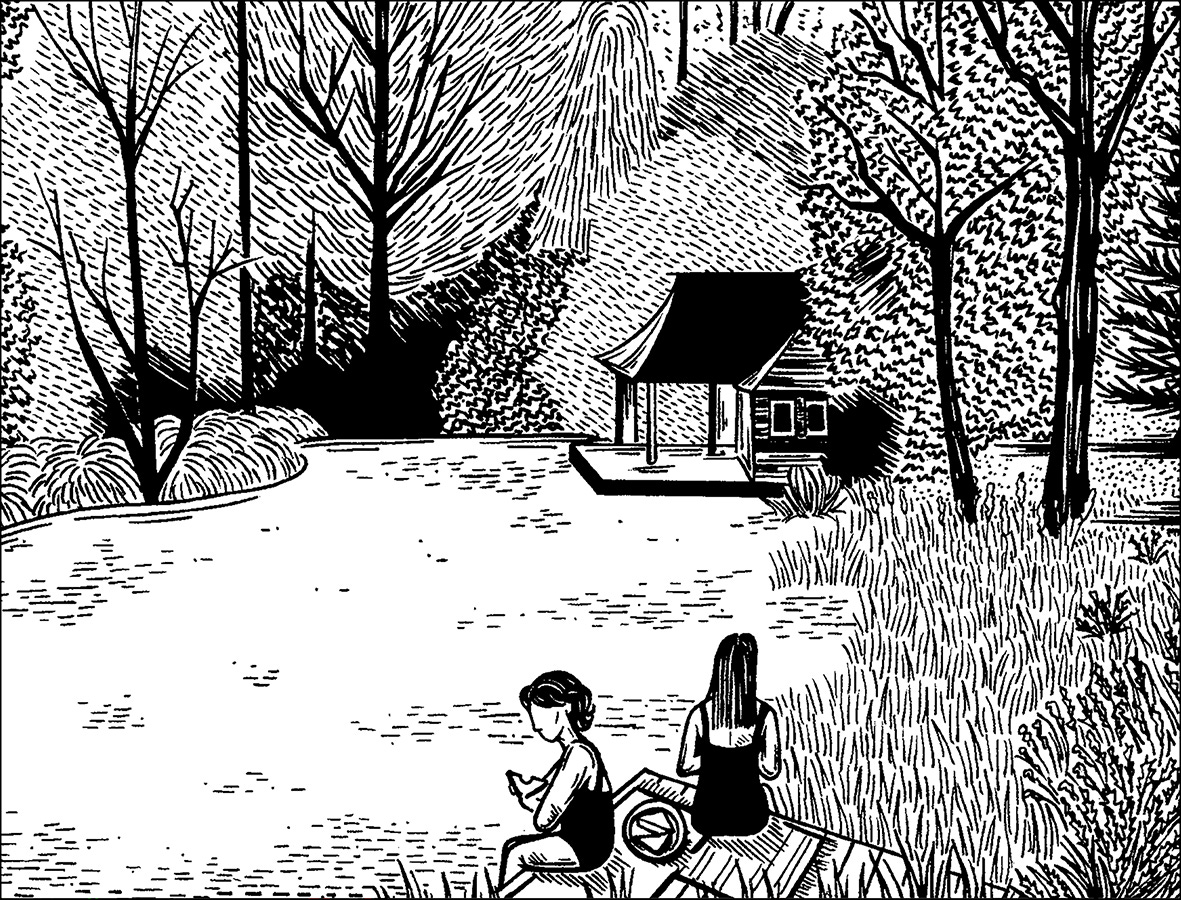
I wrote in my diary that night on 1 May: ‘Intense dreams about Pat. Sad morning. Took delicious cheese and pickle (with lots of butter) sandwiches down to the lake and swam. I told Sophie, “this is what life is about. This is all we have.” ’
Ten days later, I was back at home scrolling through my phone when a suggested poem popped up on Instagram called ‘The Gate’ by Marie Howe. The poem begins: ‘I had no idea that the gate I would step through / to finally enter this world / would be the space my brother’s body made’.
I felt a chill as I reached the end:
This is what you have been waiting for, he used to say to me.
And I’d say, What?
And he’d say, This—holding up my cheese and mustard sandwich.
And I’d say, What?
And he’d say, This, sort of looking around.
I couldn’t believe it. The cheese sandwich. The demonstrative pronoun – ‘this’.

My parents have their own experiences of ‘cosmic coincidences’, as we have come to call them – Yeats poems, circumzenithal arcs, asking an oak tree for a sign, receiving a clap of thunder. There are different ways to explain this phenomenon. Psychologists might call it apophenia, the human tendency to perceive patterns in disparate information. A physical explanation might be entanglement, what Einstein called ‘spooky action at a distance’. Entanglement is the idea that once two particles have become intimately linked, they will share a single quantum state, regardless of the distance separating them. In other words, they will continue to interact outside of space and time. Others might call this God.
However, the Celtic understanding of the world has suited me best in grief, the idea that time is not linear, that everything is interconnected. Through Patrick’s interest in our ancestral mythologies, it was as if he had unknowingly carved out a narrative to help us make sense of his sudden death.
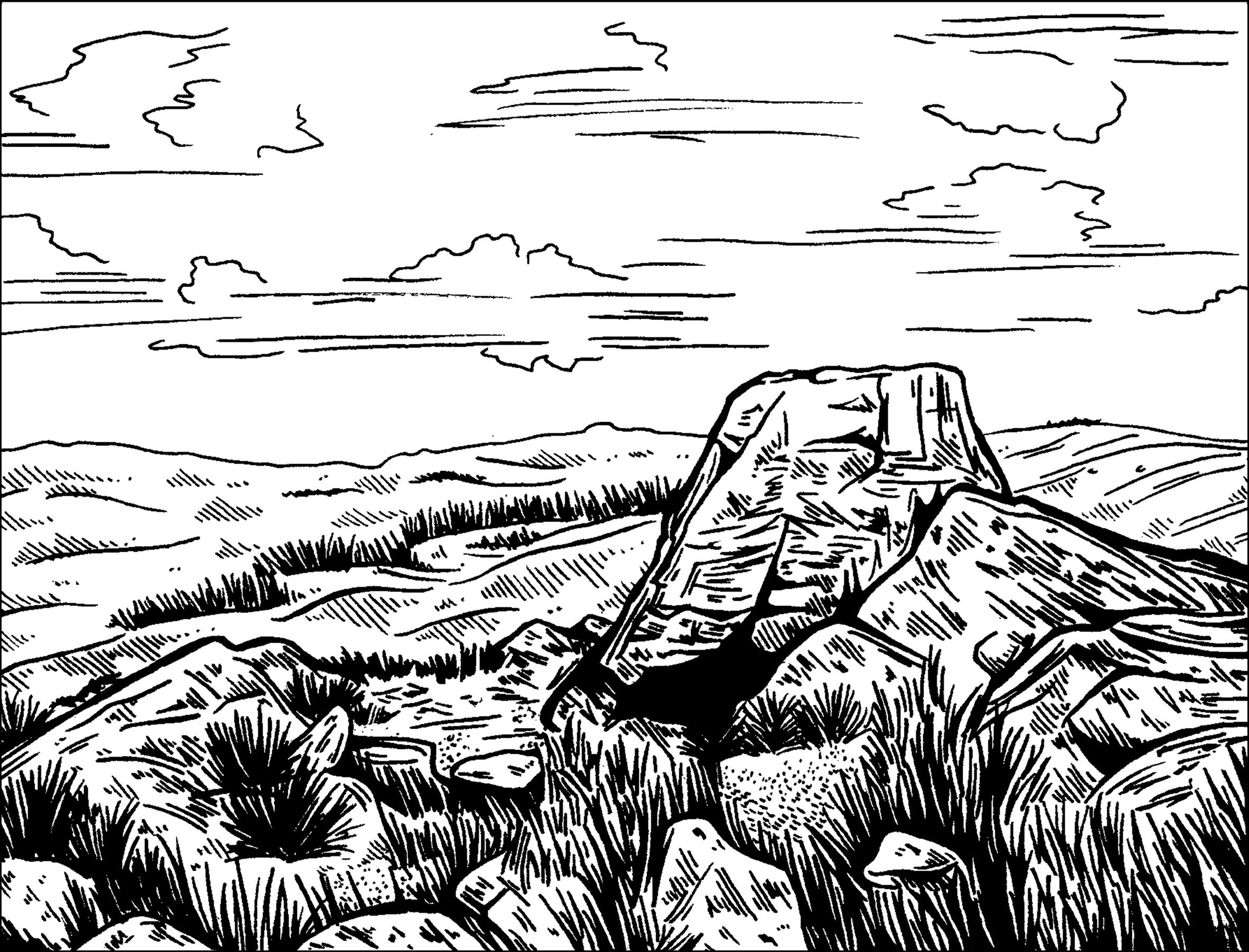
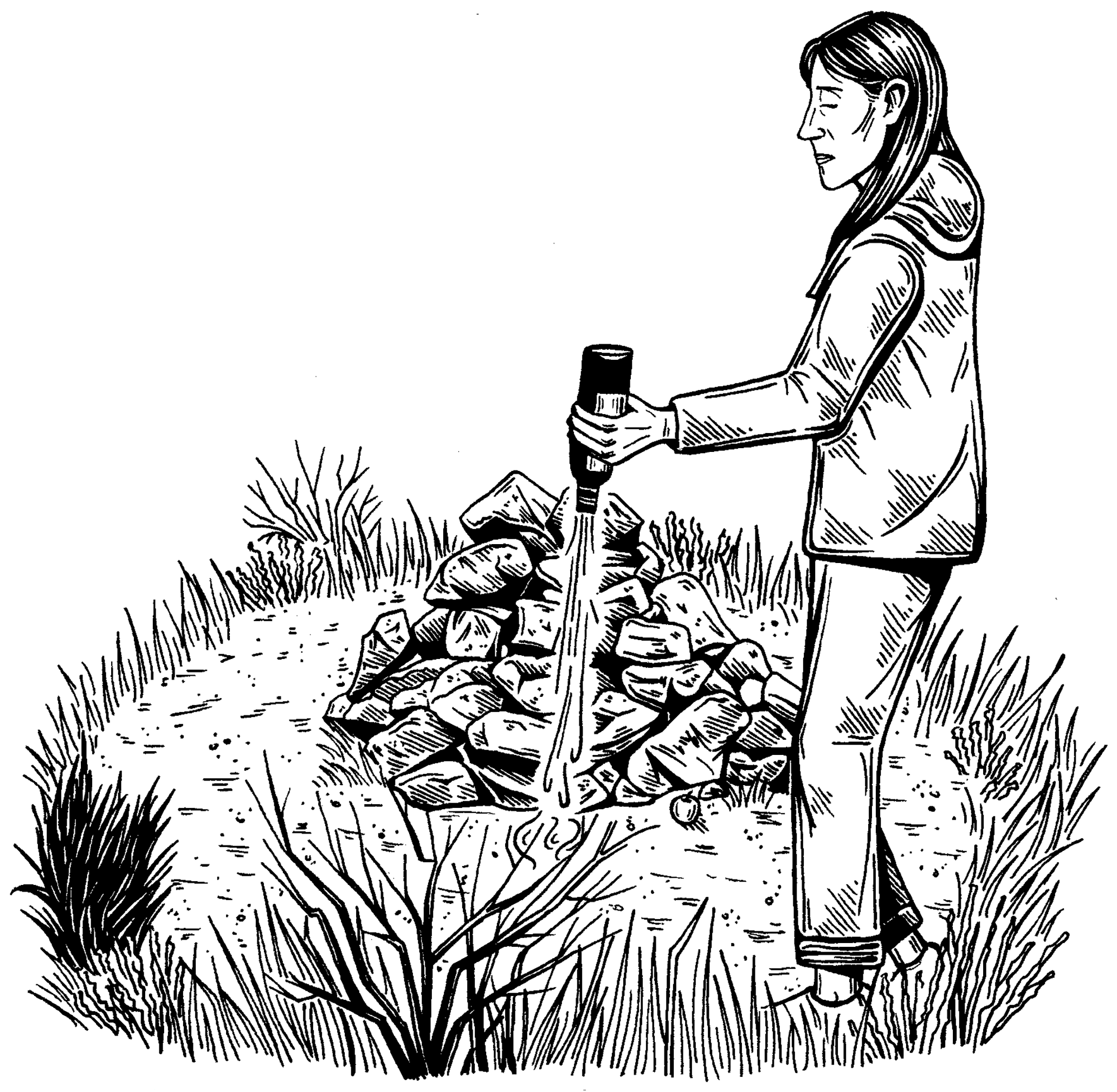
We spread Pat’s ashes at the Drake Stone in Northumberland, somewhere we used to go as children, another thin place. At the Drake Stone, I placed an apple on a cairn. I drizzled honey over the rocks, the dandelion goo oozing slowly from the jar. Finally, as in the Irish tradition, I poured whiskey onto the ground.
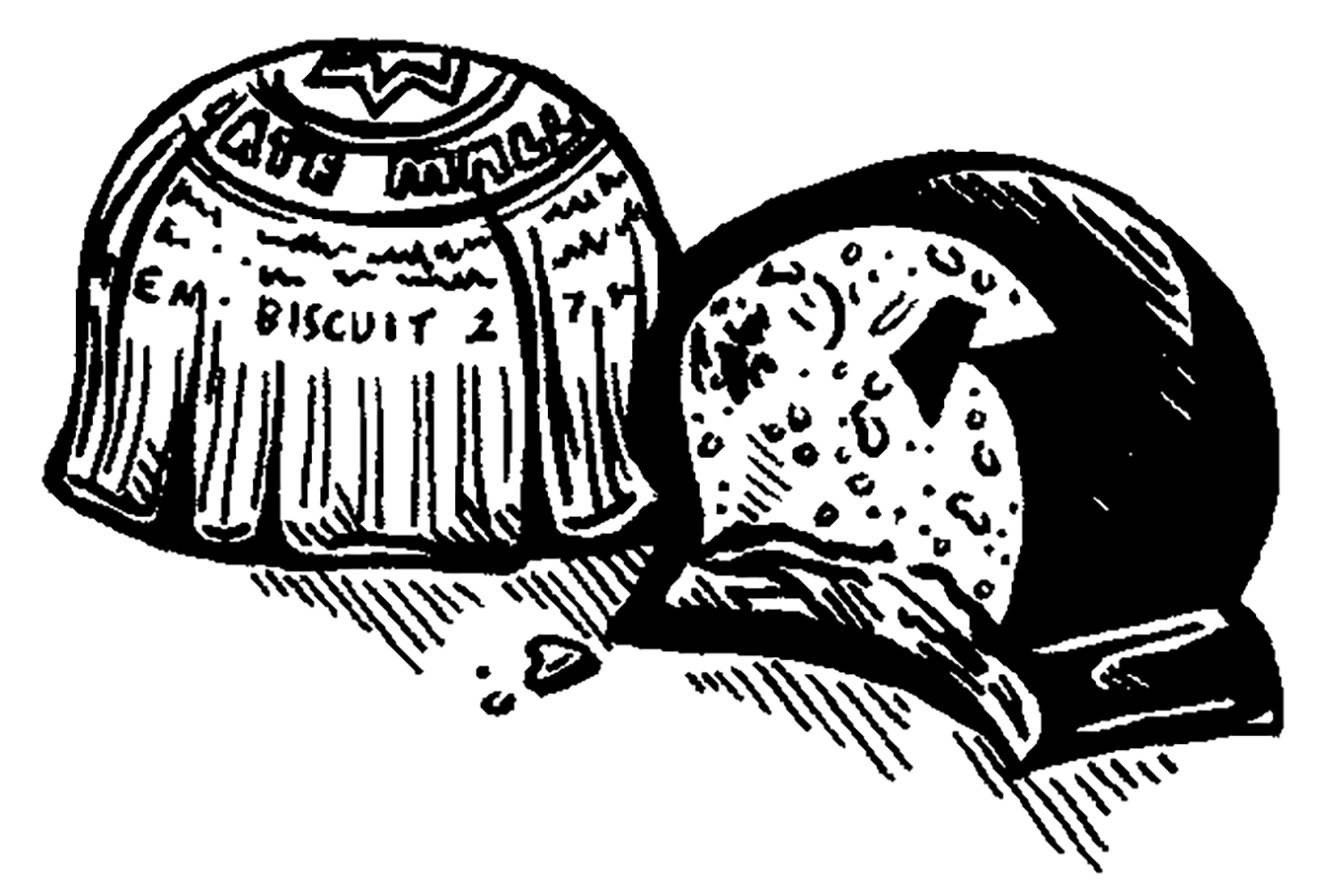
After he had dispersed, we ate Tunnock’s Teacakes, his favourite snack. I took a bite. ‘I don’t actually want this,’ I laughed. ‘Give it to Pat,’ Dad replied, so I set the half-eaten confection down on the cairn, an offering.

It feels impossible to write about Patrick without guilt. I do not have his permission, and his is not my story to tell. When I wrote his eulogy, it felt absurd trying to flatten such a rich life into 2,000 words, but I wanted to transcribe as much as I could remember in case my brain could not contain it. I continue to feel this urge to record and catalogue. But I cannot write him alive again.
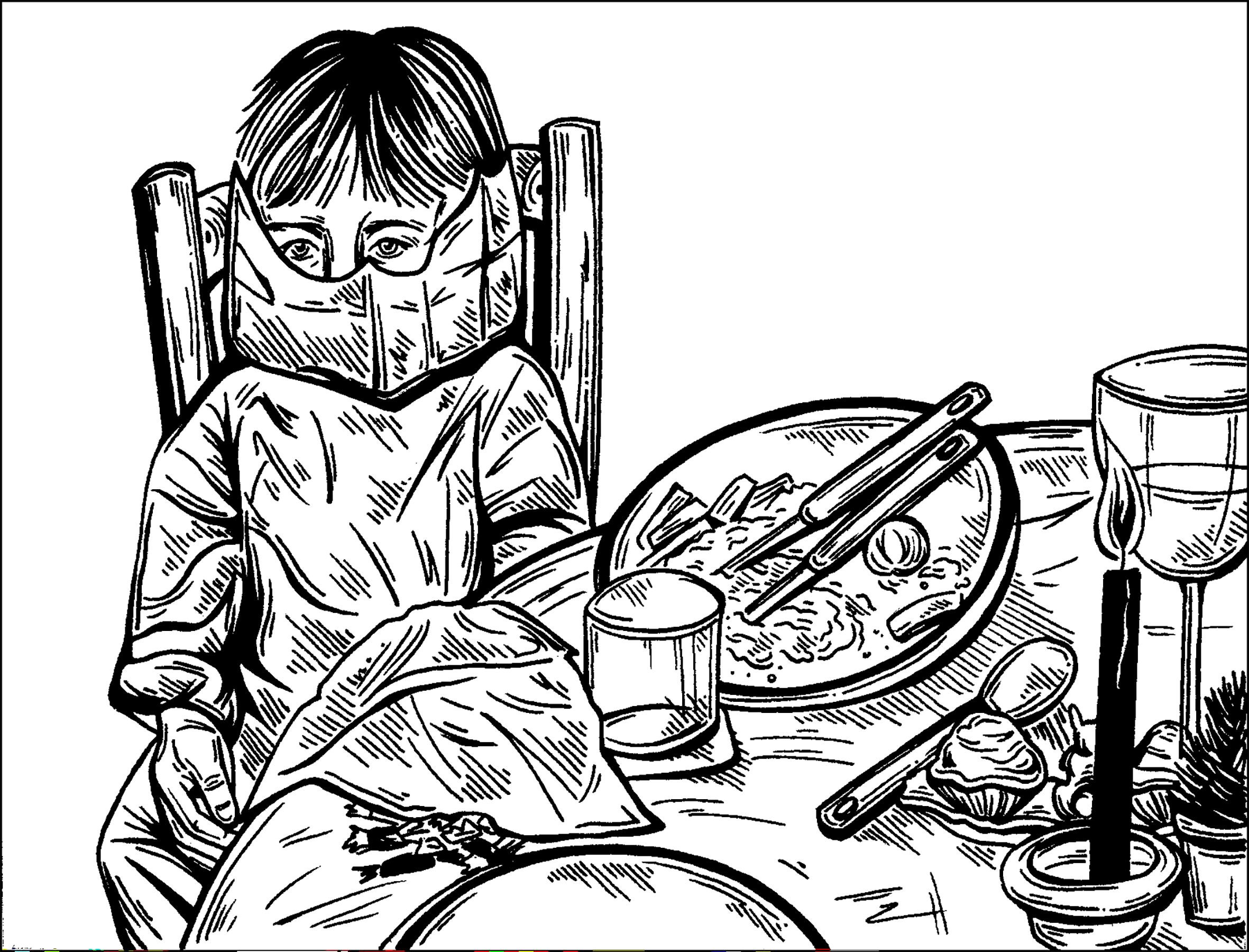
For Christmas 2025, our first without him, we ate our meals as a family of four, on a table set for three. He is never not in the room.
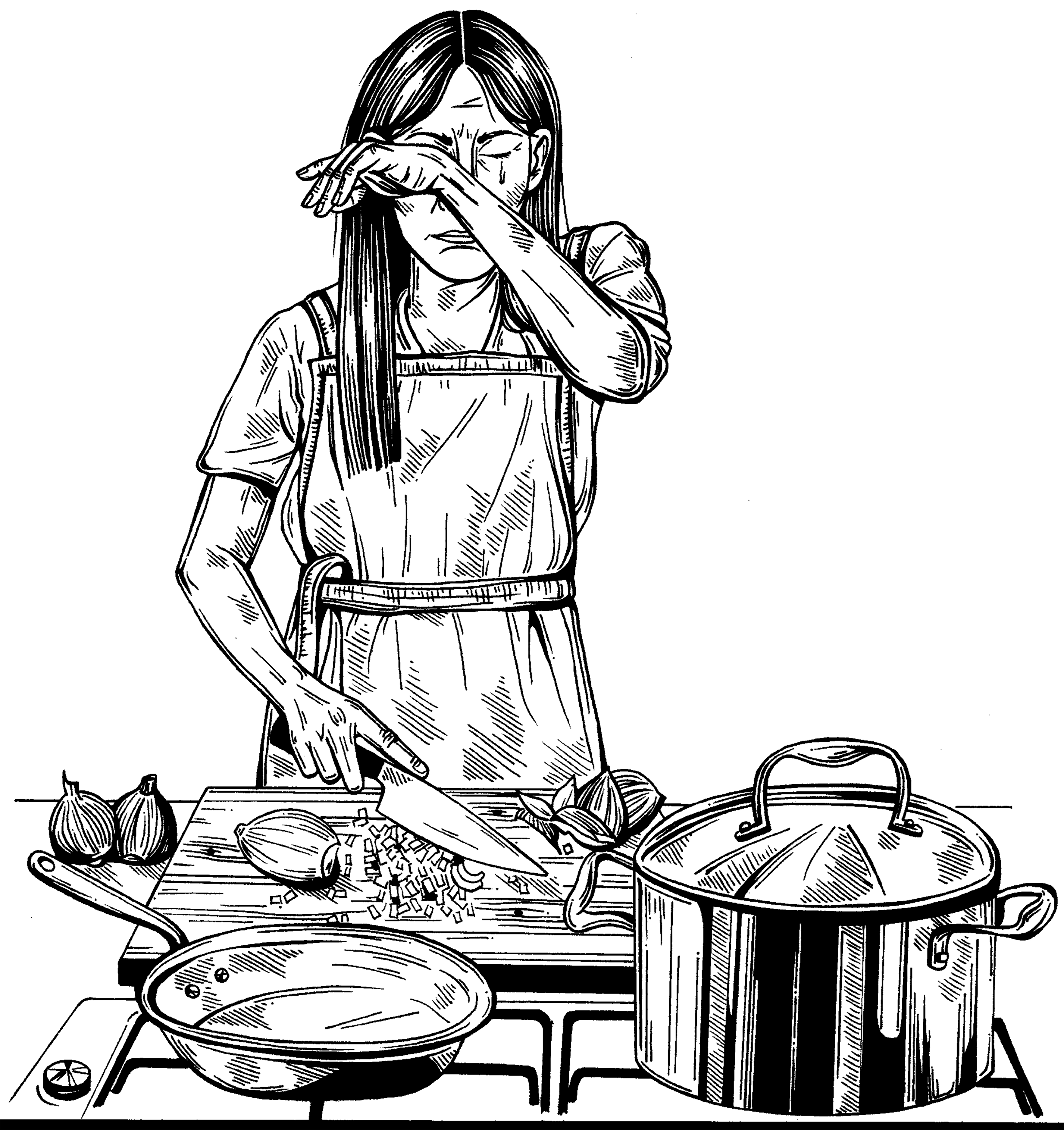
On New Year’s Eve, I moved out of mine and Pat’s old building and into a new flat with a freezer, where leftovers will no longer feel painful. I brought Patrick’s pans with me. Every time I cook, I think of him.
Credits
Ella Bucknall is a writer and illustrator based in SE London who specialises in graphic narratives. Ella is currently working on a graphic biography of Virginia Woolf and studying for a PhD in Creative Writing at King’s College London. Ella’s clients include the FT, BBC, and TLS, among other publications.
The full Vittles masthead can be found here.
What a beautiful way of remembering your brother. I’m so sorry for your loss.
To Pat.
A wonderful tribute, I’m very sorry for your loss.