

Table-scalping
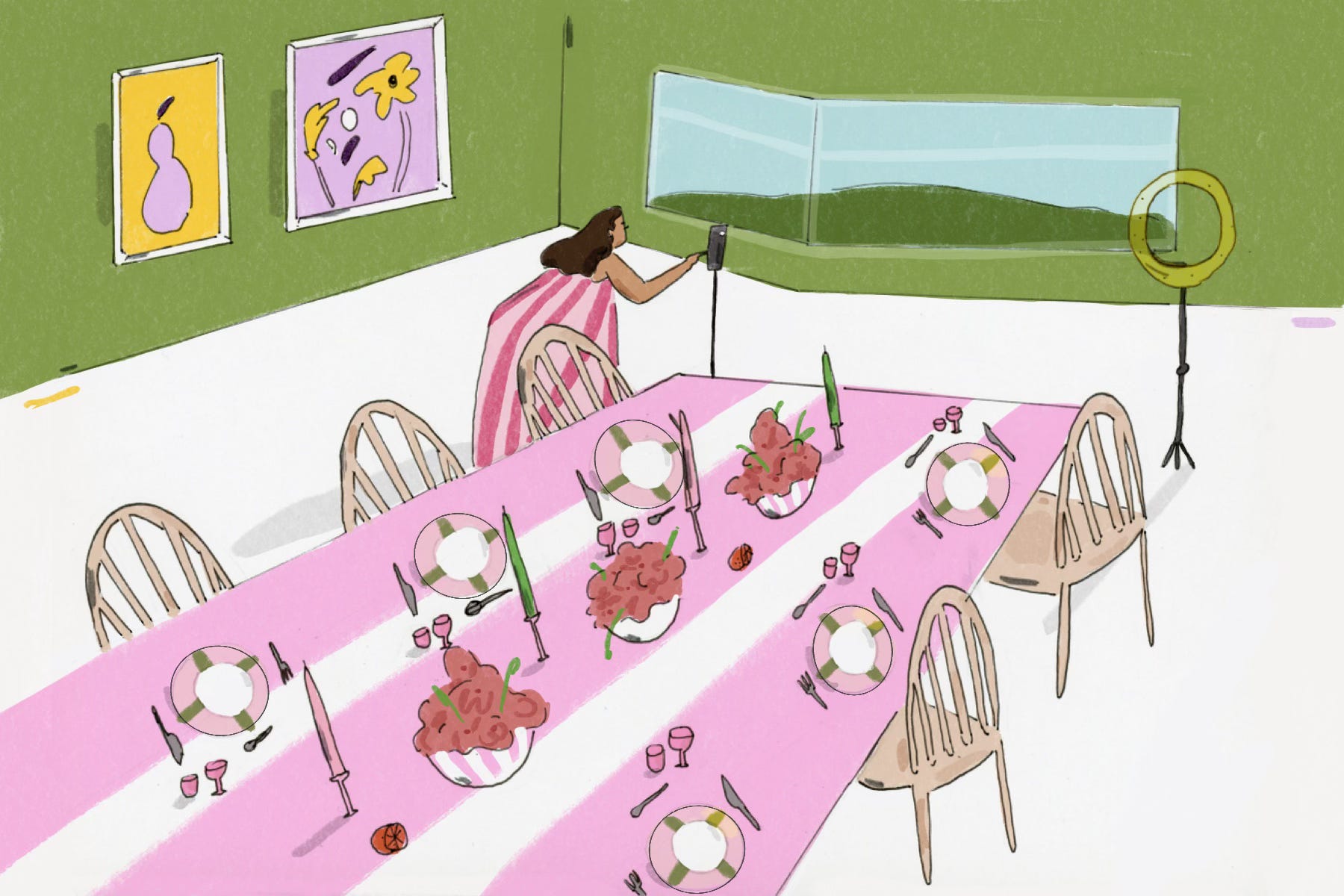
The rise of tablescaping and hosting influencers, for whom food is often an afterthought. Words by Timi Sotire. Illustration by Jess Nash.
Good morning and welcome to Vittles. If you missed this week’s podcast with chef Will Gleave, you can listen to it here or watch it here.
In today’s newsletter, Timi Sotire writes about the new vanguard of influencers making content about hosting and the crafting of elaborate tablescapes. While these influencers emphasise the importance of food as a means of building connection, often both food and community are secondary considerations to their paid partnerships.
This piece is an online-only article linked to our third print issue, ‘The Influencers’, which is all about how the internet and short-form video have reshaped food culture, as well as about the broader sociocultural systems and structures that shape how we eat today. Order your copy now!

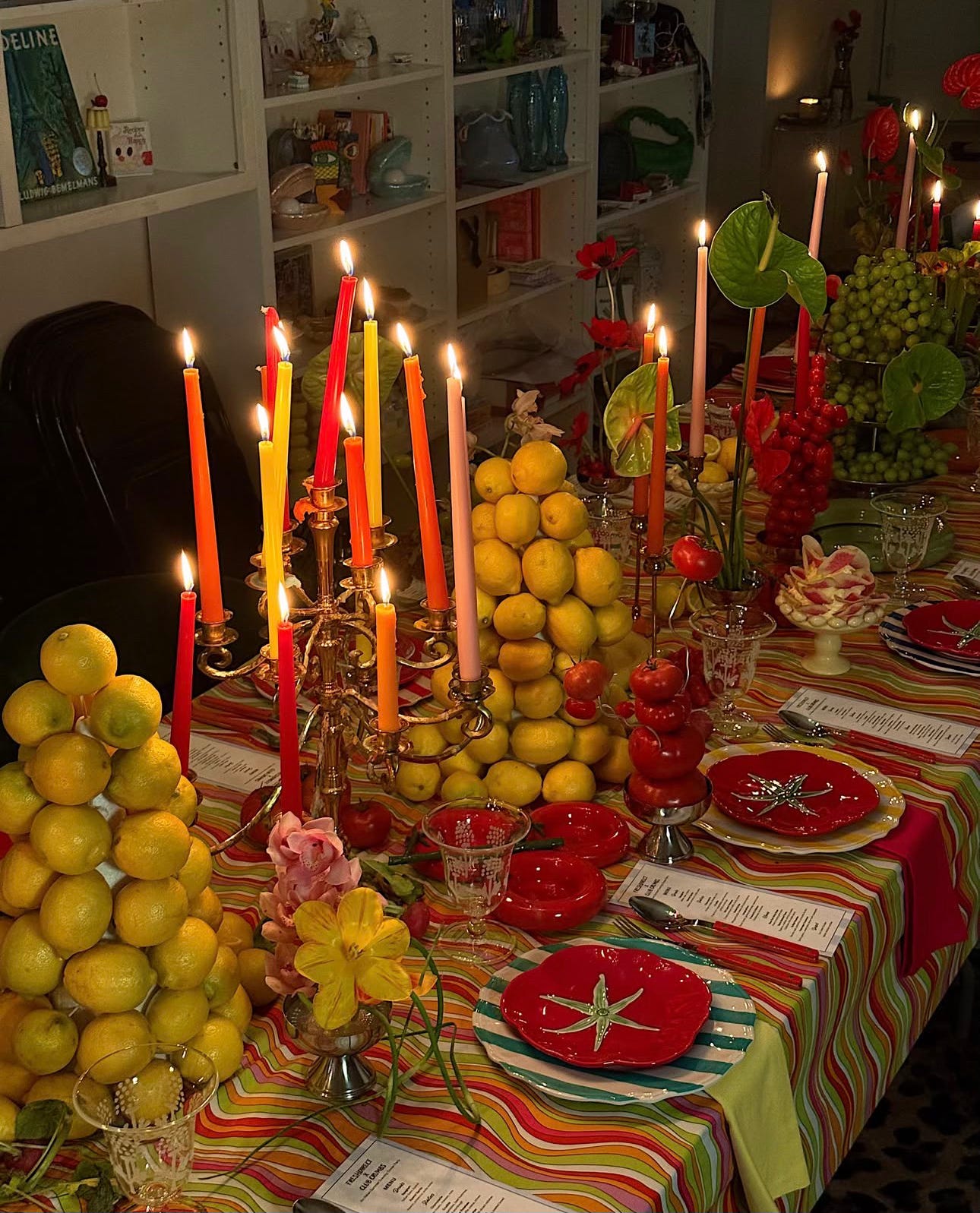
‘Circus … but girl’ reads the caption of the TikTok carousel. The images – soundtracked by a blend of Friends character Rachel Green screaming ‘This is a girls’ apartment!’ and the bridge of Sabrina Carpenter’s ‘House Tour’ – depict an elaborately staged table: twenty seats arranged around red-and-white striped linens, anthurium arrangements, table lamps from Marrakesh, lanterns and taper candles threaded through ivy. Aside from bright green appletinis and circus cakes, food is rarely featured across the four posts recapping the event; instead, the focus is on the decadence, maximalism and lavishness of the host’s aesthetic choices, aided by sponsors DedCool and Paperless Post.
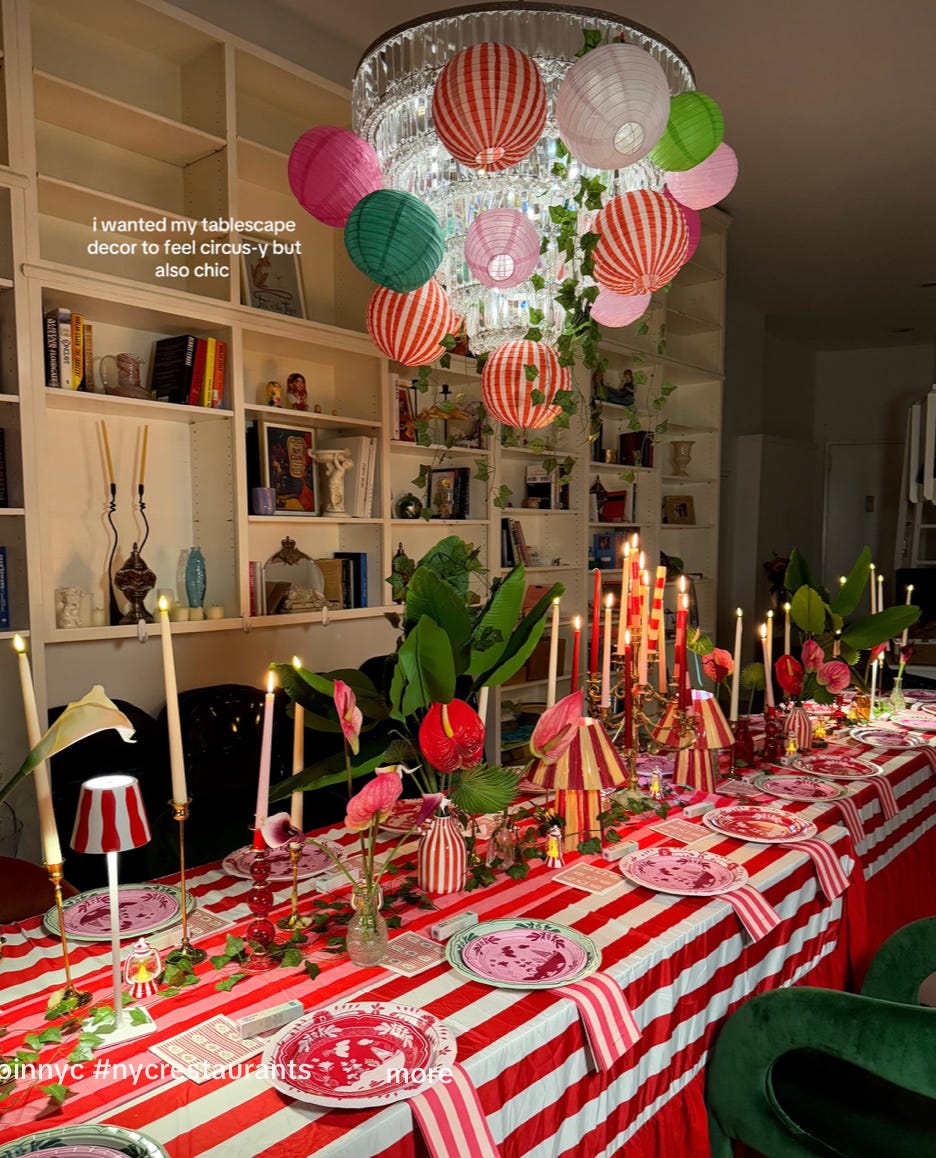
This tablescape was at the centre of a dinner party hosted by Madeline Marcella in her Fifth Avenue NYC apartment late last year. Marcella is one of many young women building an online brand around hosting; for these women, tablescaping – the careful styling of the dining table – has become both creative pursuit and viable work.
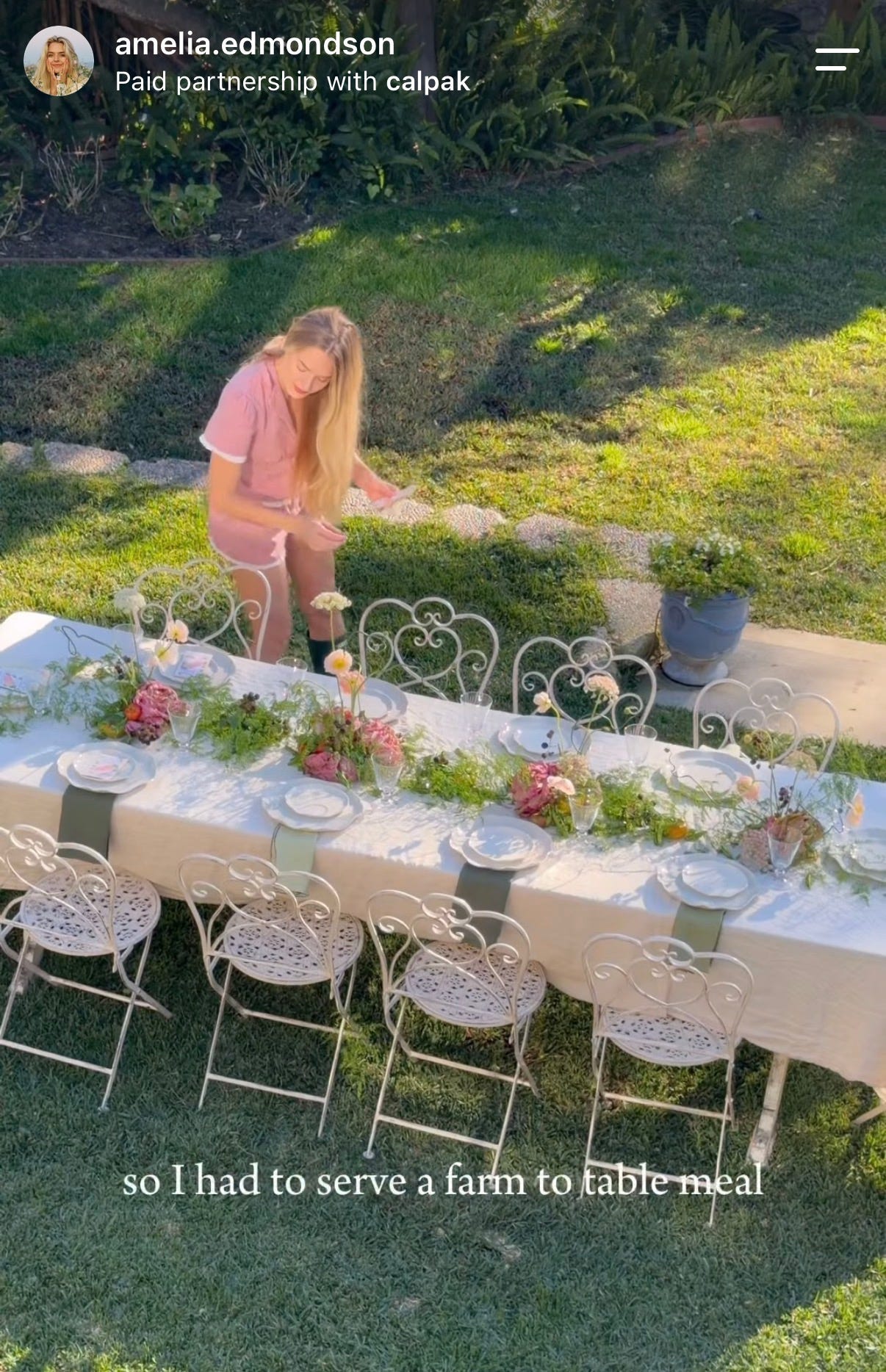
Amelia Edmondson, a self-described ‘hosting enthusiast’, shares content from dinner parties at her country home in Orange County, many sponsored by brands like Calpak, Pottery Barn and Samsung. Roti Brown posts tutorials on table draping and decorating alongside cooking videos, writing in a post sponsored by Le Creuset that ‘Good food tastes even better when the table is set just right’. Marcella, meanwhile, offers followers the chance to apply to join her supper club via a form, with selected members paying a monthly fee on top of ticket costs for each event.
‘Food often plays a surprisingly minor role. It’s not what you make, or how it tastes –
it’s how you style the environs that matters’
Although this trend has been slower to catch on in the UK more generally, English socialite Alice Naylor-Leyland (who uses the moniker ‘Mrs Alice’) has described herself as launching ‘the world’s first Tablescape brand’. Meanwhile, creators like Matilda Bea, a ‘dinner party obsessed London girl’, are aiming to bring this brand of elegance to a younger audience, filming ‘analogue, cosy gatherings at home’ featuring appliances gifted by Ninja and looks sponsored by Superdrug and YSL Beauty.
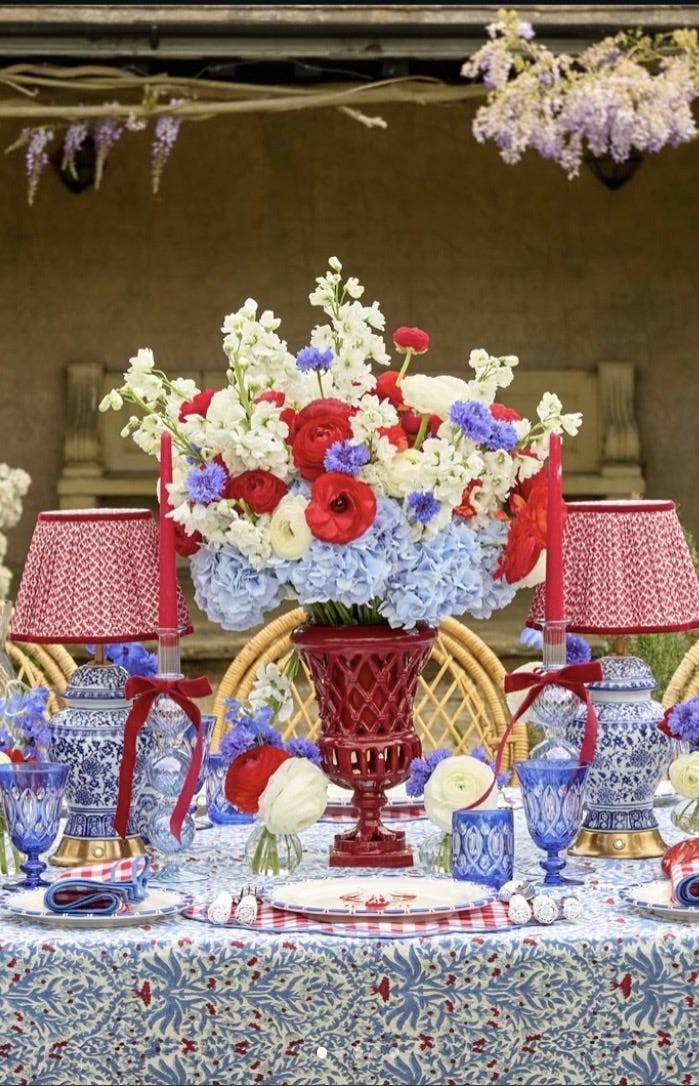
Irrespective of location, most tablescaping content tends to adhere to a similar style: Baroque decorations (often arranged around ornate centrepieces), stylised crockery and personalised place cards clutter the table, as elaborate themes are expressed in the minutiae. Food often plays a surprisingly minor role. It’s not what you make, or how it tastes – it’s how you style the environs that matters. In fact, creators often openly outsource the catering. ‘If you want to host without the stress of cooking everything, I highly recommend hiring a private chef through Airbnb’, Edmondson says in one sponsored post. Marcella similarly relies on local bakers and chefs for most of the food for her events – all she has to do is make it look cute.
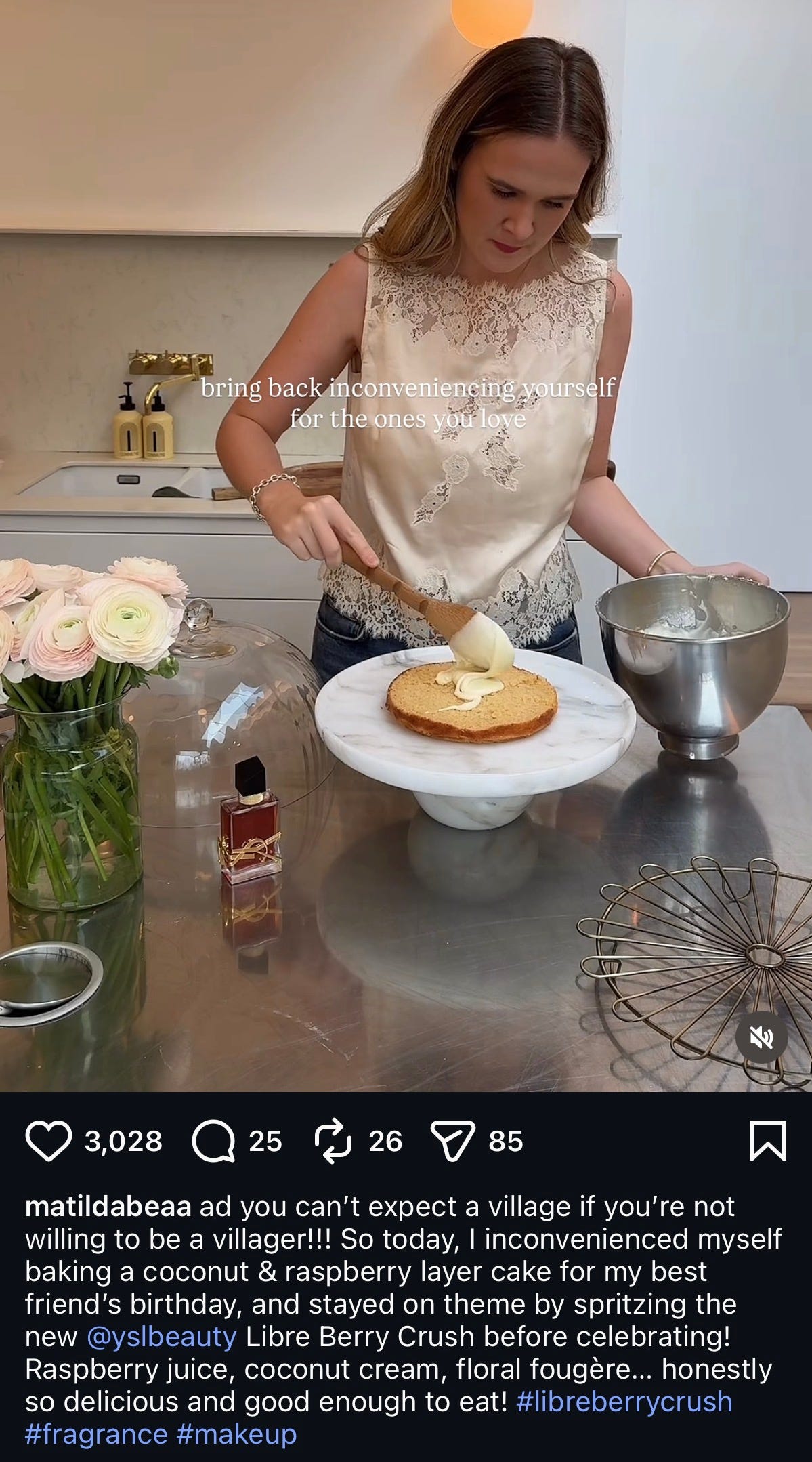
This emphasis on aesthetics is framed as an expression of care and connection, drawing on the idea of gathering around meals as a cornerstone of love and community. The community in question, however, is seldom the focus of the content, present only as anonymous hands or faces in the background, or mentioned in voiceovers but not actually present in scenes in which the table – and what it can sell – is the main character. ‘Bring back inconveniencing yourself for the ones you love,’ Bea captions a video in which she bakes a coconut and raspberry layer cake from scratch for her friend’s birthday (the post is actually a sponsored ad for a perfume). Marcella’s guests, you’ll remember, have to pay to be there.
The version of communality portrayed by hosting and tablescaping influencers is highly specific, shaped by gendered and aspirational ideals of domesticity. In Homeward Bound, a cultural history of domestic work, Emily Matchar describes how the consumer revolution of the mid-twentieth century transformed housewives into a lucrative demographic whose taste could be expressed through purchasing choices. Magazines and television instructed women about the products needed to achieve the ideal standard of living, while innovations in washing machines, fridges and dishwashers promised to reduce the burden of domestic labour (which, up to this point, had often been handled by domestic workers, usually women of colour from lower socioeconomic backgrounds).
‘Bring back inconveniencing yourself for the ones you love,’ Bea captions a video in which she bakes a coconut and raspberry layer cake from scratch for her friend’s birthday (the post is actually a sponsored ad for a perfume)’
These time-saving products were meant to make domestic life easier. ‘But at the same time, there’s been a massive shift in expectation of domestic labour,’ says Professor Maggie Andrews, a cultural historian focused on domesticity and femininity. New technologies forced middle-class women to keep up with ever higher standards of cleanliness, as Ruth Cowan convincingly argues in More Work for Mother.
The holding of elaborate dinner parties – which had been viewed as ambitious among the Victorian upper and upper-middle classes – gradually became an ordinary expectation for middle-class women. Expertise in how to meet, and exceed, this expectation was itself commodified – most famously by Martha Stewart, who, in the 1980s, began to elevate domestic labour from a private, feminised obligation into a public-facing, monetisable lifestyle brand. Other lifestyle television stars – like Ina Garten, Ree Drummond and Nigella Lawson – followed in her wake, putting as much emphasis on creating ambience and staging elaborate tables as they did on the food (albeit with less emphasis on perfection than Stewart).
Today’s influencers adapt these methods to younger sensibilities, at a time when the promise they offer – a nostalgic view of a simpler time when the stresses of life could supposedly be relieved by a sit-down meal with loved ones – feels more enticing than ever. Matchar argues that commercial nudges toward domesticity (specifically the stability and respectability of the idealised middle-class home) normally grow ‘in response to the social conditions of the moment’, pointing to the emergence of mommy bloggers around the 2008 financial crisis as a way of making sense of socioeconomic precarity in an increasingly uncertain world.
‘Although tradwife content is undoubtedly more overtly regressive in its politics, hosting content similarly fetishises heteronormative white middle-class ideals of order and beauty, inflected with the vernacular of millennial girlboss feminism’
Since then, anxieties have only intensified. The percentage of unemployed Americans with four-year college degrees hit a record 37% in January, and more than 700,000 UK graduates are out of work and claiming welfare benefits, a 46% increase from 2019. The combined effects of an ever-lengthening cost-of-living crisis and a severe affordable-housing shortage are forcing many adults to pay exorbitant rent to cohabit with roommates, or to live in their childhood bedrooms. Access to the traditional markers of success and stability – steady employment, stable housing – feel more out of reach than ever.
With the tradwife movement demonstrating a more extreme response to this economic insecurity, hosting influencers offer a softer middle ground for young women searching for reprieve. Yet although tradwife content is undoubtedly more overtly regressive in its politics, hosting content similarly fetishises heteronormative white middle-class ideals of order and beauty, inflected with the vernacular of millennial girlboss feminism. The hosting influencer emerges as a new kind of businesswoman: someone who can mood board, hire vendors and essentially project manage her home. Like the tradwife, she must also make it all appear effortless and pleasurable – a highly gendered performance in itself. Unlike the tradwife, however, she does not retreat entirely into domesticity, instead selling a curated lifestyle that can coexist with ambition, branding and entrepreneurialism.
In the past, servants were tasked with ensuring wealthy hosts appeared graceful and at ease. Now, the same illusion can be achieved through editing. On social media, none of us really know what happens behind the scenes, and that’s partly the point. By making domestic perfection appear natural – and hiding the labour that produces it – these influencers create another arena for comparison, leaving other women to feel as though they’re somehow falling short. And, of course, around this ecosystem of inadequacy, a whole mini-economy has emerged. Marketplaces like Tblscape allow users to rent hosting decor, while platforms like ShopMy let influencers monetise curated lists of serving bowls, linens and candleholders through affiliate links. Marcella offers followers the chance to book bespoke tablescape design services for their own events.
Amid the collective obsession with aesthetics aspersonality, whereby social identity can be constructed through the accumulation of visual signifiers, aphorisms like ‘food brings people together’ feel extremely hollow. Hosting influencers present themselves as champions of connection, encouraging their followers to get off their phones and gather around the table. Yet the version of community they sell is designed first and foremost to be viewed, with food, decorations and even guests reduced to raw material for content creation.
What is being produced is not hospitality itself, but rather the appearance of hospitality: a carefully edited performance, in which the labour, mess and unpredictability that make gatherings meaningful disappear from view. Hosting becomes yet another image to perfect, another lifestyle to perform, another way women are expected to aestheticise their lives for public consumption. The more these creators insist that food brings people together, the less interested they seem in the food – or the people – at all.
Related Reading
Niloufar Haidari on the contemporary protein hysteria
Helena Aeberli on Luigi Cornaro, the OG thinfluencer
Aaron Timms on UK food influencers’ attempts to break the US
Credits
Timi Sotire is a London-born, Brooklyn-based writer and journalist covering culture. She holds an MA in Journalism from NYU, where she developed a passion for reporting stories that illuminate the complexities of everyday life. Her work explores the human condition through culture, examining the people, ideas and moments that shape how we see ourselves and one another.
Jess Nash is an illustrator based in the South East; her main goal is to create moments of relatability, narrative, connection and joy. You can find more of her work at www.jessnash.co.uk.
The full Vittles masthead can be found here.
My pet hate the candles not being straight! I am loving reading your third issue, dreaming of contributing one day, well deserved award from the Guild. It’s interesting going through your take on this subject, I have been an event planner for over two decades and things in terms of decorations have gone through the roof. I’m loving the fact that now, as a private chef, I get to do both tablescaping and cooking for the clients. I can see the appeal of a beautifully decorated table, but with food at the centre of it, always.
So we've moved from talking about baking with love to baking with inconvenience?