The Vittles Guide to the UK’s Chinatowns
Birmingham, Bristol, Cambridge, Edinburgh, Glasgow, Liverpool, London, Manchester, Newcastle, Oxford, and Sheffield - more than 150 recommendations for Chinese restaurants.
Welcome back to the Vittles Chinatowns Project. Here is our comprehensive and extensive guide to Chinatowns and Chinese restaurants across the UK.
In this list, you will find guides to Birmingham, Bristol, Cambridge, Edinburgh, Glasgow, Liverpool, London, Manchester, Newcastle, Oxford, and Sheffield. We have published the longer guides as standalone pieces, for which you will find links in the newsletter.
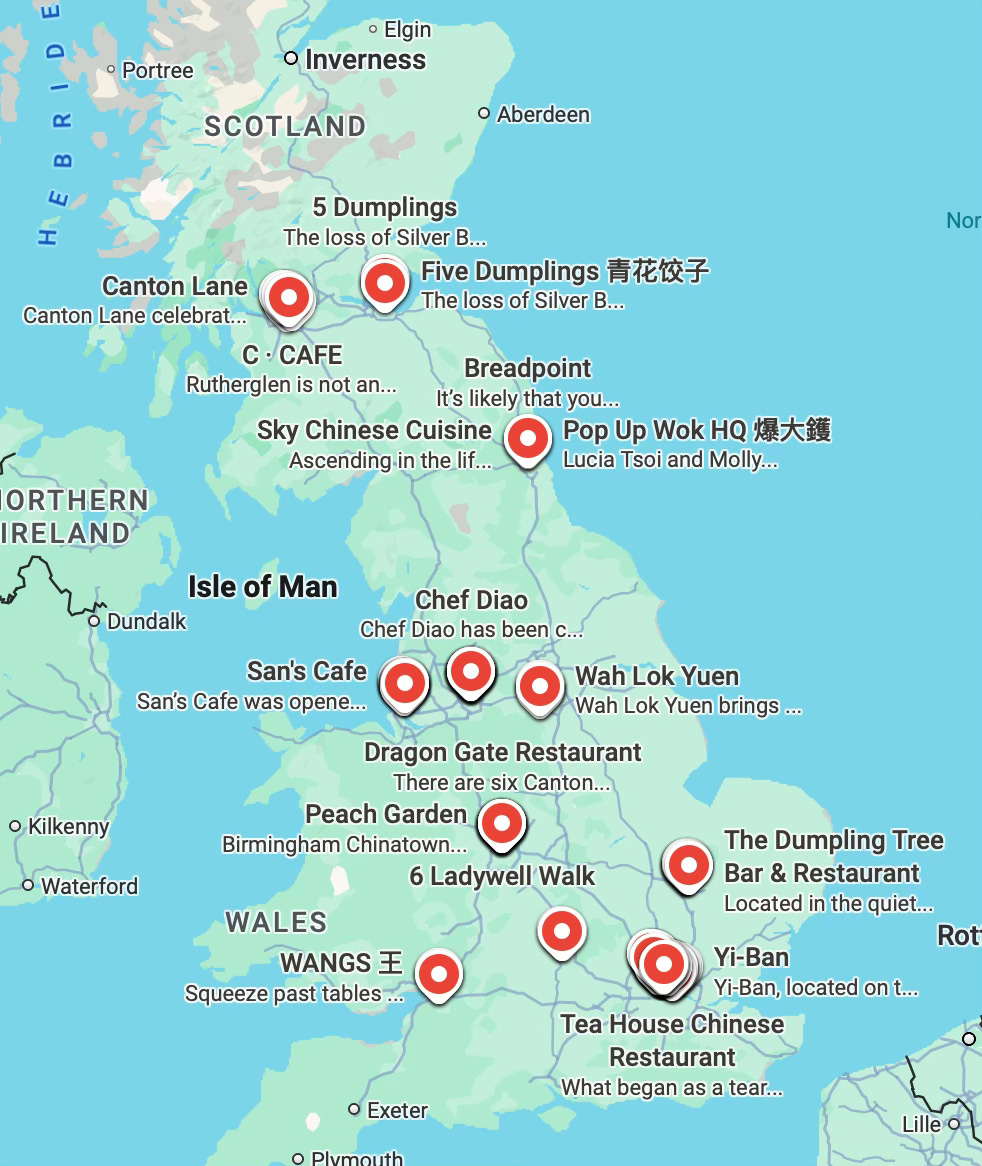
At the end of this post, you’ll also find our subscriber-only map featuring all 168 restaurants that we recommend across all the guides.
You can read the rest of the project here:
Who is Chinatown for?, by Xiao Ma
The New Chinatowns, by Barclay Bram
Crying in Wing Yip, by various
The Vittles Guide to London’s Chinatowns, by various
Birmingham
Lap-fai Lee
Birmingham’s Chinatown is not a tourist destination like the London equivalent. It is a living Chinatown; our businesses primarily cater to the local Chinese community. Growing up, we would go to Hor Tung for dim sum, but below the restaurant was a Chinese shop that seemed to sell everything, including copies of Hong Kong shows on VHS for rent. When the old Bull Ring was demolished, the Chinese community shifted its focus to The Arcadian, Hurst Street and Ladywell Walk, and more restaurants, Hong Kong-style bakeries, Cantonese BBQ joints and noodle shops started to open. When Chinese students arrived in the 2000s to study at Birmingham’s three universities, mainland Chinese flavours arrived with them.
With the recent influx of Hong Kong immigrants, the pendulum has swung back. The cha chaan teng diners are now in, bringing back that nostalgic colonial comfort food to dear old Blighty. With all the redevelopment in Southside – the district’s recent nomenclature – the area is now buzzing with activity and opportunity. Yet despite the changes, Chinatown continues to reflect the Birmingham spirit; it’s quiet and industrious, always self-deprecating. All you have to do is come with an open mind.
Read Lap-fai’s full guide to Birmingham’s Chinatown here.
Bristol
Meg Houghton-Gilmour
Authentic Hot Pot and Hand-Pulled Noodles Sichuan
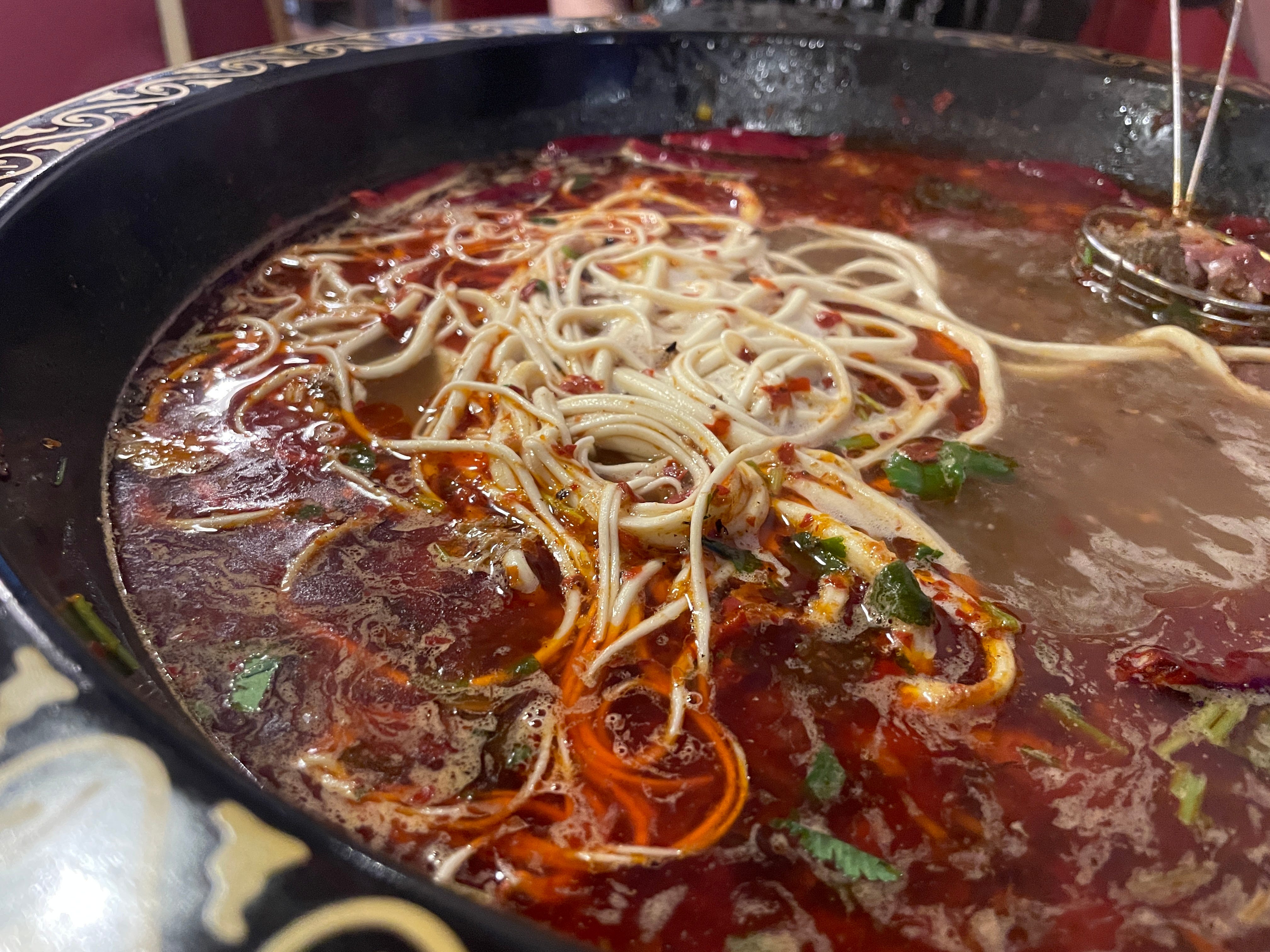
At Authentic Hot Pot, expert hands trained in the Chengdu style of pulling noodles twist, lift and pull thick braids of dough, each one slightly off-kilter, to be quickly transported across the room and dumped into your hot pot. It’s the only place in Bristol where the noodles are hand-pulled – which can be a rarity even in the UK’s bigger Chinatowns – and the result is an irresistible signature chew. Paired with the addictive tingle of Sichuan peppercorns, it’s a masterpiece of mouthfeel. A meal here is an all-you-can-eat, choose-your-own-adventure-affair; you can populate your hot pot with anything from slices of spam to wobbling, collagen-rich pig’s trotters. The setting is conference-room chic, brightly lit and lined with help-yourself drinks fridges. The website doesn’t work and attempting to book often proves futile, but it’s large and relatively undiscovered, so persistence is rewarded.
Thomas Lane, Redcliffe, BS1 6JG
Nice Spice Cantonese/siu mei
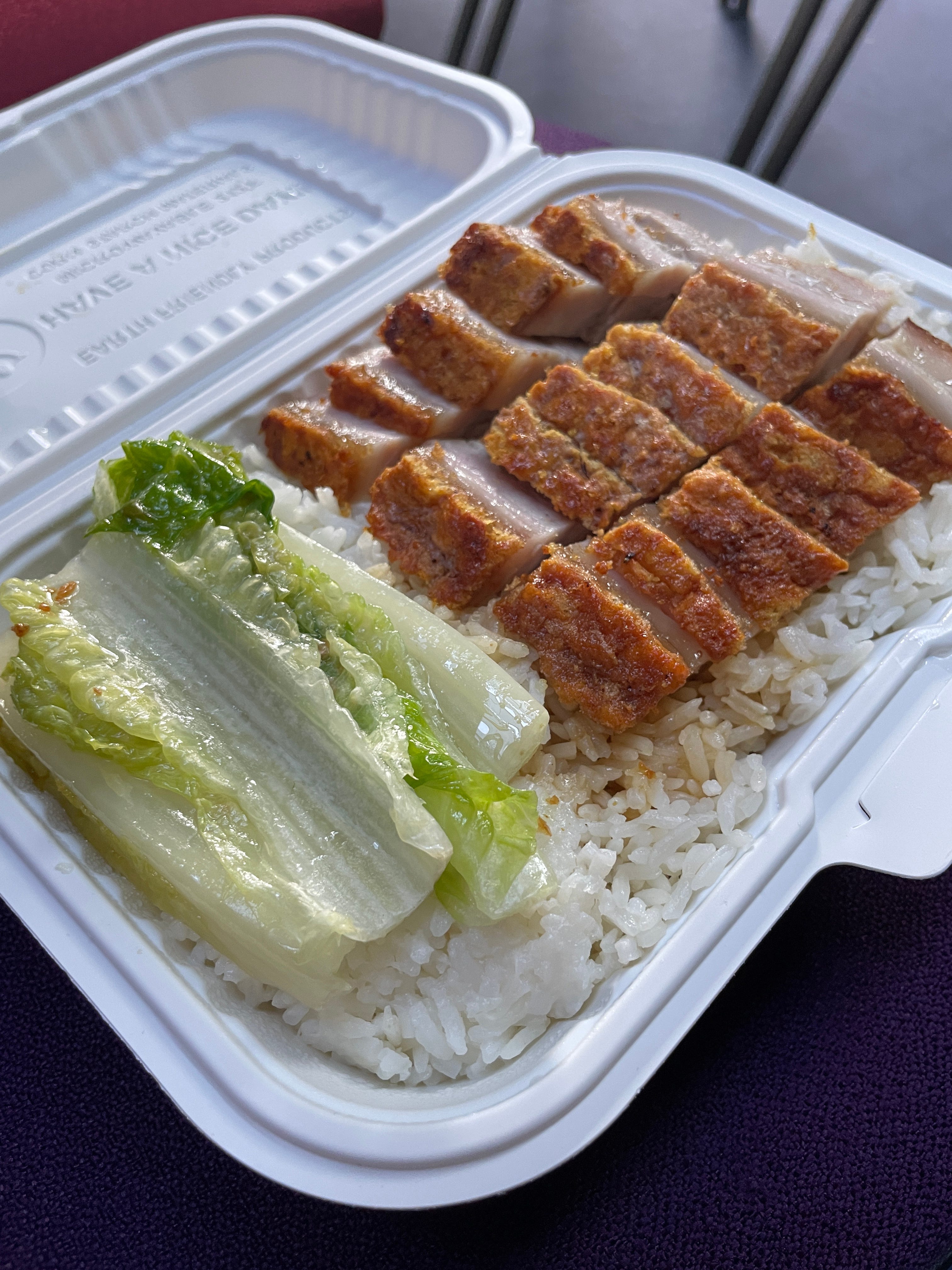
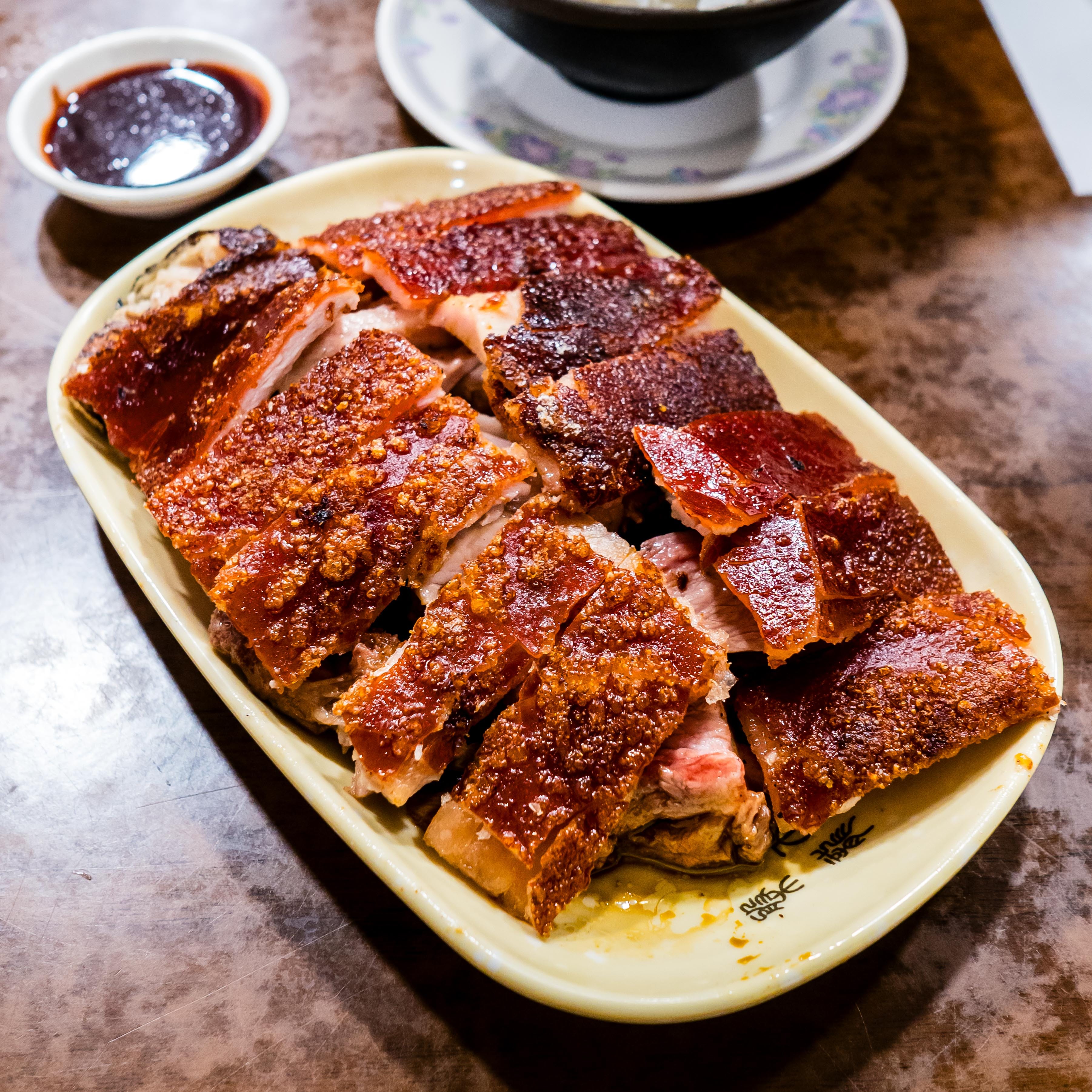
Neatly tucked behind Bristol Hippodrome, Nice Spice is not particularly spicy, but there’s a queue outside every day, loyal disciples of Bristol’s most succulent Cantonese roast meats waiting for their generous fix of shattering pork skin, as they have been doing for more than a decade. Inside, cleavers quarter bronzed ducks that have been hanging in the window, as hungry Chinese students and lunchtime crowds watch on from a handful of small, undecorated tables. Nice Spice does offer other dishes, but a trip here is really always about these superlative, affordable, consistently perfect roast meats. Come hungry and bring cash.
24 Denmark St, BS1 5DQ
Wangs Miscellaneous
Squeeze past tables buckling under the weight of Sichuan margaritas and plates of soy-braised chicken and you’ll see Emily Xin Xin Chan, Wangs’ head chef, tucked in the tiny kitchen, deep in concentration, pumping out inventive dishes. Owners Sandy and Sacha met in Hong Kong queuing for street food, then returned to Bristol to turn a former fruit and veg shop into their dream restaurant. They lured Chan, who grew up in her parents’ takeaway, back to Chinese cooking after a spell in fine dining, with the promise of doing things differently. The menu reads as a mission to redefine regional Chinese food in the UK, complete with house-made XO sauce, Xinjiang lamb cooked over fire and an unbeatable pan-fried turnip cake. A recent, successful crowdfunding campaign paid for a traditional Cantonese charcoal roasting oven from China, so watch this space as they expand the garden terrace and menu.
66 Bath Buildings, Montpelier, BS6 5PU
Cambridge
CP – Cici Peng. EML – Edward Moon Little. SQ – Siqi Chong.
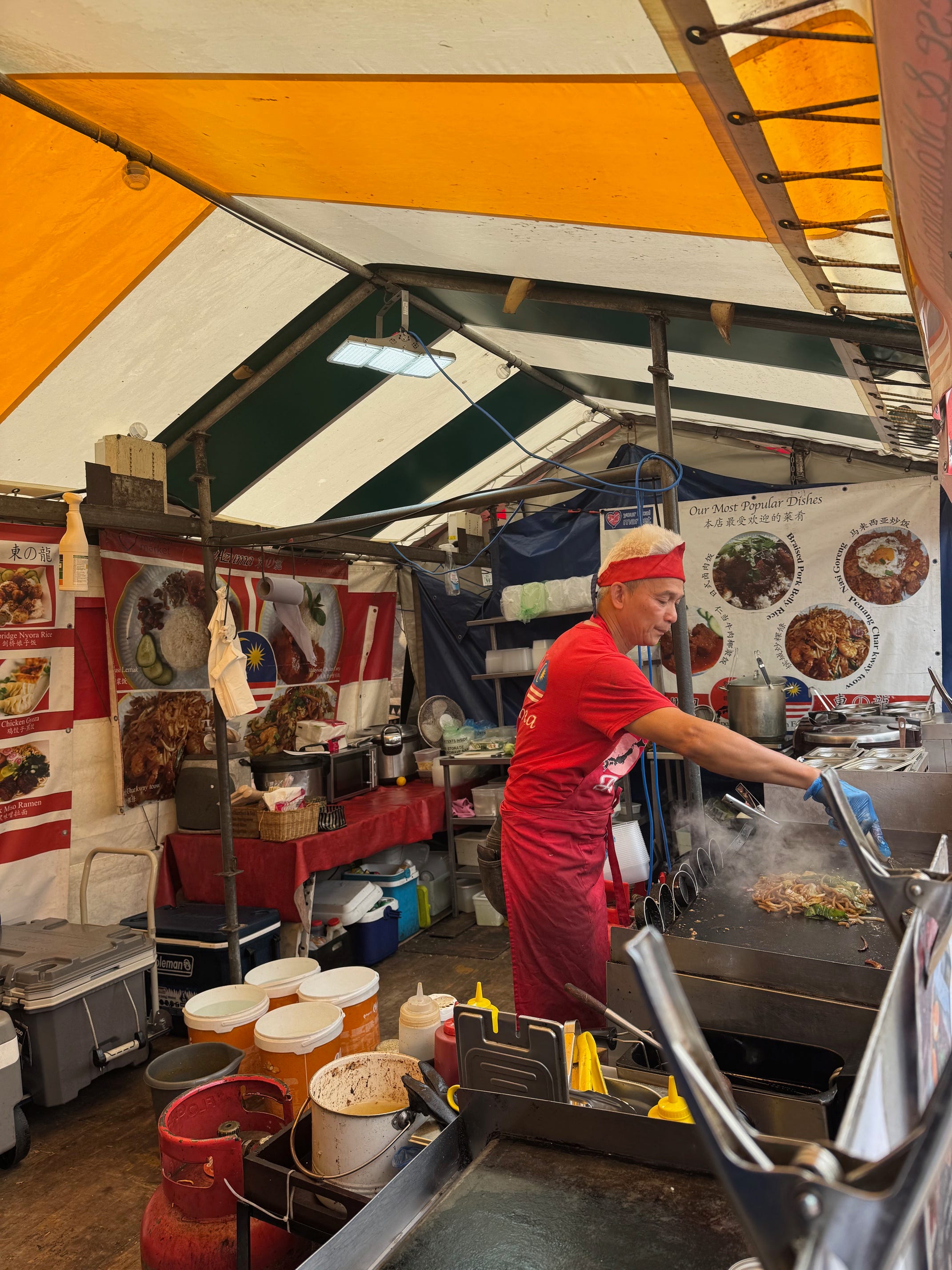
According to the 2021 Census, Cambridgeshire has the highest proportional population of ethnic Chinese residents in the UK. While Cambridge’s Chinese migration history parallels London’s in some ways, its food scene has largely sidestepped the recent patterns that have swept through the capital’s dining scene: there are barely any Sichuan concepts or biang biang noodle joints, and new restaurant openings are rare due to a high concentration of university-owned buildings, expensive commercial rents and students opting for the sanctuary of college dining halls. Instead, Cambridge offers peripheral regional cuisines that, in some cases, arrived here before reaching London, and I maintain that the best xiao long baos in the UK can be found in the city.
With no centralised Chinatown, the city’s Chinese restaurants can instead be found in dispersed culinary pockets – in residential neighbourhoods, bubbled together along the peripheries of the local shopping centre or along the bustling Mill Road, which houses most of the city’s best independent food shops. CP
Read the Vittles Guide to Chinese Restaurants in Cambridge here.
Edinburgh
SY – Steven Young. SK – Sean Wai Keung.
Noodles Home Lanzhou
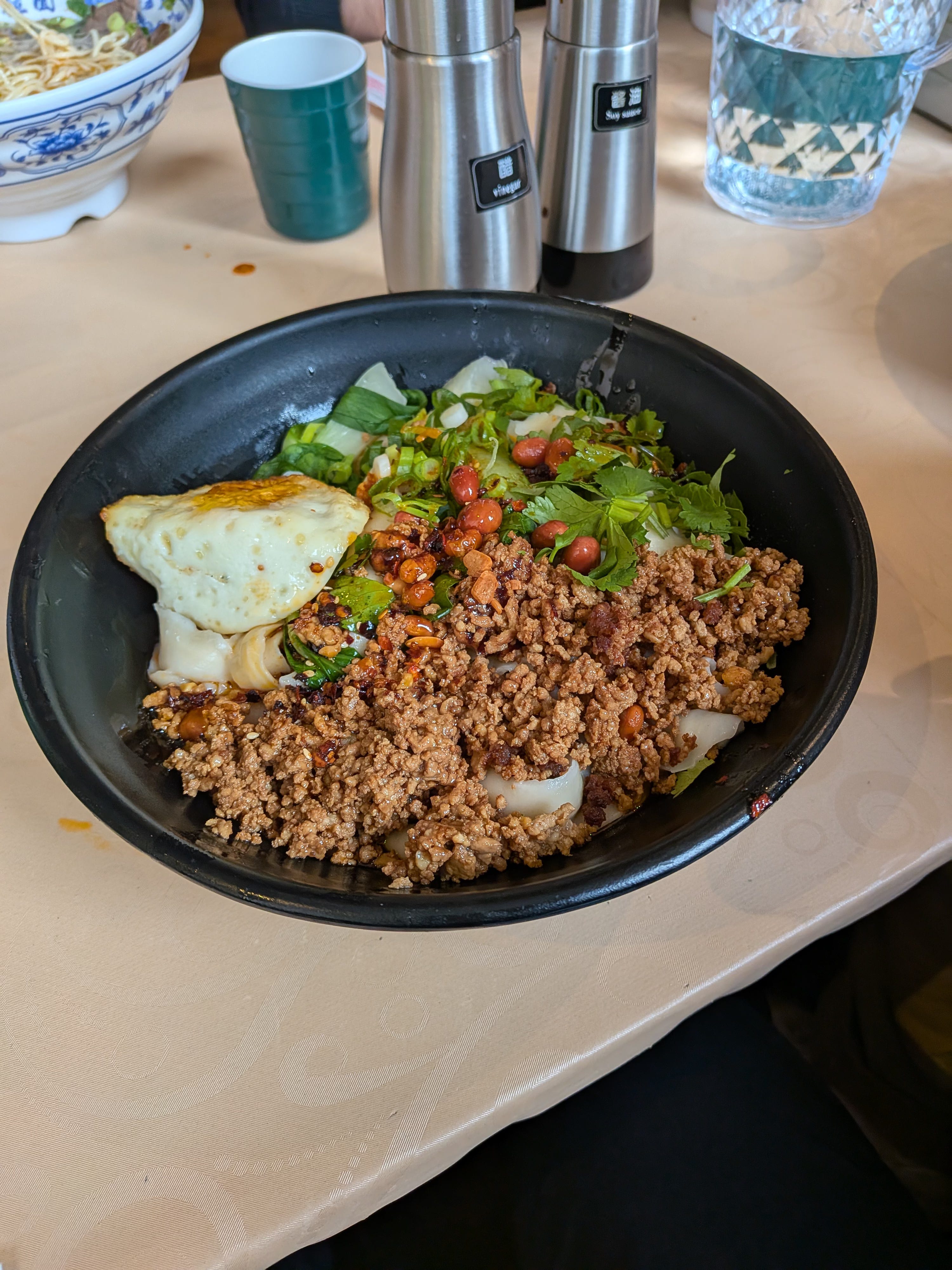
Often, the status of ‘favourite restaurant’ conveys something quite specific: reliability, the comfort taken in knowing exactly what you’re going to order and what you’re going to get. Noodles Home, which specialises in Lanzhou and Sichuanese noodles, is not that. Its gift is being consistent in its inconsistency: that the same dish at different times, or even ordered by multiple people on the same occasion, will take wildly different forms. Take my go-to, the Chongqing spicy noodles with pork mince. You can go 20 times (and, categorically, I have) and never know the broth-to-noodle ratio, the spice level, or how your choice of protein will be prepared and presented. But never being the same twice, often not even close, just means the kitchen has found multiple paths to paradise. SY
14a Nicolson St, EH8 9DH
Five Dumplings Dongbei/jiaozi
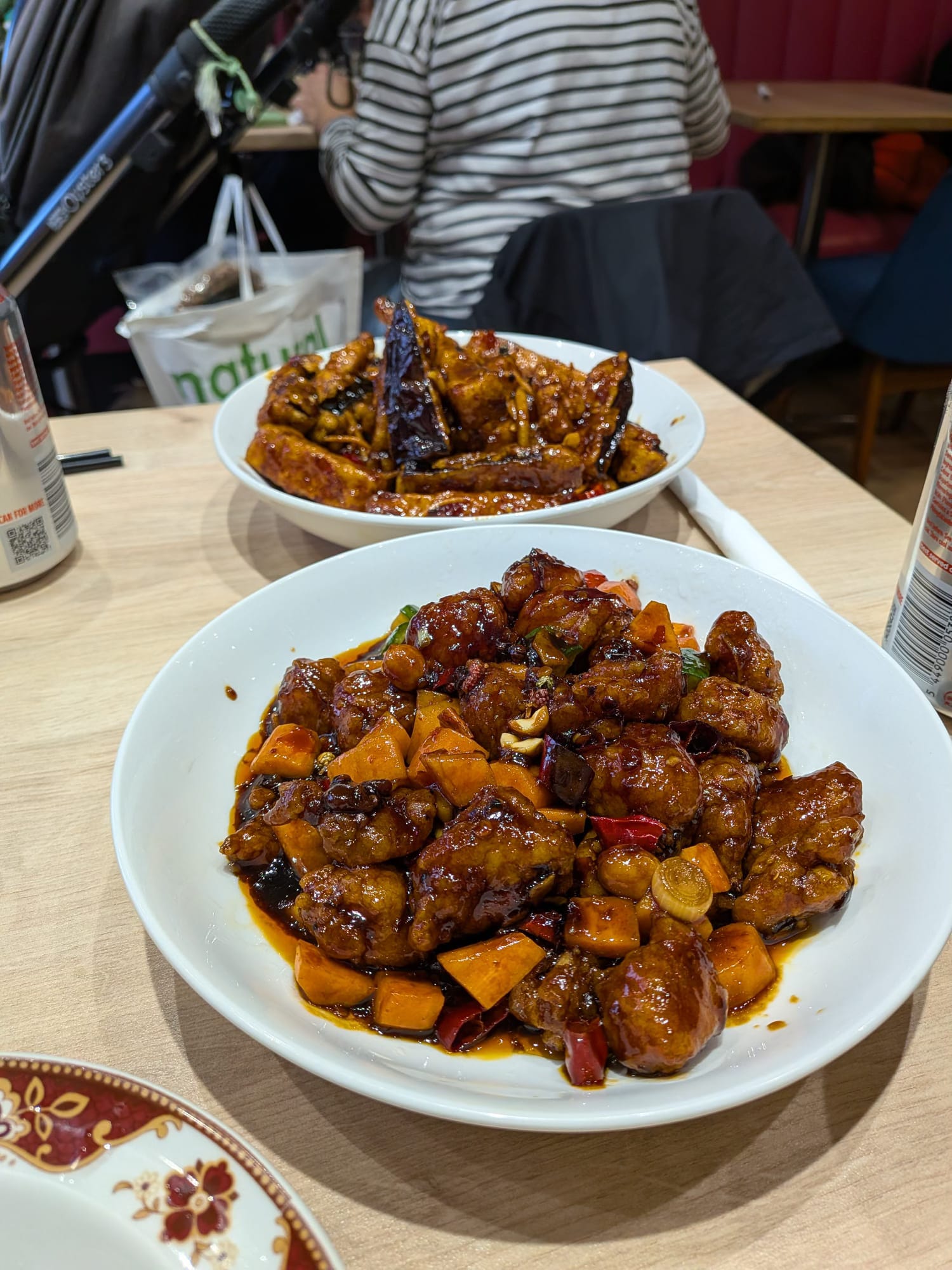
The loss of Silver Bowl, Edinburgh’s longest standing Chinese takeaway, was a blow to the city’s cultural heritage and a tough act to follow. Enter Five Dumplings. The dishes that give the new occupier of 311 Leith Walk its name are solid, but the treasure on the menu is buried elsewhere. Take its potato and aubergine mixed with peppers: an unexciting moniker for di san xian (three heavenly treasures), a Dongbei dish that harmonises the sweet, salty, sour and pungent at once. Those wanting something similarly well balanced, but with more umami and heat, should go for the dry wok beef tripe with chilli. It’s a take on offal so well judged that it finally put the haunting memories of my grandpa’s take (unseasoned, boiled for an hour by a tetchy Scottish nonagenarian) to rest. SY
311 Leith Walk, EH6 8SA (also Wheatfield St and Newhaven)
Noodles & Dumplings Sichuan
During a long month working every day at the Fringe, Noodles &Dumplings quickly became my happy place. Freshly hand-pulled noodles and hand-wrapped dumplings are rarely bad, but what makes this place stand out are its accompanying dishes. The cold plate mixed salad is beautifully seasoned and not too oily, while the skewers are moreish and not too salty. It also offers Chengdu-style hot pots that are great to share on a cold day, and the garlic broth delivers on its flavourful promise, all of which makes this place one of my favourite restaurants in the city. SK
23 South Clerk St, EH8 9JD
Glasgow
Sean Wai Keung
The first recorded Chinese restaurant in Glasgow, Wah Yen, opened on the Govan Road in 1948. As the more traditional shipbuilding industries, which had previously attracted Chinese migrants to the city, declined through the 1950s and 1960s, the number of food-focused places only grew. While Wah Yen didn’t survive, the Glasgow Chinatown complex opened its doors in 1992. It featured 15 indoor units, a large restaurant and a traditional gate. It was in the Cowcaddens area to the north of the city, and was both a means of promoting Chinese businesses to those outside the community and a home for organisation and solidarity, working with other organisations such as Wing Hong Elderly Group to provide information on issues like housing and visas.
Unfortunately the complex itself has been in steady decline over the last decade, with a range of factors, including the pandemic, to blame. Despite this, Cowcaddens itself is still a major hub for Chinese businesses in the city, while over in the West End a new kind of ‘Chinatown’ is blossoming, with its restaurants catering more towards the growing Chinese student population at Glasgow University. This combination of newer restaurants alongside more long-established ones, as well as a few surprises in unexpected places, has ensured Glasgow’s continued position as one of Scotland’s best cities for Chinese food.
Read Sean’s full guide to Glasgow’s best Chinese restaurants here.
Liverpool
EB – Emily Beswick. JN – Jonathan Nunn. BP – Beatrice Png. HLL – Hai Lin Leung. RCJ – Ruth Cheung Judge. IR – Isaac Rangaswami. SMN – Sufea Mohamad Noor. LT – Lisa Tse. HT – Helen Tse.
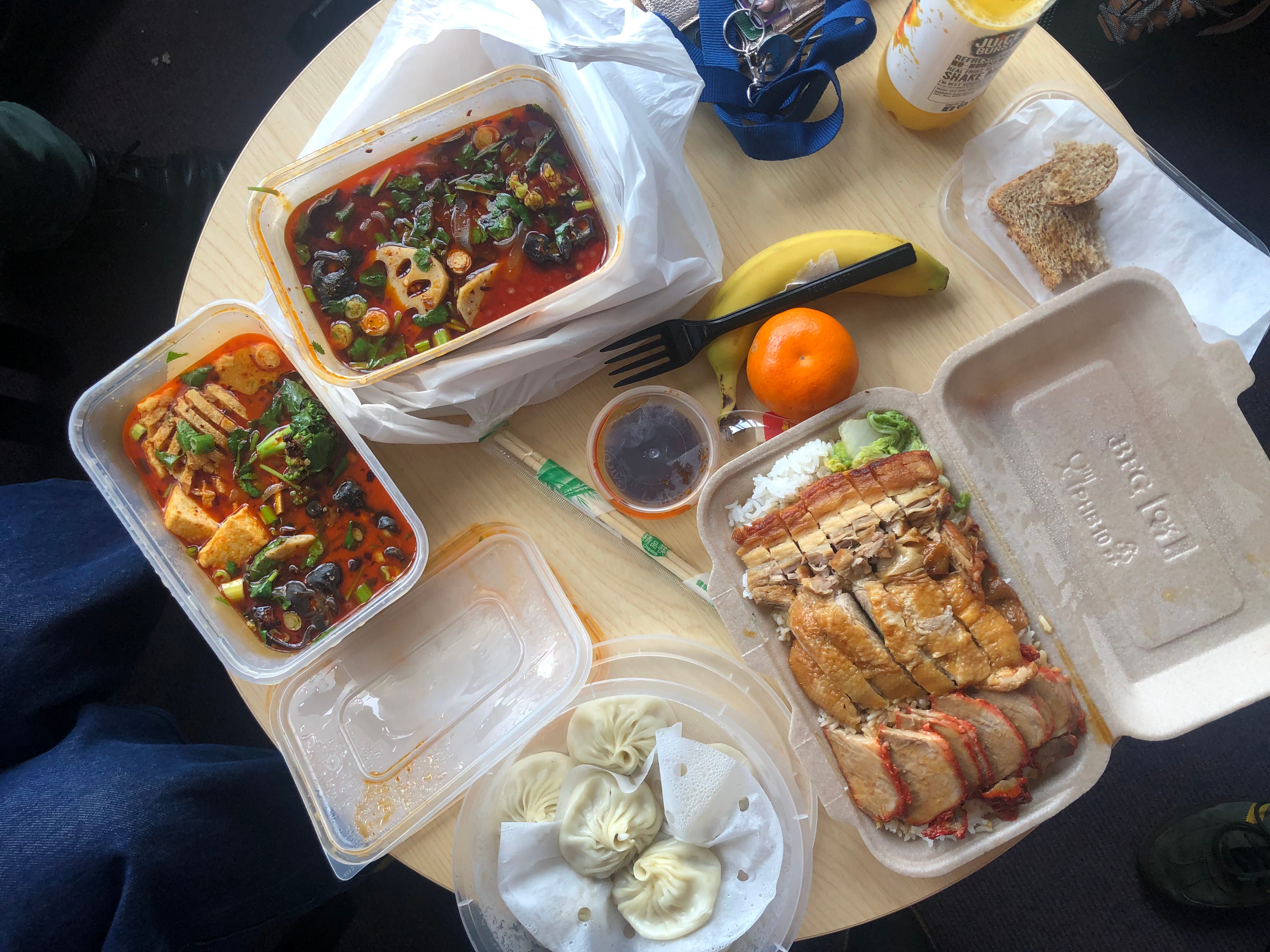
Liverpool is home to Europe’s oldest Chinese community. Its Chinatown, near the docks, served the Chinese seafarers (as well as those from the Philippines, Malaysia and Singapore) who have passed through and settled in the city since the 1880s. With the arrival of postwar migrants from Hong Kong, Chinese food then expanded via takeaways, which popped up in the suburbs and on the Wirral. Chinese families took over chip shops, fusing English comfort food with Chinese flavours to create the city’s signature salt and pepper everything – chips, ribs and siu mai.
The installation of Chinatown’s enormous arch in 2000, a gift from Liverpool’s twin city, Shanghai, heralded a new era of international students from mainland China to the city. Mini-Chinatowns sprung up to supply these contemporary sojourners, including Myrtle Street’s row of grocery shops and cafes and a cluster of hot pot restaurants on London Road. However, Liverpool’s historical Chinatown on Nelson Street is quiet for most of the year, coming alive only during Lunar New Year celebrations. Recent efforts have tried to bring the area back to life, including the trial of a new street market. But maybe Liverpool’s Chinatown hints at the future of Chinatowns in the UK: a mix of old-school dim sum parlours, flourishing takeaways and new Malaysian and Vietnamese spots, unconfined to a single street. EB
Read the full Vittles guide to Liverpool’s Chinatown here.
London
JN – Jonathan Nunn. AH – Angela Hui. EZ – Elaine Zhao. SC – Siqi Chong. GC – Guan Chua. ZS – Zoe Suen. FD – Fuchsia Dunlop. BB – Barclay Bram. DB – Dan Biddulph. IR – Isaac Rangaswami. MAC – Montague Ashley-Craig. AW – Anto Wu. FL – @foodinlondon. LT – Liz Tray.
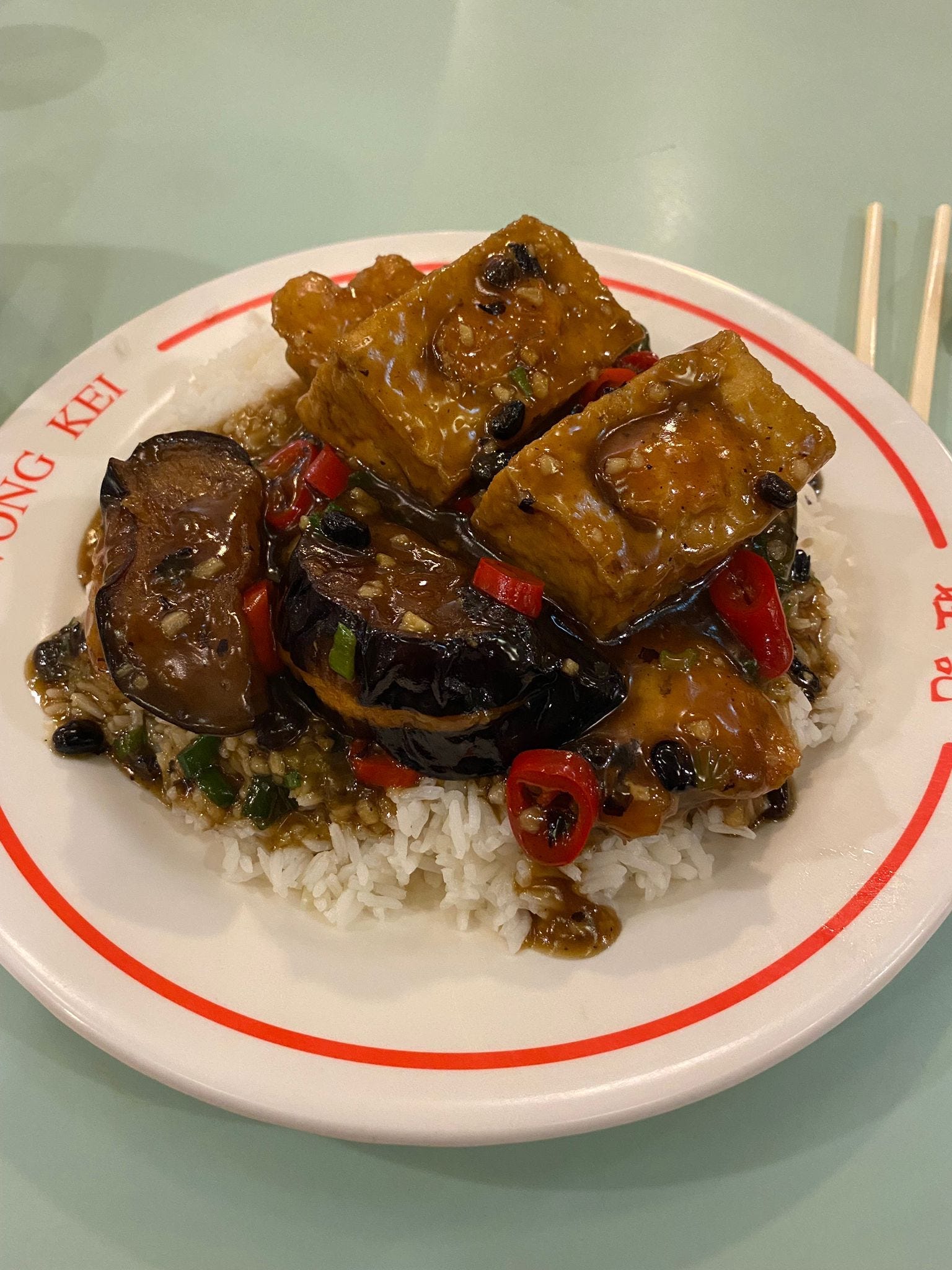
The concept of Chinatown as we commonly understand it emerged from a very specific set of circumstances at the turn of the 20th century, when Cantonese sailors with meagre resources were forced to make creative use of limited space in their new cities. In London, this began at the docks in Limehouse and moved to Soho in the 1960s, when migrants from Hong Kong and the New Territories took on cheap leases in what was then considered an undesirable part of the city. Many had been displaced by wartime bombing and rebuilt their businesses around a tight cluster of streets between Leicester Square and Soho. Alongside restaurants sat Chinese supermarkets, traditional Chinese medicine clinics, massage parlours, video stores, cinemas and a handful of betting shops tucked into side corners, all part of the same compact ecosystem.
That era of Chinatown is over. The Soho Chinatown – the place that most Londoners would think of when they hear the word ‘Chinatown’ – is no longer the only centre of Chinese culture in the city. New types of Chinatowns are flourishing across the city, in places where Chinese people actually live. What this means is that there has never been another time in London’s history when you can eat better and more widely across China’s rich diversity of regional cuisines. For the first time ever, across more than 80 restaurants and 15 distinct cuisines, we have compiled a guide on where to eat them, in London’s six (and counting) Chinatowns.
Read more about London’s historic and new Chinatowns and a Vittles guide to their restaurants here.
Manchester
Lisa and Helen Tse
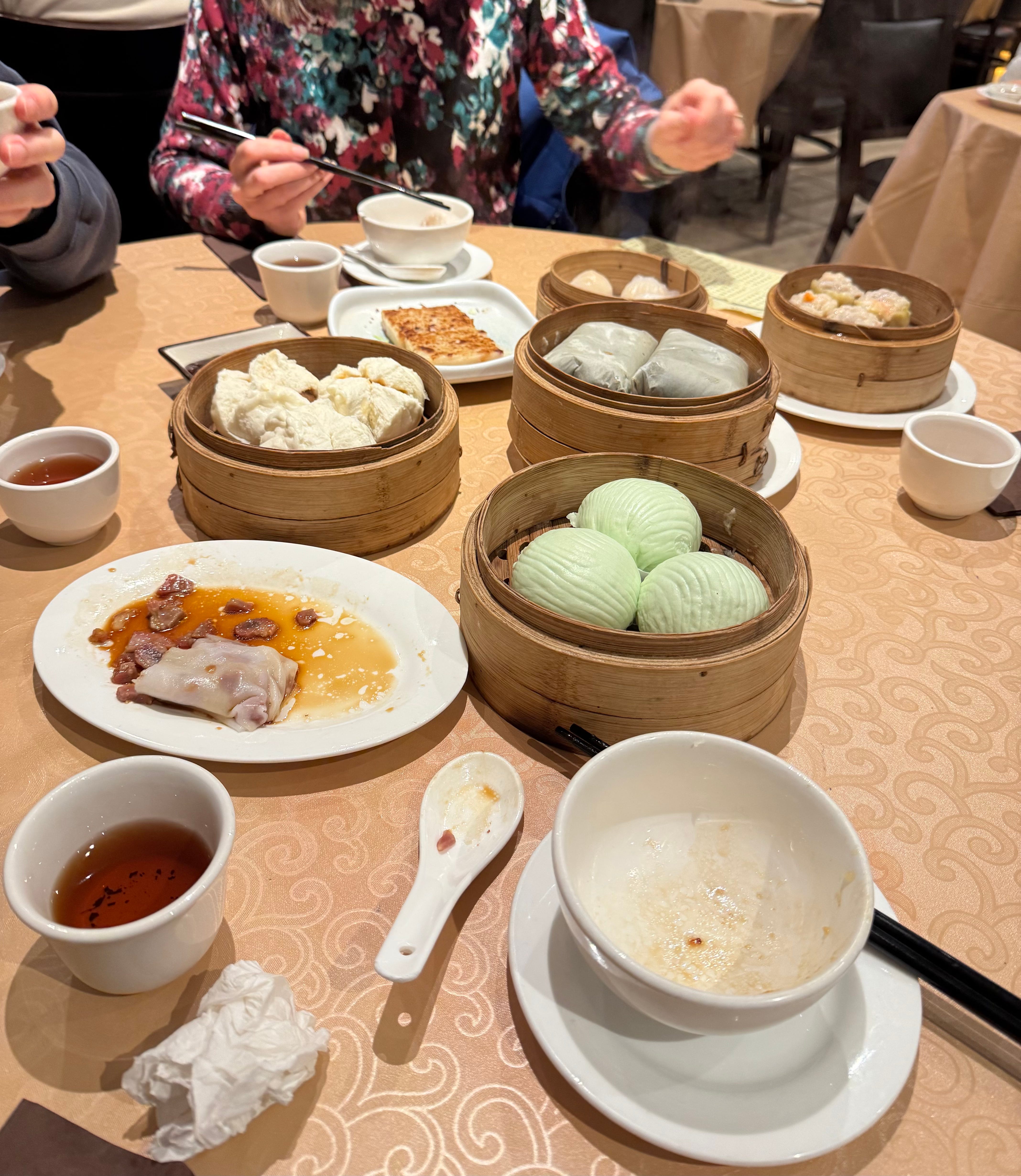
Manchester’s Chinatown is compact – just half a square mile bounded by Moseley, Charlotte, Princess and Portland Streets, with the grand Imperial Chinese arch at its heart, a gift from China and a reminder of the old Sino-British textile trade that built this city. The food has shifted over the years: what was once solidly Cantonese now runs hot with Sichuan peppercorns and the vinegary punch of northern noodle joints. Stalwarts like Kwok Man and Hong Kong have closed, but things are shifting back as new waves of Hong Kong immigrants arrive, bringing with them the sweet-savoury char siu and the crackle of roast pork belly. Old Chinese acupuncture clinics sit beside new Taiwanese bubble tea stalls; herbalists who’ve been grinding the same remedies for forty years share a wall with hot-pot joints where university students queue for numbing broth.
During the pandemic, Manchester became home to the UK’s largest Chinese population, accounting for 3.4% of the national total. The rents may be brutal, and the economic headwinds real, but the community holds. This is not a Chinatown that performs for tourists. It just cooks, day after day, better than it has any right to. If you come hungry, you’ll eat things you’ve never heard of, cooked by people who’ve been doing it longer than you’ve been alive, and it will absolutely ruin you for anywhere else.
Read Lisa and Helen’s full guide to Manchester’s Chinatown here.
Newcastle
LP – Leah Pattem. EK – Eve Kossman.
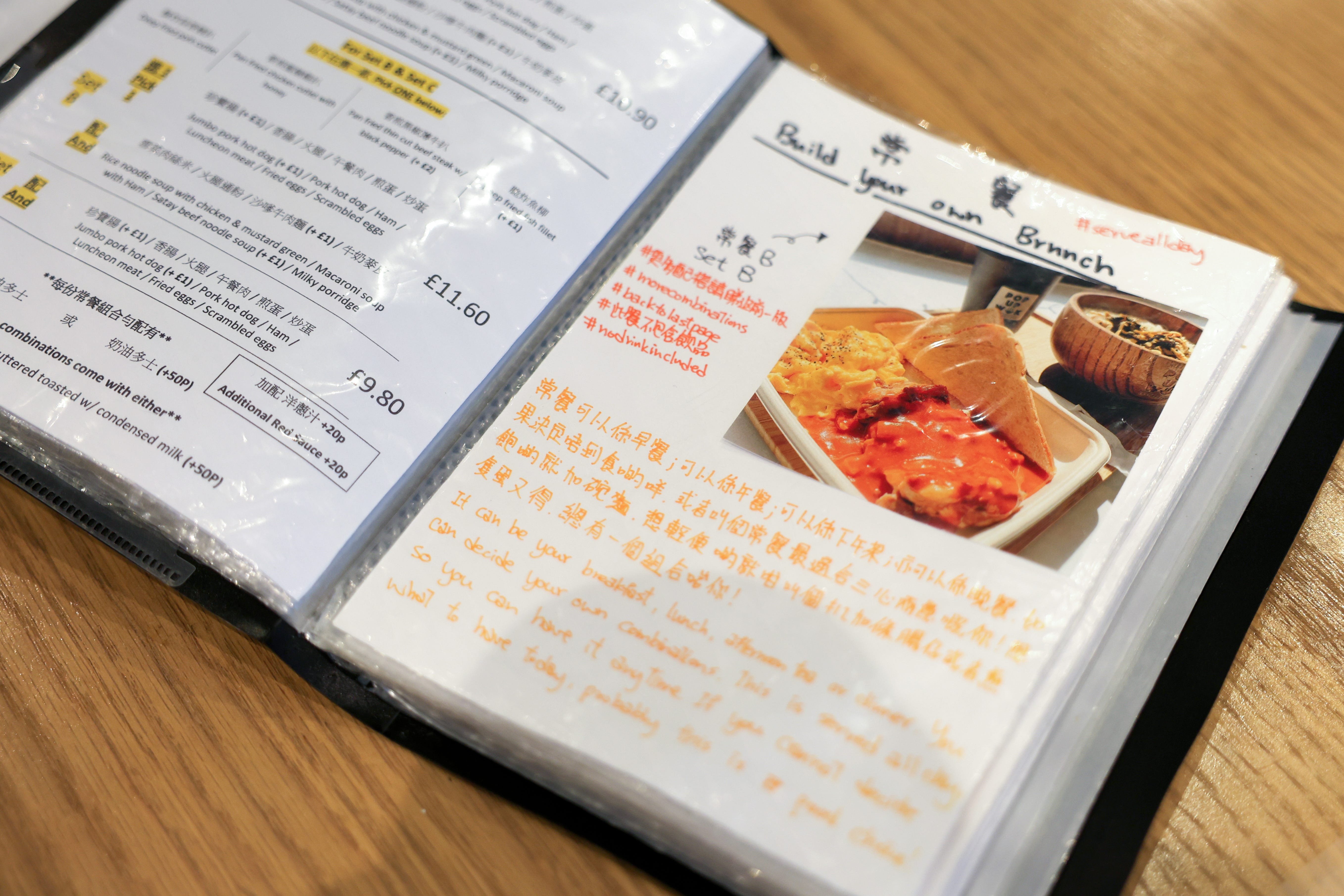
Pop Up Wok HQ 爆大鑊 Hong Kong
Lucia Tsoi and Molly Chan are not chefs by training; they just cook the way they always did in Hong Kong, their home until 2014, when they both moved to Newcastle as students. As a result, the food at Pop Up Wok isn’t traditional Hong Kong cuisine in the rigid sense. Instead, it celebrates the movement of Hongkongers and the cultures they’ve consumed over centuries – think Satay beef noodles with peanut butter French toast. It’s food that flips the script on culinary migration, and it’s all the better for it. LP
16 Saville Row, NE1 8JE
Sky Chinese Cantonese
Ascending in the lift from the bustling Stowell Street to Sky Chinese Cuisine is one of the great pleasures of visiting Newcastle, whether you’re looking for traditional pork and cashew dumplings, crispy mooli cake, fluffy siu mai or Anglo-Chinese classics. Be sure to order the trio of roast meats over rice and pair it with the extremely moreish cheung fun (note: both are only served until 5pm). EK
20 Stowell St, NE1 4XQ
Breadpoint Cantonese/bakery
It’s likely that you’ll smell Breadpoint before you see it. The aromas from this long-running Hong Kong bakery, which pumps out freshly baked Cantonese-style breads, buns, cakes and pastries, will draw you in like a cartoon scent trail. Beyond the cutesy font and red interiors, there’s a classic pick-and-mix tray setup, where you can load up on sausage buns, pineapple buns and the more unusual bear-shaped ones. A personal favourite is the seaweed and custard bun: it has the ideal ratio of sweet to salty. EK
13 Low Friar St, NE1 5UE
Oxford
Harin Turrell
Tse Noodle Cantonese/Malaysian
Since it opened in 2019, Tse Noodle has become a firm favourite among the student community for its central location, speedy service and reasonable prices. Come for the noodle soups – particularly the scallion oil chicken, although the aromatic beef and prawn wonton are equally strong contenders. Expect springy noodles, chicken skin so crisp it’s still sizzling, and the pure comfort of sesame and scallion-steeped broth when you inevitably lift the bowl to lap up the last traces. The eponymous Mr Tse is now more likely to be found at his follow-up restaurant, Qin, which has an almost identical menu but at slightly hiked prices, justified by the addition of tenderstem broccoli and a greater likelihood of finding a table (it’s a bit outside the centre of town). But the original site has a je ne sais quoi that always draws me back; maybe it’s the steam that swallows you, or the squeeze of getting to your seat. Get choosing quickly, because there’s a queue behind you, and don’t forget to dash to Natwest before the food arrives, it’s cash only. HT
8 Ship St, OX1 3DA
Café Orient (Zhang Ji) Sichuan/Dongbei
Cowley, in the south of Oxford, has at least seven restaurants that serve Chinese food. Café Orient, the first you encounter if you are coming from the city centre, conveniently happens to be the best of the bunch. Don’t be fooled by its generic name (which is different online anyway: Zhang Ji). For a simple solo dine, the yo po mian, bouncy hand-stretched noodles slicked with punchy housemade chilli oil, does not disappoint – the ratio of grease, spice, acid and texture is done satisfyingly right. If you are in a rice kind of mood, the pairing of jiggly, pepper-heavy mapo tofu and charred, dry-fried green beans never goes amiss, either. Better yet, bring company and you could try it all. HT
170 Cowley Rd, OX4 1UE
Fusion House Cantonese/Sichuan/Dongbei
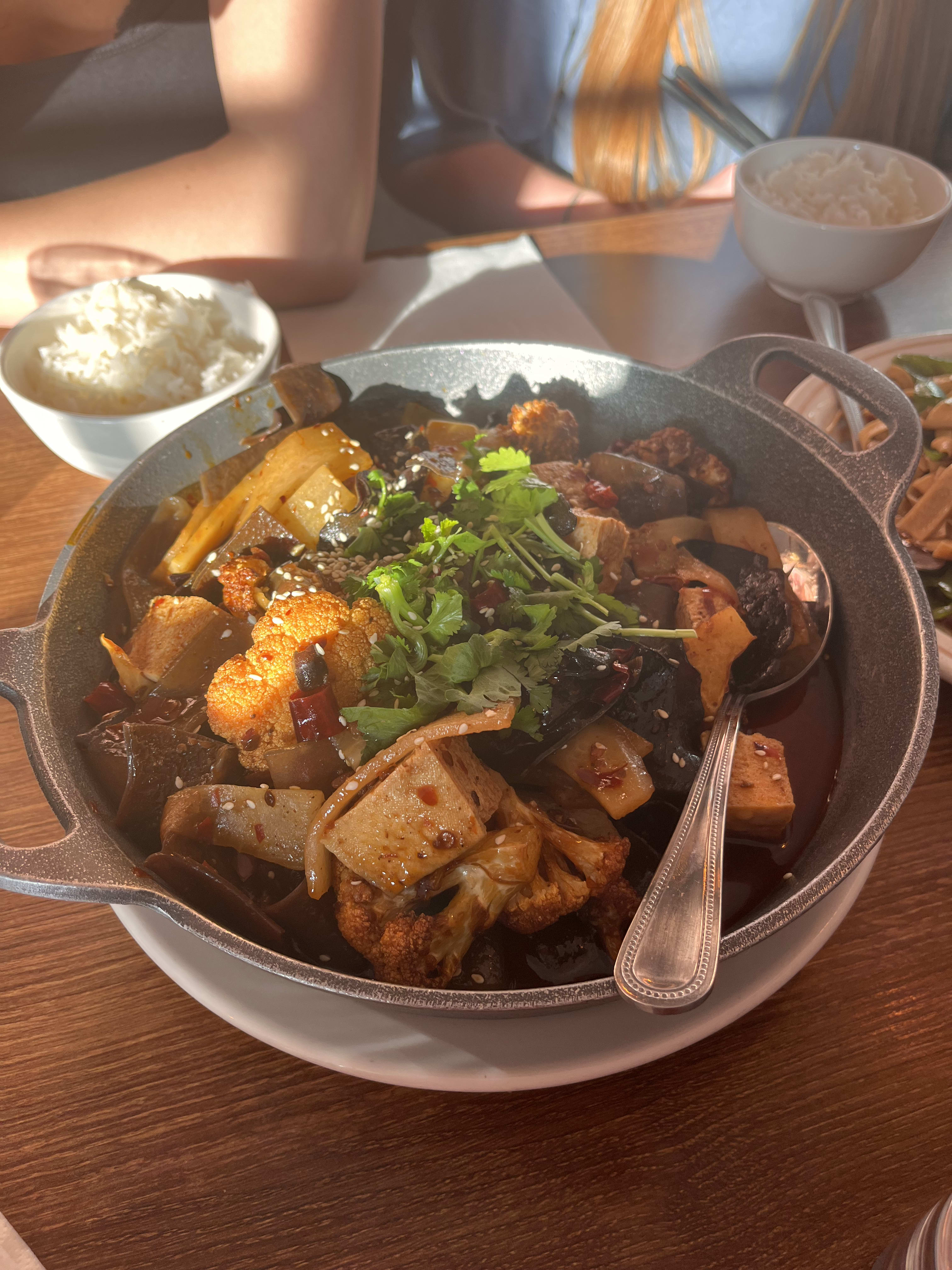
Fusion House looks like an unassuming takeaway at first glance, but up its narrow staircase, you will find a serene restaurant space. I can’t suggest much apart from the dry hot pot, because I seldom stray from this near-perfect dish. The contents of the pot can be personalised, but some ingredients wear Fusion House’s fiery, addictive and, frankly, unmatched, mala coat particularly well, such as the fatty curls of thinly sliced beef, the crumbly bites of cauliflower and the knuckly crunch of wood ear mushrooms (‘edible tree fungus’ on the menu). These are my personal favourites, but I encourage experimentation and an open mind. If you’re looking for variety, the fried thin sheets of bean curd with padron peppers and guo bao ruo (double fried pork tossed in a sweet and sour dressing) are also worth your attention. And if you are served by the lady with the bob (her name is Elsa), be nice to her: she might give you candied winter melon. HT
126 Cowley Road, OX41JE
Sheffield
Kerre Chen
Sheffield’s food and drink scene has quietly flourished over the past decade, shaped in no small part by its large East Asian community. The city now has a strong roster of excellent Chinese restaurants, many of them long-standing, well-loved and fiercely reliable. I’m Chinese myself, and as a Sheffield-based food blogger, I’ve spent years eating my way across the city. While newer developments like New Era Square – often described as Sheffield’s Chinatown – have brought renewed visibility to the scene, the places worth travelling for are spread far wider. This list brings together the places I return to time and time again.
A Journey to Chengdu Sichuan
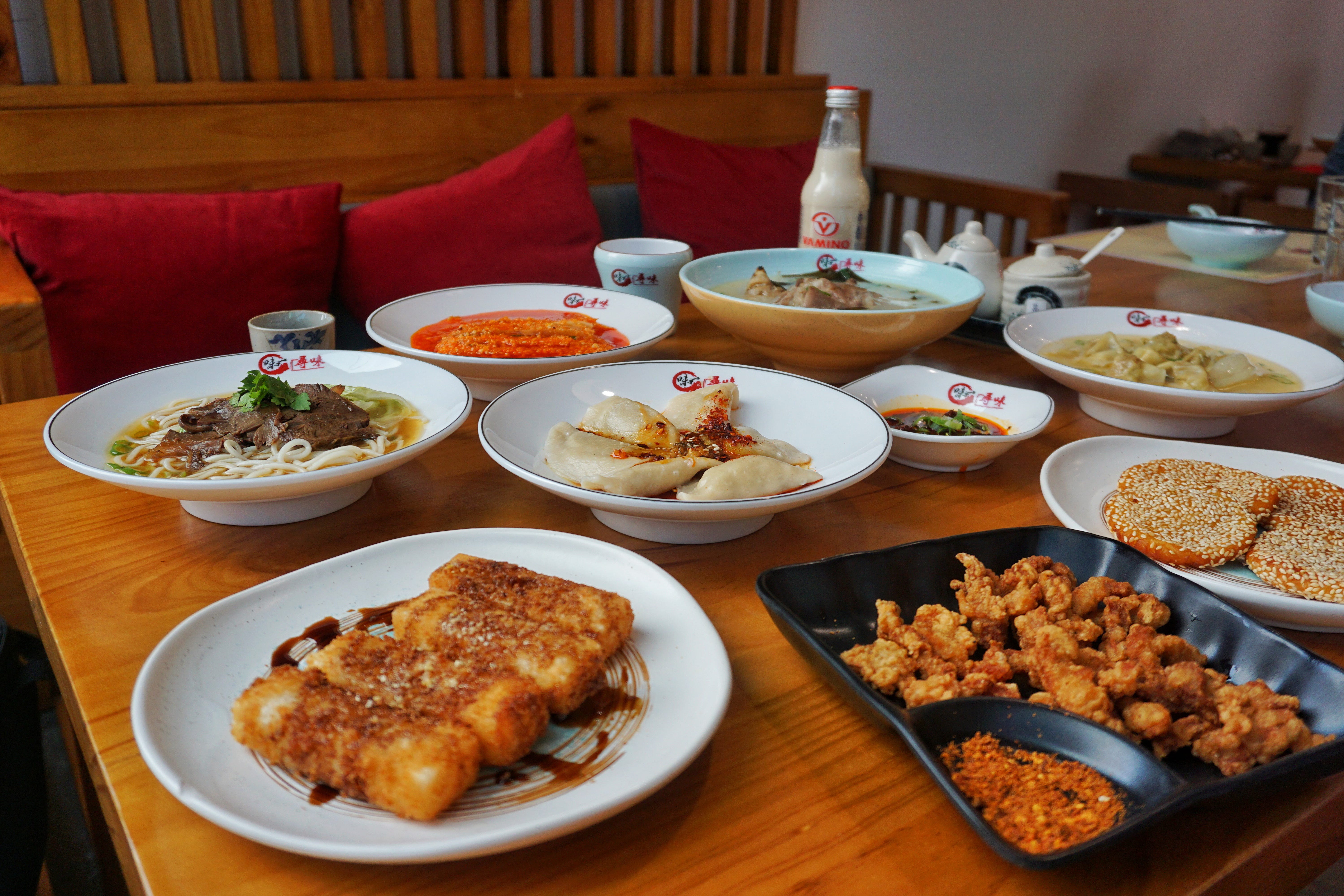
Tucked inside New Era Square, Sheffield’s answer to a modern Chinatown, A Journey to Chengdu cooks the food of Sichuan with unflinching confidence. The mapo tofu is silken and volcanic, its surface shimmering with crimson oil. The deep-fried pork arrives dusted in tongue-tingling peppercorns and crackles in the most satisfying way. The braised pig trotters are glossy, gelatinous and far better than they are ever given credit for. You can also build your own traditional maocai, choosing from vegetables, meats and seafood before everything is steeped in a bubbling, spicy broth. The space is contemporary, with huge windows and sleek panels, but the flavours remain resolutely traditional. It’s one of the best examples of how New Era Square combines modern dining with cultural roots.
Unit 9, 9 New Era Square, Highfield, S2 4RB
Chinatown Restaurant Cantonese/dim sum
A cornerstone of Sheffield’s Chinese dining scene, Chinatown Restaurant is where families gather for weekend dim sum and gossip over pots of puerh tea. Steaming baskets fill the tables with silky cheung fun folded around prawns, XO-fried radish cake with crisp edges and molten salted egg custard buns that ooze gold. Don’t skip the three roasties: glossy char siu, lacquered roast duck and shatter-crisp pork belly. Regulars are recognised on sight, and the chatter of Sheffield’s Chinese community fills the air like background music. The venue is equally known for its traditional wedding banquets: dish after dish lands on the table like milestones in a long celebration, including whole suckling pig, lobster, abalone and mock shark fin soup.
27 London Rd, Highfield, S2 4LA
Noodle Plus Lanzhou/Shaanxi
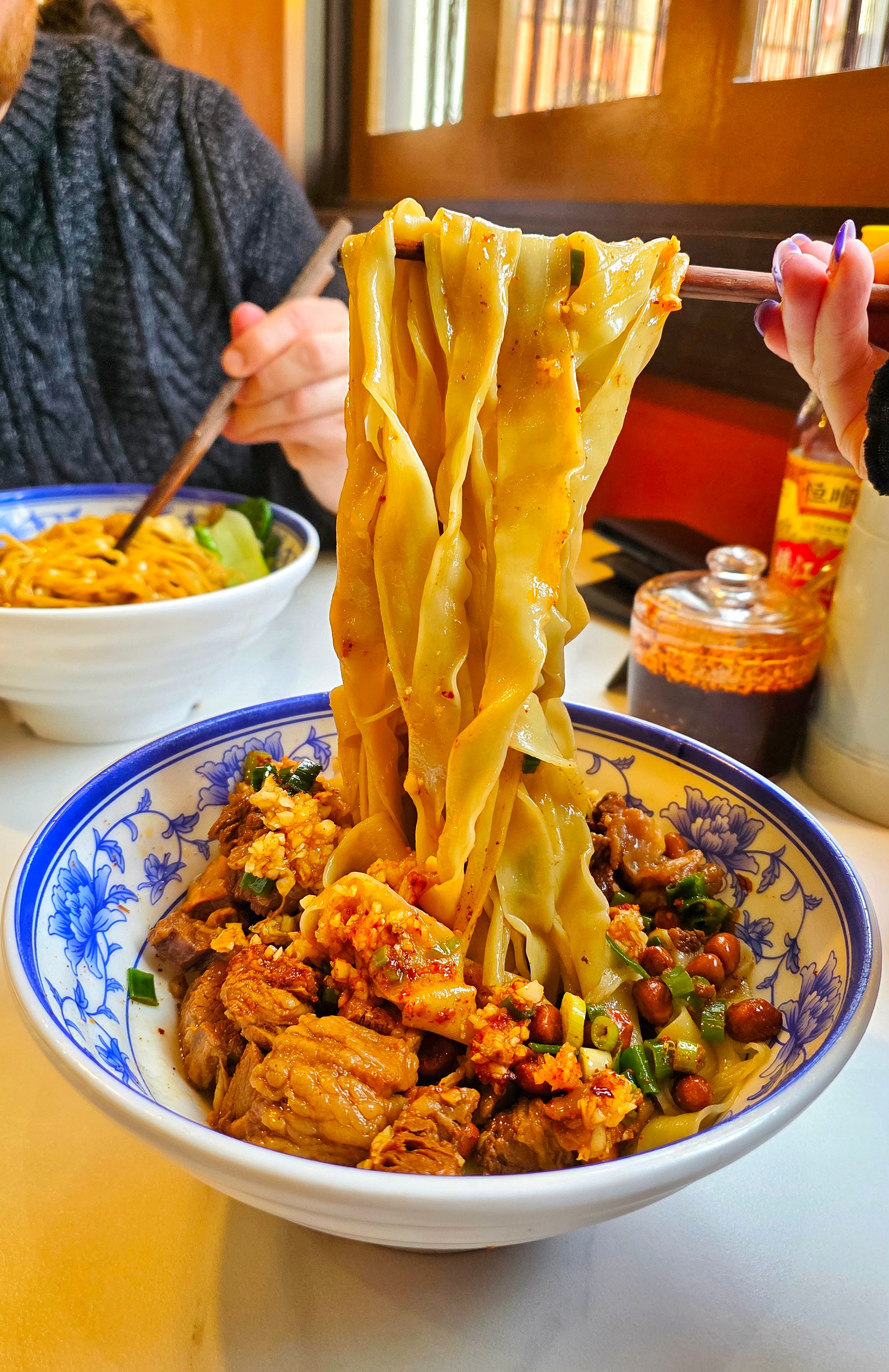
At Noodle Plus, the draw is right there in the name, and in the window. Watch as the noodle master effortlessly stretches and slaps dough into long, elastic ribbons, a hypnotic ritual of skill and strength that never fails to gather onlookers. He’s bounced around several noodle joints across the city, but wherever he goes, the masses follow. Choose from Lanzhou hand-pulled noodles with plenty of bite and bounce, Shaanxi knife-cut noodles or biang biang belt noodles, which are then plunged into broth and served steaming. The braised beef brisket is the local favourite, rich in five-spice and soy, generous in portion and layered with warmth. Affordable, filling and utterly satisfying, this is no-frills comfort food elevated by craft and best enjoyed with lashings of chilli oil.
255 Glossop Rd, Broomhall, S10 2GZ
Wah Lok Yuen Hong Kong
Wah Lok Yuen brings the cha chaan teng experience to Sheffield. For those who have spent a decent amount of time in Hong Kong, it’s a hit of instant nostalgia: bright colours, plastic stools, laminated menus and glass display cabinets stacked with pastries, all of which echo the diners many Hongkongers grew up visiting. Plates of scrambled eggs with buttered toast and satay beef noodles arrive fast and the Hong Kong milk tea, brewed the traditional silk-stocking way and served in those famed cups, is perfectly balanced – strong, tannic, and smooth. Its silky soft rice noodle rolls are a standout. Made from scratch, they’re dressed the old-school way with soy, sesame and chilli sauce. The egg tarts are just as good, with a buttery shortcrust base and a gentle wobbling custard centre that’s best eaten warm if you’re lucky enough to catch them fresh out of the oven.
132 Infirmary Rd, S6 3DH
Golden Dragon Restaurant Hakka
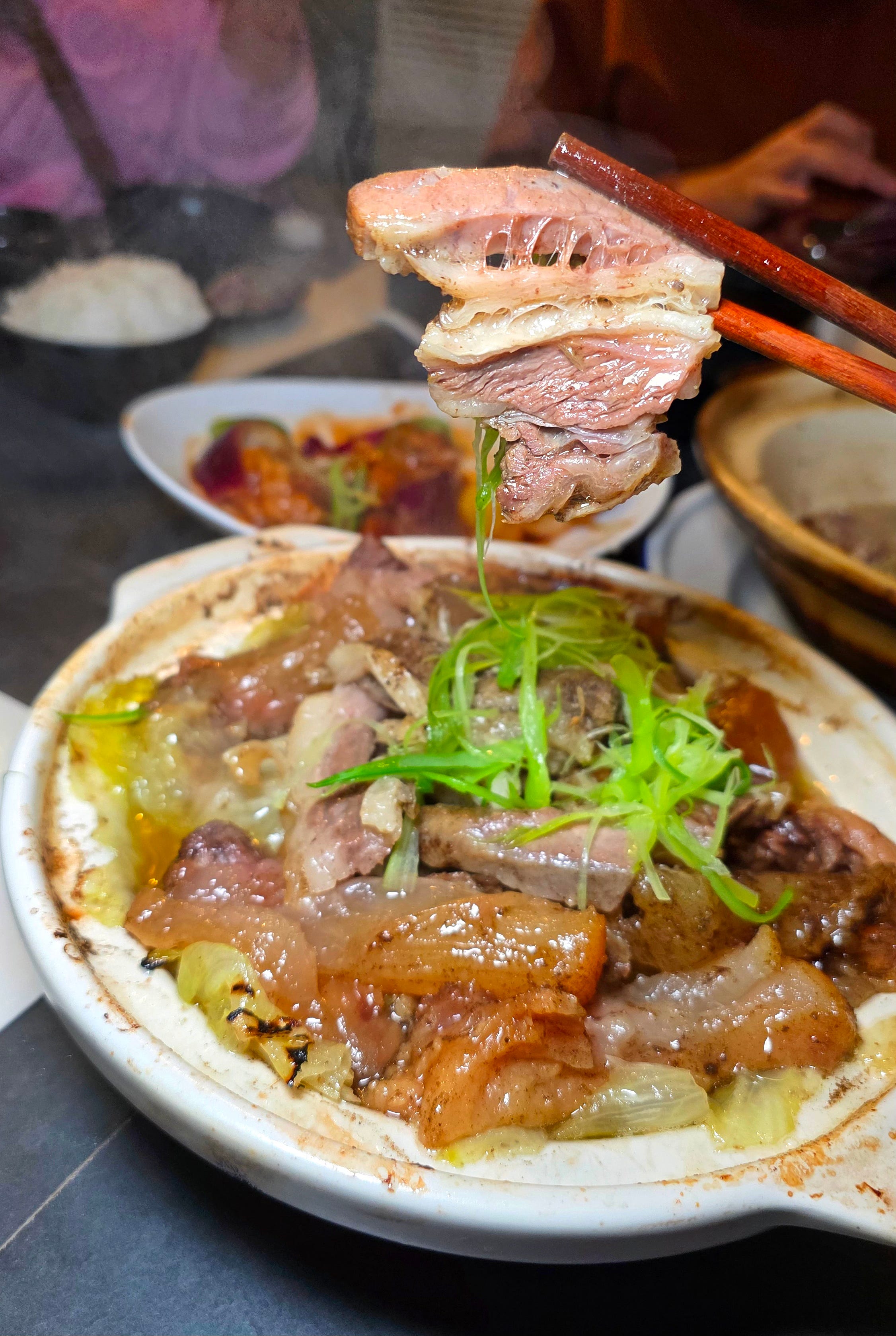
Golden Dragon opened in the last year, taking over from a sushi restaurant, and, unusually, specialises in traditional Hakka cuisine, which is rare to find anywhere in the UK. Chef Ben, who comes from Hong Kong, uses no MSG – instead long braises coax depth from tougher cuts of meat, layered aromatics come from fermented beans and preserved vegetables, and cooking techniques build flavour over hours. Each dish is shaped by patience and memory, and some orders require advance notice – a mark of their care. The slow-braised old duck is deeply savoury, the stewed herbal chicken with yellow wine soothing and nourishing, while the pickled mustard greens bring a sharp, tangy counterpoint, balancing out the richness of everything else.
6 Sheldon Rd, Nether Edge, S7 1GW
MAP BELOW