

How Chinese Students Transformed British Chinatowns
The New Chinatowns. Words by Barclay Bram. Photographs by Chan Yang Kim.
Good morning and welcome back to the Vittles Chinatowns Project. Due to a glitch, yesterday’s newsletter was sent to only some subscribers. As a result, we are re-sending it today, with apologies to those of you who receive it twice as a result.
The piece, by Barclay Bram, looks at how the recent influx of Chinese international students is producing new Chinatowns across the length and breadth of the UK, and how a simple change in university policy has fundamentally altered what British towns and cities eat.
You can read the rest of the project here:
Who is Chinatown for?, by Xiao Ma
Crying in Wing Yip, by various
The Vittles Guide to London’s Chinatowns, by various
The Vittles Guide to the UK’s Chinatowns (including individual guides to Birmingham, Manchester, Liverpool, Cambridge and Glasgow), by various
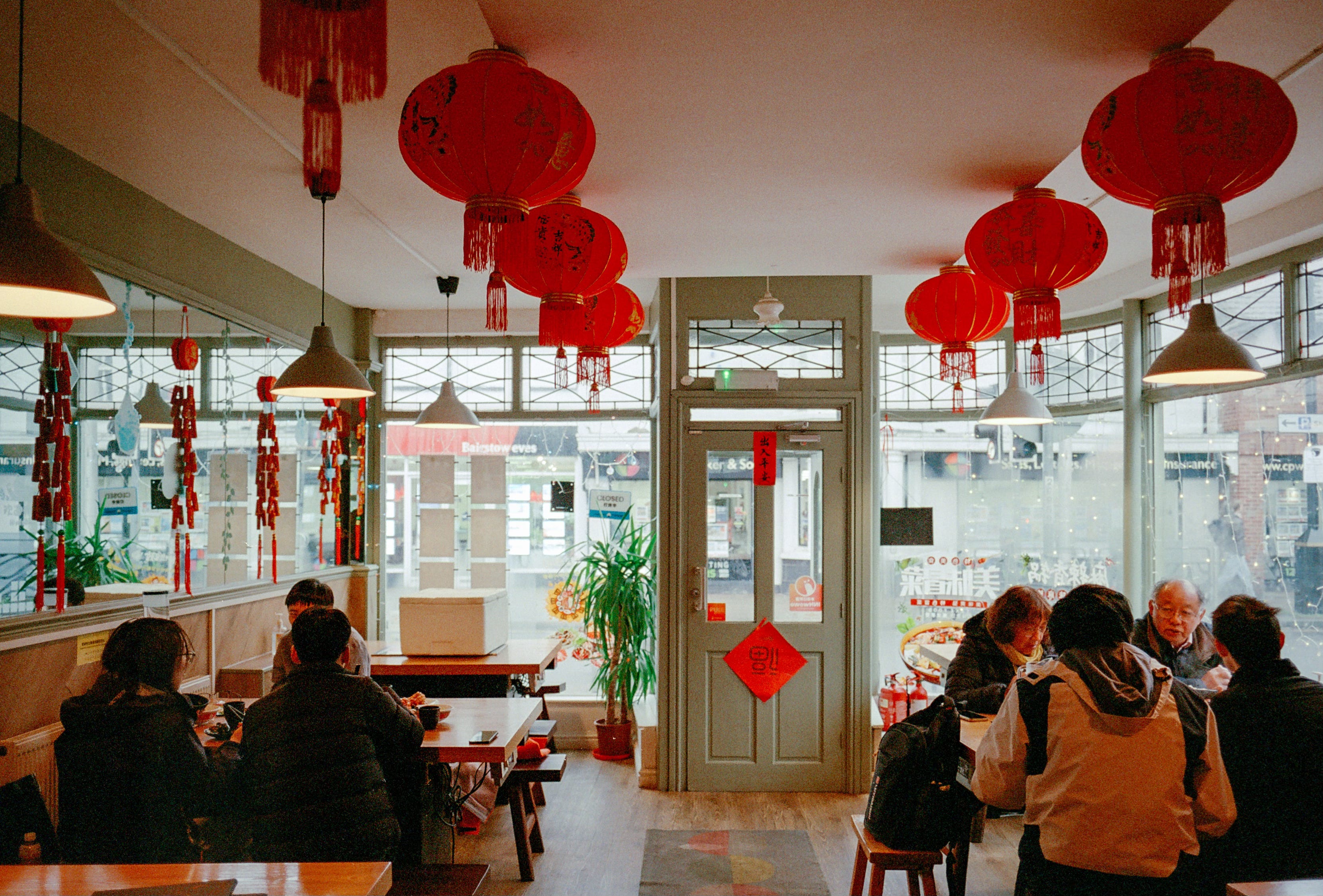
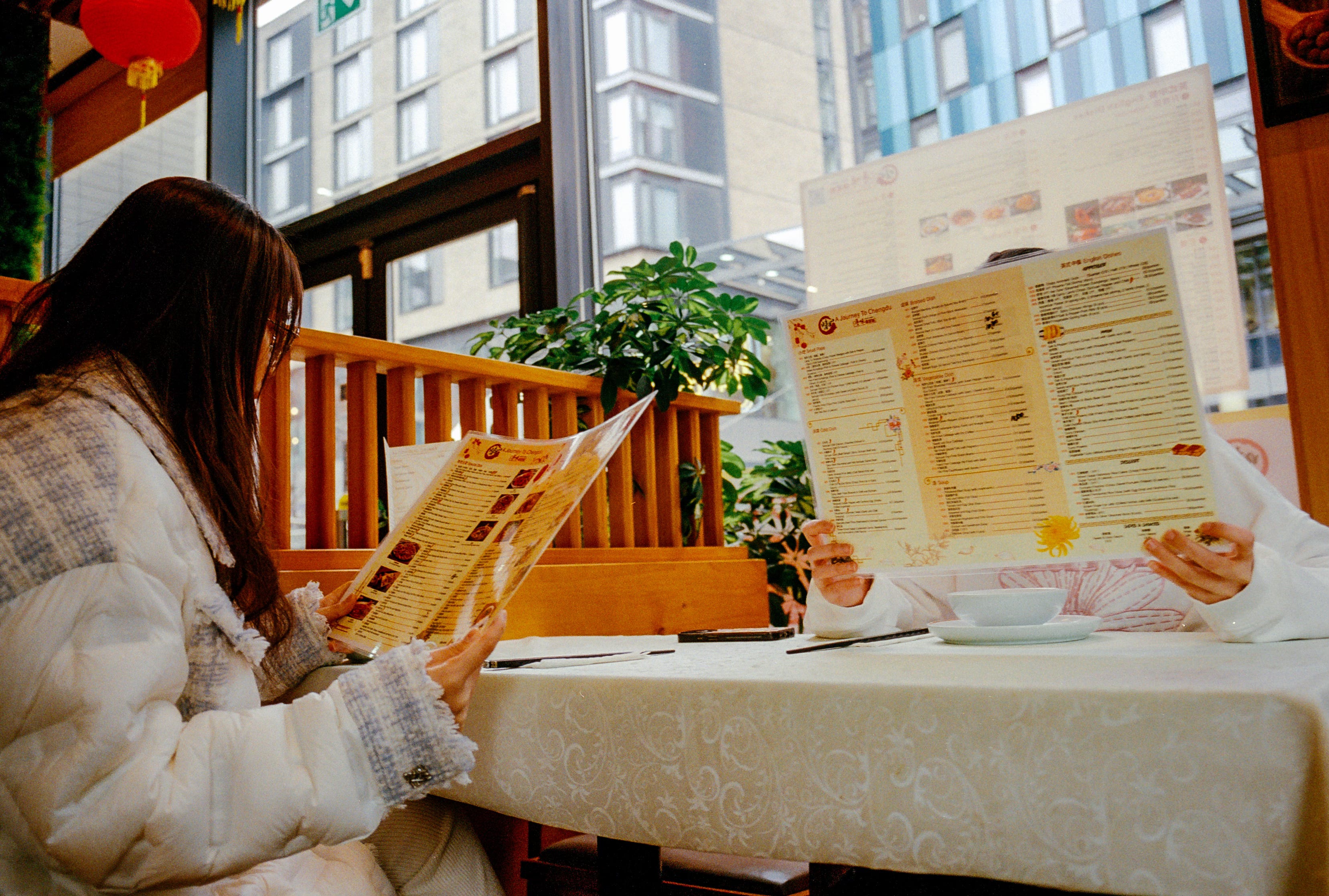
From his corner of the restaurant, Ma Teng can look across the dining room, surveying the steady flow of customers into his business. With a subtle turn of the head, he can peer through the floor-to-ceiling windows and out at London’s Chinatown. Even at 5pm on a Wednesday in February – when we sit to eat – it is already heaving with people. We’re in the flagship of Jinli, a restaurant chain that, over the last decade, has spread across the UK. Today, it has seven branches countrywide, and specialises in Sichuanese food, with an emphasis on 家常菜 – home-style cooking.
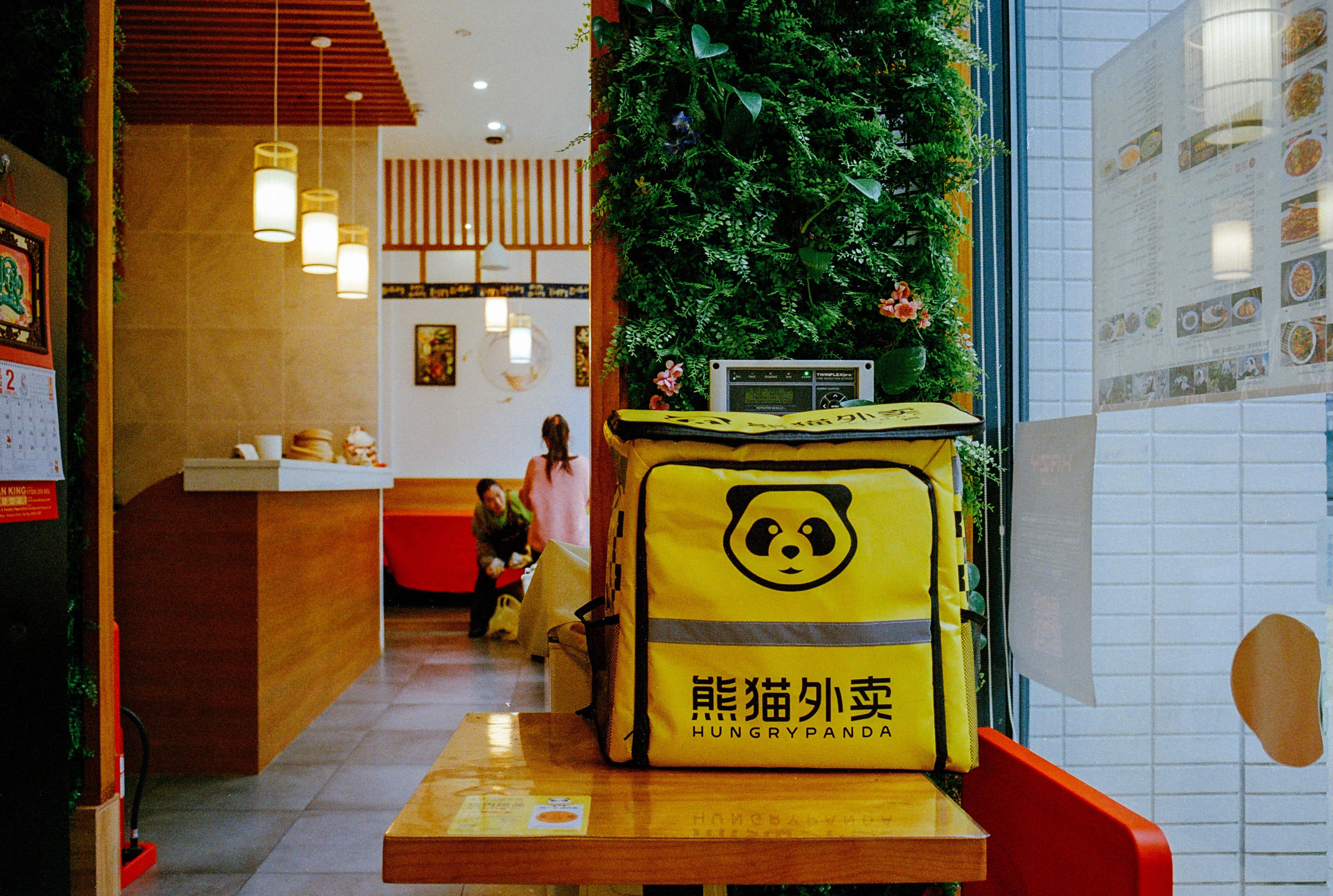
Martin (as he prefers to be known) started off working for Yin Fei, the founder of the restaurant, eventually taking over the restaurant’s ownership from him. At the entrance to Jinli, he proudly displays all the awards he has won. There are awards from Chinese platforms like Dazhong Dianping, Xiao Hongshu and HungryPanda. Chinese state television broadcaster CCTV-2 has named his grilled fish the most popular Sichuanese dish in the UK. According to the Chinese Student and Scholars Association (CSSA), Jinli has been rated the most popular with Chinese exchange students for four years in a row. This, too, is evidenced by an award on the wall.
But despite all of these successes, the outlook from Martin’s vantage point is not good. ‘I want people to understand exactly what we’re going through at the moment,’ he tells me. He is frank about the challenges his restaurants face: ‘Brexit, the war in Ukraine, price shocks from all kinds of geopolitical instability,’ he says, rattling off a litany of recent bad-news headlines. But there’s a bigger problem. ‘We’re caught in the middle of two bad economies,’ he says. Britain’s economy is stagnant. But so is China’s. ‘The students,’ he says, looking forlornly out of the window, ‘they don’t have money any more.’
The impact that the mass migration of Chinese students has had on UK food culture should be obvious to anyone who has seen HungryPanda delivery drivers zip through red lights, who has marvelled at the diversity and number of bubble tea stores, or who has noticed the upscaling of Asian supermarkets in recent years. It has propelled the fortunes of people like Martin, who rode the wave of Chinese students seeking a taste of home. Martin targets cities with a solid number of affluent Chinese students, but where the competition isn’t as fierce as in cities like Manchester or Birmingham. ‘In Exeter, we have no competition. Our brand is much stronger than everyone else’s, and no one is there to drive our prices down.’
This mass migration has allowed regional Chinese cooking to proliferate outside of London, particularly in small university towns. But it has also done something else – it has exploded the very concept of Chinatown. With university towns around the UK catering to this influx of new money and seeing their high streets thrive, it begs an important question: who needs a Chinatown?
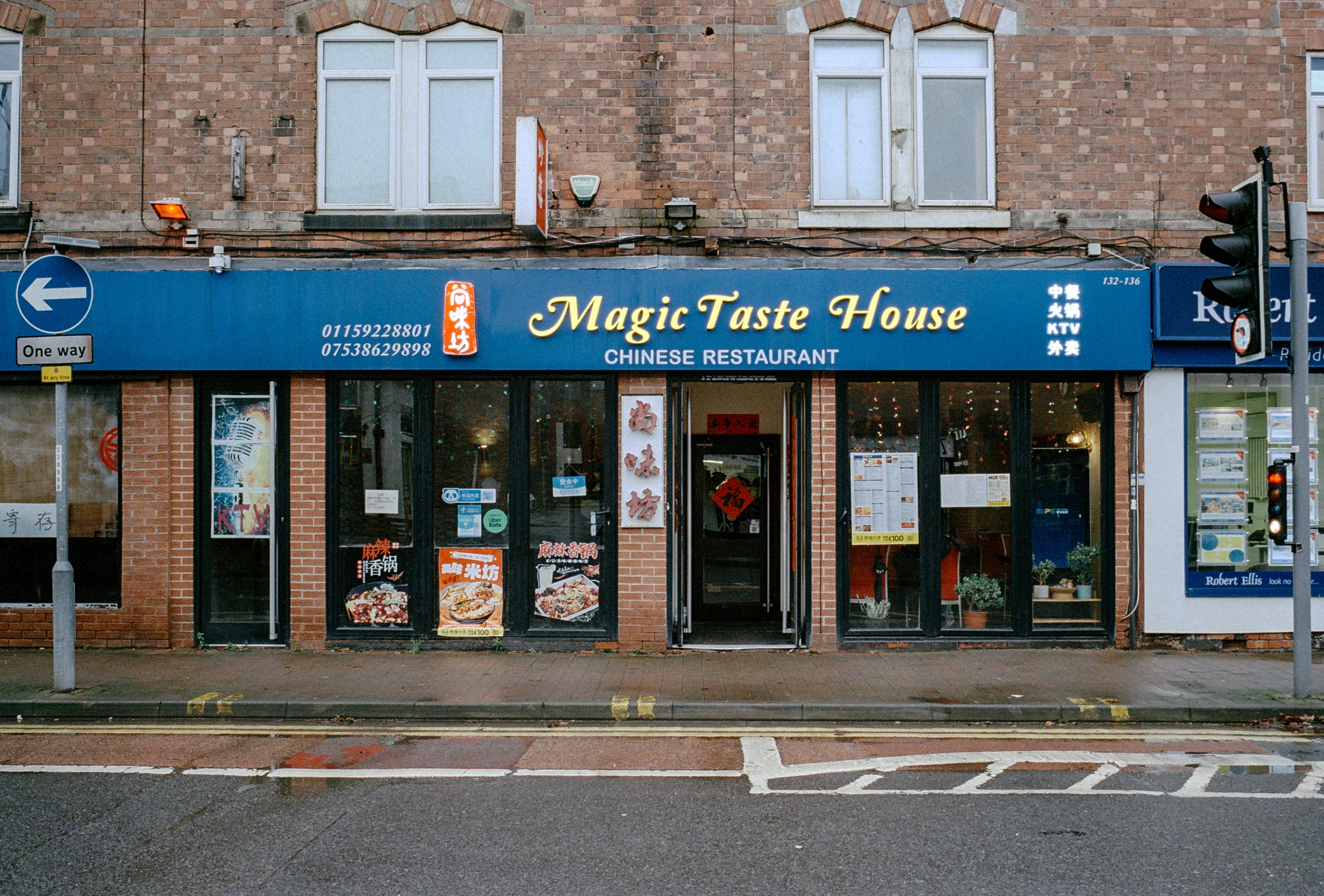
Chinese food in Europe has never just been the preserve of Chinatowns. But in many major port cities in the UK, Chinatowns became important venues for the immigrant Chinese community. Liverpool’s Chinatown grew out of the silk trade with Shanghai in the mid-nineteenth century. London’s original Chinatown, in Docklands, was bombed out in the Second World War, dispersing its residents. They gradually found their way to central London, buoyed by waves of migration from Hong Kong. What we think of as Chinatown today – in Soho – was designated as such by the council in 1985. Its food scene has always been predominantly Cantonese, or cooking based loosely on Cantonese cuisine. As a child, I used to go to Chuen Cheng Ku, delighted by the restaurant’s dim sum trolleys. It’s now a Brazilian rodizio.
Over the years, the food of Chinatowns in the UK not only reflected these waves of migration, but also the kinds of foods that might find broad appeal with locals. The food became sweeter, more fried. Chinese restaurant associations helped restaurateurs to source ingredients and recipes and to hire chefs, which standardised an idea of what ‘Chinese’ food was for British people.
By the 2010s, this idea started to change, driven by a new wave of immigration from mainland China. 2015, the year that Martin started working at Jinli, was dubbed ‘the golden era’ of Sino-British relations by then Chancellor George Osborne. In the same year, Xi Jinping addressed parliament and drank ale in a British pub in Buckinghamshire (which was subsequently bought by a Chinese entrepreneur). He also found time to stop by Imperial College to give an address to students, which made sense, given the university had over 2,000 Chinese students at the time.

Where are the New Chinatowns?
The top 20 neighbourhoods in England and Wales, listed in order of the proportion of residents who identify as Chinese. (These neighbourhoods broadly overlap with student housing at major universities.) Stats taken from the ONS Census 2021.
1. Sheffield Cathedral and Kelham 15.7%
2. Manchester Piccadilly and Ancoats 11.4%
3. Manchester University North and Whitworth Street 8.9%
4. Sheffield Devonshire Quarter 8.9%
5. Newcastle City Centre 8.8%
6. Leeds City Centre 8.6%
7. Leeds University and Little Woodhouse 7.7%
8. Birmingham Digbeth 7.1%
9. Coventry Central 7.1%
10. Liverpool Edge Hill 6.8%
11. Newcastle Arthur’s Hill 6.5%
12. Liverpool Central and Islington 6.3%
13. Bristol University and Brandon Hill 6.2%
14. Manchester Ardwick 6.1%
15. London Canary Wharf 5.5%
16. York Fulford Road and Clementhorpe 5.4%
17. Southampton City Centre and Polygon 5.2%
18. London Lambeth North, Waterloo and Southbank 5.1%
19. London Millwall 5%
20. Durham City 5%
Throughout that decade, Chinese students played a major role in sustaining British higher education. Despite the British government hiking tuition fees for domestic students to £9,000 in 2012, the university sector could not support itself without also charging substantially higher fees for international students. So, the government attempted a sleight of hand: foreign students would now subsidise domestic ones. Britain was attractive to Chinese students – its tuition was still significantly more affordable than America’s, visas were easier to come by, and the politics less fraught. When Xi Jinping addressed Imperial College, the Chinese students in the audience were paying £26,000 a year in tuition fees alone.
By the 2019/2020 academic year, there were over 100,000 first-year Chinese undergraduates enrolled in UK higher education – the first time any foreign nation had supplied a six-figure student cohort. This supplied approximately £2.5 billion in fees. British higher education had found a way to support itself through Conservative-era austerity: a seemingly endless supply of Chinese students, happy to spend lavishly to study at world-class universities that taught in English. That year, 48% of first-year non-UK domiciled students at UK universities were from mainland China. At some universities, mainland Chinese students made up over half the undergraduate international student population, including at UCL, Imperial and Sheffield. Also that year, the University of Liverpool, close to the home of the first Chinese enclave in Europe, had an international undergraduate population that was 66% Chinese.
The Sinification of higher education in the past decade has led to the satirical Chinese phrase ‘fanxiang liuxue’ 反向留学 – ‘to study abroad in reverse’, whereby Chinese students arrive in a country like the UK and find themselves surrounded by Chinese students, taught by Chinese professors and eating Chinese food. The proliferation of delivery apps like Fantuan and HungryPanda has allowed Chinese students a semblance of the slick convenience of home – though for a significant price increase. Apps like Douyin (China’s censored version of TikTok) and Xiao Hongshu enable students to share recipes and tips about where to eat or buy things that remind them of home. On WeChat, you can watch the influencer Bai Wasai walk you through the aisles of Lidl, converting the prices of items into RMB before walking back to his student dorm in Glasgow to prepare dishes such as hand-pulled noodles with braised beef.
It’s not just that Chinese students have brought their tastes to the UK; at the same time, the underlying business of food has also shifted. In 2017, Kelu ‘Eric’ Liu founded HungryPanda while still a student at the University of Nottingham, where he was studying Computer Science and Management. He served the large Chinese community in and around Nottingham (the university has a campus in Ningbo in East China, and many programmes involve exchanges between the sister campuses). HungryPanda has now expanded to eighty cities and is worth roughly $500 million. Where Chinatowns once worked as a space to centralise everything a restaurateur would need – ingredients, staff and a customer base – today the internet performs the same function. HungryPanda doesn’t just deliver prepared food; it also connects customers with Asian supermarkets.


The rise of the dark kitchen has also complicated what we understand as a restaurant. Siqi Zhao started a Deliveroo business in the pandemic from her flat in Canada Water after graduating from a food anthropology master’s at SOAS. Her customers wouldn’t have known the homely meals they were ordering were literally from someone’s home kitchen. Siqi shifted her operations to a dark kitchen in Hackney, where she now specialises in vegan Chinese cooking, informed by her Buddhist faith. I visited her in the dark kitchen a few times, passing a Jamaican takeaway, a British pie maker and Indian chefs prepping huge stock-pots of dal. Siqi told me that she is impressed by how much Chinese food has evolved in London over the eight years she has been here. (I met Siqi when we were both chefs at BAO – a restaurant co-founded by Erchen Chang, a student from Taiwan.) The arrival of major mainland Chinese brands like Xi Cha (bubble tea) and Haidilao (hot pot) has pushed local businesses to raise their game in order to compete.
Martin also uses a dark kitchen for Jinli, which ensures quality control throughout his restaurants. It also allows him to reduce costly kitchen space in each branch, making room for more seating instead. But times are still tough. When Martin took the reins in 2015, the UK was the leading figure in Europe, charging ahead with bringing China, the world’s second-largest economy, to the world’s largest single market. China’s economy grew 7% that year. Now Britain is adrift in post-Brexit economic malaise and China’s property bubble has burst. Covid disrupted China’s outbound student migration, and as the economy has worsened at home, many are questioning whether the big investment in a foreign education will really pay off. The ‘halo effect’ that foreign degrees once offered returning graduates has largely worn off, according to the sociologist Ma Yingyi – so why go abroad in the first place? After peaking in 2022, Chinese student numbers are down around 3% year on year.
Where are Chinese students studying in the UK?
The top 20 universities listed in order of the number of students who have Chinese permanent addresses (and the proportion of the entire student body). Stats taken from HESA 2024/2025.
1. University College London 14,175 (27%)
2. Manchester 9,445 (20%)
3. Edinburgh 7,725 (20%)
4. Glasgow 7,200 (19%)
5. Birmingham 6,950 (17%)
6. University of the Arts London 6,900 (30%)
7. Bristol 5,835 (18%)
8. Southampton 5,750 (22%)
9. King’s College London 5,740 (14%)
10. Leeds 5,390 (16%)
11. Imperial College London 4,885 (22%)
12. Sheffield 3,620 (13%)
13. Warwick 3,590 (13%)
14. Durham 3,410 (16%)
15. Nottingham 3,280 (9%)
16. Liverpool 3,045 (10%)
17. Newcastle 2,640 (10%)
18. Cambridge 2,050 (9%)
19. London School of Economics 2,040 (16%)
20. Exeter 1,845 (6%)
This has affected the operation of restaurants. When Jinli first opened, 90% of its clientele were mainland Chinese; now the figure is around 70%. And those who come? They spend less. ‘My customer wants £20 worth of food, £30 worth of service, and £40 worth of respect,’ notes Martin, laughing bitterly. ‘When the economy is bad, people become bad,’ he adds. His customers are also harsher with their criticism as they’re more price sensitive. ‘I used to be asked to take the service charge off once a week at most,’ he told me, ‘now it happens two or three times a day.’
But there’s a bigger trend that Martin will have to confront. One of the ironic consequences of Brexit has been the fact that net migration to the UK hasn’t dropped – it’s just shifted. As of the 2022/23 academic year, there were 53,790 Nigerian students enrolled in UK universities (in the most recent academic year, due to the economic crisis in Nigeria, this number has now halved). This is a significant jump from 2020/21 – the previous record enrolment, with 13,830 students. In 2022, Indian students overtook Chinese as the largest foreign-born student population in the UK.
As Martin and I chatted, I wondered if, in a few years, we would be talking instead about the proliferation of South Indian dosa shops and Nigerian suya spots around the country. I thought about what the restaurateurs of the future, following in the wake of the next waves of migration, would be fretting about. Martin was unfazed. ‘I want to build an international brand,’ he said. Maybe in a few years he’ll be in Dubai.
Credits
Barclay Bram is a writer based in London. He is currently a producer In The Economist’s podcast department. You can find more of his work on his website.
Chan Yang Kim (김 찬양) is a Korean-born, Manchester-raised artist. His work has been showcased in the National Portrait Gallery and the V&A, as well as on platforms such as the British Journal of Photography, Vice and AnOther Magazine.
The Vittles Chinatown Project is guest-edited by Angela Hui.
The Vittles masthead can be viewed here.
This was just so interesting – I've wondered about this exact question many times but knew nothing. Thank you Barclay/Vittles, great Chinatown series.