



Good morning and welcome back to The Vittles Podcast! A reminder that you can listen to our back-catalogue of episodes with Shuko Oda, Songsoo Kim, Joké Bakare, Ravneet Gill, Ferhat Dirik, Gemma Bell, Ruby Tandoh, and more, both on here and wherever you get your podcasts. If you prefer to watch your podcasts, you can now do so on our YouTube channel!
Some quick notes before today’s episode. Firstly, postage for EU orders is going up by £3 due to a new tariff that comes in on 1 July. Therefore if you want to order Issue 2 or Ice Cream City to the EU then this weekend is the best time to do it. On Monday, we will have to add the new tariff.
Secondly, if you're a shop or ice cream parlour that wants to stock Vittles’ recently published Ice Cream City guide by Ruby Tandoh, we have limited copies left. Please get in touch with us soon on vittleslondon@gmail.com to register your interest as we're currently working on wholesale in time for the summer.
Today’s episode of the Vittles podcast is a joint interview with Farsin Rabiee and Ziad Halub, the duo behind Logma, the Iranian-Iraqi bistro cafe, which opened close to London Fields at the end of last year. Earlier in the spring, Rabiee and Halub began opening one evening a week, on Wednesdays, for a communal, supper club style dinner service, which is Logma’s genesis. However, its sandwiches — or in the words of Hester van Hensbergen, who reviewed the café last month, ‘gargantuan pitas filled with lamb kofte or aubergine’ — have since taken the ‘Goldsmiths Row Riviera’ by storm and immediately went viral on social media.
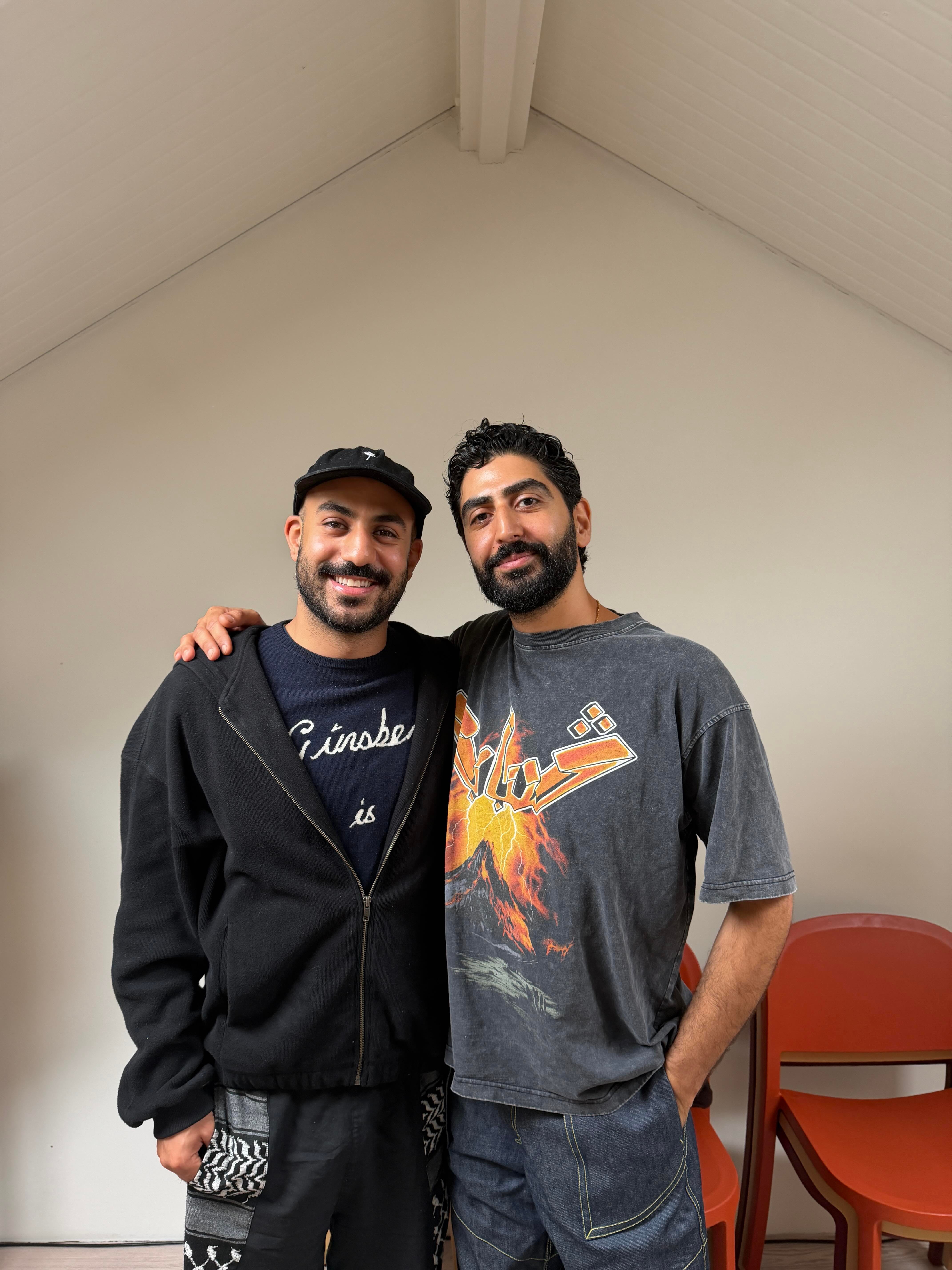
In the episode, we discuss creating something that people really want in a moment when so many hospitality businesses are feeling the pain; about the meaning and importance of community and authenticity; about navigating virality and hype online; and about how, despite all their early success, neither are trained chefs.
We hope you enjoy the episode.
Like our recent podcasts, this episode is free to listen to for all subscribers. You can listen to it here in Substack, on Apple Podcasts or through Spotify. If you’re so inclined, please like, share, rate and comment wherever you get your podcasts. A massive thanks as usual to Lucy Dearlove, our producer and to the whole team at Young Space for hosting our recording sessions.
Like last month’s episode with Koya’s Shuko Oda, you can also watch this podcast on YouTube. For that, huge thanks to our videographer Zaineb Abelque and editor Callum Winter.
Thank you for listening, reading, watching and supporting our work.
Please note this is an extra episode and we'll be back again soon, as promised last time around, with the conversation Adam had with Will Gleave, the head chef at Sargasso in Margate, who will be talking about the early days of P. Franco, the role of Australians in London and getting out of the city. We’ll see you then.
Credits
The Vittles Podcast is presented by Vittles Restaurants editor Adam Coghlan.
Farsin Rabiee was born in Colorado and raised in Sweden amid a strong Iranian diaspora community where he developed his understanding of Iranian cuisine – embracing multigenerational cooking, learning from his mother, grandmother and aunties. Farsin lived in Spain, before moving to London 15 years ago. He is a journalist and news producer who has worked in different projects and for a number of major Persian-speaking channels. His work focuses on Iran, and the Middle East, with a particular interest in human stories with a goal to raise awareness for marginalised communities within Iran or about human rights violations within Iran.
Ziad Halub was born and raised in London to Iraqi communist parents from Basra who were exiled. His parents are prominent writers, and he was raised among Iraqi creatives in London which deeply influenced how he connected with his homeland. Like many diaspora, unable to visit their homelands, Ziad understood his culture first through food, and then with art. Background first in archaeology and heritage. His professional life was multi-hyphenate working with photography, writing, and international brands with the theme of exploring junctions between material culture and consumption.
Lucy Dearlove is an audio producer, sound designer and writer originally from North East England, now based in St Leonards-on-Sea. Her food podcast, Lecker, is a two-time winner of the Fortnum & Mason Podcast of the Year Award.
The full Vittles masthead can be found here.


