

Eight People, One Hob
Nell Whittaker on the unaesthetic mundanity of house-share cooking, plus a kind of recipe for simultaneously preparing multiple meals
Good morning and welcome to Vittles! In today’s cooking essay, Nell Whittaker writes against the depoliticised romanticisation of communal cooking, which seldom acknowledges that many of us live communally out of financial necessity, not choice. Nell shares a set of five unconnected recipes cooked simultaneously on one hob, reflecting the often pedestrian reality of jostling for kitchen space in a house share.
Today’s piece is free, but you can access dozens of other cooking pieces and recipes with a Vittles subscription, which costs £7/month or £59/year. Your subscriptions help to pay all our writers, photographers and illustrators at a fair rate.
You can also support us by buying Issue 2 of our print magazine, on the theme of Bad Food, which is available here.
There’s an Instagram influencer of sorts who has made a career from cooking for the six people she lives with in a warehouse in East London. Her videos are filmed with her phone, presumably propped on a table. The fact that she lives in a warehouse with five other people is carefully mentioned at the start of every video. Apron on, she talks the viewer through whatever she’s making (tomato, caramelised onion and red pesto galette; chicken noodle soup), against a backdrop of painted brick and shelves bearing various large jars, likely filled with beans and seeds. Visible tabletops are scarred. Although not stated explicitly, the implication of the influencer’s content is that domestic cooking at this scale is ideologically aligned with the commune, even if it shares none of its politics. The emphasis is on hippie-ish, wholesome vibes rather than a radical embrace of communality.
When I was younger, I found it hard to imagine living in any form other than the communal. I have lived with no fewer than three other people for my whole adult life, and peaked in my late twenties with an eight-person house in East London (six bedrooms, two couples). It was a tall Victorian house with a vast fig tree whose green fruit tasted of nothing. Some enterprising landlord had once converted the house into offices, so on the wall next to every room was a phone to buzz open the front door. Someone – I always assumed the same landlord – had concreted over the garden so in the rain it became a kind of waterway for slugs, who at night sailed from side to side as fast as mice, and ate whatever I tried to grow in the dank, shaded flower beds.
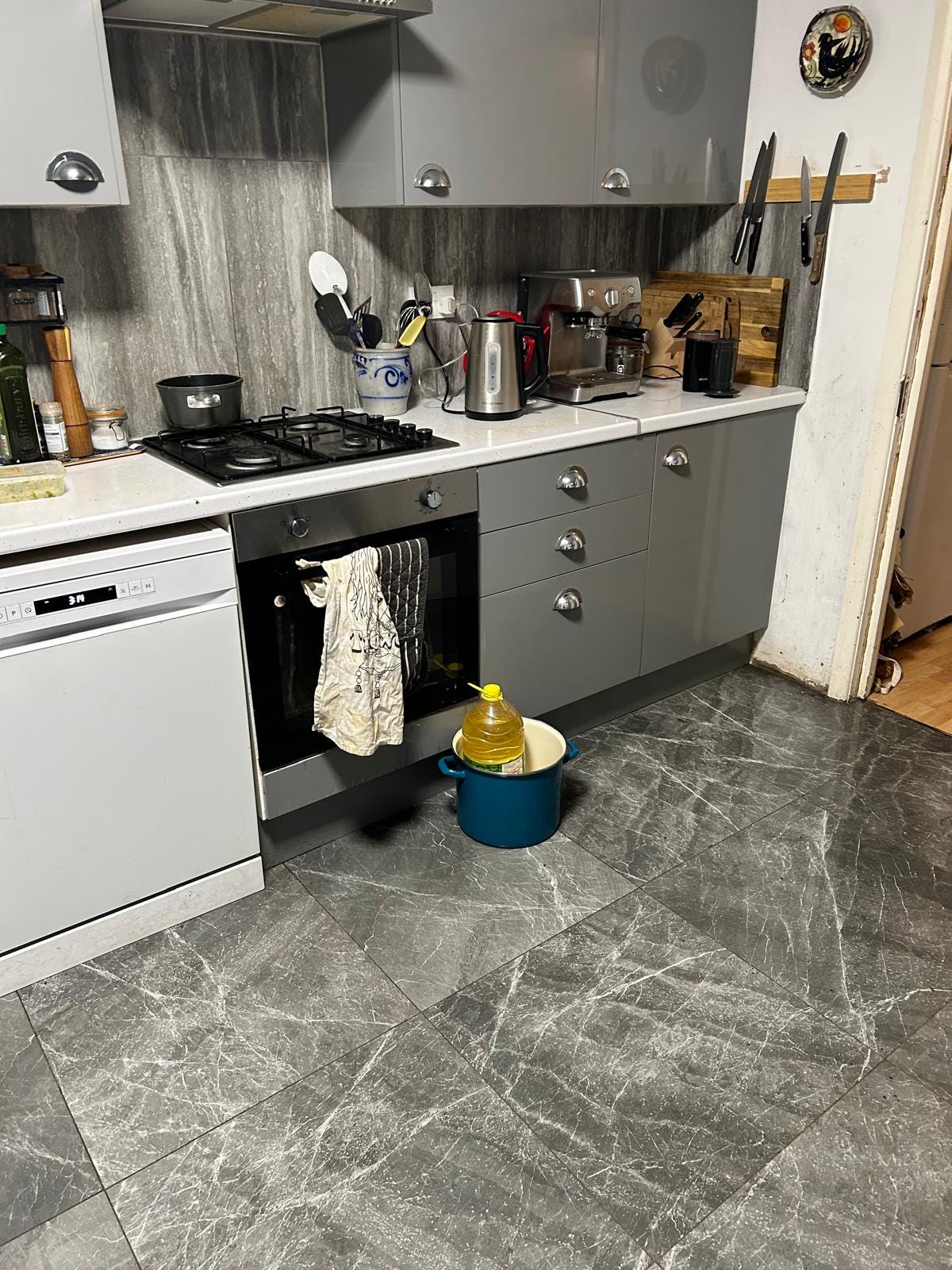
My housemates and I all got on fine, and often very well, but we very rarely deliberately cooked and ate together. Instead, we grappled for hob space as we prepared totally different dinners, skidding around on an adamantine floor that was almost permanently slicked with oil.
Fetishising food’s communal aspects and ability to bring people together is an all-too-common trope in food writing. I hope that we’re becoming bored of uncritically exalting the value of collectively breaking bread as if it automatically improves one’s political conditions, but part of the conversation that still seems to be missing is that most people living in non-familial units regularly cook and eat in an involuntarily social way – not finding communion around the table but, rather, wishing that someone else wasn’t also in the kitchen monitoring a pan of tomato sauce. Logistically, it’s a nightmare, while socially it requires a degree of politeness and jollity that can be difficult to dredge up after a long day at work.
I ended up in an eight-person house because everywhere else, a room cost around £1,000 – at the time a vast sum that has, nevertheless, now become the average for a room in London in a shared house. The material reality of spending more than half your take-home pay (even if you earn the London Living Wage) on rent is antithetical to the louche, spontaneous energy of enjoyable bohemian cohabitation and the kind of emancipatory horizons envisaged by commune founders of the twentieth century. Living in a rowdy house is good when you’re in a rowdy mood, but generally communal cooking of the sort many do is undignified because our living situations can be undignified – watching the black mould creep up the shower curtain, continually wet from eight showers a day; grimly moving someone’s mouldy tin of tomato paste back onto their overstuffed fridge shelf. Communes and other kinds of collective living are defined by the idea of intentional community – and for many, there’s not much that’s intentional about how they’re living.
Nevertheless, in such circumstances a new culinary framework can be born – one that’s chaotic, resentful, sometimes funny, sometimes formal, often deeply familial. Inspired by the kitchen wrangling of a collapsing housing market, here’s a recipe for cooking eight people’s dinner at once. While I was writing this piece, the influencer announced that she and her housemates have been unceremoniously evicted from the warehouse, though they’ve since managed to find another place to live. The fell sword of London’s housing market comes for us all.
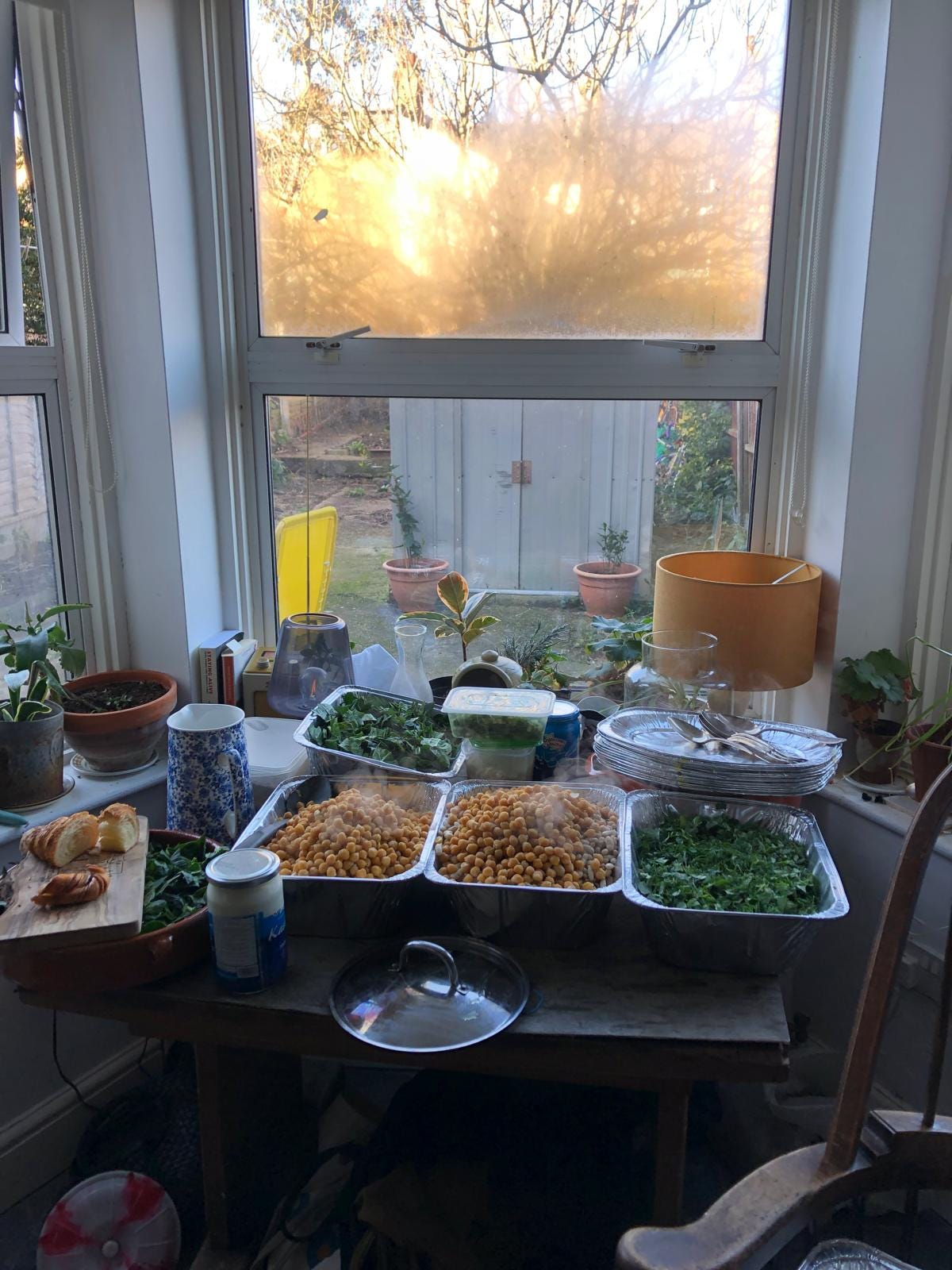
Ash reshteh, made by housemate one
Anchovy, chickpea and celery pasta, supposedly invented by housemate two, made for her and her boyfriend (housemate three)
Saag paneer, for couple housemates four and five
Marcella Hazan’s tomato pasta, for half-ill housemate six
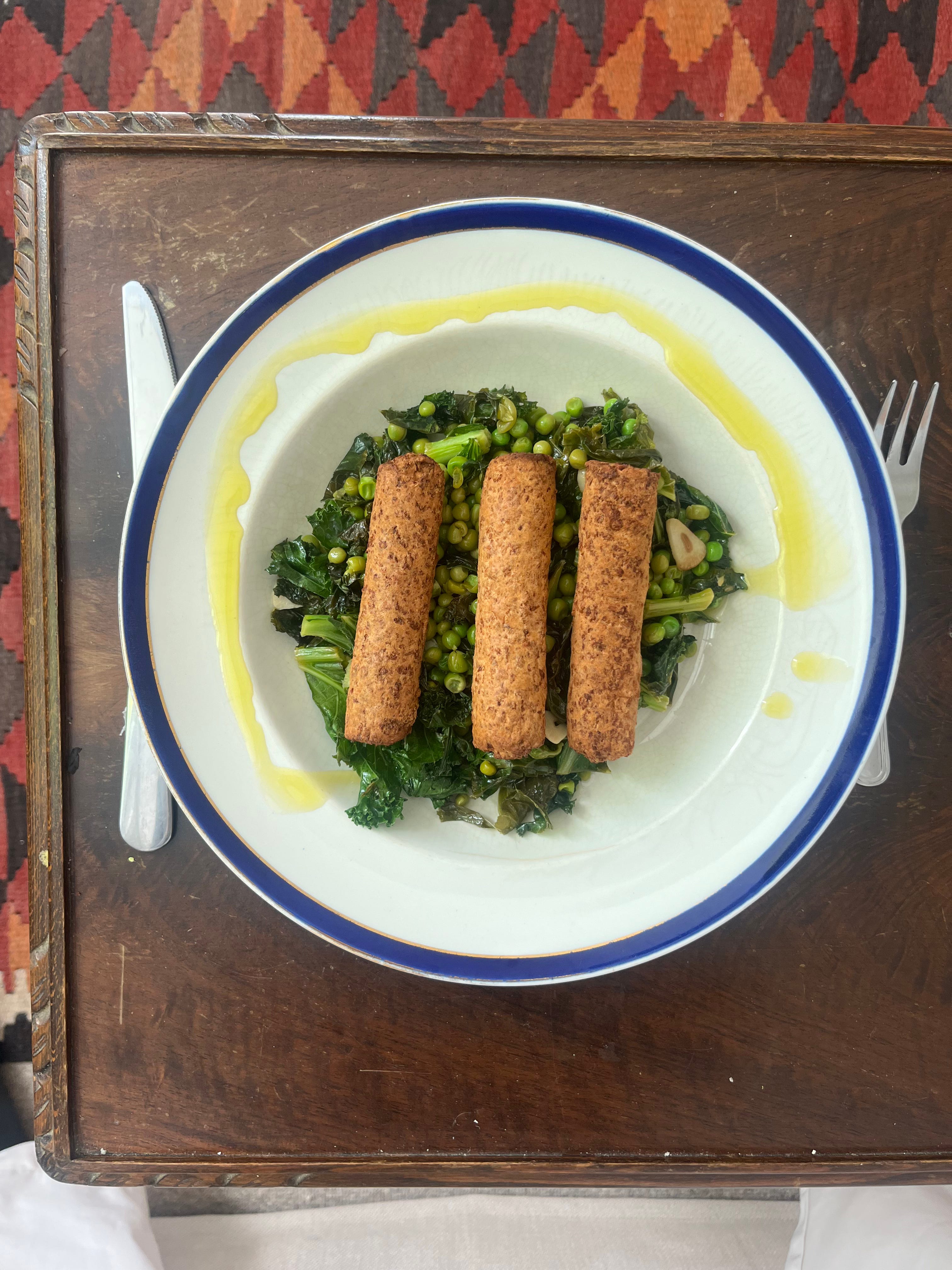
Linda McCartney sausages, peas and greens, a favourite of housemates seven and eight
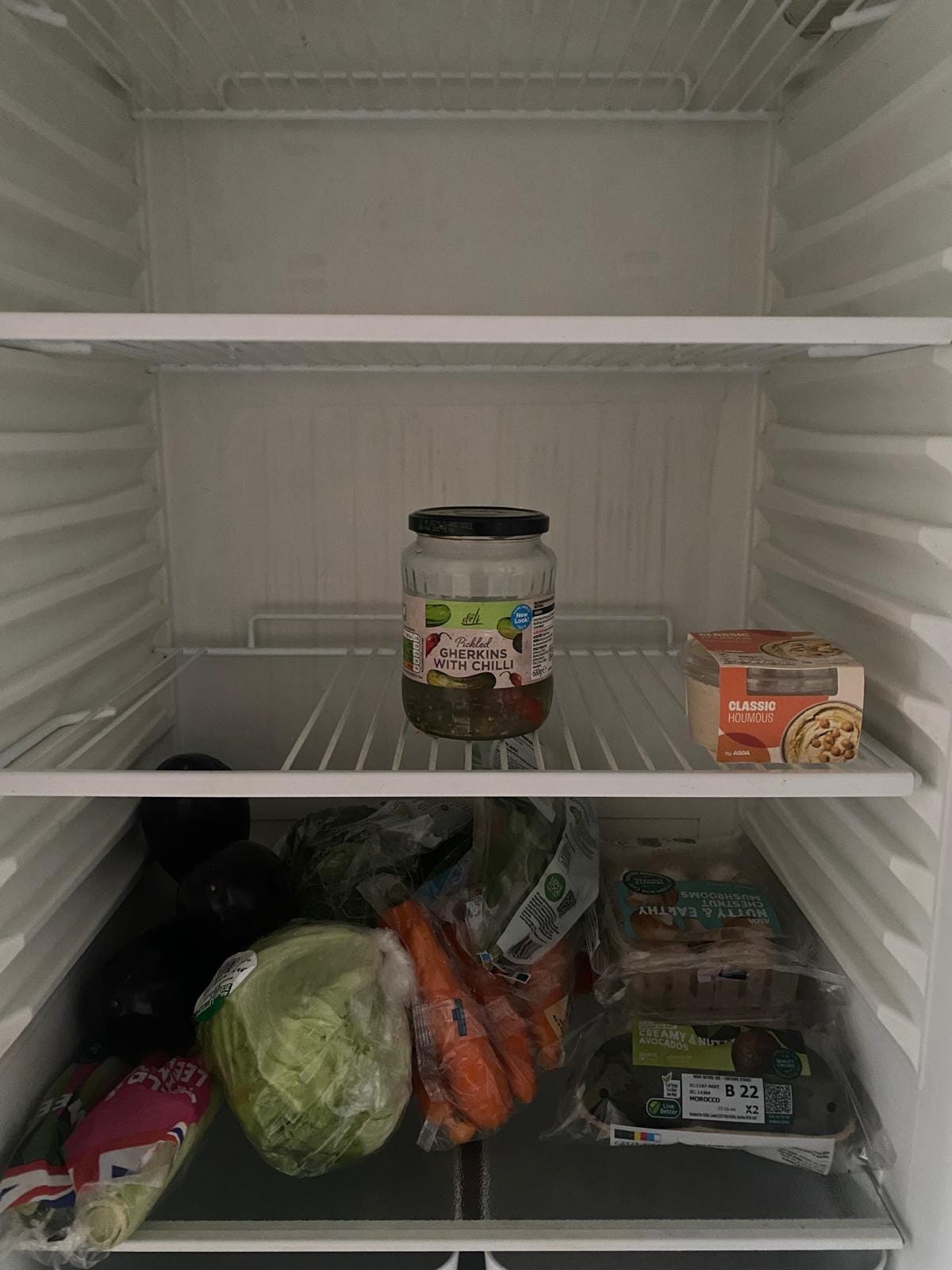
Ingredients
for everyone
4 garlic bulbs
for the ash reshteh
300g dried chickpeas
100g dried white kidney beans
100g dried haricot beans
1 onion
1 tbsp butter
sunflower oil
3 tsp turmeric
6 tsp dried mint
1 vegetable stock cube
a handful of dried green lentils
1 large bunch each of parsley, coriander, and dill
4 spring onions
½ bag frozen spinach
125g spaghetti
a big spoonful of kashk, plus extra to serve
juice of 1 lemon
for the saag paneer
2 packets of paneer (~400–500g)
2 tsp ground turmeric
2 tsp chilli powder
½ tsp fine sea salt
3 tbsp vegetable oil
1 tbsp sunflower oil
2 tsp cumin seeds
½ bag frozen spinach
2 shop-bought naans (or, failing that, flatbreads)
2 tbsp plain yoghurt
salt
juice of ½ lemon
for the anchovy, chickpea and celery pasta
1 onion
3 celery sticks
1 tbsp sunflower oil
1 x can anchovies in oil
salt
187g spaghetti
for the tomato pasta
1 onion
1 x 400g can chopped tomatoes
125g butter
salt
pepper
187g spaghetti
for the vegetarian sausages, peas and greens
1 pack vegetarian sausages
olive oil
⅓ bag frozen peas
½ bag wilting anonymous greens (kale, cavalo nero or spring greens all work), shredded
1 tbsp butter
a spoonful of cream
the end of a bottle of white wine
Method
The day before, add dried chickpeas, white kidney beans and haricot beans to a big bowl, cover with cold water, and leave to soak overnight. Slice the paneer into fat cubes. Use a fork to make holes in each cube, then rub with ½ tsp turmeric, and ½ tsp salt. Add 2 tsp of chilli powder (the label says it’s very hot, but it has become mild and dusty due to long exposure to the cupboard). Leave to marinate in the fridge overnight.
Designate housemate two to make a vast heap of minced garlic.
Take three onions. Slice two into crescents and halve the third, keeping the root base on so it holds together. Finely slice the celery. Sauté one of the sliced onions and the celery in sunflower oil over a low heat, and the other in butter and oil in a separate pan. Place the third onion in a big pan – bigger than you think you’ll need – and tip in a tin of tomatoes, half a block of butter, salt and pepper.
When onion two is translucent, add a quarter of the minced garlic, 1 tsp turmeric, and half the dried mint, and cook for a couple of minutes. Drain the soaked chickpeas and beans and add to the pan along with three mugs of water and a vegetable stock cube. Continue to cook.
[Housemate three decides to take out the bins. He is lugging the recycling bin bag, which is leaking, leaving a trail of liquid in his wake.]
Check on the pan with the onion and celery – they should be becoming jammy. Celery takes longer than you think, so don’t just test with the tip of a knife: fish it out and try some. Once collapsing, add some of the garlic and the anchovies along with their oil.
On the remaining ring of the hob, fry the paneer in about 3 tbsp veg oil in a large frying pan over a medium-high heat. Once the paneer has browned, remove from the pan and set aside on dirty tea towel. Shout at all other housemates that the pan is hot. Go to put the paneer packaging in the bin and find that housemate three has not replaced the bag.
Now, heat some more oil in the same pan over a medium-high heat. When hot, add the cumin seeds and stir them around in the oil for about 30 seconds. Add the rest of the chilli powder and turmeric. Add in some of the minced garlic and fry, stirring constantly so that it doesn’t catch and burn, for a couple of mins, then add the frozen spinach to the pan along with a splash of water.
[While you’re waiting for things to cook, engage in lively discussion about the neighbouring house, which is undergoing a £1 million renovation and has been a building site for a year and a half. Six of the current housemates lived there before moving into this house, and the rent was cheap because the owner was keeping it occupied while obtaining planning permission. There was one bathroom with a shower that didn’t work, so you shared shallow shivering baths in the morning before work for about five months. Reminisce.]
Once the chickpea and bean pan has been cooking for about 30 mins, remove about 3 tbsp of chickpeas and set aside. Tip in a handful of dried green lentils and continue to cook.
Temporarily remove the tomato sauce pan from the hob and quickly fry the rest of the dried mint in plenty of oil in a small frying pan, then transfer to a small bowl. Return the tomato pan to the heat.
Rub a packet of vegetarian sausages with olive oil, arrange on a tray, and put in the oven at 180°C fan. Finely chop one large bunch each of parsley, coriander and dill and four spring onions. Set aside (you have run out of bowls, so use a dirty warm pan from earlier).
By now, the anchovy and celery mixture should be soft. Add the reserved chickpeas from the ash reshteh and stir to coat with oil and heat through for a couple of minutes. Remove the pan from the hob and replace with a large pan of salted water.
Add the chopped herbs and spring onions and the other half of the bag of frozen spinach to the reshteh.
When the salted water boils, add 375g spaghetti. Break another 125g spaghetti into pieces, then add to the reshteh pot.
The tomato pan should now be molten, ketchup-thick, and spitting red flecks all over the backsplash. Remove from heat.
Remove a mug from the full and dirty dishwasher. Wash briskly and use to scoop out some of the pasta water. When the spaghetti is cooked, put half of it into the celery pan and the other half into the tomato pan. Mix vigorously and serve, in two separate bowls.
Add the frozen peas to the pan of starchy pasta water and cook for a few mins.
Add the final remains of the browning minced garlic to a pan and cook gently in some butter. Open the oven and slide two shop-bought naans alongside the sausage tray, taking care not to touch the oven’s filthy sides.
Once the ash reshteh has had another 20 mins or so of cooking, add a big spoonful of kashk, squeeze in some lemon juice, and leave on the hob for another few minutes. Ladle into two bowls, then top with the fried dried mint and another dollop of kashk.
Check that the saag paneer spinach is fully defrosted, then stir in 2 tbsp yoghurt, some salt, and some lemon juice. Serve with the warmed breads.
Drain the peas but keep back a bit of water. Add to the garlic and butter pan with a spoonful of cream, the greens and the end of a bottle of white wine. Simmer for 10 mins, then serve topped with the vegetarian sausages.
Serve according to preference, but most likely all in bowls. Turn on the TV.
Credits
Nell Whittaker is a writer and editor based in London. The images in this post are by Nell, Barnaby Duff and Iona Gaskell.
The full Vittles masthead can be found here.
Related Reading
Chris Jones on the history of London’s squat cafes
Eli Davies on cooking as a means of grounding herself in a precarious housing market
Aryan Anbari’s recipe for makaroni, which resists flattened narratives of ‘traditional’ coking