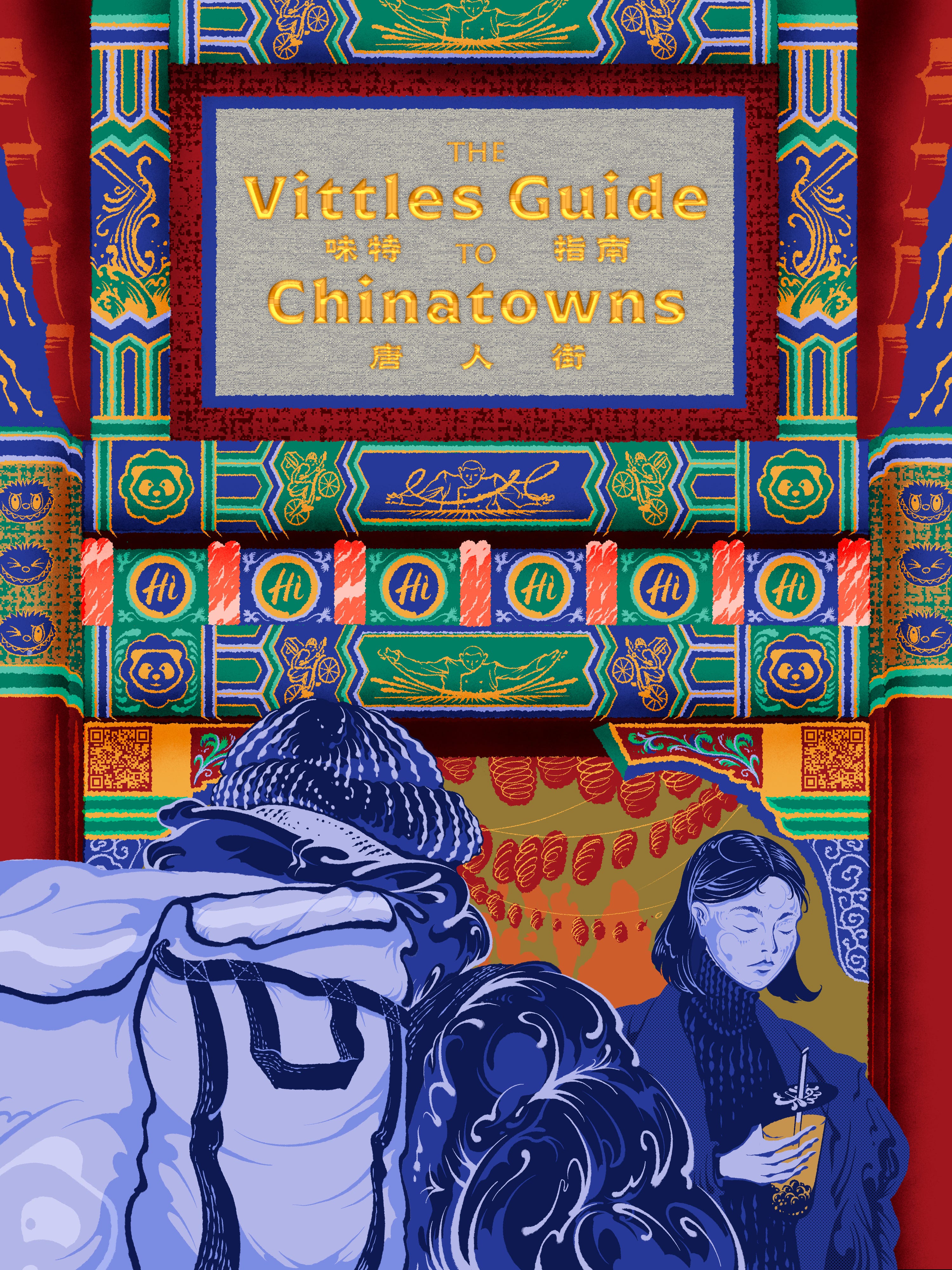
The Vittles Chinatowns Project
A special ten-part supplement about Chinatowns in the UK and how they’re changing, guest-edited by Angela Hui
Chinatowns have always been a part of my life in one way or another. When my parents emigrated from Hong Kong and China to the UK in the 1980s, they bounced between Chinatowns, Chinese restaurants and takeaways, going wherever the work took them. They usually lived above the businesses or in staff accommodation until they saved enough to buy their own Chinese takeaway in South Wales. Back then, the selection of Asian ingredients was pretty limited, and so hubs for Chinese culture were vital. Our idea of a family holiday was a three-hour drive every few months to Birmingham’s Wing Yip, after which we’d then spend time in the Chinatown there.
Whenever I visit a new city, I now automatically make a beeline for Chinatown to familiarise myself with new surroundings. Whether official or unofficial, these neighbourhoods were historically shaped by those who were marginalised – outcasts finding community in spaces often deemed undesirable. Liverpool’s Chinatown, the first in Europe, was established in the 1850s, built by Chinese sailors who settled and never left. They faced language barriers, xenophobia, economic struggles and even secret deportations, but many held on and made a life for themselves. Since moving from a stigmatised East End Limehouse area due to war damage, slum clearance, and post-war anti-immigrant prejudice, London’s Chinatown thrived in Soho during the 1960s and 1970s, becoming an official part of the city in 1985. Across the UK, Chinatowns became places for opportunity, discovery, and reinvention. They served as third spaces for Chinese immigrants, the diaspora and transnational communities, as well as for anyone else looking for a sense of belonging, community or connection (and, of course, a damn good meal).
Yet, for all their success, Chinatowns are dying – or, at least, my versions of them are. Some, like Liverpool, have been in decline since the pandemic; others, like London’s, have lost their unique Cantonese character and have developed a pan-Asian aesthetic curated for TikTok, while its restaurants face modern economic marginalisation through high-rent displacement. At the same time, as Chinese culture spreads across the UK, many cities and university towns – Sheffield, Coventry, Nottingham, Bristol, Southampton, Exeter – now have strong restaurant scenes fuelled by the increase in Chinese students, some of which can arguably be called new ‘unofficial’ Chinatowns. New developments, fuelled by property investment, student housing and available space, are also creating rival Chinatowns in new areas and suburbs. Everything about these spaces is contested – who they’re for, their relationship to Chineseness, even whether they can be called Chinatowns at all – but there is one common thread: the food.
So, for The Vittles Chinatowns Project, we have decided to examine Chinatowns across the UK and how they’re changing, while recommending some of the best places in the country to eat. Each Chinatown serves a different purpose and is aimed at a different community of people. In our lead essay, Xiao Ma, researcher, co-director of Chinatown Collective and former Cultural Projects Manager at China Exchange, asks ‘Who is Chinatown for?’, exploring the relationship between different Chinese communities and the London Chinatown, and questioning if there’s still a real sense of community left. In ‘The New Chinatowns’, Barclay Bram looks at how Chinese international students – who have long been the UK’s biggest student diaspora – have formed new Chinatowns across the length and breadth of the UK, and how a simple change in university policy has fundamentally altered what British towns and cities look like, and how we all eat.
We also wanted to celebrate the cultural significance of Asian supermarkets, and the love, nostalgia or grief they can stir up, so in ‘Crying in Wing Yip’ we asked eight of our favourite chefs, restaurateurs and writers to reflect on how they allow East and South East Asian people to connect to their heritage – or even just the thrill of discovering different products you’d never find in a Tesco or Sainsbury’s. Ultimately, this compilation is a love letter to Asian supermarkets, the products that define them and the people who work there. Think of it as a semi-functional guide, one that captures their emotional pull while offering practical tips on where to shop and what to buy.
And finally, of course, we’re offering multiple restaurant guides for Chinatowns old and new across the UK. In our huge Guide to London’s Chinatowns – longer even than the Wong Kei menu – we have made the case that there are now six areas of Chinese commerce that could be called Chinatowns: Soho, Queensway, the Docklands, Bloomsbury, Spitalfields and Hendon–Colindale. To prove this, we have listed every great restaurant encompassing a range of regional cuisines that you can find in these neighbourhoods, and tell you what to order at each one. Elsewhere, we have provided guides to the historic British Chinatowns in Manchester, Birmingham and Liverpool, as well as to new Chinatowns in Cambridge and Glasgow, with recommendations also for Oxford, Sheffield, Bristol, Newcastle and Edinburgh, written by people who know these cities inside and out. We hope you use these guides enthusiastically – and so we have made a huge subscriber-only map (linked to at the end of this post) including every restaurant mentioned to enable you to do so.
This Chinatown project has been years in the making and it would not have been possible without the incredible contributions and efforts of everyone listed below. Every time I walk through Chinatowns, any Chinatown, I am reminded that their resilience has been built brick by brick, story by story, over generations. If we do not keep telling their stories, even as those stories change, they might not be here tomorrow. Angela Hui
Contributors
Angela Hui, Xiao Ma, Barclay Bram, Ken Hom, Songsoo Kim, Sabrina Fung, Will Harris, Huong Black, Katie Goh, Hannah Natalie Hosanee, Erchen Chang, Chan Yang Kim (김찬양), Lap-fai Lee, Lisa Tse, Helen Tse, Emily Beswick, Hai Lin Leung, Sufea Mohamad Noor, Beatrice Png, Ruth Cheung-Judge, Jonathan Nunn, Elaine Zhao, Siqi Chong, Guan Chua, Zoe Suen, Fuchsia Dunlop, Barclay Bram, Dan Biddulph, Isaac Rangaswami, Montague Ashley-Craig, Anto Wu, Food in London, Liz Tray, Edward Moon-Little, Cici Peng, Harin Turrel, Leah Pattem, Eva Kossman, Meg Houghton-Gilmour, Sean Wai Keung, Steven Young, Kerre Chen and Kenn Lam.
Who is Chinatown for?
Xiao Ma unpacks the layers of London’s Chinatown. Illustration by Kenn Lam
The New Chinatowns
How the massive influx in recent years of Chinese international students has produced new Chinatowns across the UK. Words by Barclay Bram. Photographs by Chan Yang Kim.
Crying in Wing Yip
Writers and cooks share memories of their favourite Asian shops and supermarkets across the UK. Photographs by Michäel Protin.
The Vittles Guide to London’s Chinatowns
Our first-ever guide to include all six (and counting) of London’s Chinatowns, old and new, featuring more than eighty restaurants and fifteen distinct cuisines
The Vittles Guide to Liverpool’s Chinatown
Where to eat in Europe’s oldest Chinatown
The Vittles Guide to Manchester’s Chinatown
Lisa and Helen Tse share their pick of places to eat in Manchester’s compact but rich Chinatown
The Vittles Guide to Birmingham’s Chinatown
Lap-fai Lee recommends his favourite spots in Birmingham, a mixture of classic Cantonese spots and more recent regional specialists
The Vittles Guide to Chinese Restaurants in Cambridge
Cambridge offers a broad range of regional Chinese cuisines. Cici Peng, Edward Moon Little and Siqi Chong share their favourite spots
While Cambridge’s Chinese migration history parallels London’s in some ways, its food scene has largely sidestepped the recent patterns that have swept through the capital’s dining scene: there are barely any Sichuan concepts or biang biang noodle joints … Instead, Cambridge offers peripheral regional cuisines that, in some cases, arrived here before reaching London … With no centralised Chinatown, the city’s Chinese restaurants can instead be found in dispersed culinary pockets – in residential neighbourhoods, bubbled together along the peripheries of the local shopping centre or along the bustling Mill Road.
The Vittles Guide to Chinese Restaurants in Glasgow
Sean Wai Keung’s guide to Glasgow’s best Chinese restaurants (and one bakery)
The Vittles Guide to the UK’s Chinatowns
The Vittles guide to historic and new Chinatowns, with more than 150 Chinese-restaurant recommendations across the UK
Credits
The Vittles Guide to Chinatowns was guest-edited by Angela Hui in collaboration with Vittles, and written by Angela Hui, Xiao Ma, Barclay Bram, Ken Hom, Songsoo Kim, Sabrina Fung, Will Harris, Huong Black, Katie Goh, Hannah Natalie Hosanee, Erchen Chang, Lap-fai Lee, Lisa Tse, Helen Tse, Emily Beswick, Hai Lin Leung, Sufea Mohamad Noor, Beatrice Png, Ruth Cheung-Judge, Jonathan Nunn, Elaine Zhao, Siqi Chong, Guan Chua, Zoe Suen, Fuchsia Dunlop, Dan Biddulph, Isaac Rangaswami, Montague Ashley-Craig, Anto Wu, Food in London, Liz Tray, Edward Moon Little, Cici Peng, Harin Turrel, Leah Pattem, Eva Kossman, Meg Houghton-Gilmour, Sean Wai Keung, Steven Young and Kerre Chen.
It was illustrated by Kenn Lam and photographed by Chan Yang Kim (김찬양) and Michäel Protin, with additional photography by various contributors (credited individually). This project was subedited by Sophie Whitehead and Liz Tray.
The full Vittles masthead can be found here.


This project is amazing!
Wow, what a brilliant project. I haven’t read it all yet (of course) but it looks amazing. Going round London it’s clear what the impact of Chinese students at UCL, Kings, LSE etc has been in creating new restaurants and Asian supermarkets but I’m fascinated to read about it. Maybe somewhere you also mention how the recent influx of Hong Kongers is producing new eating and shopping districts.