

Vittles Pitching Guide 2026
What we’re commissioning this year

Good morning and welcome to Vittles. As of today, we are open for newsletter pitches for the first time in almost a year. Below you’ll find our updated pitching guide, which details the type of pieces we’re interested in commissioning. Details of our rates are published here.
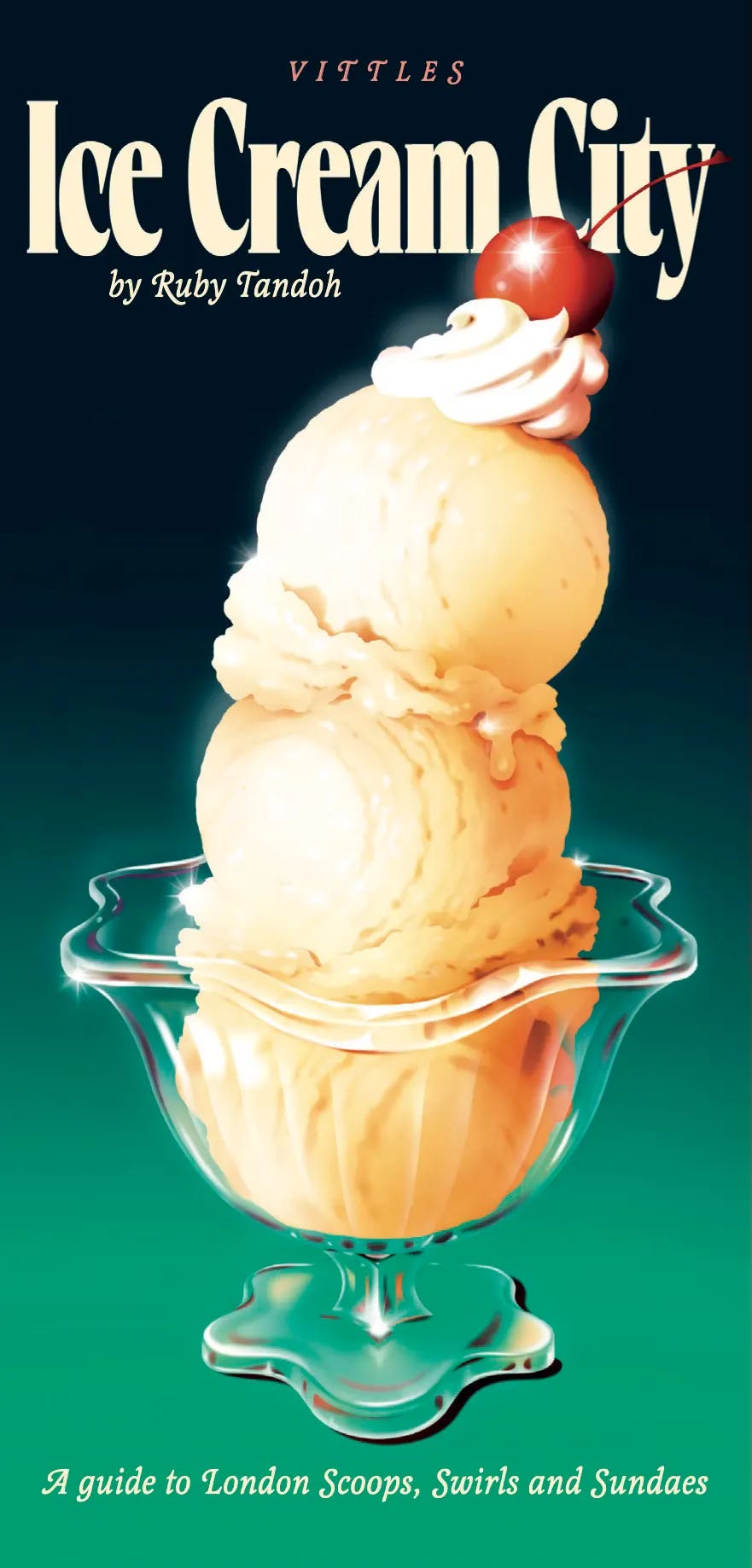
Before we start, an announcement for everyone outside of the UK: due to popular demand, we have now opened up Ruby Tandoh’s Ice Cream City to pre-orders to Europe, America and the rest of the world! We hope to send out all pre-orders within the next two weeks - if you would like to order it you can do so here.
A subscription to Vittles is £7/month or £59/year. Vittles is entirely subscriber funded, and your subscriptions help to pay all our writers, photographers and illustrators at a fair rate.
The Vittles Pitching Guide, 2026
What we’d like to commission this year
Vittles is now over six years old, and although a lot has changed in that time, one thing remains the same: in this magazine, the articles we publish are never only about food. Rather, food is a way to tell a larger or more interesting story – something surprising or intriguing, something that offers a fresh perspective.
In this round of commissioning, we are looking for submissions across a range of genres – everything from investigations and personal essays to opinion pieces and reported features (note: we are currently not commissioning recipe pieces other than Cooking From Life essays). Irrespective of format, to work for Vittles, pieces need to be voice-driven and argument-led and to have a definite story arc. In other words: please do not pitch introductions to or explainers of specific dishes or cuisines, and DO NOT USE AI.
The best way to figure out if your idea might work for Vittles is to ask: what is the story here? What else, aside from the dish itself, does this idea tell us about the world around us? As always, we particularly encourage people who don’t consider themselves food writers to pitch – writers outside the so-called ‘food world’ invigorate the often-staid ways that food is written about.
The following is a list of types of pieces and themes that we are commissioning:
Features and Reporting:
Investigative features like this piece on the working conditions at Gail’s. Investigative pitches should have a firm sense of scope and methodology (we will work with writers to develop reporting plans). We have larger budgets for investigations that require additional time and reporting, and these can be negotiated in advance.
Gripping, timeless longreads that offer novel insights into modern food culture and the people and companies who influence the way we eat. Examples include Joe Zadeh’s investigation into why white people are afraid of reheating rice, this exploration of the weird, fantastic history of Pakistani sushi by Sanam Maher, and this essay by Tim Anderson on how katsu curry became a British phenomenon. We are also looking for longreads that engage with the connections between food and energy, climate, trade and the slowly disintegrating global-food economy.
Thoughtful critical dispatches from outside the UK and USA, like this story about crisps in Madrid, this essay by Yemisí Aríbisálà about the cookbook industry in Nigeria, or this reported piece by Dora Taylor about how Hurricane Melissa exposed Jamaica’s longstanding dependence on corporatised agrarian systems. We are particularly looking for great stories from China, Taiwan, Africa and the Arab world.
Food writing that holds particular resonance in the backdrop of rising fascism in Britain, from within neighbourhoods or communities who have been unfairly demonised or underreported on. Good examples are this story by Francesca Humi about Earl’s Court, and Lola Olufemi’s piece on the role of food in radical social movements. (Note: we do not publish ‘discovery writing’.)
Pieces that take a critical, original look at something quintessentially British, such as Heather Parry’s investigation into how the popular TV show Jamie’s School Dinners affected her hometown of Rawmarsh, Digby Warde-Aldam’s piece on Pizza Express’s design, and Ruby Tandoh on the Sainsbury’s design archive.
Scams and feuds: So much of modern food culture is absurd, and driven by spite, ego and sometimes outright fraudulence. If there is a story with scams and feuds right at the heart of it then please pitch it to us. The more shenanigans the better.
Stories about the un-glamourous, chaotic, inauthentic or confused aspects of eating in the world – like this piece by Sharanya Deepek about South Asian Italian cuisine. Note: a lot of the ideas we were interested in for our print magazines (on Bad Food and Influencers) are still interesting to us.
A note on South Asian pitches. For pieces from the subcontinent, we are interested in thinking about food outside the domestic. We urge writers to pitch silly ideas about the messy, chaotic ways we live our lives in South Asia, or ideas that connect to themes of labour, industry, political surveillance, and manufacturing. Remember: we do not publish pieces about ‘heritage’ if they are solely associated with dominant-caste Hindu communities.
Memoir
The personal essay is not dead. That said, for a piece of food memoir to work for Vittles, it needs to stand out – to offer a distinct voice and point of view alongside thoughtful, lyrical writing. The Cooking from Life column is home to a lot of our personal writing – have a read through its archives.
Some particularly strong recent examples of memoir include:
This personal essay about overseeing the tea and biscuits at AA meetings
This set of vignettes about the Eucharist by Waithera Sebatindira
Jo Hamya’s lyric essay about eating in bed
Robin Craig’s Cooking From Life about the role of food in hospice care
Aryan Anbari’s Cooking From Life about Iranian makaroni
This graphic essay about grief by Ella Bucknall
Opinion/Acid Reflux
After a few issues at the tail end of last year, we have not published a new edition of our gossip/opinion column acid reflux in some time – our apologies! However, it is something we would love to continue – both in its regular form and with guest slots. If you have an issue you would like to write about, or if there is a trend in restaurants or food culture you want to interrogate critically, then this is the space to do it in. Some previous examples include Thom Eagle on serving bad customers, or Niloufar Haidari on the matcha boom.
On a related note, we would like to commission more short, critical opinion pieces this year (very much along the lines of our old column, The Hater). We are especially looking for pieces about the British hospitality industry written by people within the industry. If you’re a chef, front-of-house worker, KP, restaurant owner, producer, supplier or distributor and you have something you want to write about the industry that you can’t think of a home for, then please get in touch. Essays can be written anonymously if preferred.
Send your pitches with ‘PITCH’ in the subject line to vittlespitches@gmail.com by 30 June. We aim to reply to every single email, although due to the high volume of pitches, it can take up to six weeks for us to get back. Details on rates are below.
A London project
We are working on a special project this year which will take us back to the early days of Vittles and London Feeds Itself, focusing on the everyday and often unwritten about ways in which Londoners eat. We are particularly looking for stories about the people who feed Londoners: shopkeepers, distributors, wholesalers, importers, cooks (of all kinds, whether commercial, institutional or domestic), growers, foragers, or community networks (either physical or online), tips on people who grow or source ingredients that you cannot get elsewhere – things which are legendary among certain communities or neighbourhoods but don’t receive enough attention. If you have a strong story for a feature or profile, then please email us at vittleslondon@gmail.com. The deadline for this specific project is this week, Friday 19 June.
Vittles Restaurants
When we started Vittles Restaurants almost three years ago, we had a very simple mission statement: that over the next few years, we are going to make the way you eat tangibly better. Over the last three years, we’ve tried to cover the London restaurant ecosystem in its entirety, putting restaurants and neighbourhoods in conversation with each other rather than covering them in silos. We hope to expand that coverage this year in different forms, not limited to any particular format. This year we’re looking to commission reported features, guest reviews, neighbourhood guides as well as interviews and opinion pieces from within the London restaurant industry. Along with recommending the best places to eat, we want to also explain the mechanics of how a city like London is fed, and who and what influences it.
Pitching is now open for pieces which fall into these categories. Below is a little more on what we’re looking for as well as a list of guides we’re opening for commission.
Reviews
We are looking to commission guest reviews on restaurants in London with an exceptional story, which go beyond merely recommending a place to eat. The review might shine a light on a particular phenomenon or trend in the city, or highlight a chef who is doing something out of step with the rest of the scene. Some examples might include Mei Bai’s review of Dong Yuan and its link to Chinese social media, or Dina Begum’s piece on Bangla City and its importance to the Bangladeshi community, or Jonathan Nunn’s essay/review on The Yellow Bittern and its position within the history of British food culture.
Interviews
Who are the people making the key decisions behind what we eat now in London? We’re looking to interview those who are influencing the way restaurants operate, look and feel, the decision-makers, the tastemakers, the people on the frontline of the labour market. Ask yourself the questions: why is this person interesting? What is interesting about what they are doing? Why should more people know more about them?
Some examples of interviews we’ve published before are Jonathan Nunn with Chitra Ramaswamy, and Adam Coghlan with Andy Hayler, as well as the Vittles Podcast.
Features
We aim to publish more reported features covering specific venues (places and neighbourhoods) that are critical to communities in London – the places that are at risk of closure, those pushed ever harder by the property market. We want to hear from those who are operating and sustaining them. Food and restaurants must be a part of the story, but it is never the whole story. We want to broaden the story to include the restaurant’s wider context: its people, place, and importance in the ecosystem, of not just hospitality but London culture itself.
Examples of previous restaurant features include Vitoria Croda on Brixton Plaza, Amel Mukhtar on Ridley Road, Gavin Cleaver on Plush N16, and Xiao Ma on Chinatown.
Neighbourhood guides
After our three lunch guides, which cover the areas of central London where many Londoners work, we want to expand our guides into neighbourhoods of London in Zones 2 and above, where many Londoners live. We are looking to commission deep dives into particular neighbourhoods from people who know an area intimately and have strong opinions on what is worthwhile and what isn’t. Rather than aimed at outsiders, these guides should be useful for other people who live in the area and simply want to know where to eat on a regular weekday without expending too much energy.
Single-subject guides
We are now commissioning guides for the rest of 2026. The main guide we are accepting pitches for is our Vegan Guide, which will not only cover vegan restaurants, but places serving the best vegan dishes in any restaurant in the city.
We are also looking to commission more single-subject guides from people obsessed about the execution of a single item of food and are willing to try every example available in order to find their ideal. If there is something you’re interested in – whether it’s pizza, tacos or banh mi – please let us know. Previous examples of deep-dive guides include Ruby Tandoh on ice cream, Gavin Cleaver on barbecue and Ed Fenwick on sandwiches.
Six of One
If you don’t have a long review or guide in you, then we are always looking for Six of Ones for our regular recommendation slot. A good Six of One should be like a recommendation you would give to a friend for a lesser-known restaurant that you’re on the verge of gatekeeping (but would rather not). You can find examples from across the history of Six of One, but the main thing is that the restaurant serves excellent food, rather than simply being obscure.
Send restaurant-related pitches with ‘PITCH’ in the subject line to vittlesrestaurants@gmail.com. We aim to reply to every single email, although due to the high volume of pitches, it can take up to six weeks for us to get back. Details on rates are below.
Rates
We aim to ensure that contributors to Vittles are paid fairly. The current rate for writing is £800 for a reported 2000–2500 word newsletter, £600 for 1500–2000 word opinion pieces or personal essays, £500 plus expenses for reviews, £100 for Six of Ones, or roughly 40p a word for smaller pieces. For longer pieces, investigations, or features that involve more reporting, we can discuss a higher rate with the writer. Rates for illustrations and photography start at £250.
Credits
The Vittles masthead can be viewed here.
Hi there! Is this open to UK-based writers only? I may have a pitch from Australia 🇦🇺
I hugely enjoyed this guide as it gave me an opportunity to catch up on some pieces I had missed! Keep up the great work x